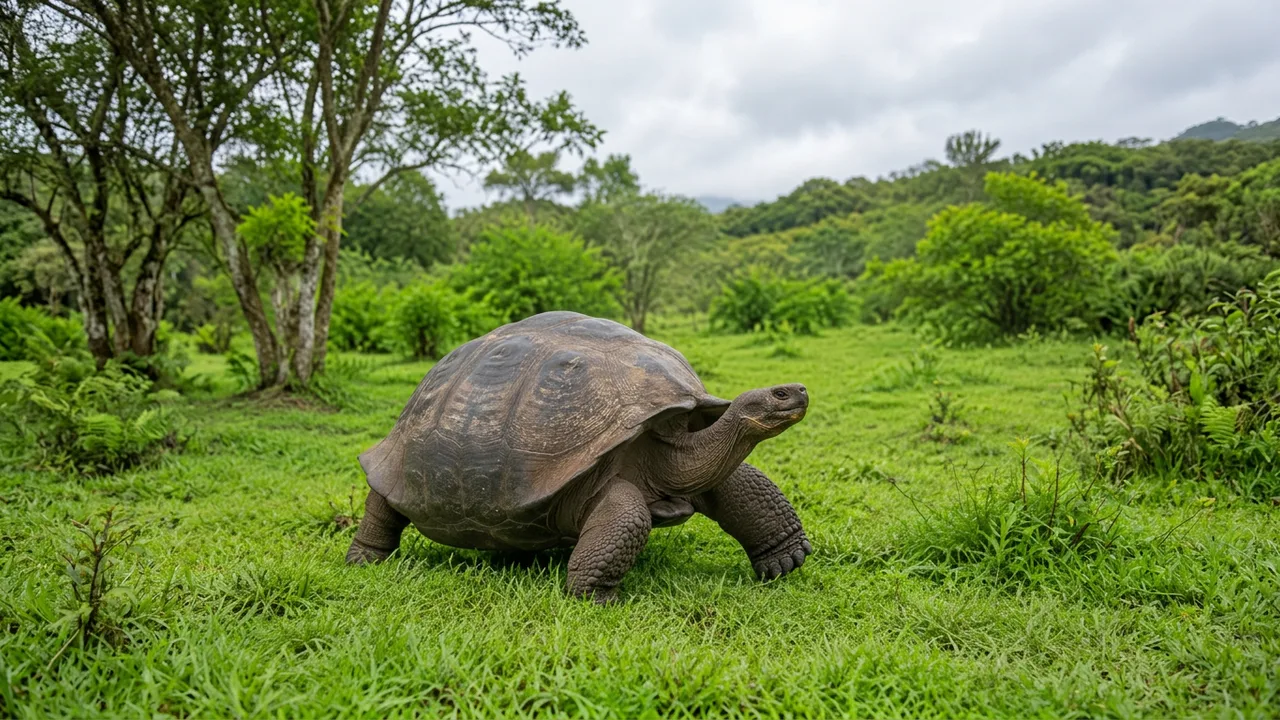
Year-round
Giant tortoise
Santa Cruz highlands
Walk through humid highland habitat to look for free-ranging tortoises. Breeding centres offer a different, conservation-focused visit.

Volcanic islands, remarkable wildlife and a new shore adventure every day.
Small ships
Personal, naturalist-led voyages
Year-round
Two very different seasons
Daily shore visits
On your approved itinerary
Extraordinary wildlife
On trails, beaches & lava shores
An archipelago like no other

One morning you might walk beside sea lions on a white-sand beach. The next brings cactus forests, seabird colonies or young black lava. Back on board, meals and overnight crossings connect the islands without repeated hotel moves.
These cruises focus on landings, nature walks and coastal exploration. Optional snorkelling and kayaking add another perspective where permitted. The exact islands, walking demands and activities depend on the vessel’s approved route.
When to go
Warm season: calmer seas, green islands, nesting land birds and sea-turtle hatchlings; shore walks are hot at midday.
Cool garúa season: busy seabird colonies, courting albatrosses and blue-footed boobies; choppier crossings but very active wildlife.
Typical patterns for planning shore excursions; weather varies year to year and is never guaranteed.
Warmer water, greener lowlands and tropical showers. Often calmer crossings, but midday shore walks can be hot and humid.
Cooler currents, stronger winds and mist in the highlands. Coastal rain is often limited, yet boat crossings can be choppier.
| Typical pattern | Jan | Feb | Mar | Apr | May | Jun | Jul | Aug | Sep | Oct | Nov | Dec |
|---|---|---|---|---|---|---|---|---|---|---|---|---|
| Climate | Warm | Warm | Warm | Warm | Warm | Cool | Cool | Cool | Cool | Cool | Cool | Cool |
| Rain / mist | Showers | Showers | Showers | Showers | Showers | Garúa* | Garúa* | Garúa* | Garúa* | Garúa* | Garúa* | Garúa* |
| Cruises | Yes | Yes | Yes | Yes | Yes | Yes | Yes | Yes | Yes | Yes | Yes | Yes |
*Garúa is persistent mist or drizzle, especially on windward highlands. Seasonal transitions vary; there is no single bad month for the whole archipelago.
Rounded, illustrative planning values, not a measured station series or forecast. Conditions differ between islands; western waters can be considerably cooler. El Niño and La Niña can shift the usual pattern.
Wildlife on land & along the coast
Year-round
Santa Cruz highlands
Walk through humid highland habitat to look for free-ranging tortoises. Breeding centres offer a different, conservation-focused visit.

Year-round
North Seymour & coastal colonies
Watch their unmistakable feet and courtship steps from the trail. Nesting timing varies with food supply and island.
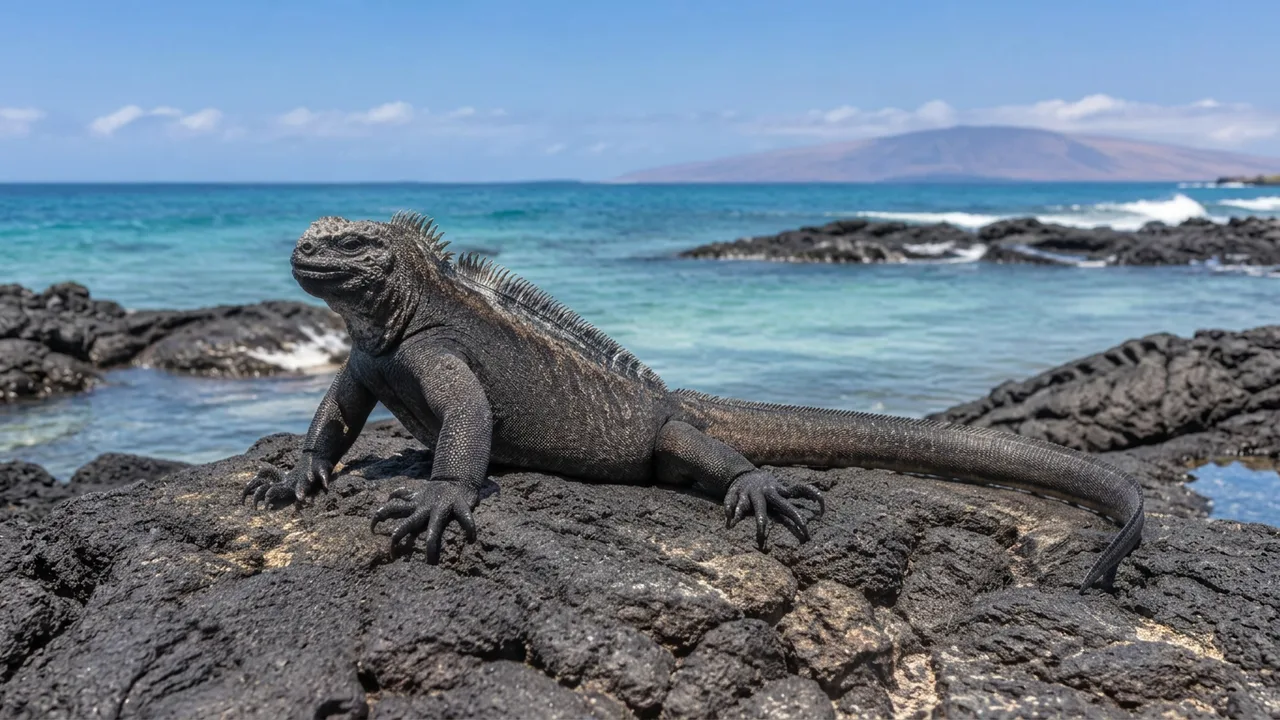
Year-round
Rocky shores across the islands
Look for colonies warming themselves on lava after feeding at sea. Española animals can be especially colourful in breeding season.
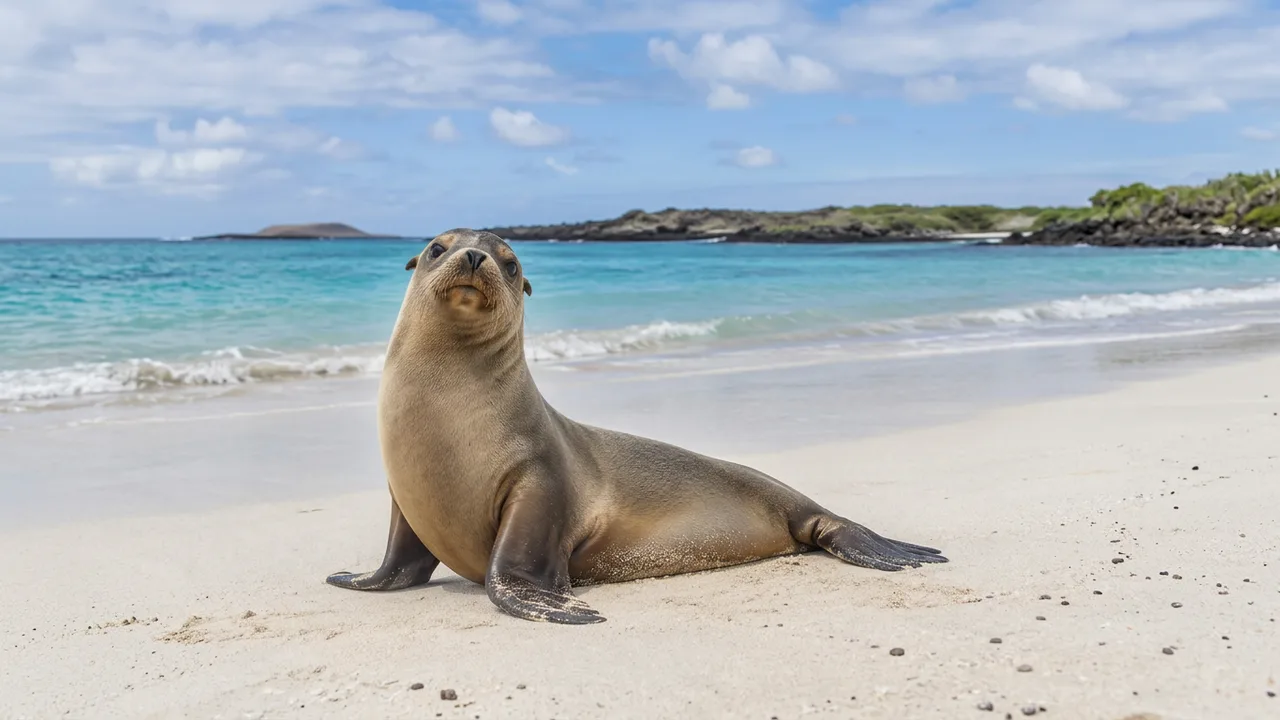
Year-round
Gardner Bay & sandy beaches
Beach colonies are a highlight of shore walks. Give resting animals space and never block their route to the water.
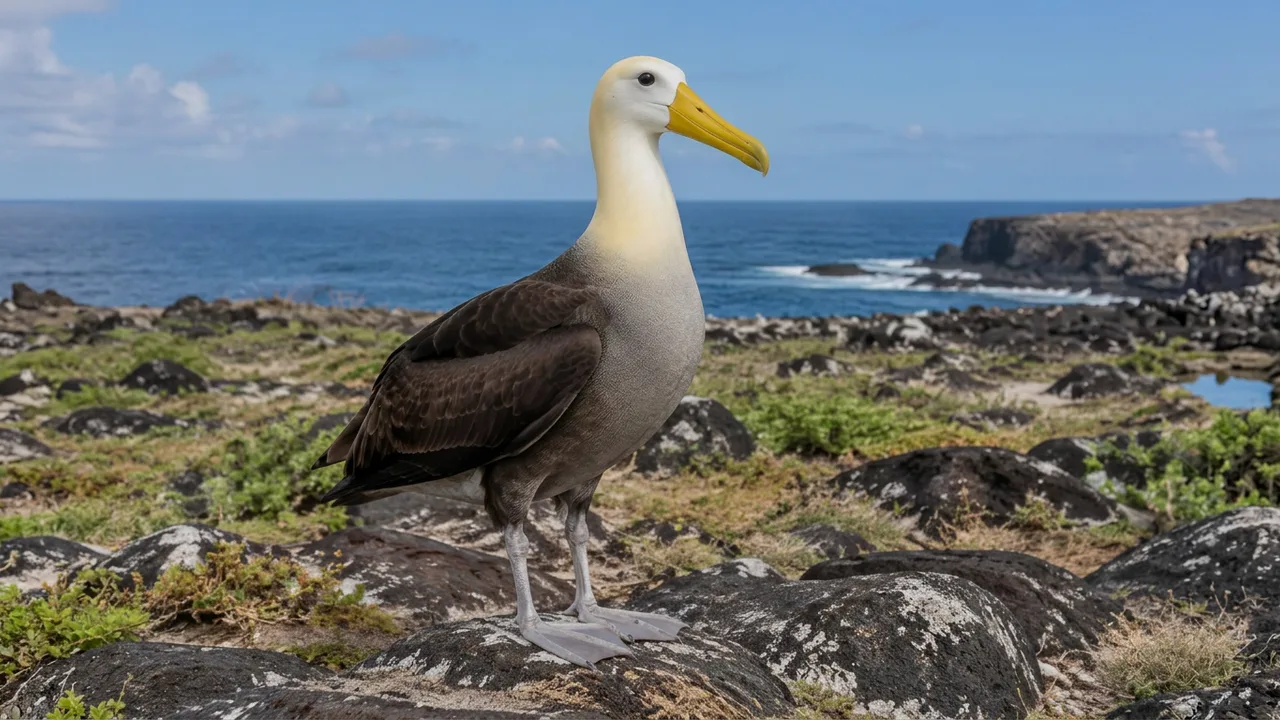
Usually April–December
Española
Choose an itinerary calling at Punta Suárez for the breeding colony. Most birds are away at sea early in the year.
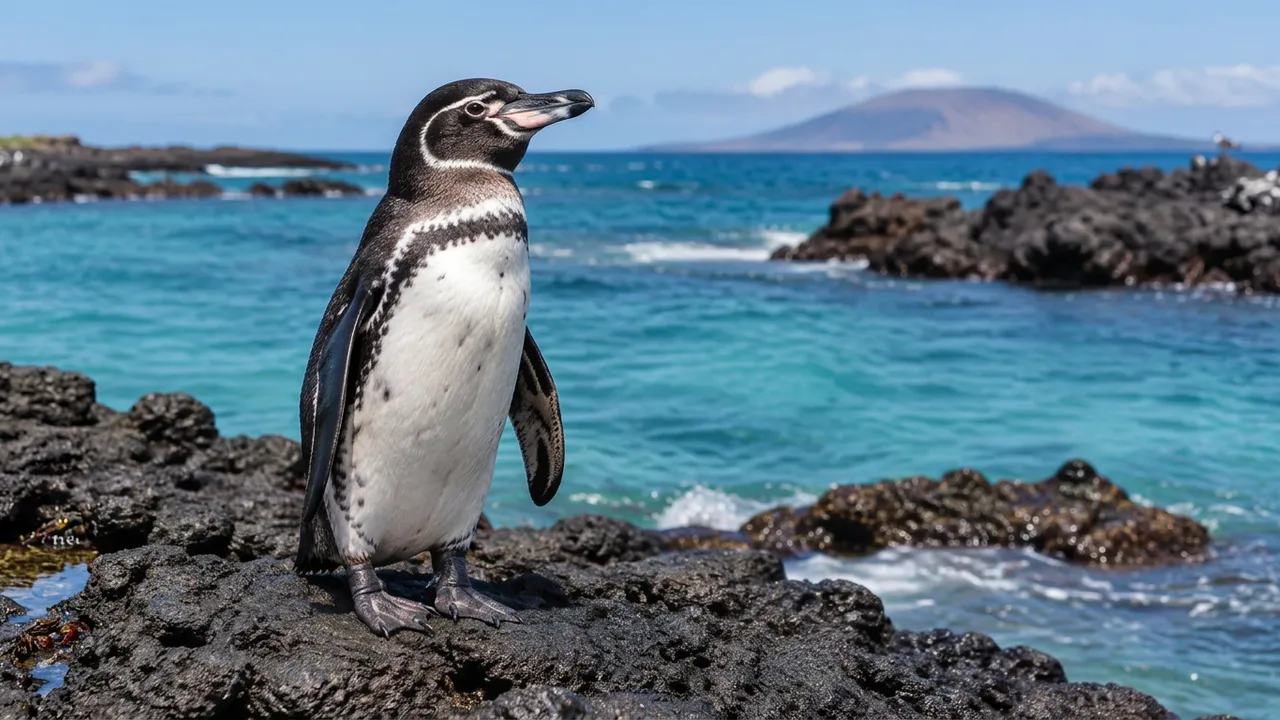
Year-round, route-dependent
Mostly western Isabela & Fernandina
Scan rocky shorelines from a panga. A western itinerary improves your chances, but sightings are never guaranteed.
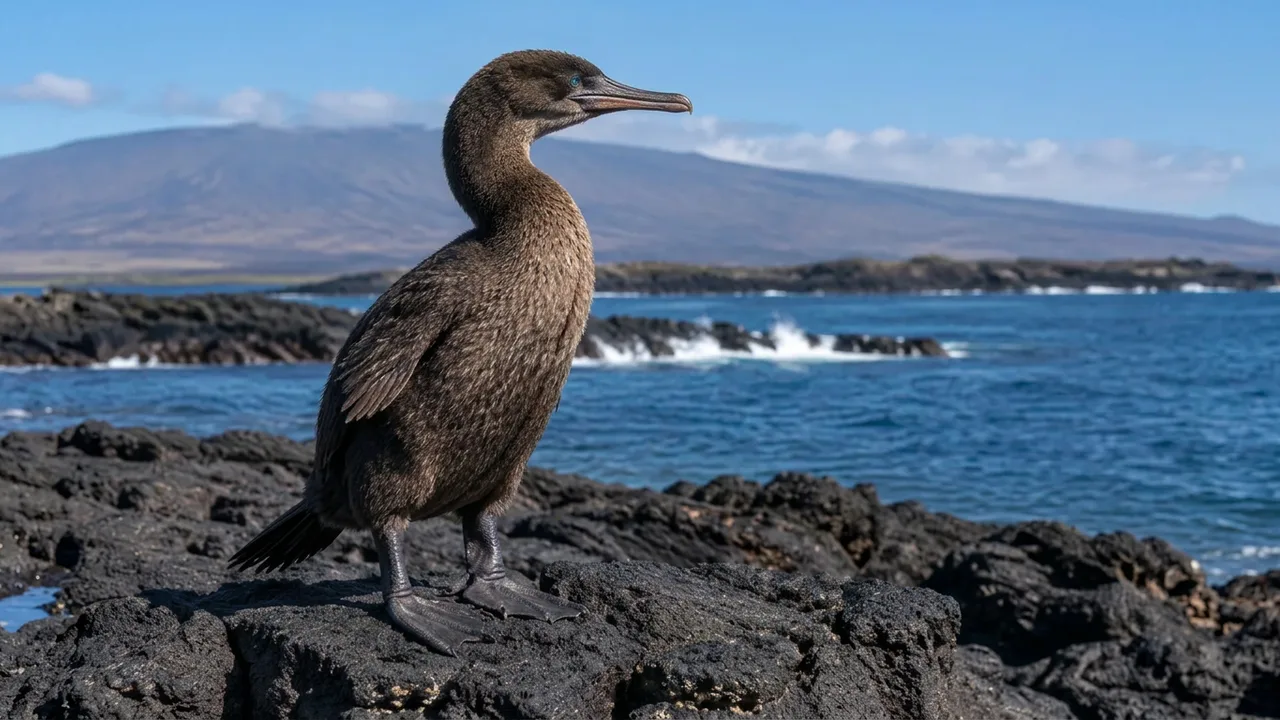
Year-round, western islands
Isabela & Fernandina
This extraordinary endemic bird lives along the western coast. It is not a species to expect on every island circuit.
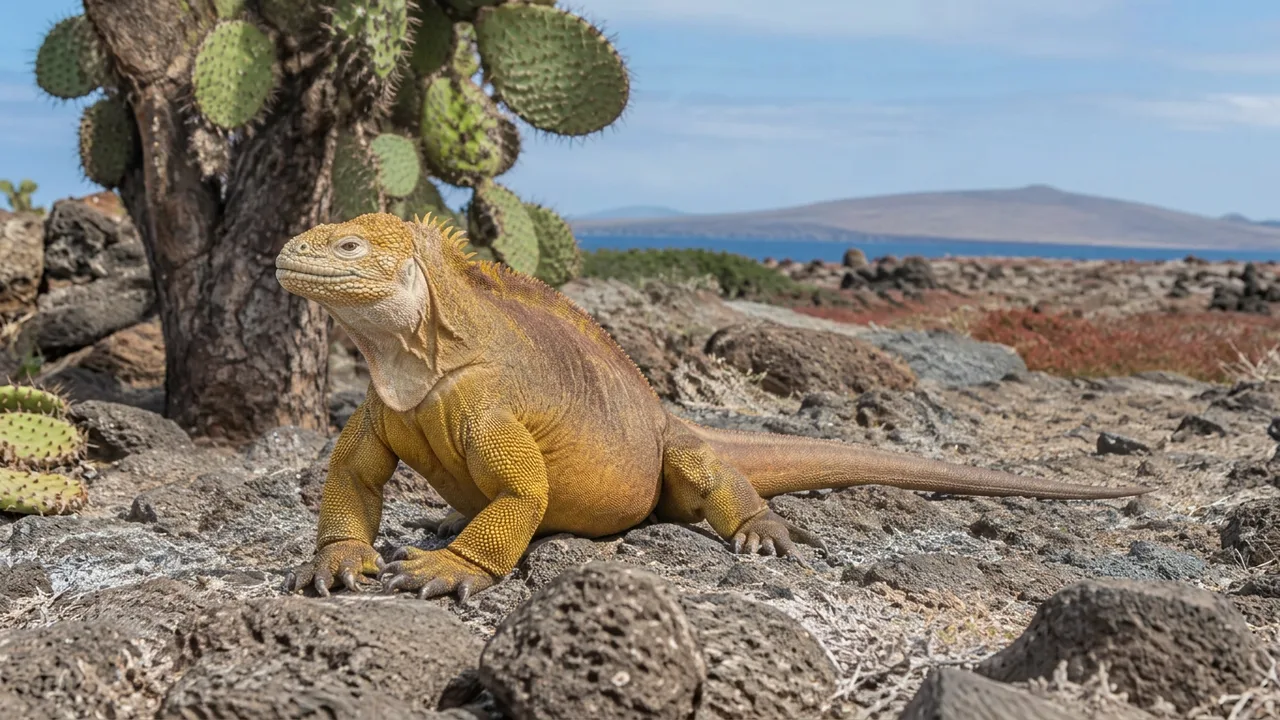
Year-round
South Plaza & selected arid islands
Search cactus-dotted trails for yellow and golden iguanas. Their distribution differs between islands and species.
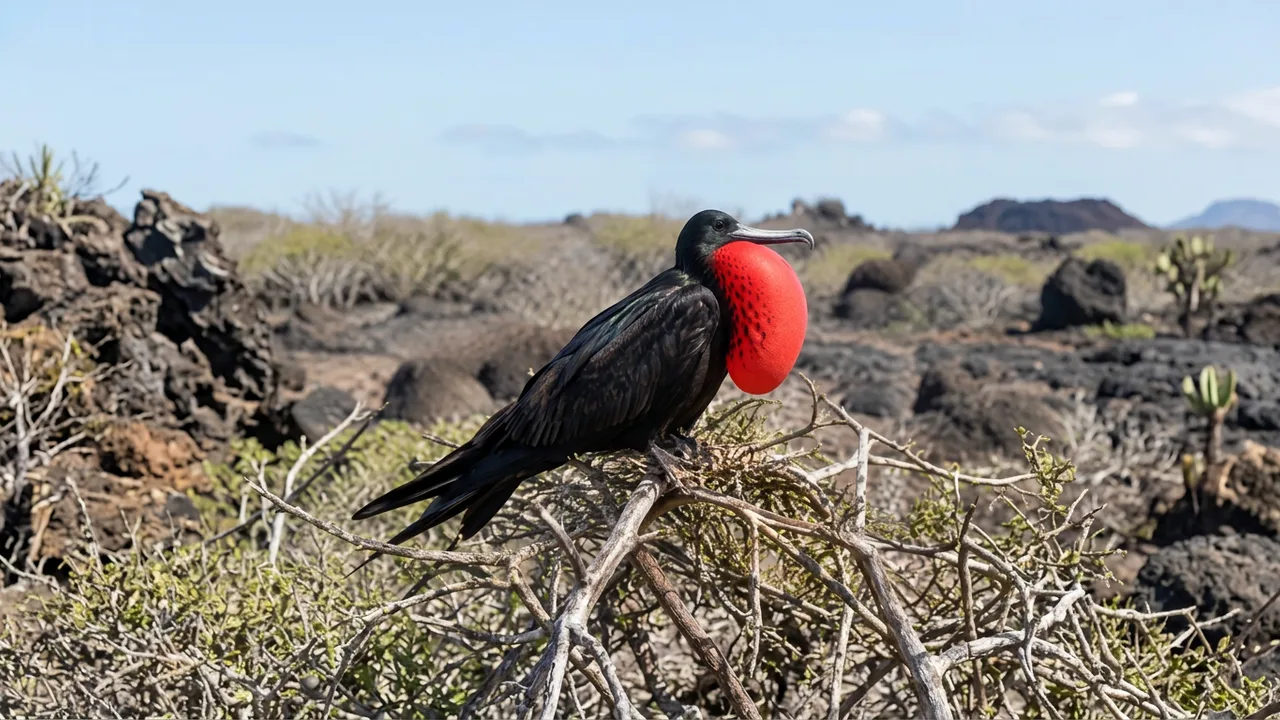
Year-round; displays vary
North Seymour & coastal nesting colonies
Watch these long-winged seabirds glide above the coast. At nesting colonies, males may inflate their vivid red throat pouches during courtship; displays depend on breeding activity.
Wildlife is wild: sightings, courtship displays and nesting activity cannot be guaranteed.
Show all other animalsEvery island tells a different story

01 · Volcanic viewpoints
Climb the stepped trail for the iconic view of Pinnacle Rock, lava cones and twin bays. The ascent is exposed to sun and requires comfortable walking shoes.
Steps & uphill walking

02 · Tortoises & lush landscapes
Trade the dry coast for greener highlands, free-ranging giant tortoises and volcanic features. Highland visits may be part of a cruise or an extension before boarding.
Uneven paths; rain possible

03 · Bird colonies
Follow naturalist-led trails past blue-footed boobies and frigatebirds. Breeding activity changes through the year, and the rocky landing depends on conditions.
Rocky dry landing

04 · Seabirds & sea lions
Punta Suárez combines dramatic coastline with seabird colonies; Gardner Bay offers white sand and sea lions. Albatross sightings depend on season and the actual stops.
Rocky trails or wet beach landing

05 · Young lava & endemic wildlife
Western routes reveal stark lava shores, marine iguanas and habitat for flightless cormorants and penguins. Check the exact landing sites rather than just the island name.
Longer crossings; uneven lava

06 · Cactus forests & coastal walks
Different islands, distinct habitats: South Plaza has cliff-edge seabirds and land iguanas; Santa Fe has its own land iguana species and tall prickly-pear cacti.
Short trails, little shade

Read the landscape in lava flows, tuff cones and uplifted coastlines.
The western islands, above all Fernandina and Isabela, still sit directly over the volcanic hot spot and are among the youngest land on Earth. Walks cross fresh black flows where rope textures, spatter cones and lava tunnels are easy to read. Older islands in the east show how the very same rock slowly weathers into soil, beaches and greenery.

Spot prickly-pear cacti, salt-tolerant coastal plants and greener highland vegetation.
Each altitude brings its own vegetation zone, from salt-tolerant shore plants through arid cactus forest to humid highlands with ferns and giant daisies. Because so few species ever reached the islands, many of them grow nowhere else on the planet. Watching where a land iguana or tortoise feeds is often the quickest way to read these zones.

Santa Cruz research and breeding-centre visits explain habitat protection and tortoise recovery.
Visits to the Charles Darwin Research Station and the tortoise breeding centres on Santa Cruz show how eggs are hatched and young tortoises raised until they can survive on their own. Park fees and strict visitor rules directly fund this work. Your guide explains how biosecurity checks and marked trails keep the islands intact for the years ahead.
Choose islands before cabins

For lava shores & rare endemics
Look for Fernandina and western Isabela if penguins, flightless cormorants and young volcanic landscapes are priorities.
Explore the western islands
For seabirds & sandy bays
An Española call is key for waved albatross in season. San Cristóbal and other eastern stops bring different colonies and coastlines.
Explore the southern & eastern islands
For classic island variety
Routes including Santa Cruz, North Seymour, Bartolomé or South Plaza can combine highlands, seabirds, viewpoints and cactus habitat.
Explore the central islandsYour base between islands
Loading Galápagos cruise ships…
Flights & arrival
Mainland gateway
Direct flights from Miami, Houston, Atlanta, Fort Lauderdale, Bogotá, Lima, Panama City, Madrid and Amsterdam. Galápagos flights from Quito usually stop briefly in Guayaquil.
Mainland gateway
Closest mainland airport to the islands, with the shortest onward flight. Connections from Miami, New York, Madrid, Amsterdam, Panama City, Bogotá and Lima.
Island airport
Main island airport, next to Santa Cruz. Most cruise ships embark here or at nearby Itabaca Channel / Puerto Ayora. Around 1 h 50 min from Guayaquil.
Island airport
On the edge of Puerto Baquerizo Moreno, a few minutes from the harbour. Used by eastern and some southern itineraries. Around 1 h 45 min from Guayaquil.
Europe
Amsterdam or Madrid → Quito/Guayaquil (≈11–12 h)
Next morning: Guayaquil → Baltra or San Cristóbal
North America
Miami, Houston, Atlanta or New York → Quito/Guayaquil (≈4–7 h)
Next morning: Guayaquil → Baltra or San Cristóbal
South & Central America
Bogotá, Lima or Panama City → Quito/Guayaquil (≈1.5–3 h)
Next morning: Guayaquil → Baltra or San Cristóbal
Asia & Australia
Via the US, Madrid, Amsterdam or Santiago de Chile → Guayaquil
Plan at least one full night in Ecuador before the island flight
Flight times, airlines and fees change. Check current schedules and entry rules before booking.
Before you set sail

Remote islands have limited medical facilities, so discuss health and mobility needs before choosing a route.
Good to know
Find the ship, island route and travel dates that suit you.
Newsletter
Adventure cruise offers, last-minute deals and trip inspiration.
Free, unsubscribe anytime. Details: Privacy Policy
Partner with Blue Rides
Recommend adventure cruises and earn commission on every confirmed booking.
Share. Track. Earn.


