Punta Espinoza, Fernandina
A lava peninsula with the densest marine iguana colonies of the islands, flightless cormorant nests and pioneer cactus on fresh rock.
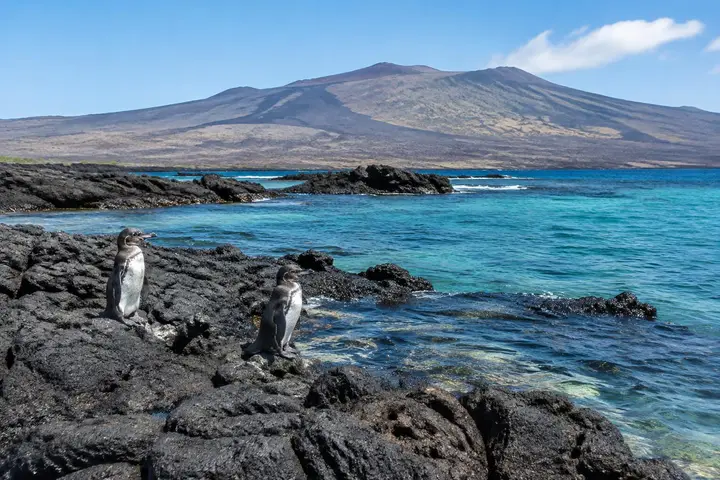
Young lava, cold upwelling and wildlife found nowhere else.
Region guide
The west feels raw. Black lava flows run straight into the sea, mangrove lagoons hide in the folds of the coast and giant shield volcanoes dominate the skyline. Few visitor sites exist, so routes that include the west are usually longer and fill early.
Water temperatures are noticeably cooler than in the centre, especially from June to November. That cold water is the reason the wildlife is so rich: snorkelling alongside feeding sea turtles, penguins and marine iguanas is one of the highlights of any Galápagos voyage.

Where you land
A lava peninsula with the densest marine iguana colonies of the islands, flightless cormorant nests and pioneer cactus on fresh rock.
A historic anchorage with ship names painted on the cliffs, a trail up to the salt-water Darwin Lake and panga rides along the cove.
Coral heads lifted out of the sea by a 1954 uplift, land iguanas and, in the wet season, giant tortoises on the coastal plain.
Mangrove channels explored by panga, with penguins, rays and turtles, plus lava fields with brackish lagoons and flamingos.
What you can see

Galápagos penguin
The only penguin living north of the equator, most common along the cold western shores.
Flightless cormorant
Endemic to Fernandina and Isabela, it lost the ability to fly and dives for food close to shore.
Marine iguana
The western subspecies are the largest; watch them sneezing salt on warm lava.
Whales & dolphins
The Bolívar Channel is a feeding area where whales and pods of dolphins are regularly reported.
Don't miss
Plan ahead
June to November brings the coldest water and the most active marine life; December to May has calmer seas and warmer snorkelling.
Western routes involve longer crossings. Bring motion-sickness remedies and a wetsuit for snorkelling, which most ships provide.
Your base between islands
Loading Galápagos cruise ships…
Keep exploring

Albatross cliffs, white-sand bays and the oldest islands of the archipelago.
Explore
Highland tortoises, iconic viewpoints and the widest variety in a short trip.
ExploreFind a ship whose route includes the sites you want to see.
Newsletter
Adventure cruise offers, last-minute deals and trip inspiration.
Free, unsubscribe anytime. Details: Privacy Policy
Partner with Blue Rides
Recommend adventure cruises and earn commission on every confirmed booking.
Share. Track. Earn.


