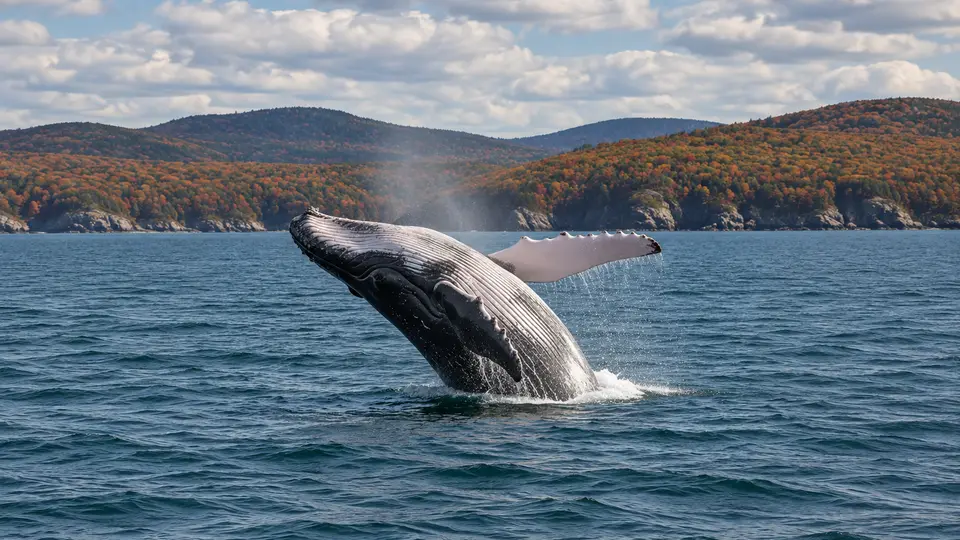
Fin Whale in its natural habitat, AI illustration
Size18–24 m longLifespan80–100 yearsStatusVulnerable

Fin Whale: where and when to see them

Balaenoptera physalus

Fin Whale at a glance

The fin whale is the second-largest living animal, a streamlined baleen whale capable of travelling rapidly through open water. Its tall blow and long back may be visible from distant coastal viewpoints or vessel decks, although much of its life unfolds far offshore. Commercial whaling severely reduced many populations, and recovery is uneven. Ship strikes, entanglement, noise and changing prey distributions remain important threats across its broad but discontinuous global range.

Behaviour & reproduction

Size
18–24 m long
Weight
40–80 tonnes
Lifespan
80–100 years
Status
Vulnerable

Fin whales occur alone, in small groups or in larger feeding aggregations where prey is concentrated. They engulf dense prey patches by expanding the pleated throat, then filter water through baleen. At the surface, the blow usually appears before the small dorsal fin far down the back. They rarely raise their tail flukes before descending. Seasonal movements vary among populations, and some regional groups remain within the same broad sea throughout the year. Fin whales are among the fastest cetaceans, often referred to as the 'greyhounds of the sea', capable of sustained speeds. They often travel in pairs or small family groups, though larger aggregations form around abundant food sources. Their blowhole is often visible before the back of the whale, offering an initial clue to their presence.

Top wildlife locations

Mexico wildlife habitat

Mexico

Deep waters of the Gulf of California support a resident population. Elevated coastal viewpoints and distant deck watching offer possibilities, but many animals remain offshore and ordinary beach visits provide limited prospects.

Adventure cruises in Mexico
New England wildlife habitat

New England

Productive shelf waters off New England attract feeding fin whales. Headlands can provide distant views when animals approach shore, although deck observation usually covers more suitable habitat and shore sightings remain unpredictable.

Adventure cruises in New England
Croatia wildlife habitat

Croatia

Fin whales occasionally enter the Adriatic, but Croatian coastal sightings are rare. Deep-water views from exposed headlands or a passing vessel’s deck are plausible observation settings, not dependable species-watching destinations.

Adventure cruises in Croatia
Greece wildlife habitat

Greece

Deep offshore waters, particularly toward the Hellenic Trench, can hold fin whales, but sightings are uncommon. Coastal headlands offer very limited prospects; distant deck observation is more plausible than ordinary shore watching.

Adventure cruises in Greece
Norway wildlife habitat

Norway

Northern Norwegian coasts adjoining deep channels and productive offshore waters offer possibilities from elevated shore viewpoints or decks. Distribution changes with prey, and reaching favourable areas may require travel beyond major coastal towns.

Adventure cruises in Norway
Portugal wildlife habitat

Portugal

The Azores provide the strongest regional context, with deep Atlantic water close to coastal lookouts. Distant shore or deck views are possible, but mainland beaches are much less dependable and sightings remain variable.

Adventure cruises in Portugal

Destinations describe the species' habitat, not guaranteed cruise stops. Some animals require an optional inland excursion or are found in restricted reserves.

Fun facts about the Fin Whale

  • The right lower jaw is pale while the left is dark.
  • Only the blue whale grows larger.
  • Their low-frequency calls can travel great distances through seawater.
  • Fin whales usually descend without displaying their tail flukes.

Best time to see the Fin Whale

The most practical window varies greatly by region: northern summer often suits North Atlantic observation, while Antarctic access concentrates in austral summer. Some populations, including those in the Gulf of California, are resident. Destination windows reflect access and viewing conditions, not universal migration dates. In locations like the Gulf of California, the late winter and spring often provide excellent viewing opportunities due to resident populations. Peak viewing seasons in the North Atlantic often coincide with summer phytoplankton blooms which support prey aggregations. For Antarctic cruises, the austral summer is the primary window when these whales concentrate in krill-rich waters.

Fin Whale: season matrix by destination

Travel and observation windows vary by region. Highlighted months are an orientation for planning, not confirmed sightings or a guarantee of access.

Mexico

A practical cooler-season travel window for the Gulf of California; resident whales occur year-round, and this does not imply a breeding peak.

JanFebMarAprMayJunJulAugSepOctNovDec
Cruise ships in Mexico

New England

These months broadly overlap regional feeding opportunities and established fair-weather viewing access, with substantial year-to-year variation.

JanFebMarAprMayJunJulAugSepOctNovDec
Cruise ships in New England

Croatia

Occurrence is too irregular to justify a species-specific seasonal window; pleasant coastal travel weather does not predict fin whale presence.

JanFebMarAprMayJunJulAugSepOctNovDec
Cruise ships in Croatia

Greece

Available occurrence information does not support a dependable Greek shore-viewing season; summer travel conditions alone are insufficient.

JanFebMarAprMayJunJulAugSepOctNovDec
Cruise ships in Greece

Norway

Long daylight and generally practical coastal access favour this window; whale presence varies locally and is not confined to these months.

JanFebMarAprMayJunJulAugSepOctNovDec
Cruise ships in Norway

Portugal

Spring commonly offers stronger fin whale opportunities around the Azores; this should not be generalised to every Portuguese coastline.

JanFebMarAprMayJunJulAugSepOctNovDec
Cruise ships in Portugal

Antarctica

Austral summer combines regional access with feeding activity, but ice, weather and shifting krill concentrations determine local opportunities.

JanFebMarAprMayJunJulAugSepOctNovDec
Cruise ships in Antarctica

Arctic

This is a broad summer access window, not a claim of occurrence throughout the Arctic; regional distribution and ice conditions require checking.

JanFebMarAprMayJunJulAugSepOctNovDec
Cruise ships in Arctic

Where the Fin Whale lives

Fin whales inhabit temperate, polar and some subtropical seas, using continental slopes, deep channels and productive offshore waters. They sometimes approach steep coasts where deep water lies nearby. This is a fully marine mammal, with shore visibility dependent on distance and sea conditions. They are generally found in offshore waters, favoring areas with high productivity and good prey availability. Though global in distribution, their presence is sparse in tropical and equatorial regions. Their adaptable nature allows them to thrive in diverse ocean environments, from ice-edged seas to warmer temperate zones.

What the Fin Whale eats

They filter-feed on krill, schooling fish and other small marine prey, with regional differences in emphasis. Antarctic feeding is strongly associated with krill, while northern populations also consume fish such as herring and capelin. Feeding locations shift as prey patches move. Their feeding technique, known as lunge feeding, involves turning onto their right side to engulf prey patches. This specialized feeding strategy allows them to consume vast quantities of small organisms efficiently. In some areas, euphausiids (krill) form a substantial part of their diet, supplemented by copepods and small schooling fish.

Species at a glance

Common name
Fin Whale
Scientific name
Balaenoptera physalus
Animal group
Marine life
Size
18–24 m long
Weight
40–80 tonnes
Lifespan
80–100 years
Status
Vulnerable
Identification
A long streamlined body, small swept dorsal fin and pale right lower jaw distinguish fin whales from stockier humpbacks and the usually smaller, differently marked sei and Bryde’s whales. The asymmetrical pigmentation, with a darker left side and a distinctive white or pale lower right jaw, is a key diagnostic feature. Their relatively small, falcate dorsal fin is set far back on their body, making them appear longer than other large whales. The chevron pattern visible behind the head and along the flanks further aids in distinguishing them from similar species.

Fin Whale: frequently asked questions

Where can I see the Fin Whale?
Mexico, New England, Croatia, Greece, Norway, Portugal, Antarctica, Arctic. Use binoculars from stable coastal viewpoints or a vessel’s designated observation deck. Never encourage pursuit, interception or close approaches. Keep clear of railings in rough seas, and use blows and surfacing sequence rather than proximity for identification. Always maintain a respectful distance, allowing the whales to behave naturally without disturbance. Look for their distinctive tall, columnar blow, which can reach up to 6 meters in height. Pay attention to changes in sea surface texture, which might indicate a whale just below or approaching the surface.
When is the best time to see the Fin Whale?
The most practical window varies greatly by region: northern summer often suits North Atlantic observation, while Antarctic access concentrates in austral summer. Some populations, including those in the Gulf of California, are resident. Destination windows reflect access and viewing conditions, not universal migration dates. In locations like the Gulf of California, the late winter and spring often provide excellent viewing opportunities due to resident populations. Peak viewing seasons in the North Atlantic often coincide with summer phytoplankton blooms which support prey aggregations. For Antarctic cruises, the austral summer is the primary window when these whales concentrate in krill-rich waters.
How big does the Fin Whale get?
18–24 m long. Adult weight: 40–80 tonnes. Size varies with age, sex and population.
How should I behave around the Fin Whale?
Use binoculars from stable coastal viewpoints or a vessel’s designated observation deck. Never encourage pursuit, interception or close approaches. Keep clear of railings in rough seas, and use blows and surfacing sequence rather than proximity for identification. Always maintain a respectful distance, allowing the whales to behave naturally without disturbance. Look for their distinctive tall, columnar blow, which can reach up to 6 meters in height. Pay attention to changes in sea surface texture, which might indicate a whale just below or approaching the surface.
What does the Fin Whale eat?
They filter-feed on krill, schooling fish and other small marine prey, with regional differences in emphasis. Antarctic feeding is strongly associated with krill, while northern populations also consume fish such as herring and capelin. Feeding locations shift as prey patches move. Their feeding technique, known as lunge feeding, involves turning onto their right side to engulf prey patches. This specialized feeding strategy allows them to consume vast quantities of small organisms efficiently. In some areas, euphausiids (krill) form a substantial part of their diet, supplemented by copepods and small schooling fish.
Are wildlife sightings guaranteed on an adventure cruise?
No. Animals move freely and routes, weather, access restrictions and local conditions influence every outing. Confirm the actual itinerary and shore programme before booking.

Compare wildlife in the same destinations

Explore other marine life recorded in these destinations. Similar surroundings do not mean the animals share the same habits or viewing season.

Species comparison by animal group and destination
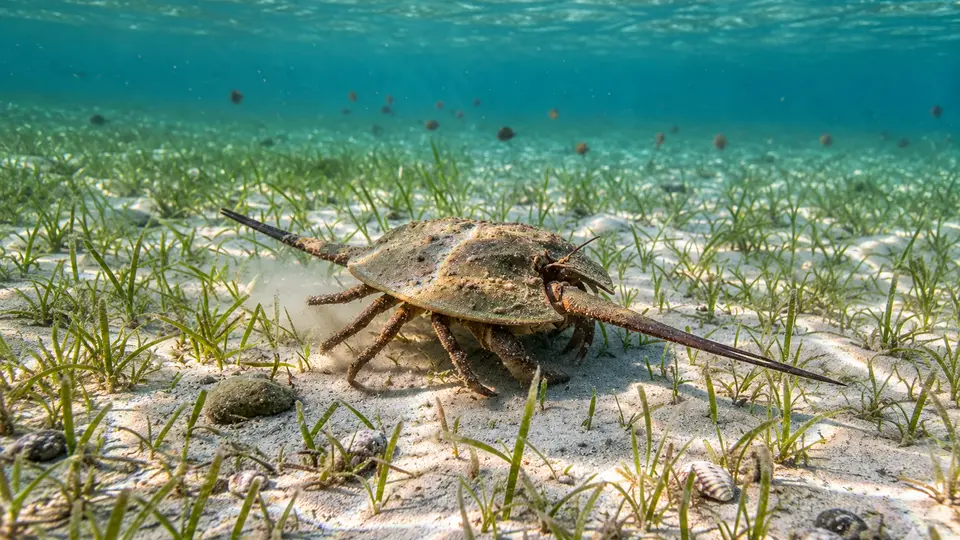
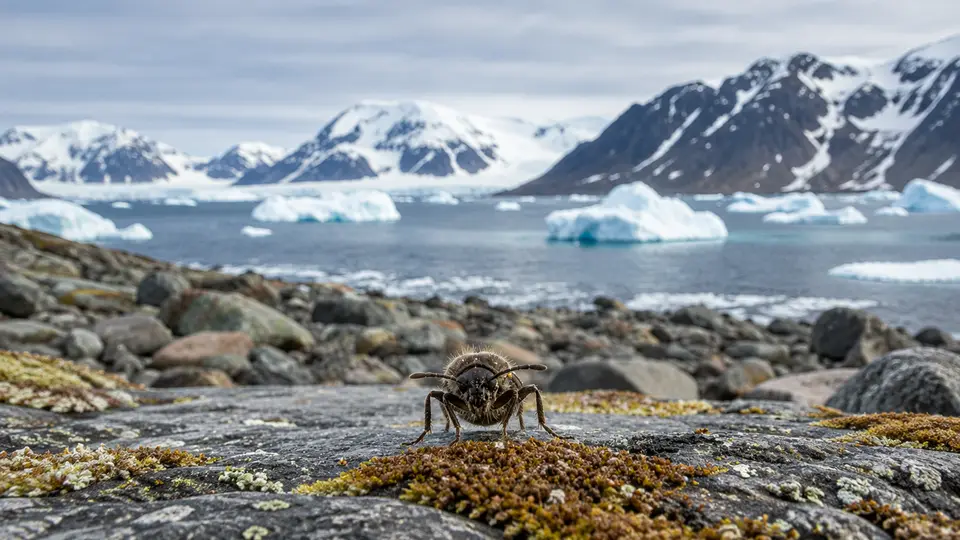
Fin WhaleFin WhaleAtlantic Horseshoe CrabAtlantic Horseshoe CrabBelgica antarcticaBelgica antarctica
Animal groupMarine lifeAnimal groupMarine lifeAnimal groupMarine life
DestinationsMexico, New England, Croatia, Greece, Norway, Portugal, Antarctica, ArcticDestinationsFlorida, New EnglandDestinationsAntarctica
All wildlife destinations
Plan your trip

Find your next wildlife adventure

Compare destinations, shore programmes and dates with the animals and habitats you would love to see.

  • Naturalist-led shore excursions
  • Responsible wildlife watching
  • Small expedition ships

Newsletter

Take Blue Rides with you

Adventure cruise offers, last-minute deals and trip inspiration.

Free, unsubscribe anytime. Details: Privacy Policy

Partner with Blue Rides

Affiliate Program

Recommend adventure cruises and earn commission on every confirmed booking.

Share. Track. Earn.