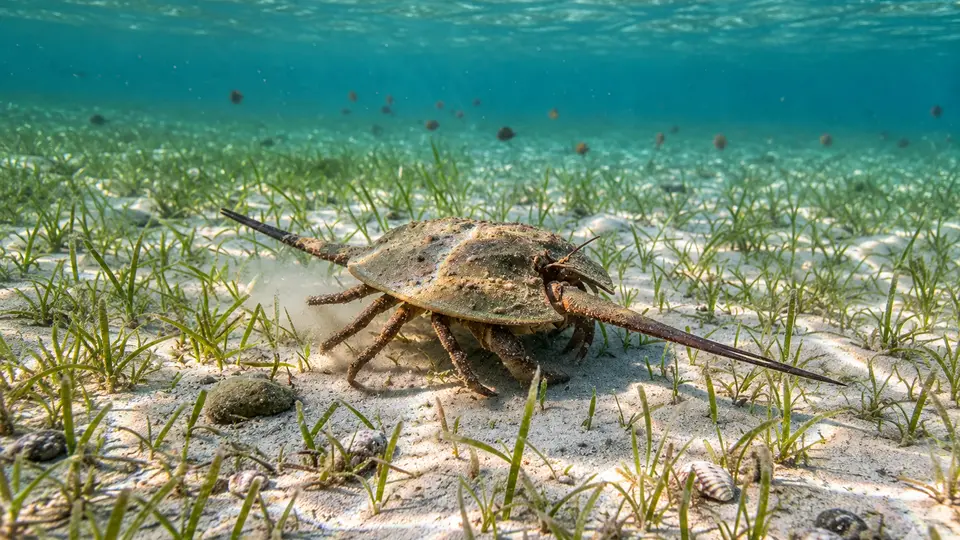
The Atlantic horseshoe crab is an ancient-looking marine arthropod with a domed shell and a long, pointed tail. Despite its common name, it is more closely related to arachnids than to true crabs. Adults spend much of their lives on shallow coastal seabeds, becoming especially noticeable when they approach beaches to spawn. Their eggs support coastal food webs, including migratory shorebirds, while habitat loss and human collection create conservation concerns.

Florida
Sheltered bay beaches and estuarine sand margins can support shore observation, including on both coasts. Access varies by reserve and tide; avoid crossing nesting closures or assuming every open ocean beach is suitable.