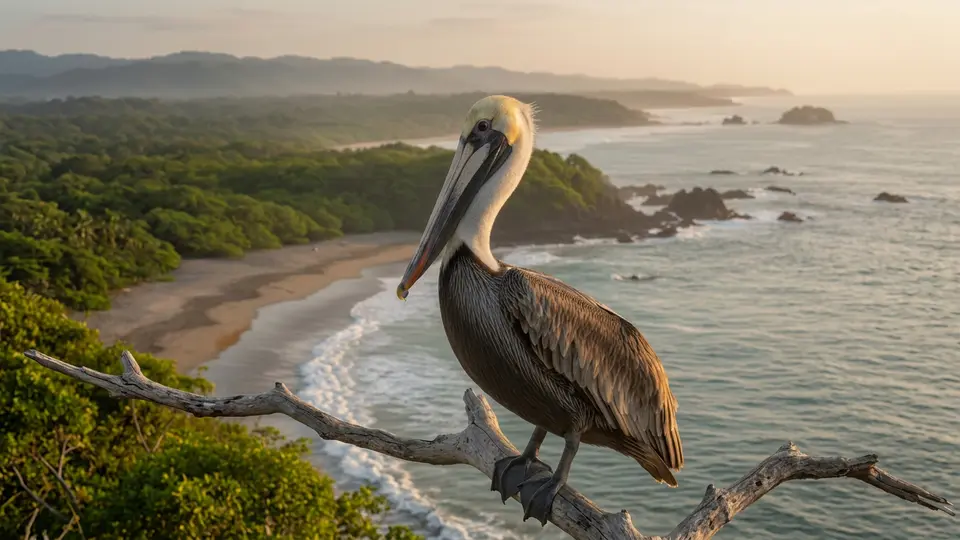
Brown Pelican in its natural habitat, AI illustration

Brown Pelican: where and when to see them

Pelecanus occidentalis

Brown Pelican at a glance

The brown pelican is a large coastal bird famous for plunge-feeding and orderly lines of birds gliding just above the waves. Its enormous bill pouch is used to capture prey and drain water, not to store food for long journeys. Populations occupy American Atlantic and Pacific coasts, including the Galapagos. Recovery from pesticide-related declines is an important conservation success, although fishing-line injuries, disturbance, storms and loss of nesting habitat remain significant local threats.

Behaviour & reproduction

Size
100-137 cm long
Weight
2-5 kg
Lifespan
15-25 years
Status
Least Concern

Brown pelicans patrol shorelines individually or in loose formations, using rising air above waves to reduce flight effort. When prey is located, they fold their wings and strike the water, then drain the bill pouch before swallowing. They rest communally on sandbars, rocks, mangroves and harbour structures. Breeding colonies may be on the ground or in trees, and adults feed chicks by regurgitation. Birds habituated to fishing areas remain vulnerable wildlife, not safe feeding companions. Courtship displays involve the male flying in circles over the female, often presenting her with nesting material. They are generally non-migratory across much of their range but northern populations undertake seasonal movements to warmer climes.

Top wildlife locations

Costa Rica wildlife habitat

Costa Rica

Pacific beaches, estuaries and public harbour viewpoints provide accessible coastal habitat. Birds may rest on offshore rocks or sandbars that should remain undisturbed; Caribbean observations are more locally variable.

Adventure cruises in Costa Rica
Florida wildlife habitat

Florida

Public piers, bayfront paths, beaches and mangrove-fringed estuaries offer accessible views. Nesting islands may be closed or inaccessible, and resting birds on docks still need space from pedestrians and anglers.

Adventure cruises in Florida
Galapagos wildlife habitat

Galapagos

Authorized coastal paths, harbour fronts and deck views near rocky shores offer plausible observation. Nesting mangroves and offshore rocks may be inaccessible, and birds should never be approached for feeding photographs.

Adventure cruises in Galapagos
Mexico wildlife habitat

Mexico

Pacific and Gulf beaches, sheltered bays and public estuary viewpoints provide suitable habitat. Colony islands are often protected or inaccessible, and local abundance varies greatly along Mexico's extensive coastlines.

Adventure cruises in Mexico

Destinations describe the species' habitat, not guaranteed cruise stops. Some animals require an optional inland excursion or are found in restricted reserves.

Fun facts about the Brown Pelican

  • The throat pouch drains water before a fish is swallowed.
  • Brown pelicans often glide in lines close to wave crests.
  • Pesticide-related eggshell thinning once caused severe regional declines.
  • Both parents warm their eggs using their feet.

Best time to see the Brown Pelican

Many tropical populations are present year-round, while northern populations and local numbers shift seasonally. Coastal dry seasons often improve viewing comfort in Central America and Mexico. Florida offers broad year-round opportunities, and Galapagos conditions vary seasonally without producing a single reliable archipelago-wide peak. In the Galapagos, the garua season (cool and dry) can offer excellent viewing opportunities as pelicans are highly active. Conversely, the warm wet season may see a slight reduction in their visibility due to dispersed prey.

Brown Pelican: season matrix by destination

Travel and observation windows vary by region. Highlighted months are an orientation for planning, not confirmed sightings or a guarantee of access.

Costa Rica

The Pacific dry season generally suits shore observation; pelicans can occur throughout the year, and this is not a uniform breeding period.

JanFebMarAprMayJunJulAugSepOctNovDec
Cruise ships in Costa Rica

Florida

Present year-round in suitable coastal habitat; storms, heat, migration and regional breeding schedules alter local numbers and viewing comfort.

JanFebMarAprMayJunJulAugSepOctNovDec
Cruise ships in Florida

Galapagos

Resident throughout the year; changing sea conditions, food supply and local nesting activity affect where birds gather.

JanFebMarAprMayJunJulAugSepOctNovDec
Cruise ships in Galapagos

Mexico

A broadly useful coastal travel window in many regions, not a nationwide breeding season; resident birds also occur outside these months.

JanFebMarAprMayJunJulAugSepOctNovDec
Cruise ships in Mexico

Where the Brown Pelican lives

Shallow coastal seas, bays, estuaries, lagoons and mangrove shorelines are typical habitat. Secure islands and secluded coastal vegetation support colonies, while exposed rocks and sandbars provide resting places. Brown pelicans are strongly coastal and are less associated with inland lakes than American white pelicans. They are often found within a few miles of the coast, rarely venturing far out to sea or far inland. Optimal habitats feature shallow, productive waters with safe nesting sites nearby.

What the Brown Pelican eats

Small to medium-sized schooling fish dominate the diet, with prey varying by coast and season. Pelicans often exploit fish concentrated in shallow water or near the surface. Fishery scraps can attract them, but swallowing hooks or becoming dependent on handouts creates serious welfare problems. They will occasionally consume crustaceans, eggs, and amphibians, particularly when fish are scarce or during breeding season. Unlike some other pelican species, brown pelicans do not typically cooperatively herd fish.

Species at a glance

Common name
Brown Pelican
Scientific name
Pelecanus occidentalis
Animal group
Birds
Size
100-137 cm long
Weight
2-5 kg
Lifespan
15-25 years
Status
Least Concern
Identification
The brown pelican's dark body and plunge-feeding distinguish it from the mostly white American white pelican, while the related Peruvian pelican is substantially larger with more contrasting plumage. Juveniles are uniformly brown on the head and neck, gradually acquiring the adult's white and dark brown plumage over several years. Their large, expandable gular pouch, used for catching prey, is a key field mark even when not plunge-diving.

Brown Pelican: frequently asked questions

Where can I see the Brown Pelican?
Costa Rica, Florida, Galapagos, Mexico. Use shore paths, piers or decks while keeping clear of resting flocks. Never feed pelicans or pull embedded fishing line; report entangled birds to trained rescuers and secure all hooks. A good pair of binoculars will enhance viewing details, especially when observing their distinct plunge-diving from a distance. Observing them at low tide often reveals them foraging in exposed tidal pools or on mudflats.
When is the best time to see the Brown Pelican?
Many tropical populations are present year-round, while northern populations and local numbers shift seasonally. Coastal dry seasons often improve viewing comfort in Central America and Mexico. Florida offers broad year-round opportunities, and Galapagos conditions vary seasonally without producing a single reliable archipelago-wide peak. In the Galapagos, the garua season (cool and dry) can offer excellent viewing opportunities as pelicans are highly active. Conversely, the warm wet season may see a slight reduction in their visibility due to dispersed prey.
How big does the Brown Pelican get?
100-137 cm long. Adult weight: 2-5 kg. Size varies with age, sex and population.
How should I behave around the Brown Pelican?
Use shore paths, piers or decks while keeping clear of resting flocks. Never feed pelicans or pull embedded fishing line; report entangled birds to trained rescuers and secure all hooks. A good pair of binoculars will enhance viewing details, especially when observing their distinct plunge-diving from a distance. Observing them at low tide often reveals them foraging in exposed tidal pools or on mudflats.
What does the Brown Pelican eat?
Small to medium-sized schooling fish dominate the diet, with prey varying by coast and season. Pelicans often exploit fish concentrated in shallow water or near the surface. Fishery scraps can attract them, but swallowing hooks or becoming dependent on handouts creates serious welfare problems. They will occasionally consume crustaceans, eggs, and amphibians, particularly when fish are scarce or during breeding season. Unlike some other pelican species, brown pelicans do not typically cooperatively herd fish.
Are wildlife sightings guaranteed on an adventure cruise?
No. Animals move freely and routes, weather, access restrictions and local conditions influence every outing. Confirm the actual itinerary and shore program before booking.

Compare wildlife in the same destinations

Explore other birds recorded in these destinations. Similar surroundings do not mean the animals share the same habits or viewing season.

Species comparison by animal group and destination
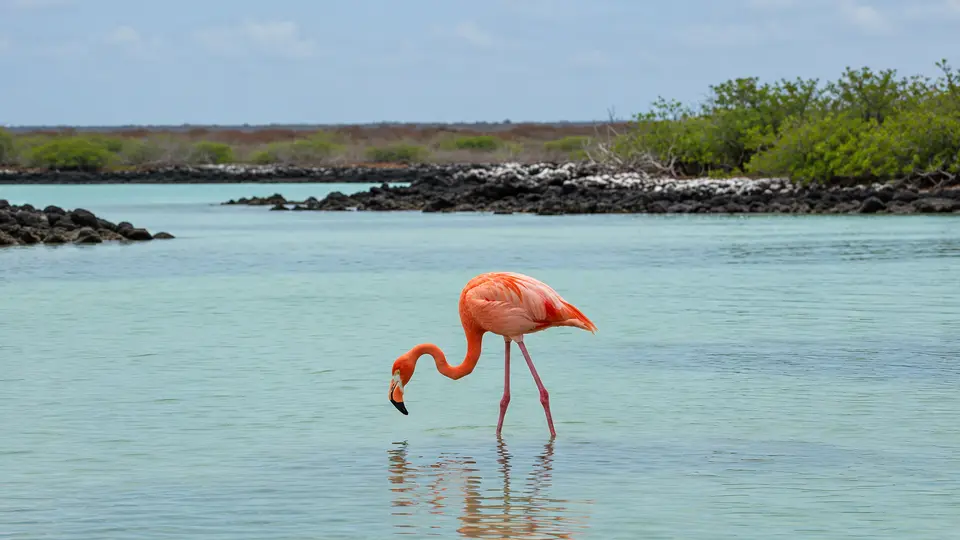
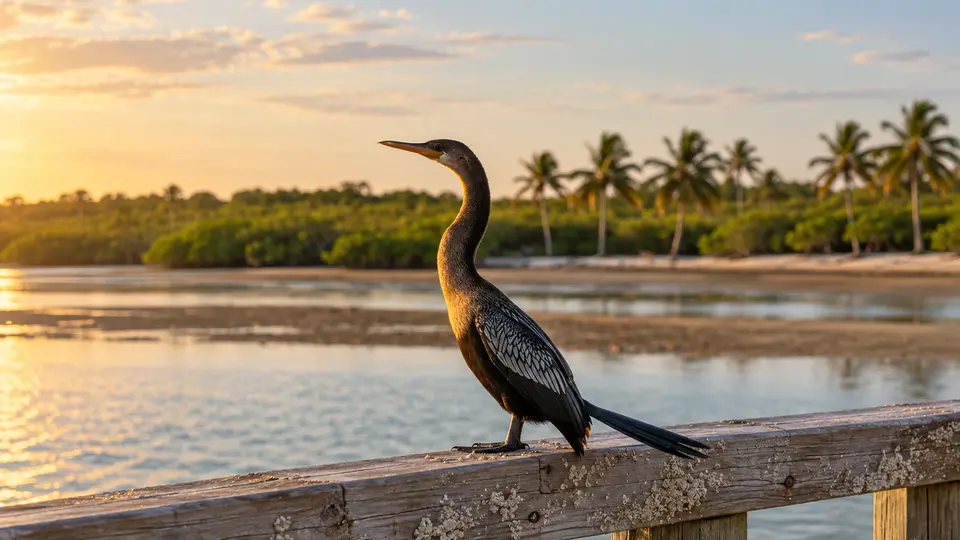
Brown PelicanBrown PelicanAmerican FlamingoAmerican FlamingoAnhingaAnhinga
Animal groupBirdsAnimal groupBirdsAnimal groupBirds
DestinationsCosta Rica, Florida, Galapagos, MexicoDestinationsGalapagos, MexicoDestinationsFlorida
All wildlife destinations
Plan your trip

Find your next wildlife adventure

Compare destinations, shore programs and dates with the animals and habitats you would love to see.

  • Naturalist-led shore excursions
  • Responsible wildlife watching
  • Small expedition ships

Newsletter

Take Blue Rides with you

Adventure cruise offers, last-minute deals and trip inspiration.

Free, unsubscribe anytime. Details: Privacy Policy

Partner with Blue Rides

Affiliate Program

Recommend adventure cruises and earn commission on every confirmed booking.

Share. Track. Earn.

Your footage, our stage

Send us your videos or pictures.

Captured beautiful landscapes or wildlife? Share your videos and pictures with us, we may feature them on Blue Rides.