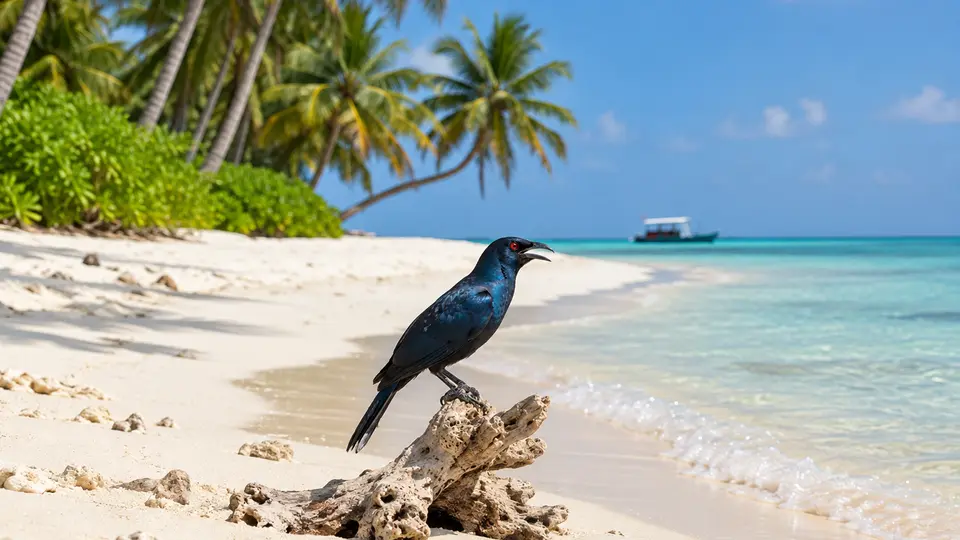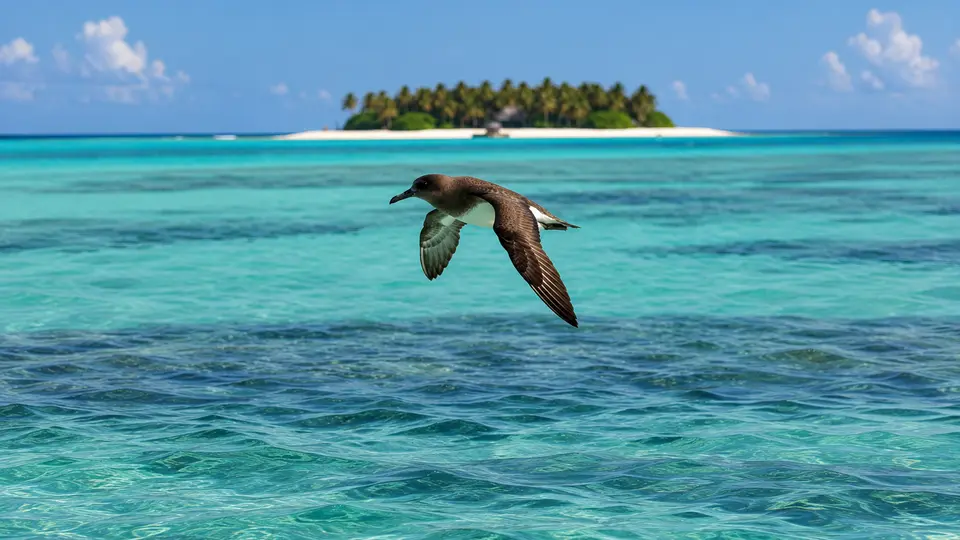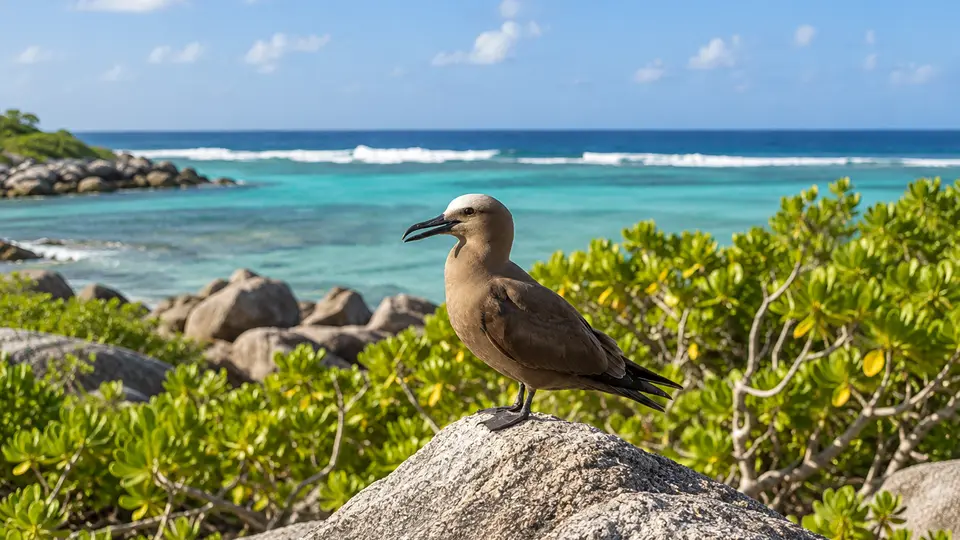
Brown Noddy in its natural habitat, AI illustration

Brown Noddy: where and when to see them

Anous stolidus

Brown Noddy at a glance

The brown noddy is a dark tropical tern with a pale grey crown and a gentle-looking expression. It lives around warm oceans worldwide, nesting on islands and feeding over nearby seas. Its name comes from the nodding movements used in social displays. Although colonies can contain many birds, their dependence on secure nesting habitat makes them sensitive to introduced predators, vegetation loss and disturbance. Island abundance should not be mistaken for universal coastal occurrence.

Behaviour & reproduction

Size
38-45 cm long
Weight
150-270 g
Lifespan
Not reliably established
Status
Least Concern

Brown noddies usually feed by dipping toward the sea surface, often joining mixed seabird flocks over schooling prey. Their flight is steady and buoyant, and birds frequently return to familiar resting places. Pairs exchange nodding displays and may maintain long-lasting partnerships. Nest placement is flexible, ranging from exposed ground and rock ledges to shrubs and trees. Both parents incubate the single egg and provision the chick, defending the immediate nest space from neighbours. Courtship involves bowing and mutual preening, reinforcing pair bonds before egg-laying. Their colonial nesting habits provide safety in numbers, with many pairs nesting in close proximity. Adults are highly territorial around their immediate nest site, actively defending it from intruding neighbours.

Top wildlife locations

Seychelles wildlife habitat

Seychelles

Permitted paths on seabird islands and coastal viewpoints near vegetated shores offer plausible views. Colony access is managed, and some nesting areas are inaccessible or closed to protect ground and tree nests.

Adventure cruises in Seychelles
Maldives wildlife habitat

Maldives

Vegetated outer-island shores and distant deck views near seabird islets provide possible observation habitat. Breeding sites are localized, often inaccessible, and should not be inferred from the presence of ordinary resort vegetation.

Adventure cruises in Maldives
Fiji wildlife habitat

Fiji

Small wooded islands, rocky coastal ledges and offshore deck routes offer potential views. Nesting colonies are localized and may require permission or remain inaccessible, while birds can forage well beyond shore.

Adventure cruises in Fiji

Destinations describe the species' habitat, not guaranteed cruise stops. Some animals require an optional inland excursion or are found in restricted reserves.

Fun facts about the Brown Noddy

  • The genus name Anous comes from an ancient Greek word meaning foolish.
  • Nodding head movements are part of pair displays.
  • Each breeding attempt normally involves one egg.
  • The species can nest on the ground, on ledges or in vegetation.

Best time to see the Brown Noddy

Breeding schedules vary considerably among tropical islands and can be extended or locally seasonal. Select travel months for safe coastal access, then confirm colony attendance with local wardens. Calm conditions improve distant identification, while strong monsoon or trade winds can make exposed viewpoints uncomfortable or inaccessible. Peak breeding activity in the Seychelles and Maldives often occurs during the inter-monsoon periods or dry season when calmer seas facilitate foraging. In Fiji, breeding can be less strictly seasonal, with nesting sometimes observed year-round depending on local food availability. Consult local conservation organizations for up-to-date information on nesting cycles and viewing restrictions.

Brown Noddy: season matrix by destination

Travel and observation windows vary by region. Highlighted months are an orientation for planning, not confirmed sightings or a guarantee of access.

Seychelles

Inter-monsoon periods often suit coastal observation; colony-specific breeding and access schedules must be checked separately.

JanFebMarAprMayJunJulAugSepOctNovDec
Cruise ships in Seychelles

Maldives

Generally calmer, drier travel conditions in many atolls; this does not establish a nationwide nesting season or local presence.

JanFebMarAprMayJunJulAugSepOctNovDec
Cruise ships in Maldives

Fiji

A broadly drier travel period; local breeding schedules and trade-wind exposure determine viewing conditions.

JanFebMarAprMayJunJulAugSepOctNovDec
Cruise ships in Fiji

Where the Brown Noddy lives

Oceanic islands, coral cays and rocky tropical coasts provide nesting and roosting habitat. Unlike some close relatives, brown noddies use a wide range of nest supports, including low vegetation and bare ground. Feeding takes place over surrounding marine waters, sometimes beyond easy viewing distance from shore. These colonial nesters often choose remote, predator-free islands and cays to raise their young. They are frequently found on islands with sparse vegetation, often alongside other seabird species. Their widespread distribution across tropical oceans makes them a common sight on many remote atolls.

What the Brown Noddy eats

Small fish and squid are the principal foods, with other marine prey taken opportunistically. Birds generally collect prey close to the surface rather than making deep pursuits. Feeding flocks can form where predatory fish drive schools upward, but these concentrations move rapidly. They primarily consume small pelagic fish, such as anchovies and sardines, which they snatch from the water's surface. Noddies are adept at exploiting ocean currents and upwellings that bring prey closer to the surface. Their unique feeding strategy involves hovering and surface-dipping rather than plunge-diving for food.

Species at a glance

Common name
Brown Noddy
Scientific name
Anous stolidus
Animal group
Birds
Size
38-45 cm long
Weight
150-270 g
Lifespan
Not reliably established
Status
Least Concern
Identification
Brown noddies are larger and browner with a heavier bill than black noddies, whose darker plumage and more sharply contrasting pale crown can otherwise look similar. The brown noddy's overall dark brown plumage, contrasting with a grayish-white cap that fades into the hindneck, is a key field mark. Their relatively long, pointed wings and wedge-shaped tail are also distinctive in flight. Unlike many other seabirds, they lack a prominent white wing bar or underwing pattern.

Brown Noddy: frequently asked questions

Where can I see the Brown Noddy?
Seychelles, Maldives, Fiji. Watch from marked paths or decks without entering roosts or nesting vegetation. Check the ground carefully where access is authorized, because some nests are exposed and easily overlooked among resting birds. From the deck, look for their characteristic buoyant flight and dark plumage against the whitecaps. When approaching nesting islands, keep noise to a minimum and maintain a respectful distance to avoid disturbing the colony. Binoculars are essential for observing subtle behaviors and individual markings from a distance.
When is the best time to see the Brown Noddy?
Breeding schedules vary considerably among tropical islands and can be extended or locally seasonal. Select travel months for safe coastal access, then confirm colony attendance with local wardens. Calm conditions improve distant identification, while strong monsoon or trade winds can make exposed viewpoints uncomfortable or inaccessible. Peak breeding activity in the Seychelles and Maldives often occurs during the inter-monsoon periods or dry season when calmer seas facilitate foraging. In Fiji, breeding can be less strictly seasonal, with nesting sometimes observed year-round depending on local food availability. Consult local conservation organizations for up-to-date information on nesting cycles and viewing restrictions.
How big does the Brown Noddy get?
38-45 cm long. Adult weight: 150-270 g. Size varies with age, sex and population.
How should I behave around the Brown Noddy?
Watch from marked paths or decks without entering roosts or nesting vegetation. Check the ground carefully where access is authorized, because some nests are exposed and easily overlooked among resting birds. From the deck, look for their characteristic buoyant flight and dark plumage against the whitecaps. When approaching nesting islands, keep noise to a minimum and maintain a respectful distance to avoid disturbing the colony. Binoculars are essential for observing subtle behaviors and individual markings from a distance.
What does the Brown Noddy eat?
Small fish and squid are the principal foods, with other marine prey taken opportunistically. Birds generally collect prey close to the surface rather than making deep pursuits. Feeding flocks can form where predatory fish drive schools upward, but these concentrations move rapidly. They primarily consume small pelagic fish, such as anchovies and sardines, which they snatch from the water's surface. Noddies are adept at exploiting ocean currents and upwellings that bring prey closer to the surface. Their unique feeding strategy involves hovering and surface-dipping rather than plunge-diving for food.
Are wildlife sightings guaranteed on an adventure cruise?
No. Animals move freely and routes, weather, access restrictions and local conditions influence every outing. Confirm the actual itinerary and shore program before booking.

Compare wildlife in the same destinations

Explore other birds recorded in these destinations. Similar surroundings do not mean the animals share the same habits or viewing season.

Species comparison by animal group and destination
Brown NoddyBrown NoddyAsian koelAsian koelAudubon's shearwaterAudubon's shearwater
Animal groupBirdsAnimal groupBirdsAnimal groupBirds
DestinationsSeychelles, Maldives, FijiDestinationsMaldivesDestinationsMaldives
All wildlife destinations
Plan your trip

Find your next wildlife adventure

Compare destinations, shore programs and dates with the animals and habitats you would love to see.

  • Naturalist-led shore excursions
  • Responsible wildlife watching
  • Small expedition ships

Newsletter

Take Blue Rides with you

Adventure cruise offers, last-minute deals and trip inspiration.

Free, unsubscribe anytime. Details: Privacy Policy

Partner with Blue Rides

Affiliate Program

Recommend adventure cruises and earn commission on every confirmed booking.

Share. Track. Earn.

Your footage, our stage

Send us your videos or pictures.

Captured beautiful landscapes or wildlife? Share your videos and pictures with us, we may feature them on Blue Rides.