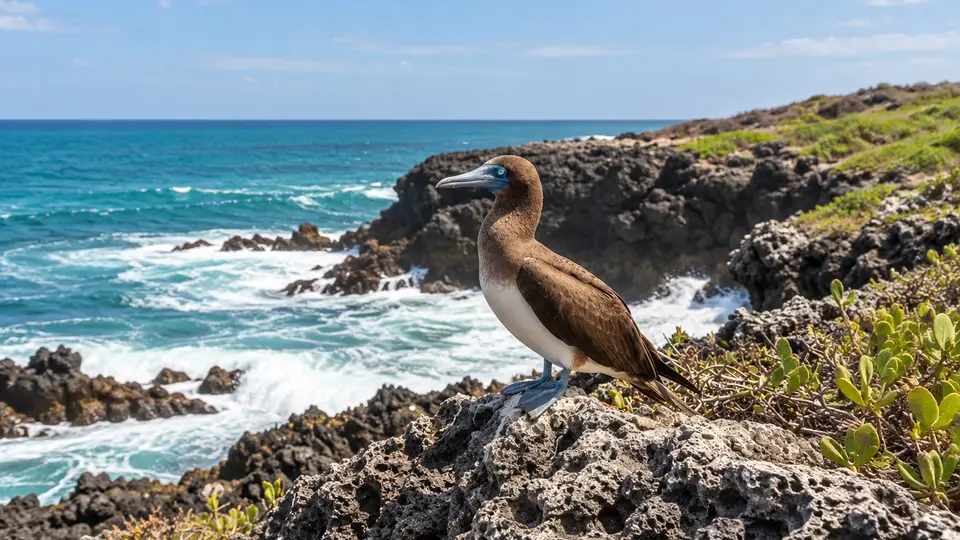
Brown Booby in its natural habitat, AI illustration
Size64-76 cm longLifespanNot reliably establishedStatusCheck current assessment

Brown Booby: where and when to see them

Sula leucogaster

Brown Booby at a glance

The brown booby is a powerful tropical seabird often seen commuting between island colonies and offshore feeding grounds. Adults have chocolate-brown upperparts and a sharply contrasting white belly. Females are generally larger than males, while bare-part colours also differ. Recent taxonomy separates the eastern Pacific Cocos booby from brown booby in some major lists, an important distinction for Costa Rica and eastern Polynesia that older wildlife catalogs may not reflect consistently.

Behaviour & reproduction

Size
64-76 cm long
Weight
0.9-1.5 kg
Lifespan
Not reliably established
Status
Check current assessment

Brown boobies search for prey from the air and plunge into the sea when they locate fish. They may feed in loose groups where predatory fish concentrate prey near the surface. On land, pairs use courtship displays involving the bill, head and wings, then occupy open ground nests. Adults alternate incubation and chick care. Birds can appear remarkably unwary at colonies, but close human approaches may expose eggs or chicks to heat and predators. Pairs maintain strong pair bonds and often return to the same nest site year after year. Chicks are semi-altricial, hatching with sparse down and requiring extensive parental care. While foraging, they employ dynamic soaring, utilizing wind currents to conserve energy during flight.

Top wildlife locations

Costa Rica wildlife habitat

Costa Rica

Pacific headlands and offshore-island decks offer booby watching, but birds historically called brown boobies there are generally Cocos boobies under split treatments. Confirm taxonomy before assigning a distant coastal observation to this key.

Adventure cruises in Costa Rica
Cape Verde wildlife habitat

Cape Verde

Rocky coastal headlands and views toward offshore islets provide plausible watching habitat. Breeding sites may be protected or inaccessible, so use established shore viewpoints rather than seeking access to nesting ground.

Adventure cruises in Cape Verde
Egypt wildlife habitat

Egypt

Red Sea island waters and rocky shore viewpoints offer possible distant observations. Colonies on offshore islands may be restricted or inaccessible, and ordinary mainland beaches should not be assumed to support nesting birds.

Adventure cruises in Egypt
Fiji wildlife habitat

Fiji

Exposed island shores and deck views near rocky offshore islets provide suitable watching opportunities. Colonies are localized and may be inaccessible, so sightings depend on feeding movements rather than visits to nesting areas.

Adventure cruises in Fiji
Polynesia wildlife habitat

Polynesia

Rocky island coasts and offshore decks offer potential views, but occurrence and taxonomy vary across this enormous region. Some eastern populations belong to Cocos booby, and nesting islets may be inaccessible.

Adventure cruises in Polynesia

Destinations describe the species' habitat, not guaranteed cruise stops. Some animals require an optional inland excursion or are found in restricted reserves.

Fun facts about the Brown Booby

  • Females are typically larger than males.
  • All four toes are connected by webbing.
  • A clutch often contains two eggs, but usually only one chick survives.
  • Eastern Pacific birds formerly included here may now be classified as Cocos boobies.

Best time to see the Brown Booby

There is no single breeding season across this wide tropical range. Dry-season travel can improve comfort at coastal viewpoints, while colony attendance follows local conditions. Check regional taxonomy and current colony information, especially in the eastern Pacific, before interpreting older records as evidence for this species. Peak breeding activity in some regions coincides with periods of higher ocean productivity. Monitoring local seabird reports and specific island conservation group updates can provide the most current breeding information. Coastal upwellings or current convergences often concentrate prey, influencing booby presence.

Brown Booby: season matrix by destination

Travel and observation windows vary by region. Highlighted months are an orientation for planning, not confirmed sightings or a guarantee of access.

Costa Rica

No species-specific window is assigned because historical Pacific records may refer to Sula brewsteri rather than Sula leucogaster.

JanFebMarAprMayJunJulAugSepOctNovDec
Cruise ships in Costa Rica

Cape Verde

A generally practical coastal travel window; breeding attendance and winds vary, and birds are not guaranteed near visitor viewpoints.

JanFebMarAprMayJunJulAugSepOctNovDec
Cruise ships in Cape Verde

Egypt

Shoulder seasons avoid the strongest summer heat; this is a coastal travel window rather than a confirmed colony attendance peak.

JanFebMarAprMayJunJulAugSepOctNovDec
Cruise ships in Egypt

Fiji

Generally drier travel months, not a uniform breeding season; trade winds can make exposed coastal watching difficult.

JanFebMarAprMayJunJulAugSepOctNovDec
Cruise ships in Fiji

Polynesia

A single window is unsupported without an island group and taxonomic treatment; local weather and species identity both require confirmation.

JanFebMarAprMayJunJulAugSepOctNovDec
Cruise ships in Polynesia

Where the Brown Booby lives

Tropical and subtropical seas provide feeding habitat, particularly around islands, continental shelves and productive current boundaries. Colonies occupy rocky islets, cliffs and open ground on islands. Roosting birds may use navigation structures, but nesting habitat generally needs limited disturbance and relatively safe access to the sea. They are widely distributed throughout tropical and subtropical oceans globally, rarely straying far from land. While nesting, they prefer remote islands and cays to avoid land-based predators. During non-breeding periods, individuals may range more widely across open ocean waters.

What the Brown Booby eats

Flying fish, other small schooling fish and squid are important prey. Birds capture food through aerial plunges and short submerged pursuits. Feeding sometimes occurs near tuna or other predatory fish, while fishing activity can attract birds but also expose them to hooks and entanglement. They typically hunt within 50 km of their nesting colonies or roosting sites. While primarily feeding on small fish, they are also known to take discards from fishing vessels. This species typically hunts alone or in small groups, less commonly forming large feeding frenzies.

Species at a glance

Common name
Brown Booby
Scientific name
Sula leucogaster
Animal group
Birds
Size
64-76 cm long
Weight
0.9-1.5 kg
Lifespan
Not reliably established
Status
Check current assessment
Identification
Adults differ from masked boobies in their dark head and chest, but separation from the recently split Cocos booby requires geographic context and careful attention to sex-specific head coloration. Juveniles are generally browner overall with a paler belly, lacking the sharp contrast of adults. Sexes are outwardly similar, but females are typically slightly larger than males. The bill is sharp and pointed, often greenish-yellow in males and duller yellow or bluish in females.

Brown Booby: frequently asked questions

Where can I see the Brown Booby?
Costa Rica, Cape Verde, Egypt, Fiji, Polynesia. Observe passing birds from shore or a stable deck, and respect colony exclusion boundaries. Never stand between nesting birds and the sea; retreat if adults leave eggs or chicks exposed. When viewing from a vessel, keep a respectful distance and avoid sudden movements that could disturb birds. Binoculars are essential for observing subtle identification features from a distance. Early morning and late afternoon often provide the best light for photography and observation of active colonies.
When is the best time to see the Brown Booby?
There is no single breeding season across this wide tropical range. Dry-season travel can improve comfort at coastal viewpoints, while colony attendance follows local conditions. Check regional taxonomy and current colony information, especially in the eastern Pacific, before interpreting older records as evidence for this species. Peak breeding activity in some regions coincides with periods of higher ocean productivity. Monitoring local seabird reports and specific island conservation group updates can provide the most current breeding information. Coastal upwellings or current convergences often concentrate prey, influencing booby presence.
How big does the Brown Booby get?
64-76 cm long. Adult weight: 0.9-1.5 kg. Size varies with age, sex and population.
How should I behave around the Brown Booby?
Observe passing birds from shore or a stable deck, and respect colony exclusion boundaries. Never stand between nesting birds and the sea; retreat if adults leave eggs or chicks exposed. When viewing from a vessel, keep a respectful distance and avoid sudden movements that could disturb birds. Binoculars are essential for observing subtle identification features from a distance. Early morning and late afternoon often provide the best light for photography and observation of active colonies.
What does the Brown Booby eat?
Flying fish, other small schooling fish and squid are important prey. Birds capture food through aerial plunges and short submerged pursuits. Feeding sometimes occurs near tuna or other predatory fish, while fishing activity can attract birds but also expose them to hooks and entanglement. They typically hunt within 50 km of their nesting colonies or roosting sites. While primarily feeding on small fish, they are also known to take discards from fishing vessels. This species typically hunts alone or in small groups, less commonly forming large feeding frenzies.
Are wildlife sightings guaranteed on an adventure cruise?
No. Animals move freely and routes, weather, access restrictions and local conditions influence every outing. Confirm the actual itinerary and shore programme before booking.

Compare wildlife in the same destinations

Explore other birds recorded in these destinations. Similar surroundings do not mean the animals share the same habits or viewing season.

Species comparison by animal group and destination
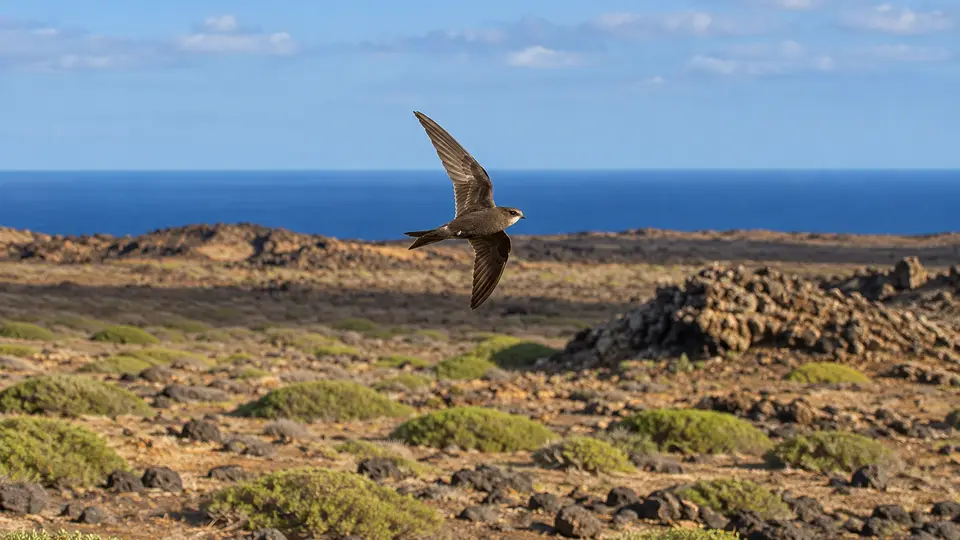
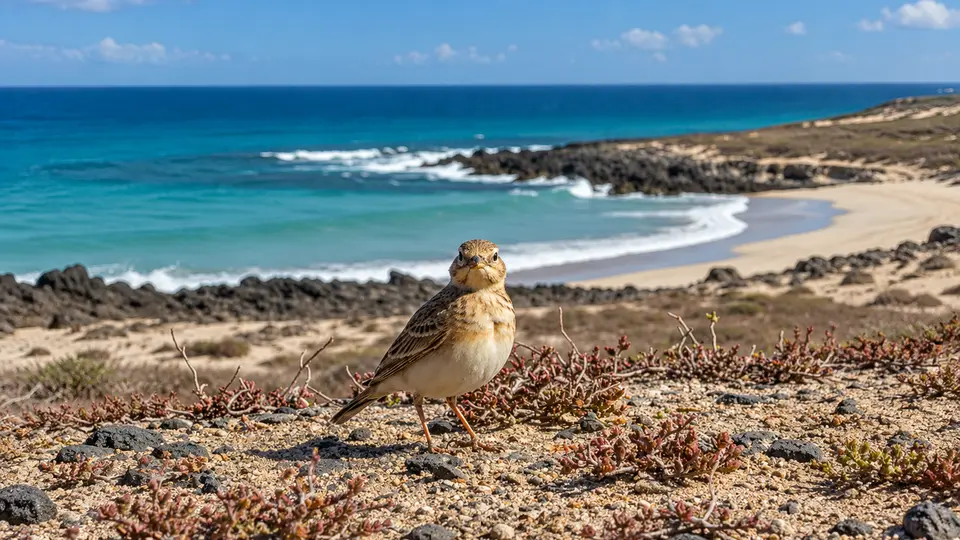
Brown BoobyBrown BoobyAlexander's SwiftAlexander's SwiftBar-tailed LarkBar-tailed Lark
Animal groupBirdsAnimal groupBirdsAnimal groupBirds
DestinationsCosta Rica, Cape Verde, Egypt, Fiji, PolynesiaDestinationsCape VerdeDestinationsCape Verde
All wildlife destinations
Plan your trip

Find your next wildlife adventure

Compare destinations, shore programmes and dates with the animals and habitats you would love to see.

  • Naturalist-led shore excursions
  • Responsible wildlife watching
  • Small expedition ships

Newsletter

Take Blue Rides with you

Adventure cruise offers, last-minute deals and trip inspiration.

Free, unsubscribe anytime. Details: Privacy Policy

Partner with Blue Rides

Affiliate Program

Recommend adventure cruises and earn commission on every confirmed booking.

Share. Track. Earn.