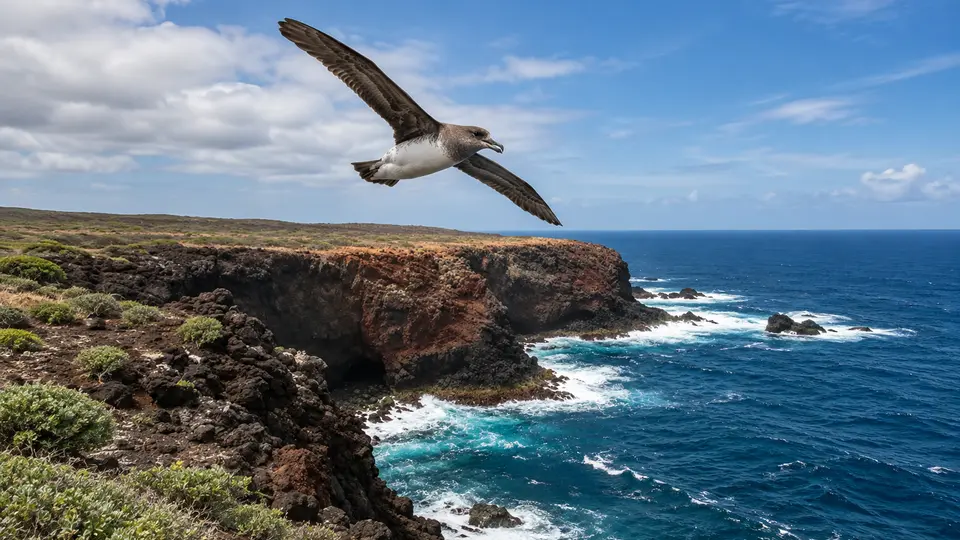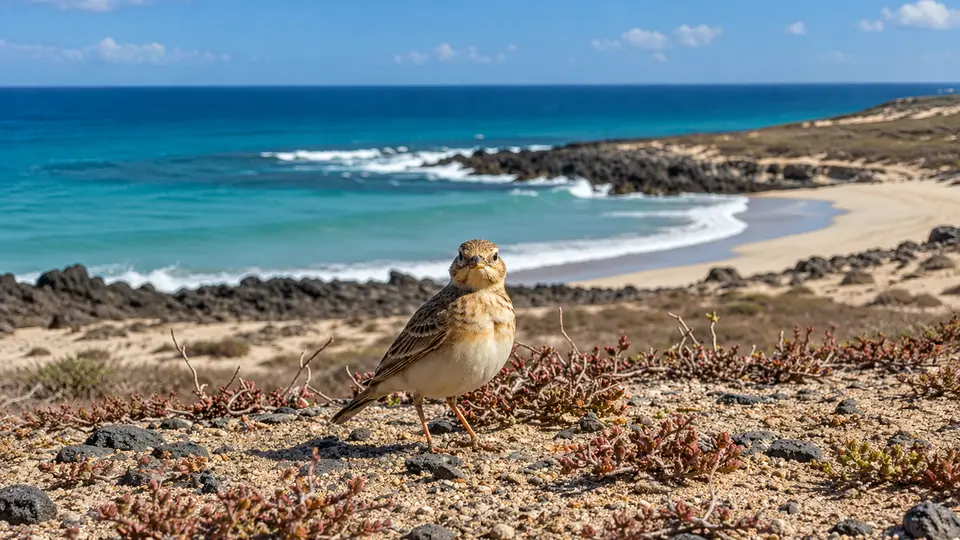
Bar-tailed Lark in its natural habitat, AI illustration

Bar-tailed LarkAmmomanes cincturaWhere and when to see them

Bar-tailed Lark at a glance

The bar-tailed lark is a small desert bird whose sandy plumage blends closely with open, stony ground. Its range extends across parts of North Africa and southwestern Asia, with a distinctive island population in Cape Verde. It favors sparse landscapes rather than lush vegetation. The dark band near the end of its otherwise warm-toned tail becomes particularly helpful when a bird flies a short distance ahead.

Behaviour & reproduction

Size
14–15 cm long
Weight
15–23 g
Lifespan
Not reliably established
Status
Least Concern

Much of its time is spent walking or running over bare ground, pausing to pick up small food items. Birds may occur in pairs or loose groups, especially where seeds are concentrated. Their unobtrusive movements and desert-colored plumage make stationary individuals easy to overlook. Breeding activity responds to suitable conditions, particularly rainfall and resulting food availability, so island observations should not be forced into a rigid annual breeding calendar. When flushed, it typically flies a short distance before landing and resuming its cryptic posture, often running quickly before settling. Its song, a series of pleasant trills and whistles, is often given from a low perch or in a display flight.

Top wildlife locations

Cape Verde wildlife habitat

Cape Verde

Arid coastal plains and gravelly open ground on islands within its local range offer possible walking observations. A short inland excursion may be needed, and suitable-looking habitat does not establish presence.
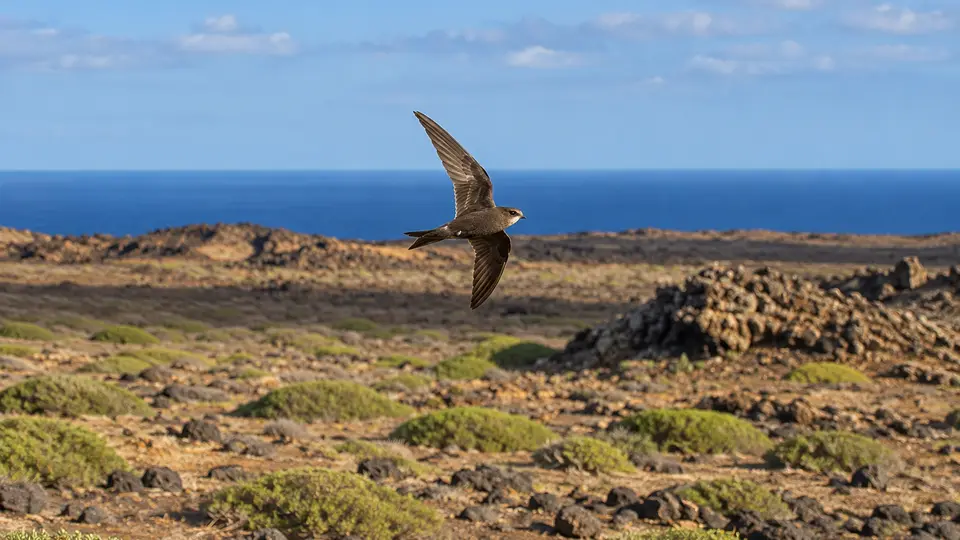
Destinations describe the species' habitat, not guaranteed cruise stops. Some animals require an optional inland excursion or are found in restricted reserves.

Fun facts about the Bar-tailed Lark

  • Cape Verde birds belong to the nominate subspecies, Ammomanes cinctura cinctura.
  • The tail pattern can be much easier to see in flight than on the ground.
  • Its nest is placed on the ground.
  • Rainfall can affect breeding opportunities in its arid habitats.

Best time to see the Bar-tailed Lark

The generally drier months can offer comfortable access to Cape Verde's open landscapes, though wind may complicate observation. Birds are resident where they occur. Rainfall can change feeding distribution and breeding activity, so travel season should not be confused with nesting season. While resident, peak breeding activity often coincides with periods of increased rainfall, which can vary locally and annually. Therefore, assessing current conditions on arrival can be more informative than relying on fixed seasonal calendars.

Bar-tailed Lark: season matrix by destination

Travel and observation windows vary by region. Highlighted months are an orientation for planning, not confirmed sightings or a guarantee of access.

Cape Verde

This is a generally dry-season travel window, not a defined breeding season; local rainfall and island distribution remain important.

JanFebMarAprMayJunJulAugSepOctNovDec
Cruise ships in Cape Verde

Where the Bar-tailed Lark lives

Open sandy or gravelly plains, dry stony ground and sparsely vegetated desert margins are typical habitat. In Cape Verde it occupies suitable arid island landscapes, including some near the coast. Dense scrub, urban waterfronts and lush valleys are less appropriate. Though generally a desert bird, the Bar-tailed Lark readily adapts to agricultural areas, particularly those with fallow fields or dry cultivation. Its preference for open, level ground makes it less likely to be found on steep slopes or in rocky outcrops.

What the Bar-tailed Lark eats

Small seeds form much of the diet, supplemented by insects and other tiny invertebrates. Animal food becomes especially valuable when raising young. Feeding takes place on the ground, with birds selecting items from bare patches and between scattered desert plants. Insects like ants, beetles, and small grasshoppers are commonly consumed, especially during the breeding season to meet the high protein demands of chicks. It often probes the surface with its bill to find hidden food items.

Species at a glance

Common name
Bar-tailed Lark
Scientific name
Ammomanes cinctura
Animal group
Birds
Size
14–15 cm long
Weight
15–23 g
Lifespan
Not reliably established
Status
Least Concern
Identification
Its small size and sharply defined dark terminal tail band distinguish it from the larger desert lark, which lacks the same crisp tail pattern. The pale underparts and sandy upperparts provide excellent camouflage against its desert habitat. A subtle, pale supercilium is often visible and can help distinguish it from other ground-dwelling larks.

Bar-tailed Lark: frequently asked questions

Where can I see the Bar-tailed Lark?
Cape Verde. Scan open ground before walking across it, since nests and resting birds are exceptionally well concealed. Stay on existing tracks, avoid playback and carry water; use distant photographs to assess tail markings without repeatedly flushing birds. Its cryptic plumage provides excellent camouflage against the desert backdrop, making it challenging to spot even when close. Watching for slight movements or the distinctive upright posture when alarmed can aid in detection.
When is the best time to see the Bar-tailed Lark?
The generally drier months can offer comfortable access to Cape Verde's open landscapes, though wind may complicate observation. Birds are resident where they occur. Rainfall can change feeding distribution and breeding activity, so travel season should not be confused with nesting season. While resident, peak breeding activity often coincides with periods of increased rainfall, which can vary locally and annually. Therefore, assessing current conditions on arrival can be more informative than relying on fixed seasonal calendars.
How big does the Bar-tailed Lark get?
14–15 cm long. Adult weight: 15–23 g. Size varies with age, sex and population.
How should I behave around the Bar-tailed Lark?
Scan open ground before walking across it, since nests and resting birds are exceptionally well concealed. Stay on existing tracks, avoid playback and carry water; use distant photographs to assess tail markings without repeatedly flushing birds. Its cryptic plumage provides excellent camouflage against the desert backdrop, making it challenging to spot even when close. Watching for slight movements or the distinctive upright posture when alarmed can aid in detection.
What does the Bar-tailed Lark eat?
Small seeds form much of the diet, supplemented by insects and other tiny invertebrates. Animal food becomes especially valuable when raising young. Feeding takes place on the ground, with birds selecting items from bare patches and between scattered desert plants. Insects like ants, beetles, and small grasshoppers are commonly consumed, especially during the breeding season to meet the high protein demands of chicks. It often probes the surface with its bill to find hidden food items.
Are wildlife sightings guaranteed on an adventure cruise?
No. Animals move freely and routes, weather, access restrictions and local conditions influence every outing. Confirm the actual itinerary and shore program before booking.

Compare wildlife in the same destinations

Explore other birds recorded in these destinations. Similar surroundings do not mean the animals share the same habits or viewing season.

Species comparison by animal group and destination
Bar-tailed LarkBar-tailed LarkAlexander's SwiftAlexander's SwiftBoyd's ShearwaterBoyd's Shearwater
Animal groupBirdsAnimal groupBirdsAnimal groupBirds
DestinationsCape VerdeDestinationsCape VerdeDestinationsCape Verde
All wildlife destinations
Plan your trip

Find your next wildlife adventure

Compare destinations, shore programs and dates with the animals and habitats you would love to see.

  • Naturalist-led shore excursions
  • Responsible wildlife watching
  • Small expedition ships

Newsletter

Take Blue Rides with you

Adventure cruise offers, last-minute deals and trip inspiration.

Free, unsubscribe anytime. Details: Privacy Policy

Partner with Blue Rides

Affiliate Program

Recommend adventure cruises and earn commission on every confirmed booking.

Share. Track. Earn.

Your footage, our stage

Send us your videos or pictures.

Captured remarkable nature or wildlife on your journey? Share it with us, we may feature it on Blue Rides.