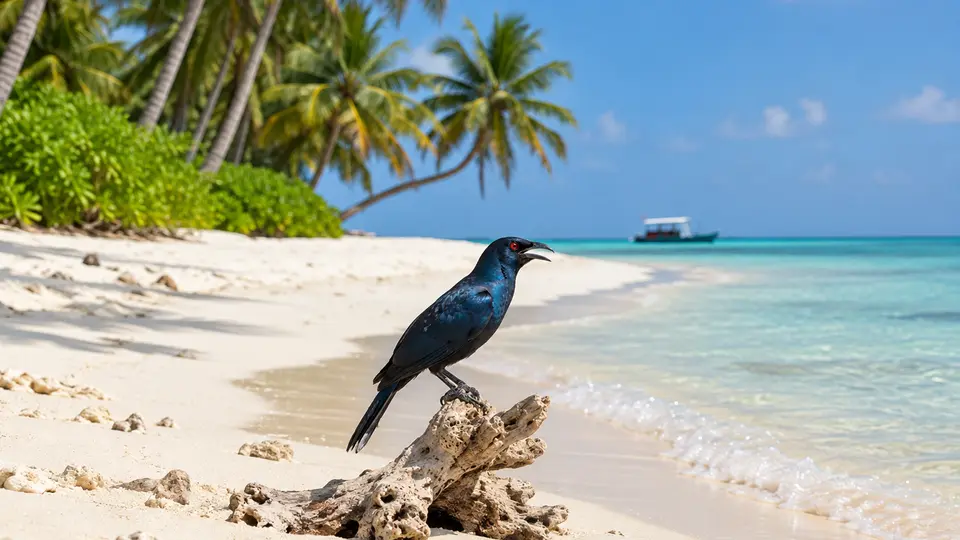
Asian koel in its natural habitat, AI illustration

Asian koel: where and when to see them

Eudynamys scolaceus

Asian koel at a glance

The Asian koel is a large, long-tailed cuckoo associated with wooded settlements, orchards and tropical forest edges. Males are glossy black, while females wear intricate brown-and-white spotting and barring. Its ringing calls often reveal a bird that remains concealed in foliage. Unlike many cuckoos, adults eat predominantly fruit. The species reproduces through brood parasitism, placing eggs in other birds' nests rather than building a nest and raising its own young.

Behaviour & reproduction

Size
39–46 cm long
Weight
190–327 g
Lifespan
Not reliably established
Status
Least Concern

Koels move deliberately through tree crowns, pausing at fruiting branches and sometimes chasing one another during courtship. Males give repeated, rising whistles, while females produce sharper, rapid calls. Females monitor suitable host nests and lay when the hosts' breeding stage is appropriate. Crows are important hosts in parts of the range, although host use differs geographically. Young koels are fed by their foster parents and may remain dependent after leaving the nest. As brood parasites, females carefully observe potential host nests, often focusing on a single nest at a time before laying an egg, typically mimicking a host egg. Young koels grow rapidly, often outcompeting or evicting host nestlings to ensure they receive all the food from their foster parents.

Top wildlife locations

Maldives wildlife habitat

Maldives

Look for wooded gardens and fruiting trees on inhabited islands where access is permitted. Occurrence is uneven across the archipelago, and a coastal visit to a sparsely vegetated resort island may offer little suitable habitat.

Adventure cruises in Maldives

Destinations describe the species' habitat, not guaranteed cruise stops. Some animals require an optional inland excursion or are found in restricted reserves.

Fun facts about the Asian koel

  • Male and female plumages differ so strongly that they can look like different species.
  • Adults can disperse seeds after swallowing fruit.
  • The familiar repeated koel whistle is primarily a male call.
  • Unlike common cuckoo chicks, young Asian koels generally do not evict every nestmate.

Best time to see the Asian koel

Calls usually make koels easier to detect during local breeding activity, but timing varies across their extensive range. In the Maldives, the generally drier December-to-April travel period can suit patient garden birdwatching; it should not be interpreted as a confirmed local breeding season. In the Maldives, though not a confirmed breeding season, the drier months often coincide with increased fruit availability, which can make koels more active and visible. Migration patterns also influence their presence, with some populations undertaking long-distance movements that could bring them to the islands.

Asian koel: season matrix by destination

Travel and observation windows vary by region. Highlighted months are an orientation for planning, not confirmed sightings or a guarantee of access.

Maldives

These months generally offer drier travel conditions, not a verified koel breeding or presence window on every island.

JanFebMarAprMayJunJulAugSepOctNovDec
Cruise ships in Maldives

Where the Asian koel lives

This cuckoo uses lowland woodland, mangrove margins, gardens and cultivated landscapes with substantial tree cover. Fruiting trees and available host birds are more important than untouched forest. On small tropical islands, leafy residential areas can provide suitable feeding and sheltering habitat. In the Maldives, they are often found in coastal vegetation, particularly on islands with human settlements, where food sources like fruit trees are abundant. Their adaptable nature allows them to thrive in human modified environments, unlike many forest specialist birds.

What the Asian koel eats

Adults consume figs, berries and other soft fruits, often swallowing smaller items whole. They also take insects and occasional other animal food. Nestlings receive whatever their host parents bring, so their early diet can differ markedly from the fruit-heavy diet of adults. Their gizzard structure is adapted for processing soft fruits and seeds, which are typically regurgitated, aiding in seed dispersal for many plant species. While insects are consumed, fruits form the bulk of their diet, especially during periods of high fruit availability.

Species at a glance

Common name
Asian koel
Scientific name
Eudynamys scolaceus
Animal group
Birds
Size
39–46 cm long
Weight
190–327 g
Lifespan
Not reliably established
Status
Least Concern
Identification
A male's red eye, pale bill and long tail distinguish it from crows, while the heavily spotted female differs from the more boldly barred female Asian emerald cuckoo. The male's glossy black plumage, contrasting with its bright red eye, is quite striking and distinct from other common black birds in the region. Females have a brown upperpart with white spotting and a pale underside with heavy barring, offering good camouflage among leaves.

Asian koel: frequently asked questions

Where can I see the Asian koel?
Maldives. Listen from public garden paths and scan fruiting trees without approaching active host nests. Avoid call playback, which can disturb both koels and their hosts. Island occurrence and visibility vary, so sightings are not assured. Their loud, distinctive calls, especially from males, are often the first sign of their presence, even when hidden by foliage. Using binoculars to scan tree canopies, particularly around fig and other fruiting trees, can help locate these often elusive birds.
When is the best time to see the Asian koel?
Calls usually make koels easier to detect during local breeding activity, but timing varies across their extensive range. In the Maldives, the generally drier December-to-April travel period can suit patient garden birdwatching; it should not be interpreted as a confirmed local breeding season. In the Maldives, though not a confirmed breeding season, the drier months often coincide with increased fruit availability, which can make koels more active and visible. Migration patterns also influence their presence, with some populations undertaking long-distance movements that could bring them to the islands.
How big does the Asian koel get?
39–46 cm long. Adult weight: 190–327 g. Size varies with age, sex and population.
How should I behave around the Asian koel?
Listen from public garden paths and scan fruiting trees without approaching active host nests. Avoid call playback, which can disturb both koels and their hosts. Island occurrence and visibility vary, so sightings are not assured. Their loud, distinctive calls, especially from males, are often the first sign of their presence, even when hidden by foliage. Using binoculars to scan tree canopies, particularly around fig and other fruiting trees, can help locate these often elusive birds.
What does the Asian koel eat?
Adults consume figs, berries and other soft fruits, often swallowing smaller items whole. They also take insects and occasional other animal food. Nestlings receive whatever their host parents bring, so their early diet can differ markedly from the fruit-heavy diet of adults. Their gizzard structure is adapted for processing soft fruits and seeds, which are typically regurgitated, aiding in seed dispersal for many plant species. While insects are consumed, fruits form the bulk of their diet, especially during periods of high fruit availability.
Are wildlife sightings guaranteed on an adventure cruise?
No. Animals move freely and routes, weather, access restrictions and local conditions influence every outing. Confirm the actual itinerary and shore program before booking.

Compare wildlife in the same destinations

Explore other birds recorded in these destinations. Similar surroundings do not mean the animals share the same habits or viewing season.

Species comparison by animal group and destination
Asian koelAsian koelAudubon's shearwaterAudubon's shearwaterBlack-naped ternBlack-naped tern
Animal groupBirdsAnimal groupBirdsAnimal groupBirds
DestinationsMaldivesDestinationsMaldivesDestinationsMaldives
All wildlife destinations
Plan your trip

Find your next wildlife adventure

Compare destinations, shore programs and dates with the animals and habitats you would love to see.

  • Naturalist-led shore excursions
  • Responsible wildlife watching
  • Small expedition ships

Newsletter

Take Blue Rides with you

Adventure cruise offers, last-minute deals and trip inspiration.

Free, unsubscribe anytime. Details: Privacy Policy

Partner with Blue Rides

Affiliate Program

Recommend adventure cruises and earn commission on every confirmed booking.

Share. Track. Earn.

Your footage, our stage

Send us your videos or pictures.

Captured beautiful landscapes or wildlife? Share your videos and pictures with us, we may feature them on Blue Rides.