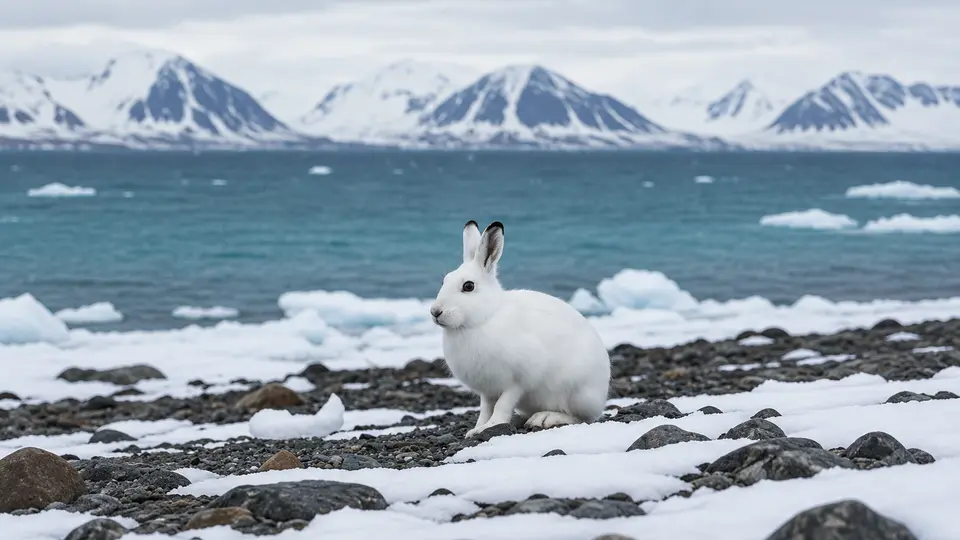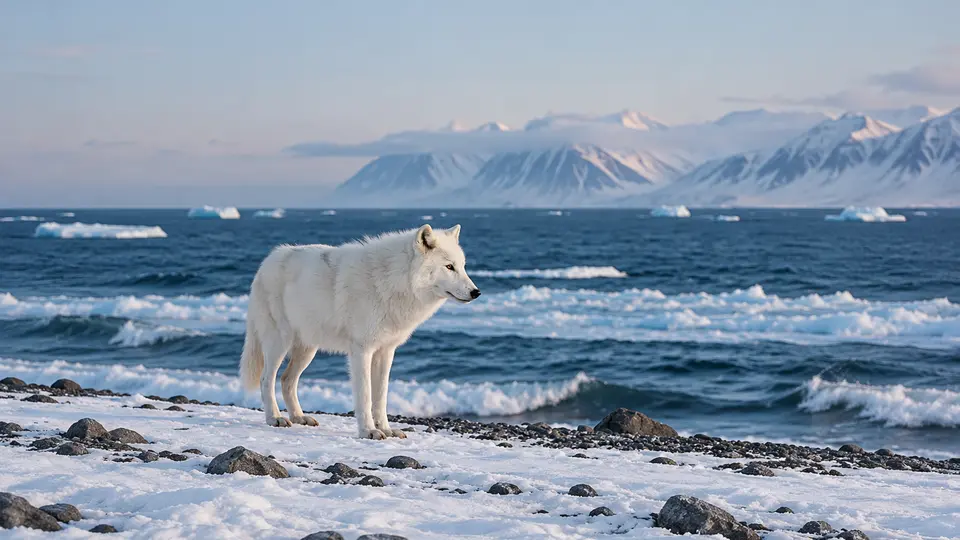
Arctic Wolf in its natural habitat, AI illustration

Arctic WolfCanis lupus arctosWhere and when to see them

Arctic Wolf at a glance

The Arctic wolf is a northern form of the gray wolf, generally associated with Canada's High Arctic islands and northern Greenland. It is usually treated as a subspecies rather than a separate species, although subspecies boundaries are debated. Pale fur is common but does not by itself establish identity. Its remote range supports a demanding predatory life, with widely scattered prey and long periods of darkness, cold and seasonal food shortage.

Behaviour & reproduction

Size
Not reliably established
Weight
Not reliably established
Lifespan
Not reliably established
Status
Assessment varies / Check current assessment

Arctic wolves live in family-based packs that cooperate in raising pups and hunting large prey. Pack size changes with prey supply and family history rather than following a fixed pattern. Wolves communicate through scent, posture and howling, and may travel long distances across open terrain. In places with little human persecution, some show curiosity toward people, but this is not domestication and must never be rewarded with food or close contact. Packs typically consist of an alpha breeding pair, their offspring, and sometimes other non-breeding adults, ranging in size from 2 to 20 individuals. Howling serves various functions, including pack cohesion, territorial declaration, and locating other pack members across vast distances.

Top wildlife locations

Arctic wildlife habitat

Arctic

Coastal plains of Canada's High Arctic and northern Greenland fall within the relevant range. Encounters are exceptionally rare; most habitat is inaccessible on standard visits and may require a dedicated authorized inland excursion.
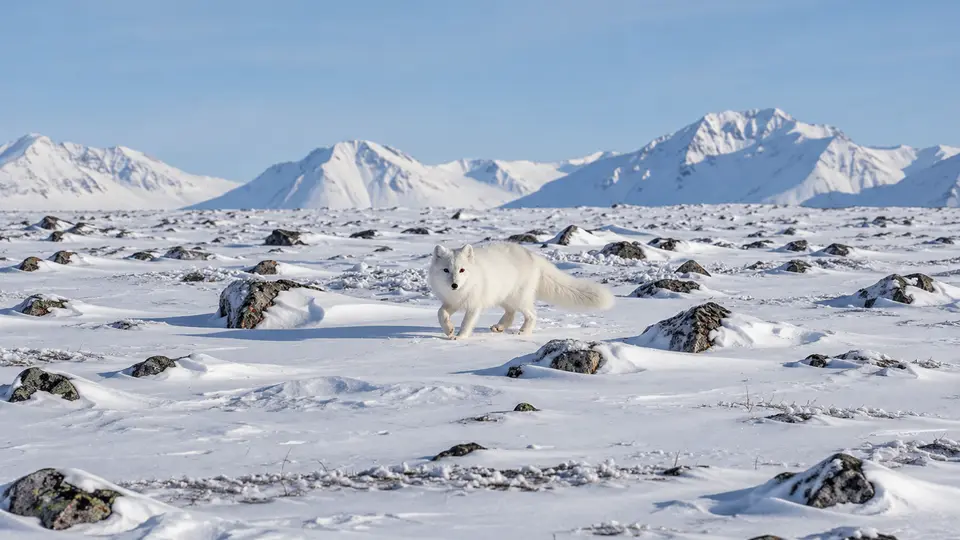
Destinations describe the species' habitat, not guaranteed cruise stops. Some animals require an optional inland excursion or are found in restricted reserves.

Fun facts about the Arctic Wolf

  • Arctic wolves are gray wolves despite their frequently white coats.
  • Family packs may include offspring from more than one year.
  • Howling helps pack members communicate across open terrain.
  • Their High Arctic prey can include both muskoxen and Arctic hares.

Best time to see the Arctic Wolf

June through August is the most realistic period for authorized travel in accessible parts of the High Arctic. Long daylight improves scanning, but wolves range widely and remain very rarely encountered. Denning areas should be avoided regardless of season, and winter access is highly specialized. Prime viewing opportunities occur during late spring and early summer when pups are born and packs are more concentrated around dens. Observing wolves during their summer hunting forays across the open tundra requires patience and often specialized long-range optics.

Arctic Wolf: season matrix by destination

Travel and observation windows vary by region. Highlighted months are an orientation for planning, not confirmed sightings or a guarantee of access.

Arctic

These months describe a possible regional travel window, not a wolf-viewing season; distribution, permissions and logistics sharply limit opportunities.

JanFebMarAprMayJunJulAugSepOctNovDec
Cruise ships in Arctic

Where the Arctic Wolf lives

High Arctic tundra, polar desert, broad valleys and rocky coastal plains provide habitat where sufficient prey persists. Dens occur in sheltered ground or rock features. The relevant range is much narrower than the entire Arctic, and many otherwise suitable-looking coastal landscapes contain few wolves. The species' distribution is circumpolar, found throughout the Canadian Arctic Archipelago, Greenland, and parts of northern Alaska. Their nomadic existence is often tied to the migratory patterns of their main prey species like caribou and muskoxen.

What the Arctic Wolf eats

Muskoxen and Arctic hares are important prey in parts of the High Arctic, with caribou used where available. Wolves also take smaller animals and scavenge carcasses. Cooperative hunting helps them tackle large prey, but successful kills are not assured and food supply fluctuates. Despite their size, wolves are opportunistic hunters, often subsisting on lemmings and voles when larger prey is scarce. They have powerful jaws capable of crushing bone to access marrow, an important nutritional source.

Species at a glance

Common name
Arctic Wolf
Scientific name
Canis lupus arctos
Animal group
Mammals
Size
Not reliably established
Weight
Not reliably established
Lifespan
Not reliably established
Status
Assessment varies / Check current assessment
Identification
A robust build, broad muzzle and relatively short rounded ears distinguish wolves from Arctic foxes, but pale fur alone cannot distinguish the Arctic subspecies from other gray wolves. Arctic wolves typically have a thick, white, or creamy-white coat that provides excellent camouflage against the snowy landscape. Their proportionally shorter legs and stockier build are adaptations for surviving harsh arctic conditions.

Arctic Wolf: frequently asked questions

Where can I see the Arctic Wolf?
Arctic. Observe only at long range with an experienced local guide. Never feed, follow or approach wolves, pups or carcasses; if one approaches, stay together, do not run, and follow the guide's deterrence protocol. Always maintain a respectful distance, using binoculars or spotting scopes for observation to avoid disturbing their natural behaviors. If observing from a vessel, minimize noise and sudden movements on deck to prevent startling the animals.
When is the best time to see the Arctic Wolf?
June through August is the most realistic period for authorized travel in accessible parts of the High Arctic. Long daylight improves scanning, but wolves range widely and remain very rarely encountered. Denning areas should be avoided regardless of season, and winter access is highly specialized. Prime viewing opportunities occur during late spring and early summer when pups are born and packs are more concentrated around dens. Observing wolves during their summer hunting forays across the open tundra requires patience and often specialized long-range optics.
How big does the Arctic Wolf get?
Not reliably established. Adult weight: Not reliably established. Size varies with age, sex and population.
How should I behave around the Arctic Wolf?
Observe only at long range with an experienced local guide. Never feed, follow or approach wolves, pups or carcasses; if one approaches, stay together, do not run, and follow the guide's deterrence protocol. Always maintain a respectful distance, using binoculars or spotting scopes for observation to avoid disturbing their natural behaviors. If observing from a vessel, minimize noise and sudden movements on deck to prevent startling the animals.
What does the Arctic Wolf eat?
Muskoxen and Arctic hares are important prey in parts of the High Arctic, with caribou used where available. Wolves also take smaller animals and scavenge carcasses. Cooperative hunting helps them tackle large prey, but successful kills are not assured and food supply fluctuates. Despite their size, wolves are opportunistic hunters, often subsisting on lemmings and voles when larger prey is scarce. They have powerful jaws capable of crushing bone to access marrow, an important nutritional source.
Are wildlife sightings guaranteed on an adventure cruise?
No. Animals move freely and routes, weather, access restrictions and local conditions influence every outing. Confirm the actual itinerary and shore program before booking.

Compare wildlife in the same destinations

Explore other mammals recorded in these destinations. Similar surroundings do not mean the animals share the same habits or viewing season.

Species comparison by animal group and destination
Arctic WolfArctic WolfArctic FoxArctic FoxArctic HareArctic Hare
Animal groupMammalsAnimal groupMammalsAnimal groupMammals
DestinationsArcticDestinationsNorway, ArcticDestinationsArctic
All wildlife destinations
Plan your trip

Find your next wildlife adventure

Compare destinations, shore programs and dates with the animals and habitats you would love to see.

  • Naturalist-led shore excursions
  • Responsible wildlife watching
  • Small expedition ships

Newsletter

Take Blue Rides with you

Adventure cruise offers, last-minute deals and trip inspiration.

Free, unsubscribe anytime. Details: Privacy Policy

Partner with Blue Rides

Affiliate Program

Recommend adventure cruises and earn commission on every confirmed booking.

Share. Track. Earn.

Your footage, our stage

Send us your videos or pictures.

Captured remarkable nature or wildlife on your journey? Share it with us, we may feature it on Blue Rides.