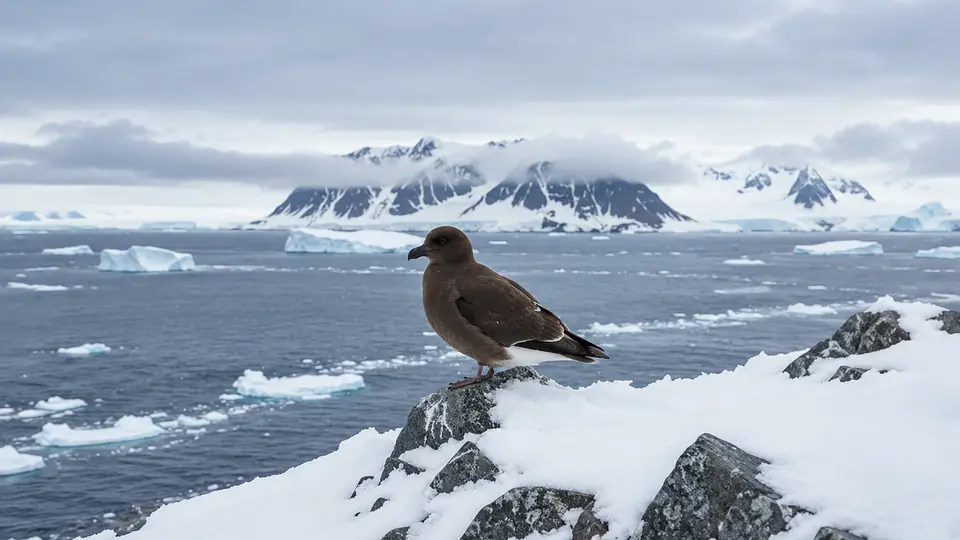
Brown Skua in its natural habitat, AI illustration

Brown Skua: where and when to see them

Stercorarius antarcticus

Brown Skua at a glance

The brown skua is a robust predatory seabird of southern oceans and subantarctic islands, reaching the Antarctic Peninsula region. Its dark plumage and powerful bill suit an adaptable scavenger and hunter around seabird colonies. The name covers geographically differentiated forms whose treatment has varied between taxonomic authorities. It overlaps with the south polar skua in parts of the Antarctic region, where hybridization can make identification more complicated than a simple comparison of colour.

Behaviour & reproduction

Size
50-64 cm long
Weight
1.2-2.2 kg
Lifespan
Not reliably established
Status
Least Concern

Brown skuas patrol colonies, shorelines and coastal waters, taking unattended food and sometimes chasing other seabirds until they release a meal. Breeding pairs defend territories forcefully, including areas containing reliable food resources. They nest on open ground and can direct close aerial passes at intruders. Both adults attend the nest and chicks. Outside breeding, movements become more marine, and birds may roam widely rather than remaining near the islands where they nested. Outside of the breeding season, brown skuas disperse widely across the southern oceans, sometimes reaching warmer waters in search of food. They are strong, agile fliers, capable of sustained flight and often seen harassing other birds mid-air to steal their catches.

Top wildlife locations

Antarctica wildlife habitat

Antarctica

Ice-free Peninsula-region shores and authorized viewpoints near seabird colonies offer possible observations. Many sites are inaccessible or restricted, and similar south polar skuas make expert identification important during coastal visits.

Adventure cruises in Antarctica
Destinations describe the species' habitat, not guaranteed cruise stops. Some animals require an optional inland excursion or are found in restricted reserves.

Fun facts about the Brown Skua

  • Brown and south polar skuas hybridize where their breeding ranges overlap.
  • Some pairs defend feeding territories around portions of seabird colonies.
  • White patches in the outer wings become conspicuous in flight.
  • Skuas obtain food both by hunting and by stealing from other birds.

Best time to see the Brown Skua

November through March is the main visitor season for Antarctic Peninsula waters and overlaps the southern breeding period. Brown skuas are more relevant to maritime and subantarctic sites than deep continental locations. Snow conditions, permitted access and overlap with south polar skuas affect observation and identification. Prime viewing opportunities occur when skuas are actively breeding and raising young, as they are more localized and protective of their territories. From the ship, look for them soaring along the coastlines or resting on icebergs, particularly when near known seabird rookeries.

Brown Skua: season matrix by destination

Travel and observation windows vary by region. Highlighted months are an orientation for planning, not confirmed sightings or a guarantee of access.

Antarctica

The normal austral-summer travel window overlaps breeding activity, but access is weather-dependent and occurrence varies substantially by site.

JanFebMarAprMayJunJulAugSepOctNovDec
Cruise ships in Antarctica

Where the Brown Skua lives

Subantarctic islands and parts of the maritime Antarctic provide breeding habitat, particularly ice-free ground near seabird colonies. Coastal grassland, rocky slopes and open ground are used. At sea, brown skuas occupy southern ocean waters, but they are not characteristic residents of the Antarctic continental interior. They often choose elevated positions on headlands or ridges to provide a good vantage point over their territory and food sources. Their preferred nesting sites are typically located within a few kilometers of the coast, often near penguin or petrel colonies.

What the Brown Skua eats

Fish, carrion, seabird eggs and chicks are major foods, with proportions varying greatly among territories. Some birds specialize in resources associated with particular colonies. They also steal prey from other seabirds, making both active hunting and opportunistic scavenging important parts of their feeding ecology. They are highly opportunistic predators and scavengers, readily consuming anything from krill and small fish to the eggs and chicks of penguins and other seabirds. During the breeding season, they frequently raid unattended nests, demonstrating a keen sense for vulnerable prey.

Species at a glance

Common name
Brown Skua
Scientific name
Stercorarius antarcticus
Animal group
Birds
Size
50-64 cm long
Weight
1.2-2.2 kg
Lifespan
Not reliably established
Status
Least Concern
Identification
Brown skuas are generally bulkier and heavier-billed than south polar skuas, but plumage overlap and hybridization mean some Antarctic-region birds cannot be identified confidently from appearance alone. Key physical traits for distinguishing brown skuas include their overall dark brown plumage, often with a paler nape, and prominent white wing flashes visible in flight. Juveniles tend to be even darker and more uniformly colored, which can make identification challenging.

Brown Skua: frequently asked questions

Where can I see the Brown Skua?
Antarctica. Follow expedition staff on authorized routes and give territorial birds generous space. If a skua alarms or makes close passes, retreat along your approach route rather than continuing toward a nest. Be mindful that skuas are intelligent and can be bold, especially when food is present or they perceive a threat to their nest. Their aggressive territorial displays, including loud calls and diving attacks, are clear signals to maintain your distance.
When is the best time to see the Brown Skua?
November through March is the main visitor season for Antarctic Peninsula waters and overlaps the southern breeding period. Brown skuas are more relevant to maritime and subantarctic sites than deep continental locations. Snow conditions, permitted access and overlap with south polar skuas affect observation and identification. Prime viewing opportunities occur when skuas are actively breeding and raising young, as they are more localized and protective of their territories. From the ship, look for them soaring along the coastlines or resting on icebergs, particularly when near known seabird rookeries.
How big does the Brown Skua get?
50-64 cm long. Adult weight: 1.2-2.2 kg. Size varies with age, sex and population.
How should I behave around the Brown Skua?
Follow expedition staff on authorized routes and give territorial birds generous space. If a skua alarms or makes close passes, retreat along your approach route rather than continuing toward a nest. Be mindful that skuas are intelligent and can be bold, especially when food is present or they perceive a threat to their nest. Their aggressive territorial displays, including loud calls and diving attacks, are clear signals to maintain your distance.
What does the Brown Skua eat?
Fish, carrion, seabird eggs and chicks are major foods, with proportions varying greatly among territories. Some birds specialize in resources associated with particular colonies. They also steal prey from other seabirds, making both active hunting and opportunistic scavenging important parts of their feeding ecology. They are highly opportunistic predators and scavengers, readily consuming anything from krill and small fish to the eggs and chicks of penguins and other seabirds. During the breeding season, they frequently raid unattended nests, demonstrating a keen sense for vulnerable prey.
Are wildlife sightings guaranteed on an adventure cruise?
No. Animals move freely and routes, weather, access restrictions and local conditions influence every outing. Confirm the actual itinerary and shore programme before booking.

Compare wildlife in the same destinations

Explore other birds recorded in these destinations. Similar surroundings do not mean the animals share the same habits or viewing season.

Species comparison by animal group and destination
Brown SkuaBrown SkuaAdélie PenguinAdélie PenguinAntarctic PetrelAntarctic Petrel
Animal groupBirdsAnimal groupBirdsAnimal groupBirds
DestinationsAntarcticaDestinationsAntarcticaDestinationsAntarctica
All wildlife destinations
Plan your trip

Find your next wildlife adventure

Compare destinations, shore programmes and dates with the animals and habitats you would love to see.

  • Naturalist-led shore excursions
  • Responsible wildlife watching
  • Small expedition ships

Newsletter

Take Blue Rides with you

Adventure cruise offers, last-minute deals and trip inspiration.

Free, unsubscribe anytime. Details: Privacy Policy

Partner with Blue Rides

Affiliate Program

Recommend adventure cruises and earn commission on every confirmed booking.

Share. Track. Earn.