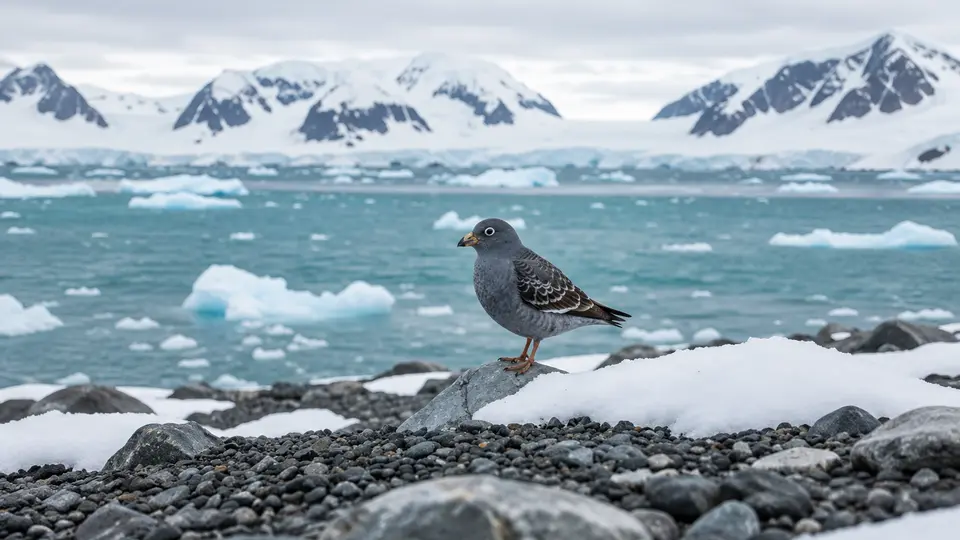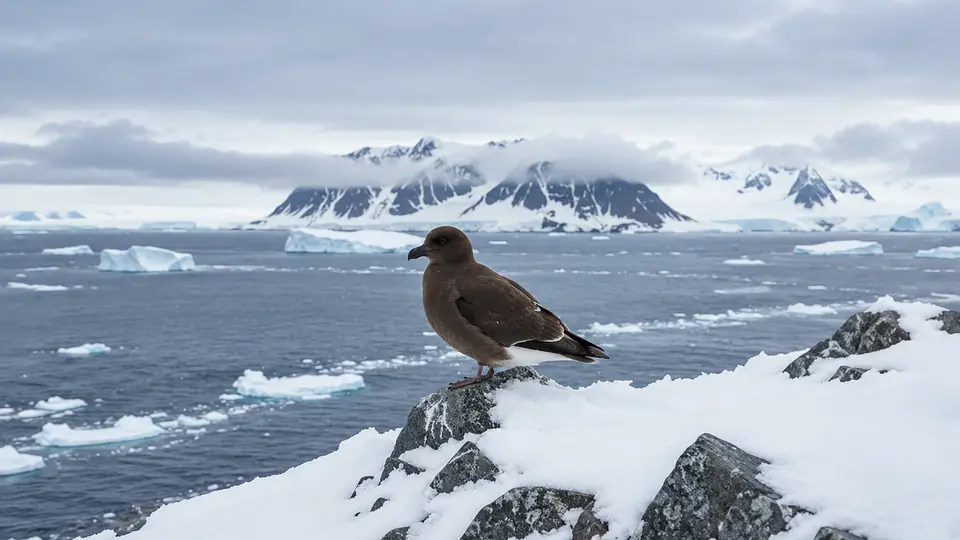
Antarctic Petrel in its natural habitat, AI illustration
Size40-46 cm body lengthLifespanNot reliably establishedStatusLeast Concern

Antarctic Petrel: where and when to see them

Thalassoica antarctica

Antarctic Petrel at a glance

The Antarctic petrel is a boldly patterned brown-and-white seabird closely tied to the Antarctic continent and surrounding ice-zone waters. Unlike many petrels that breed on vegetated islands, it nests on exposed rock, sometimes far inland. Its striking wing pattern can be visible from a ship's deck as it banks over the sea. Nevertheless, breeding colonies are generally remote, and the species is not a predictable feature of standard coastal visits.

Behaviour & reproduction

Size
40-46 cm body length
Weight
500-800 g
Lifespan
Not reliably established
Status
Least Concern

Antarctic petrels gather in colonies on rocky slopes and ledges, where pairs share incubation of a single egg and subsequent chick care. At sea they alternate flapping with gliding, often concentrating around productive ice edges. They take prey near the surface and can make short plunges after food. Adults defend nest sites with oily stomach contents, so disturbing colonies risks both stress to birds and contamination of nearby plumage. Antarctic petrels are known for their spectacular mass foraging events, where thousands of birds can gather at productive ice edges. They are highly colonial breeders, with some colonies numbering in the hundreds of thousands of pairs. Pairs often exhibit strong site fidelity, returning to the same nesting ledges year after year.

Top wildlife locations

Antarctica wildlife habitat

Antarctica

Deck views are possible near Antarctic pack ice, while coastal nesting habitat consists of remote snow-free cliffs. Most colonies are inaccessible on standard itineraries, and sightings along commonly visited Peninsula routes can be scarce.

Adventure cruises in Antarctica
Destinations describe the species' habitat, not guaranteed cruise stops. Some animals require an optional inland excursion or are found in restricted reserves.

Fun facts about the Antarctic Petrel

  • It is the only living species in the genus Thalassoica.
  • Some colonies lie far inland on exposed Antarctic rock.
  • Each breeding attempt normally involves a single egg.
  • Like other petrels, it has tubular nostrils and produces energy-rich stomach oil.

Best time to see the Antarctic Petrel

November through February overlaps colony activity and the main period of accessible Antarctic travel. Distant deck observations depend strongly on route and proximity to suitable ice-zone waters. Many important breeding areas remain inaccessible to ordinary visitors throughout the year, regardless of season. Prime viewing opportunities often coincide with their breeding season, as birds are concentrated at colonies or foraging nearby. However, large aggregations at sea can be observed during summer months when foraging along the ice edge, sometimes involving thousands of individuals. Early austral summer offers the best chance to see adults returning to or establishing their nests.

Antarctic Petrel: season matrix by destination

Travel and observation windows vary by region. Highlighted months are an orientation for planning, not confirmed sightings or a guarantee of access.

Antarctica

This window combines austral-summer access with breeding activity, but route and ice conditions matter more than month for most visitors.

JanFebMarAprMayJunJulAugSepOctNovDec
Cruise ships in Antarctica

Where the Antarctic Petrel lives

Breeding sites are snow-free cliffs, scree slopes and rocky outcrops on the Antarctic continent and nearby islands, including sites well inland. Feeding habitat lies in cold Southern Ocean waters, especially the seasonal pack-ice zone, leads and productive waters around retreating ice. Coastal breeding colonies are typically found on exposed, north-facing slopes, which allows for maximum solar exposure to melt snow. While most colonies are coastal, some significant breeding sites are located hundreds of kilometers inland in nunatak regions of the Transantarctic Mountains. These inland sites are often associated with geothermal activity, providing snow-free areas for nesting.

What the Antarctic Petrel eats

Antarctic krill, fish and squid form the principal diet, with their relative importance varying by locality and prey availability. Birds seize food at the surface or just below it. Concentrations of prey around sea ice can attract substantial feeding flocks. Their diet composition often reflects the abundance of krill, especially during the breeding season when energy demands are high. During winter months, when krill may be less accessible, the proportion of fish and cephalopods in their diet can increase. This dietary flexibility allows them to adapt to seasonal variations in prey availability across the Southern Ocean.

Species at a glance

Common name
Antarctic Petrel
Scientific name
Thalassoica antarctica
Animal group
Birds
Size
40-46 cm body length
Weight
500-800 g
Lifespan
Not reliably established
Status
Least Concern
Identification
Dark brown upperparts contrast with broad white rear wing panels and a white tail with a dark tip, separating it from the grayer Antarctic fulmar. The species is medium-sized, measuring around 40-46 cm in length with a wingspan of 100-110 cm. Its distinctive flight profile, with deep wing beats alternated with long glides, can also aid identification at sea. The sharp contrast between the dark cap and the white face is another helpful field mark.

Antarctic Petrel: frequently asked questions

Where can I see the Antarctic Petrel?
Antarctica. Use binoculars from a stable deck or authorized coastal viewpoint. Do not approach nesting ledges: startled birds may eject defensive stomach oil, and leaving nests exposed can increase egg or chick losses. When observing colonies from a distance, notice the characteristic white plumage that helps them blend with snowy backgrounds, making distant identification challenging without binoculars. Respect designated viewing boundaries to avoid causing disturbance, especially during the sensitive incubation and chick-rearing periods. Always follow expedition staff instructions regarding proximity to wildlife.
When is the best time to see the Antarctic Petrel?
November through February overlaps colony activity and the main period of accessible Antarctic travel. Distant deck observations depend strongly on route and proximity to suitable ice-zone waters. Many important breeding areas remain inaccessible to ordinary visitors throughout the year, regardless of season. Prime viewing opportunities often coincide with their breeding season, as birds are concentrated at colonies or foraging nearby. However, large aggregations at sea can be observed during summer months when foraging along the ice edge, sometimes involving thousands of individuals. Early austral summer offers the best chance to see adults returning to or establishing their nests.
How big does the Antarctic Petrel get?
40-46 cm body length. Adult weight: 500-800 g. Size varies with age, sex and population.
How should I behave around the Antarctic Petrel?
Use binoculars from a stable deck or authorized coastal viewpoint. Do not approach nesting ledges: startled birds may eject defensive stomach oil, and leaving nests exposed can increase egg or chick losses. When observing colonies from a distance, notice the characteristic white plumage that helps them blend with snowy backgrounds, making distant identification challenging without binoculars. Respect designated viewing boundaries to avoid causing disturbance, especially during the sensitive incubation and chick-rearing periods. Always follow expedition staff instructions regarding proximity to wildlife.
What does the Antarctic Petrel eat?
Antarctic krill, fish and squid form the principal diet, with their relative importance varying by locality and prey availability. Birds seize food at the surface or just below it. Concentrations of prey around sea ice can attract substantial feeding flocks. Their diet composition often reflects the abundance of krill, especially during the breeding season when energy demands are high. During winter months, when krill may be less accessible, the proportion of fish and cephalopods in their diet can increase. This dietary flexibility allows them to adapt to seasonal variations in prey availability across the Southern Ocean.
Are wildlife sightings guaranteed on an adventure cruise?
No. Animals move freely and routes, weather, access restrictions and local conditions influence every outing. Confirm the actual itinerary and shore programme before booking.

Compare wildlife in the same destinations

Explore other birds recorded in these destinations. Similar surroundings do not mean the animals share the same habits or viewing season.

Species comparison by animal group and destination
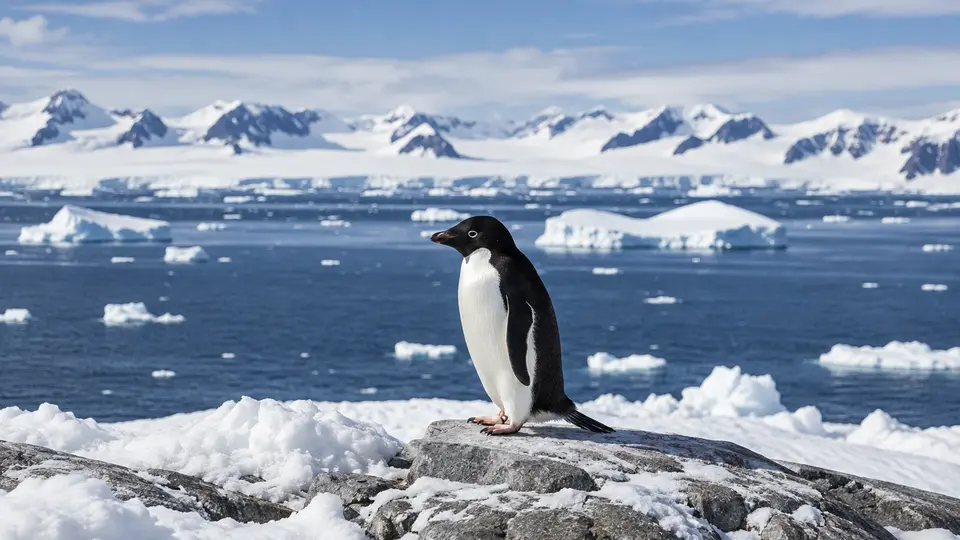
Antarctic PetrelAntarctic PetrelAdélie PenguinAdélie PenguinAntarctic PrionAntarctic Prion
Animal groupBirdsAnimal groupBirdsAnimal groupBirds
DestinationsAntarcticaDestinationsAntarcticaDestinationsAntarctica
All wildlife destinations
Plan your trip

Find your next wildlife adventure

Compare destinations, shore programmes and dates with the animals and habitats you would love to see.

  • Naturalist-led shore excursions
  • Responsible wildlife watching
  • Small expedition ships

Newsletter

Take Blue Rides with you

Adventure cruise offers, last-minute deals and trip inspiration.

Free, unsubscribe anytime. Details: Privacy Policy

Partner with Blue Rides

Affiliate Program

Recommend adventure cruises and earn commission on every confirmed booking.

Share. Track. Earn.