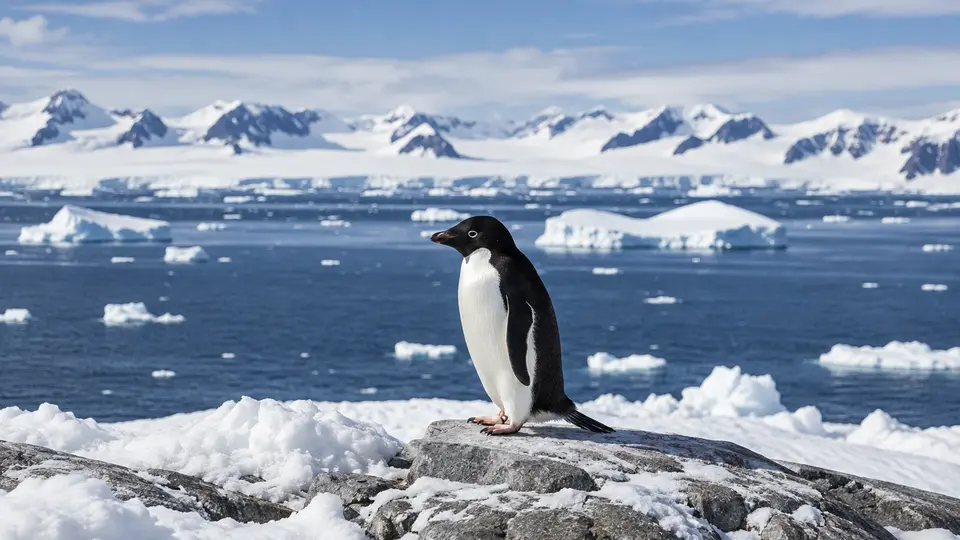
Adélie Penguin in its natural habitat, AI illustration
Size46-71 cm tallLifespan10-20 yearsStatusLeast Concern

Adélie Penguin: where and when to see them

Pygoscelis adeliae

Adélie Penguin at a glance

The Adélie penguin is a small, strongly built Antarctic seabird with a black head, white belly and conspicuous white eye rings. It breeds around the Antarctic continent, often forming crowded colonies on exposed coastal ground. Although its breeding life unfolds on land, it depends on marine food and spends much of the year associated with sea ice. Population trends differ substantially between Antarctic regions as ice conditions and food availability change.

Behaviour & reproduction

Size
46-71 cm tall
Weight
3.5-6 kg
Lifespan
10-20 years
Status
Least Concern

Adélies return to nesting areas in spring, where partners assemble pebble nests and defend small territories from neighbours. Both parents incubate the eggs and alternate feeding trips after hatching. Older chicks gather in groups called crèches while adults forage. Birds communicate through loud calls and upright displays, and frequently follow established routes between colony and sea. Outside breeding, they disperse widely through the seasonal sea-ice zone rather than remaining beside their nesting grounds. Adélies are known for their feisty and territorial nature within the colony, often engaging in pecking and squawking with neighbors over nest materials or space. Their strong fidelity to breeding sites means they often return to the same colony and even the same nest scrape year after year.

Top wildlife locations

Antarctica wildlife habitat

Antarctica

Approved visits to ice-free Antarctic coastal colonies can provide shore views, while decks may overlook birds on beaches or ice. Access is seasonal and tightly managed, and individual colonies may be inaccessible.

Adventure cruises in Antarctica
Destinations describe the species' habitat, not guaranteed cruise stops. Some animals require an optional inland excursion or are found in restricted reserves.

Fun facts about the Adélie Penguin

  • Its scientific genus name means rump-tailed, referring to its stiff tail feathers.
  • Nest-building adults sometimes take pebbles from neighbouring nests.
  • Both sexes incubate the usual two-egg clutch.
  • Adélies can travel by sliding on their bellies across suitable snow.

Best time to see the Adélie Penguin

November through February offers the principal Antarctic visitor season and access to breeding activity. Courtship and incubation occur earlier, while chicks become more conspicuous later in summer. Local ice, weather, colony restrictions and expedition routing determine whether shore observation is possible. Early November sees the arrival of adults and courtship rituals beginning, offering opportunities to observe pair bonding. By late December and January, newly hatched chicks are visible, rapidly growing on their parents' frequent feeding trips.

Adélie Penguin: season matrix by destination

Travel and observation windows vary by region. Highlighted months are an orientation for planning, not confirmed sightings or a guarantee of access.

Antarctica

These are the main visitor months overlapping breeding activity, not a guarantee of access to an Adélie colony.

JanFebMarAprMayJunJulAugSepOctNovDec
Cruise ships in Antarctica

Where the Adélie Penguin lives

Breeding colonies occupy ice-free rocky coasts, offshore islands and raised beaches near accessible water. At sea, Adélies use coastal and offshore Antarctic waters, particularly areas influenced by seasonal pack ice. Their distribution reflects both nesting-ground availability and changing access to marine feeding areas. These colonial nesters prefer accessible slopes for breeding and rely on the availability of open water for foraging. Satellite imagery and historical records indicate that their colonies are often found in areas that have been ice-free for extended periods.

What the Adélie Penguin eats

Antarctic krill, ice krill and small fish form the main diet, with proportions varying by region and season. Antarctic silverfish can be especially important in some populations. Parents bring captured food back in their stomachs and regurgitate it for chicks. Their diet largely consists of zooplankton, with krill being the primary component. Adélie penguins are considered specialist krill predators, playing a significant role in the Antarctic food web.

Species at a glance

Common name
Adélie Penguin
Scientific name
Pygoscelis adeliae
Animal group
Birds
Size
46-71 cm tall
Weight
3.5-6 kg
Lifespan
10-20 years
Status
Least Concern
Identification
A black head with a narrow white eye ring separates the Adélie from the white-capped gentoo and the chinstrap penguin’s black facial band. Adélies are medium-sized penguins, typically standing around 70-73 cm tall and weighing 3.8-8.2 kg depending on the season. Their solid black back extends to a prominent tail, giving them a slightly hunched appearance when standing.

Adélie Penguin: frequently asked questions

Where can I see the Adélie Penguin?
Antarctica. Watch from approved paths or designated deck positions, leaving penguin routes completely clear. Never approach nests or chicks, and follow the guide’s required distance. Retreat if birds hesitate, change direction or interrupt normal behaviour. When viewing from zodiacs, maintain a slow and steady approach to avoid disturbing rafting or swimming penguins. Keep noise to a minimum and ensure engine use is considerate of wildlife.
When is the best time to see the Adélie Penguin?
November through February offers the principal Antarctic visitor season and access to breeding activity. Courtship and incubation occur earlier, while chicks become more conspicuous later in summer. Local ice, weather, colony restrictions and expedition routing determine whether shore observation is possible. Early November sees the arrival of adults and courtship rituals beginning, offering opportunities to observe pair bonding. By late December and January, newly hatched chicks are visible, rapidly growing on their parents' frequent feeding trips.
How big does the Adélie Penguin get?
46-71 cm tall. Adult weight: 3.5-6 kg. Size varies with age, sex and population.
How should I behave around the Adélie Penguin?
Watch from approved paths or designated deck positions, leaving penguin routes completely clear. Never approach nests or chicks, and follow the guide’s required distance. Retreat if birds hesitate, change direction or interrupt normal behaviour. When viewing from zodiacs, maintain a slow and steady approach to avoid disturbing rafting or swimming penguins. Keep noise to a minimum and ensure engine use is considerate of wildlife.
What does the Adélie Penguin eat?
Antarctic krill, ice krill and small fish form the main diet, with proportions varying by region and season. Antarctic silverfish can be especially important in some populations. Parents bring captured food back in their stomachs and regurgitate it for chicks. Their diet largely consists of zooplankton, with krill being the primary component. Adélie penguins are considered specialist krill predators, playing a significant role in the Antarctic food web.
Are wildlife sightings guaranteed on an adventure cruise?
No. Animals move freely and routes, weather, access restrictions and local conditions influence every outing. Confirm the actual itinerary and shore programme before booking.

Compare wildlife in the same destinations

Explore other birds recorded in these destinations. Similar surroundings do not mean the animals share the same habits or viewing season.

Species comparison by animal group and destination
Adélie PenguinAdélie PenguinAntarctic PetrelAntarctic PetrelAntarctic PrionAntarctic Prion
Animal groupBirdsAnimal groupBirdsAnimal groupBirds
DestinationsAntarcticaDestinationsAntarcticaDestinationsAntarctica
All wildlife destinations
Plan your trip

Find your next wildlife adventure

Compare destinations, shore programmes and dates with the animals and habitats you would love to see.

  • Naturalist-led shore excursions
  • Responsible wildlife watching
  • Small expedition ships

Newsletter

Take Blue Rides with you

Adventure cruise offers, last-minute deals and trip inspiration.

Free, unsubscribe anytime. Details: Privacy Policy

Partner with Blue Rides

Affiliate Program

Recommend adventure cruises and earn commission on every confirmed booking.

Share. Track. Earn.