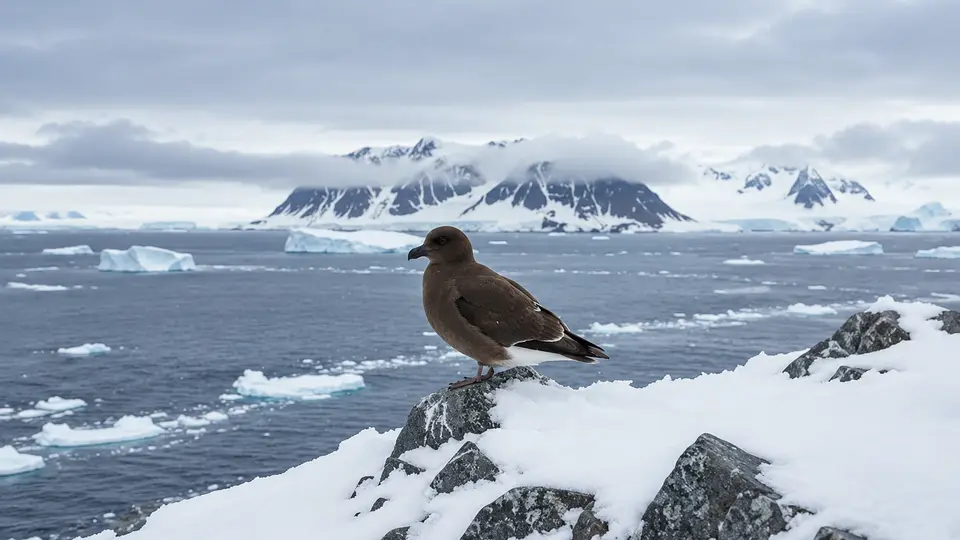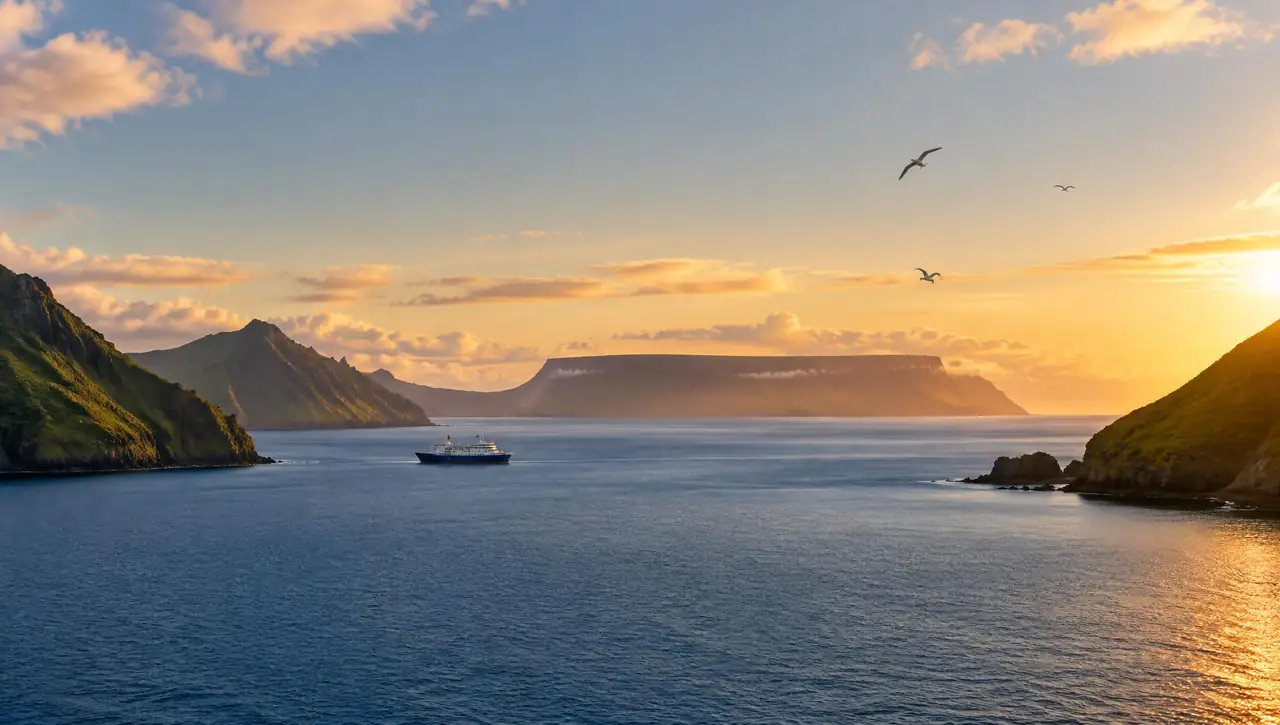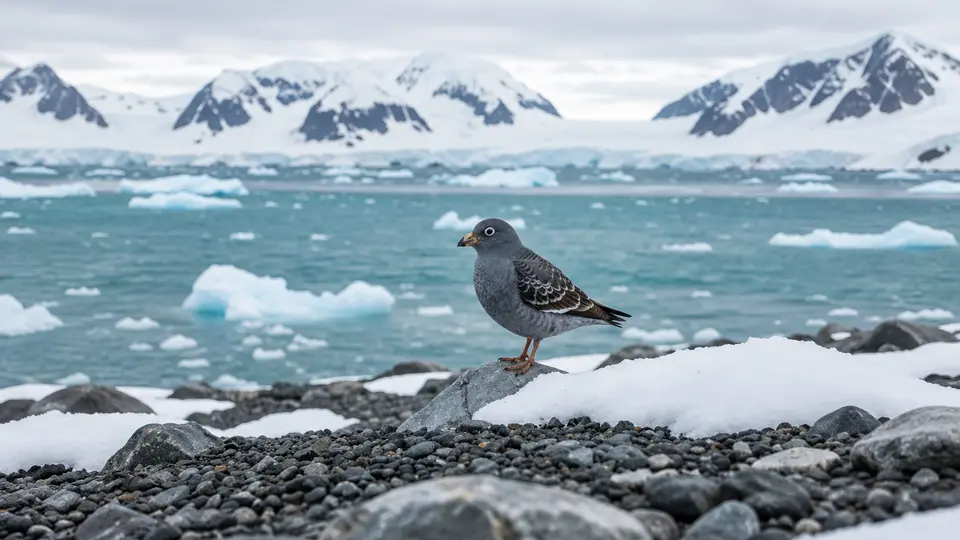
Antarctic Prion in its natural habitat, AI illustration

Antarctic Prion: where and when to see them

Pachyptila desolata

Antarctic Prion at a glance

The Antarctic prion is a small, blue-gray petrel of the Southern Ocean, often seen skimming low over waves in restless flocks. Its dark upperwing pattern and pale underside are attractive but shared with several close relatives, making confident identification difficult at distance. It breeds mainly on subantarctic islands rather than the Antarctic mainland. For coastal travelers, it is principally a bird to look for from a vessel's deck.

Behaviour & reproduction

Size
25-28 cm body length
Weight
150-200 g
Lifespan
Not reliably established
Status
Least Concern

At sea, Antarctic prions weave close to the surface, pattering with their feet and collecting small prey with the bill. Feeding flocks can change direction rapidly as birds track patches of food. On breeding islands, adults generally visit burrows at night, reducing exposure to predatory skuas. Pairs share incubation and chick provisioning. Their concealed nesting habits mean a visible colony landscape may reveal very few birds during daylight hours. Antarctic prions are highly gregarious at sea, often forming large mixed flocks with other petrels and shearwaters, especially over active feeding grounds. During the day, non-breeding birds may rest in large groups on the water's surface, particularly in calm conditions. Their nocturnal visits to burrows significantly reduce predation risk from aerial predators such as skuas and giant petrels on breeding islands.

Top wildlife locations

Antarctica wildlife habitat

Antarctica

Look from decks over open water near the Peninsula and surrounding Southern Ocean. Suitable nesting shores are mainly subantarctic and often inaccessible; identification from Antarctic coastal viewpoints is possible but frequently inconclusive.

Adventure cruises in Antarctica
Destinations describe the species' habitat, not guaranteed cruise stops. Some animals require an optional inland excursion or are found in restricted reserves.

Fun facts about the Antarctic Prion

  • Prions are sometimes called whalebirds.
  • Comb-like structures inside the bill help retain tiny crustaceans.
  • Adults usually return to breeding burrows after dark.
  • Its single chick is provisioned by both parents.

Best time to see the Antarctic Prion

November through March provides the main practical deck-observation window on Antarctic voyages. Breeding occurs during the austral summer on suitable islands, but many birds seen at sea cannot be connected to nearby colonies. Weather and viewing distance strongly affect identification success. The austral summer is the optimal time for both pelagic observations and potential, albeit limited, shore excursions to view other wildlife in the region. During this period, prions are actively breeding and foraging in higher numbers across the Southern Ocean. Late summer and early autumn may also provide opportunities to see fledglings at sea.

Antarctic Prion: season matrix by destination

Travel and observation windows vary by region. Highlighted months are an orientation for planning, not confirmed sightings or a guarantee of access.

Antarctica

These are practical voyage months, not evidence of breeding on visited Antarctic shores; several similar prions may occur along approach routes.

JanFebMarAprMayJunJulAugSepOctNovDec
Cruise ships in Antarctica

Where the Antarctic Prion lives

Antarctic prions feed over cold oceanic and shelf waters of the Southern Ocean, including waters near the Antarctic Peninsula. They nest in burrows or rock crevices on subantarctic islands, often beneath tussock vegetation or among scree rather than on exposed continental shores. Though breeding colonies are restricted to subantarctic islands, Antarctic prions range widely across the Southern Ocean year-round, including oceanic waters further north. They prefer waters with strong upwellings that bring nutrient-rich waters and plankton close to the surface. Post-breeding dispersal can lead birds across vast stretches of open ocean.

What the Antarctic Prion eats

Small crustaceans dominate, especially copepods, amphipods and krill, with small fish and squid also taken. Fine structures along the bill help retain small prey. Feeding methods include surface seizing, shallow dipping and filtering prey from water gathered near the surface. The prions' lamellate bill structure, resembling a comb, is perfectly adapted for filtering minute organisms from the water. They often feed in dense aggregations over productive waters, exploiting swarms of zooplankton. While primarily a filter feeder, they are opportunistic and will take small nekton when available.

Species at a glance

Common name
Antarctic Prion
Scientific name
Pachyptila desolata
Animal group
Birds
Size
25-28 cm body length
Weight
150-200 g
Lifespan
Not reliably established
Status
Least Concern
Identification
A dark upperwing M, pale face and moderately broad bill suggest Antarctic prion, but separation from other prions often requires close photographs and expert review. Beyond the 'M' pattern, look for the clean grey-blue upperparts contrasted with bright white underparts, a common prion characteristic. The relatively stout bill, compared to other prions like the Slender-billed, is a key feature, especially when seen in flight at close range. Note the dark eye set in the pale face and the subtly darker cap extending just to the eye.

Antarctic Prion: frequently asked questions

Where can I see the Antarctic Prion?
Antarctica. Watch low over the sea from sheltered deck positions and photograph birds without leaning beyond rails. Avoid burrowed ground at any authorized island visit, since hidden nesting tunnels can collapse underfoot. Scanning the horizon with binoculars during feeding frenzies can reveal large rafts of prions alongside other seabirds. When the ship is underway, keep an eye out for birds following in the wake, as these currents can bring food to the surface. Utilize sheltered spots on deck to minimize wind chill and maximize comfort during prolonged viewing.
When is the best time to see the Antarctic Prion?
November through March provides the main practical deck-observation window on Antarctic voyages. Breeding occurs during the austral summer on suitable islands, but many birds seen at sea cannot be connected to nearby colonies. Weather and viewing distance strongly affect identification success. The austral summer is the optimal time for both pelagic observations and potential, albeit limited, shore excursions to view other wildlife in the region. During this period, prions are actively breeding and foraging in higher numbers across the Southern Ocean. Late summer and early autumn may also provide opportunities to see fledglings at sea.
How big does the Antarctic Prion get?
25-28 cm body length. Adult weight: 150-200 g. Size varies with age, sex and population.
How should I behave around the Antarctic Prion?
Watch low over the sea from sheltered deck positions and photograph birds without leaning beyond rails. Avoid burrowed ground at any authorized island visit, since hidden nesting tunnels can collapse underfoot. Scanning the horizon with binoculars during feeding frenzies can reveal large rafts of prions alongside other seabirds. When the ship is underway, keep an eye out for birds following in the wake, as these currents can bring food to the surface. Utilize sheltered spots on deck to minimize wind chill and maximize comfort during prolonged viewing.
What does the Antarctic Prion eat?
Small crustaceans dominate, especially copepods, amphipods and krill, with small fish and squid also taken. Fine structures along the bill help retain small prey. Feeding methods include surface seizing, shallow dipping and filtering prey from water gathered near the surface. The prions' lamellate bill structure, resembling a comb, is perfectly adapted for filtering minute organisms from the water. They often feed in dense aggregations over productive waters, exploiting swarms of zooplankton. While primarily a filter feeder, they are opportunistic and will take small nekton when available.
Are wildlife sightings guaranteed on an adventure cruise?
No. Animals move freely and routes, weather, access restrictions and local conditions influence every outing. Confirm the actual itinerary and shore program before booking.

Compare wildlife in the same destinations

Explore other birds recorded in these destinations. Similar surroundings do not mean the animals share the same habits or viewing season.

Species comparison by animal group and destination
Antarctic PrionAntarctic PrionAdélie PenguinAdélie PenguinAntarctic PetrelAntarctic Petrel
Animal groupBirdsAnimal groupBirdsAnimal groupBirds
DestinationsAntarcticaDestinationsAntarcticaDestinationsAntarctica
All wildlife destinations
Plan your trip

Find your next wildlife adventure

Compare destinations, shore programs and dates with the animals and habitats you would love to see.

  • Naturalist-led shore excursions
  • Responsible wildlife watching
  • Small expedition ships

Newsletter

Take Blue Rides with you

Adventure cruise offers, last-minute deals and trip inspiration.

Free, unsubscribe anytime. Details: Privacy Policy

Partner with Blue Rides

Affiliate Program

Recommend adventure cruises and earn commission on every confirmed booking.

Share. Track. Earn.

Your footage, our stage

Send us your videos or pictures.

Captured beautiful landscapes or wildlife? Share your videos and pictures with us, we may feature them on Blue Rides.