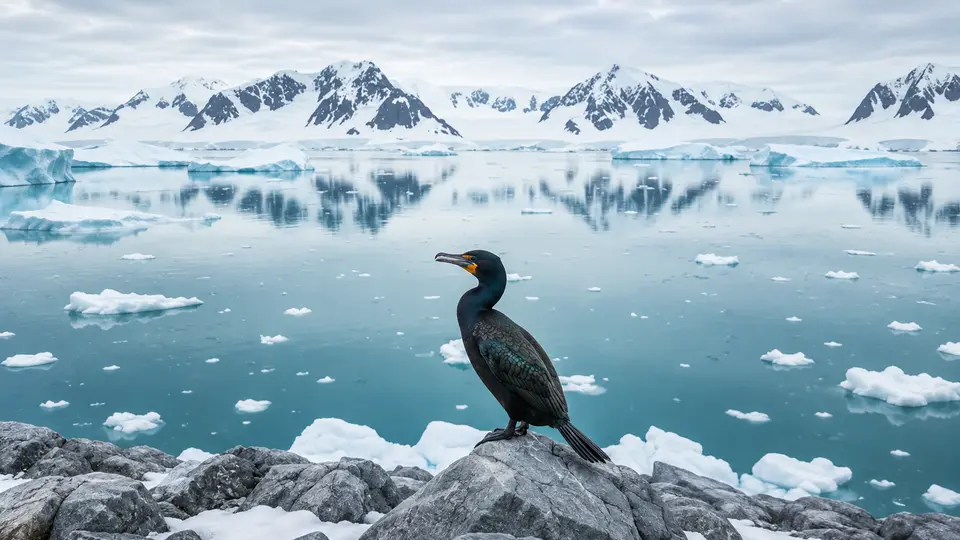
Antarctic Shag in its natural habitatAI-modified

Antarctic ShagLeucocarbo bransfieldensisWhere and when to see them

Antarctic Shag at a glance

The Antarctic shag is a large black-and-white coastal seabird of the Antarctic Peninsula region and nearby islands. It belongs to the blue-eyed shag group, whose members have often been treated differently by taxonomists. Breeding adults show vivid blue skin around the eyes and prominent orange facial knobs. Unlike wide-ranging oceanic petrels, these birds remain closely linked to coastal feeding grounds and rocky nesting places throughout their daily routines.

Behaviour & reproduction

Size
75-80 cm (29.5-31.5 in) body length
Weight
2-3.5 kg (4.4-7.7 lb)
Lifespan
Not reliably established
Status
Least Concern

Antarctic shags breed in colonies, constructing raised nests from seaweed and other available material, cemented with droppings. Both parents incubate and feed the young. Birds commute between colonies and nearby feeding areas, often flying low over coastal water in lines. They pursue prey below the surface but are observed responsibly from land or deck when resting, flying or surfacing. Nesting birds can be sensitive to close pedestrian approaches. Courtship involves head-tossing and bowing displays, often accompanied by soft calls. Nests are typically conical and can grow quite large over successive breeding seasons. Shags are social birds, often observed resting in close proximity on rocks, though they defend their immediate nest territory vigorously.

Top wildlife locations

Antarctica wildlife habitatAI-modified

Antarctica

Rocky Peninsula and South Shetland coasts offer plausible distant views of colonies or commuting birds. Access depends on authorized routes and local restrictions; nesting ledges should never be approached for a closer photograph.
Destinations describe the species' habitat, not guaranteed cruise stops. Some animals require an optional inland excursion or are found in restricted reserves.

Fun facts about the Antarctic Shag

  • The apparent blue eye is principally a ring of colored skin.
  • Breeding adults develop a crest as well as brighter facial ornaments.
  • Nest material can include seaweed gathered along the coast.
  • Both parents feed chicks by regurgitation.

Best time to see the Antarctic Shag

November through February generally offers the best overlap of Antarctic coastal access and colony activity. Nest building, eggs and chicks occur at different times among sites and years. Later summer can provide views of larger young, subject to local access restrictions. Prime viewing opportunities often coincide with the breeding season when birds are most active around colonies, making November to February ideal. Early season cruises may observe adults engaged in courtship displays and nest building. Later in the season, fledging chicks practicing their wing exercises near the colony can be a rewarding sight.

Antarctic Shag: season matrix by destination

Travel and observation windows vary by region. Highlighted months are an orientation for planning, not confirmed sightings or a guarantee of access.

Antarctica

Austral summer supports coastal access and breeding observation, but colony timing, sea ice and permissions vary by site.

JanFebMarAprMayJunJulAugSepOctNovDec
Cruise ships in Antarctica

Where the Antarctic Shag lives

The species uses ice-free rocky shores, low cliffs and small islands around the Antarctic Peninsula, South Shetland Islands and neighboring areas. Colonies need accessible coastal water for feeding. Persistent shore-fast ice can alter access to feeding grounds and local nesting conditions. The species shows high site fidelity, often returning to the same nesting sites year after year. Breeding colonies are typically found on steep slopes or cliffs facing the sea, which provides some protection from terrestrial predators. While primarily coastal, shags may occasionally forage further offshore when local conditions require it.

What the Antarctic Shag eats

Bottom-associated fish are the main prey, supplemented by marine invertebrates such as crustaceans and cephalopods. Adults return to nests with food carried internally and regurgitate it for chicks. Feeding depends on productive coastal seabeds rather than the open-ocean prey patches used by many petrels. They are pursuit divers, using their strong feet to propel themselves underwater while hunting. Their diet is largely dictated by local availability, but they show a preference for slow-moving benthic fish like nototheniids. This specialized diet means their foraging success is closely tied to the health and accessibility of nearshore marine ecosystems.

Species at a glance

Common name
Antarctic Shag
Scientific name
Leucocarbo bransfieldensis
Animal group
Birds
Size
75-80 cm (29.5-31.5 in) body length
Weight
2-3.5 kg (4.4-7.7 lb)
Lifespan
Not reliably established
Status
Least Concern
Identification
Blue eye rings, orange facial knobs and black-and-white plumage distinguish adults from other Antarctic coastal birds, while separation from related blue-eyed shags also depends on location. Distinguishing adults from immature birds involves noting the less developed facial ornamentation and often duller plumage on younger individuals. Their black back contrasts sharply with their pure white underside, extending up the neck. The specific shade of blue in the eye ring and the distinct orange wattle above the bill are key features.

Antarctic Shag: frequently asked questions

Where can I see the Antarctic Shag?
Antarctica. Observe colonies from designated routes or a distant deck position. Keep clear of nest approaches and low-flying commuting birds; backing away promptly helps prevent frightened adults from exposing chicks to cold or skuas. When viewing from a Zodiac, maintain a respectful distance to avoid flushing birds from their nests or resting spots. Look for shags perched conspicuously on rocky outcrops, often drying their wings after a dive. Their streamlined flight, usually low over the water, is a characteristic sight when moving between feeding and nesting areas.
When is the best time to see the Antarctic Shag?
November through February generally offers the best overlap of Antarctic coastal access and colony activity. Nest building, eggs and chicks occur at different times among sites and years. Later summer can provide views of larger young, subject to local access restrictions. Prime viewing opportunities often coincide with the breeding season when birds are most active around colonies, making November to February ideal. Early season cruises may observe adults engaged in courtship displays and nest building. Later in the season, fledging chicks practicing their wing exercises near the colony can be a rewarding sight.
How big does the Antarctic Shag get?
75-80 cm (29.5-31.5 in) body length. Adult weight: 2-3.5 kg (4.4-7.7 lb). Size varies with age, sex and population.
How should I behave around the Antarctic Shag?
Observe colonies from designated routes or a distant deck position. Keep clear of nest approaches and low-flying commuting birds; backing away promptly helps prevent frightened adults from exposing chicks to cold or skuas. When viewing from a Zodiac, maintain a respectful distance to avoid flushing birds from their nests or resting spots. Look for shags perched conspicuously on rocky outcrops, often drying their wings after a dive. Their streamlined flight, usually low over the water, is a characteristic sight when moving between feeding and nesting areas.
What does the Antarctic Shag eat?
Bottom-associated fish are the main prey, supplemented by marine invertebrates such as crustaceans and cephalopods. Adults return to nests with food carried internally and regurgitate it for chicks. Feeding depends on productive coastal seabeds rather than the open-ocean prey patches used by many petrels. They are pursuit divers, using their strong feet to propel themselves underwater while hunting. Their diet is largely dictated by local availability, but they show a preference for slow-moving benthic fish like nototheniids. This specialized diet means their foraging success is closely tied to the health and accessibility of nearshore marine ecosystems.
Are wildlife sightings guaranteed on an adventure cruise?
No. Animals move freely and routes, weather, access restrictions and local conditions influence every outing. Confirm the actual itinerary and shore program before booking.

Compare wildlife in the same destinations

Explore other birds recorded in these destinations. Similar surroundings do not mean the animals share the same habits or viewing season.

Species comparison by animal group and destination
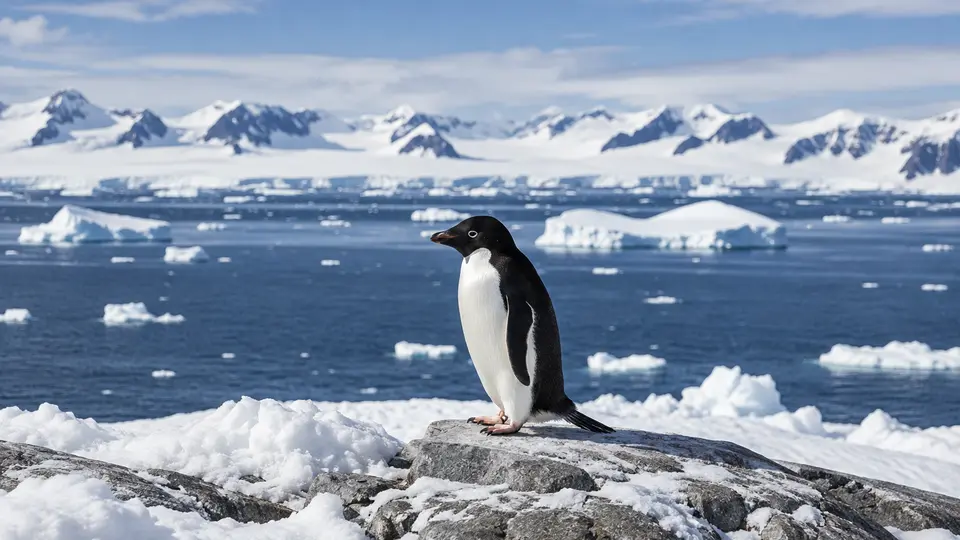
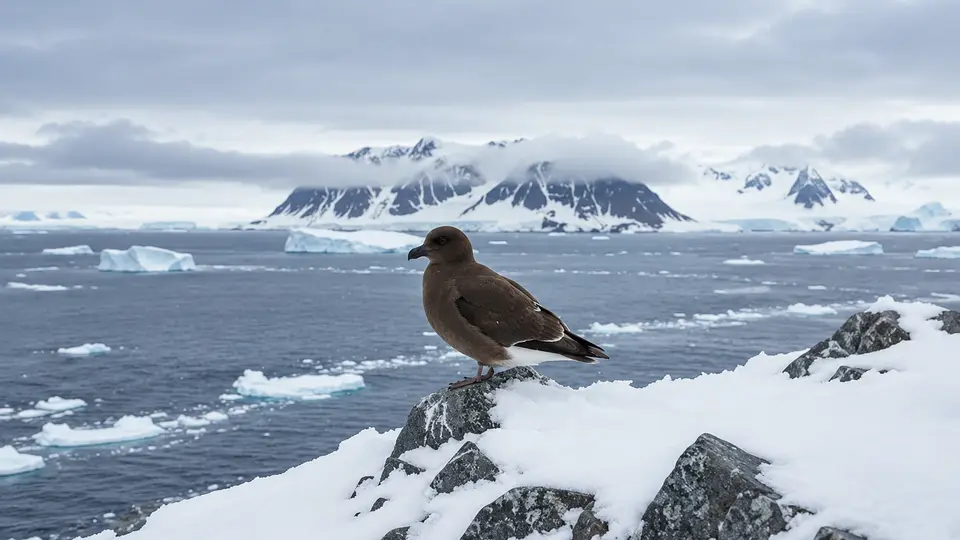
Antarctic ShagAI-modifiedAntarctic ShagAdélie PenguinAI-modifiedAdélie PenguinAntarctic PetrelAI-modifiedAntarctic Petrel
Animal groupBirdsAnimal groupBirdsAnimal groupBirds
DestinationsAntarcticaDestinationsAntarcticaDestinationsAntarctica
Scientific nameLeucocarbo bransfieldensisScientific nameScientific name
All wildlife destinations
AI-modified
Plan your trip

Find your next wildlife adventure

Compare destinations, shore programs and dates with the animals and habitats you would love to see.

  • Naturalist-led shore excursions
  • Responsible wildlife watching
  • Small expedition ships