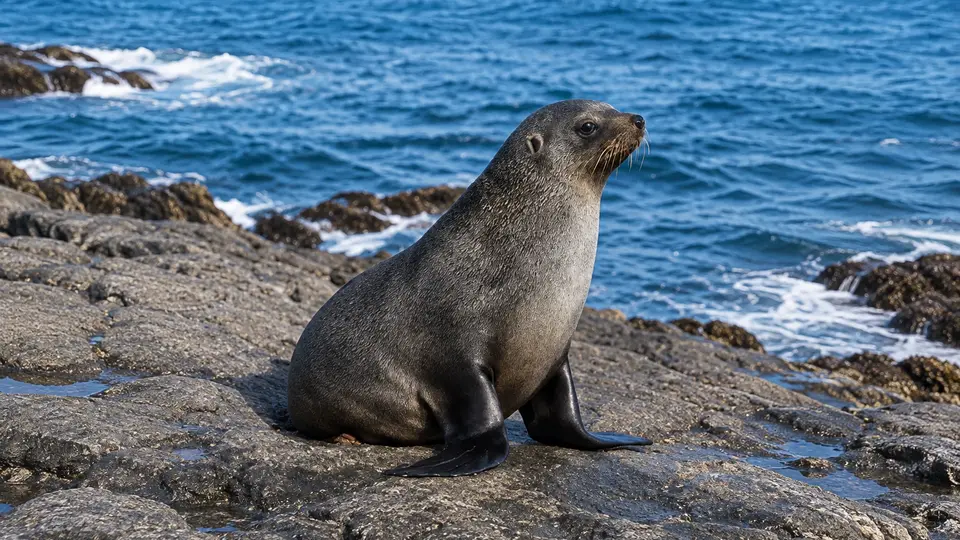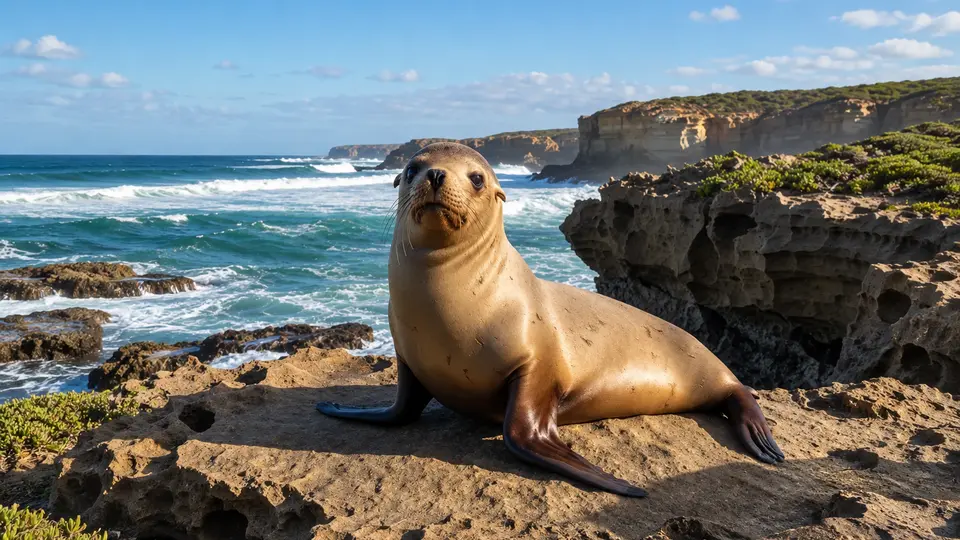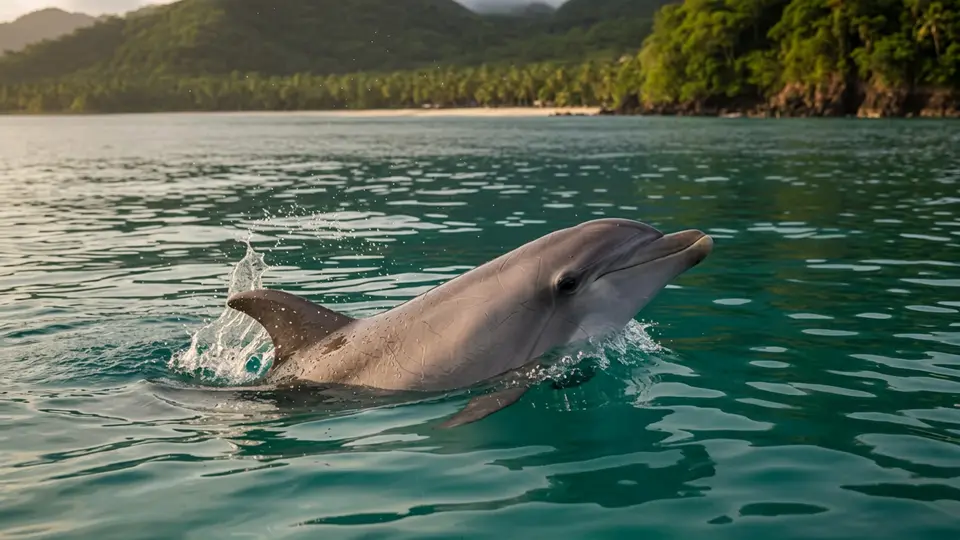
Common Bottlenose Dolphin in its natural habitat, AI illustration
Size2-4 m longLifespan30-50 yearsStatusLeast Concern

Common Bottlenose Dolphin: where and when to see them

Tursiops truncatus

Common Bottlenose Dolphin at a glance

The common bottlenose dolphin is a large, adaptable marine mammal found in temperate and tropical seas. Coastal communities may occupy bays and estuaries, while other populations range far offshore and differ in size, movements and prey. Its familiar curved dorsal fin can be visible from land, but presence varies greatly between locations. Global abundance does not remove local risks from fishing gear, pollution, vessel traffic and habitat degradation.

Behaviour & reproduction

Size
2-4 m long
Weight
150-500 kg
Lifespan
30-50 years
Status
Least Concern

These dolphins live in flexible social networks, with companions joining and separating as feeding and social conditions change. They communicate through whistles, clicks and body movements, and use echolocation to locate prey. Some communities develop specialised feeding traditions learned socially rather than shared throughout the species. From shore or a distant deck, observers may notice coordinated travel, brief surfacing sequences or occasional leaps, but long intervals without visible activity are normal. Group sizes can vary greatly, from solitary individuals to pods of several hundred in offshore waters. They are known for their intelligence and complex problem-solving abilities, often observed in their feeding techniques.

Top wildlife locations

Costa Rica wildlife habitat

Costa Rica

Pacific bays and headlands provide plausible distant viewing over coastal feeding habitat. No inland excursion is required, but distribution is uneven and a shoreline visit may produce no dolphin observations.

Adventure cruises in Costa Rica
Florida wildlife habitat

Florida

Estuary mouths, barrier-island shores and open bays provide suitable coastal viewing habitat. Accessible public shorelines can work without inland excursions, although resident communities do not use every waterfront predictably.

Adventure cruises in Florida
Galapagos wildlife habitat

Galapagos

Distant deck views and authorised coastal viewpoints overlook potentially suitable island waters. Encounters are irregular, and dolphin presence does not justify leaving designated visitor areas or arranging an unapproved landing.

Adventure cruises in Galapagos
Mexico wildlife habitat

Mexico

Pacific and Gulf bays, estuary entrances and coastal headlands offer plausible viewing habitat. No inland excursion is needed, but local species composition and the accessibility of useful viewpoints vary widely.

Adventure cruises in Mexico
Cape Verde wildlife habitat

Cape Verde

Island headlands and distant deck views overlook coastal and shelf waters used by bottlenose dolphins. Shore encounters can be rare, and exposed viewpoints may be unsuitable during strong winds or swell.

Adventure cruises in Cape Verde
Croatia wildlife habitat

Croatia

Adriatic island channels, sheltered bays and coastal headlands offer plausible distant viewing. Public shore access is possible in many places, but dolphins range widely and are not predictable waterfront attractions.

Adventure cruises in Croatia

Destinations describe the species' habitat, not guaranteed cruise stops. Some animals require an optional inland excursion or are found in restricted reserves.

Fun facts about the Common Bottlenose Dolphin

  • Individuals can be recognised by scars and notches on their dorsal fins.
  • Signature whistles help dolphins maintain contact with particular companions.
  • Some populations transmit specialised feeding techniques through social learning.
  • Coastal and offshore populations can differ substantially in body size and ecology.

Best time to see the Common Bottlenose Dolphin

There is no single global season for this widespread dolphin. Calm weather improves distant shore and deck observation, while regional prey movements influence presence. The location windows below concern practical travel and visibility, not universal breeding periods or evidence that animals occupy every coastline throughout those months. In many subtropical and tropical destinations, calm waters during dry seasons or warmer months can greatly enhance viewing opportunities. Optimal viewing conditions are often present when local weather patterns create a smooth sea surface, reducing glare and aiding visibility.

Common Bottlenose Dolphin: season matrix by destination

Travel and observation windows vary by region. Highlighted months are an orientation for planning, not confirmed sightings or a guarantee of access.

Costa Rica

Generally drier Pacific travel conditions may aid visibility; this is not a species breeding window.

JanFebMarAprMayJunJulAugSepOctNovDec
Cruise ships in Costa Rica

Florida

Cooler months often suit shore visits; dolphins occur year-round in many areas, and wind still controls visibility.

JanFebMarAprMayJunJulAugSepOctNovDec
Cruise ships in Florida

Galapagos

The warmer season often offers calmer conditions, but island-specific seas and dolphin movements remain variable.

JanFebMarAprMayJunJulAugSepOctNovDec
Cruise ships in Galapagos

Mexico

This broad cooler-season travel window suits many coasts, not all Mexican regions or a common breeding season.

JanFebMarAprMayJunJulAugSepOctNovDec
Cruise ships in Mexico

Cape Verde

These months may offer opportunities between windy periods; local sea forecasts matter more than calendar dates.

JanFebMarAprMayJunJulAugSepOctNovDec
Cruise ships in Cape Verde

Croatia

Warmer months support practical coastal travel and longer observation days; they do not define dolphin breeding.

JanFebMarAprMayJunJulAugSepOctNovDec
Cruise ships in Croatia

Greece

These are practical coastal travel months; strong summer winds can still make observation difficult.

JanFebMarAprMayJunJulAugSepOctNovDec
Cruise ships in Greece

Portugal

Longer days and often more workable weather favour observation; local residents may occur outside this window.

JanFebMarAprMayJunJulAugSepOctNovDec
Cruise ships in Portugal

Scotland

Spring and summer provide longer daylight; dolphins may occur year-round, and local tidal advice is more useful than breeding assumptions.

JanFebMarAprMayJunJulAugSepOctNovDec
Cruise ships in Scotland

Seychelles

A defensible species-specific shore window is unavailable; monsoon travel conditions alone cannot establish common bottlenose occurrence.

JanFebMarAprMayJunJulAugSepOctNovDec
Cruise ships in Seychelles

Turkey

These months generally support coastal travel; regional wind conditions and local distribution remain decisive.

JanFebMarAprMayJunJulAugSepOctNovDec
Cruise ships in Turkey

Maldives

No reliable species-specific shore observation window is established here; a general dry-season calendar would not resolve identification or occurrence.

JanFebMarAprMayJunJulAugSepOctNovDec
Cruise ships in Maldives

Australia

Australia spans contrasting climates and multiple bottlenose taxa, so a single national shore observation window is unsupported.

JanFebMarAprMayJunJulAugSepOctNovDec
Cruise ships in Australia

New Zealand

Austral summer improves daylight and travel options; local communities may occur year-round and remain unpredictable.

JanFebMarAprMayJunJulAugSepOctNovDec
Cruise ships in New Zealand

Where the Common Bottlenose Dolphin lives

Common bottlenose dolphins occupy continental shelves, coastal bays, estuary mouths and oceanic island waters, with some populations using deeper offshore habitat. They are entirely marine animals. In the Indian Ocean and parts of Australasia, identification requires care because other bottlenose species also occur. Coastal populations often show site fidelity, remaining in specific areas for extended periods. Their distribution is broad, ranging from temperate to tropical waters worldwide, though they are absent from polar regions.

What the Common Bottlenose Dolphin eats

Fish and squid dominate the diet, with crustaceans taken in some areas. Prey choice varies among coastal and offshore populations and can reflect learned local techniques. Dolphins may forage alone or cooperate, but feeding behaviour cannot reliably be inferred from a brief distant surfacing. They employ a variety of hunting strategies, including herding fish schools against shorelines or into mud banks. Individual dolphins can consume significant amounts of food daily, relative to their body size, to sustain their active lifestyle.

Species at a glance

Common name
Common Bottlenose Dolphin
Scientific name
Tursiops truncatus
Animal group
Mammals
Size
2-4 m long
Weight
150-500 kg
Lifespan
30-50 years
Status
Least Concern
Identification
A robust body and short, thick beak suggest this species, but distant separation from Indo-Pacific bottlenose dolphins is often unreliable. The dorsal fin is tall, falcate, and centrally located on the back. Adults typically display a dark grey back fading to a lighter grey flank and a white belly.

Common Bottlenose Dolphin: frequently asked questions

Where can I see the Common Bottlenose Dolphin?
Costa Rica, Florida, Galapagos, Mexico, Cape Verde, Croatia, Greece, Portugal, Scotland, Seychelles, Turkey, Maldives, Australia, New Zealand. Use binoculars from shore or a normally operating vessel's deck, keeping encounters distant. Never feed, call in or pursue dolphins, and follow local exclusion rules around resting groups and mothers with calves. Look for characteristic V-shaped blows or dorsal fins cutting through the water when scanning the horizon. Patience is key, as dolphins may travel underwater for several minutes before reappearing.
When is the best time to see the Common Bottlenose Dolphin?
There is no single global season for this widespread dolphin. Calm weather improves distant shore and deck observation, while regional prey movements influence presence. The location windows below concern practical travel and visibility, not universal breeding periods or evidence that animals occupy every coastline throughout those months. In many subtropical and tropical destinations, calm waters during dry seasons or warmer months can greatly enhance viewing opportunities. Optimal viewing conditions are often present when local weather patterns create a smooth sea surface, reducing glare and aiding visibility.
How big does the Common Bottlenose Dolphin get?
2-4 m long. Adult weight: 150-500 kg. Size varies with age, sex and population.
How should I behave around the Common Bottlenose Dolphin?
Use binoculars from shore or a normally operating vessel's deck, keeping encounters distant. Never feed, call in or pursue dolphins, and follow local exclusion rules around resting groups and mothers with calves. Look for characteristic V-shaped blows or dorsal fins cutting through the water when scanning the horizon. Patience is key, as dolphins may travel underwater for several minutes before reappearing.
What does the Common Bottlenose Dolphin eat?
Fish and squid dominate the diet, with crustaceans taken in some areas. Prey choice varies among coastal and offshore populations and can reflect learned local techniques. Dolphins may forage alone or cooperate, but feeding behaviour cannot reliably be inferred from a brief distant surfacing. They employ a variety of hunting strategies, including herding fish schools against shorelines or into mud banks. Individual dolphins can consume significant amounts of food daily, relative to their body size, to sustain their active lifestyle.
Are wildlife sightings guaranteed on an adventure cruise?
No. Animals move freely and routes, weather, access restrictions and local conditions influence every outing. Confirm the actual itinerary and shore programme before booking.

Compare wildlife in the same destinations

Explore other mammals recorded in these destinations. Similar surroundings do not mean the animals share the same habits or viewing season.

Species comparison by animal group and destination
Common Bottlenose DolphinCommon Bottlenose DolphinAustralian fur sealAustralian fur sealAustralian sea lionAustralian sea lion
Animal groupMammalsAnimal groupMammalsAnimal groupMammals
DestinationsCosta Rica, Florida, Galapagos, Mexico, Cape Verde, Croatia, Greece, Portugal, Scotland, Seychelles, Turkey, Maldives, Australia, New ZealandDestinationsAustraliaDestinationsAustralia
All wildlife destinations
Plan your trip

Find your next wildlife adventure

Compare destinations, shore programmes and dates with the animals and habitats you would love to see.

  • Naturalist-led shore excursions
  • Responsible wildlife watching
  • Small expedition ships

Newsletter

Take Blue Rides with you

Adventure cruise offers, last-minute deals and trip inspiration.

Free, unsubscribe anytime. Details: Privacy Policy

Partner with Blue Rides

Affiliate Program

Recommend adventure cruises and earn commission on every confirmed booking.

Share. Track. Earn.