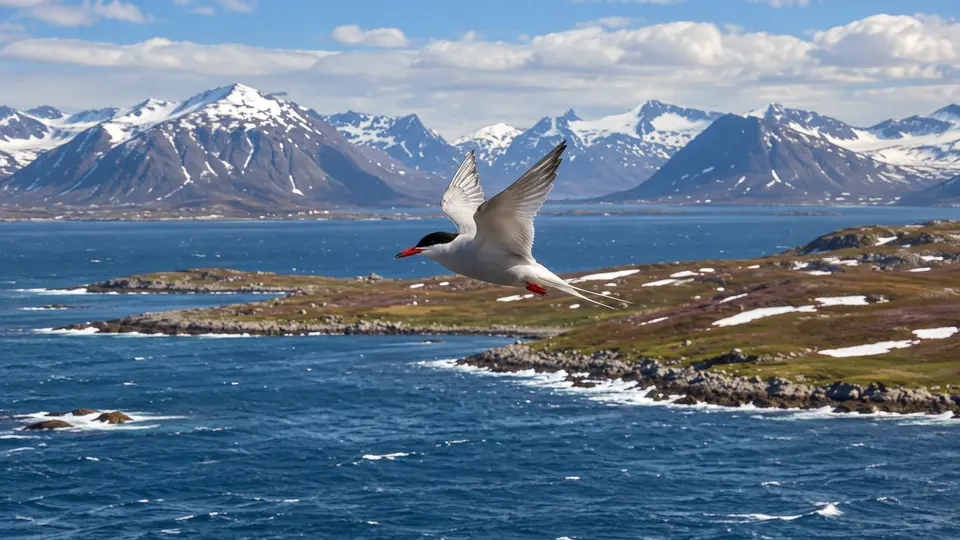
Common Eider in its natural habitat, AI illustration
Size50-71 cm longLifespan10-20 yearsStatusNear Threatened

Common Eider: where and when to see them

Somateria mollissima

Common Eider at a glance

The common eider is a heavily built sea duck of northern coasts, famous for the insulating down females use to line their nests. Adult males show bold black and white plumage with a greenish nape, while females are intricately barred brown. Its sloping forehead and substantial bill create a distinctive profile. Although widespread, the species faces regional declines linked to changing food supplies, disturbance, disease and other pressures.

Behaviour & reproduction

Size
50-71 cm long
Weight
1.2-2.8 kg
Lifespan
10-20 years
Status
Near Threatened

Eiders gather in coastal flocks, often feeding where shallow seabeds support abundant shellfish. Courtship includes soft, resonant male calls and conspicuous head movements. Females nest on the ground, sometimes in loose colonies, and may lead ducklings into communal broods attended by several females. Outside breeding, birds concentrate in moulting or wintering areas. Flight is strong and direct, usually low over the sea with relatively rapid wingbeats. Common Eiders are renowned for their exceptionally insulating down, which females use to line their nests. During courtship, males perform a distinctive 'cooing' call, often accompanied by head-tossing displays. Outside the breeding season, eiders are highly social, forming large rafts for mutual protection and foraging efficiency.

Top wildlife locations

New England wildlife habitat

New England

Rocky headlands, harbour entrances and island shores offer accessible coastal viewing, especially of winter flocks. No inland excursion is needed; nesting islands may be restricted and should be observed remotely.

Adventure cruises in New England
Norway wildlife habitat

Norway

Sheltered fjord mouths, rocky shores and coastal islands provide plausible viewing from public paths or decks. Many breeding islands are inaccessible or protected, so remain outside marked seasonal exclusion areas.

Adventure cruises in Norway
Arctic wildlife habitat

Arctic

Ice-free coastal bays and low islands can support eiders, but this broad region includes inaccessible and protected breeding shores. Observation should remain at authorised viewpoints or distant decks without colony approaches.

Adventure cruises in Arctic

Destinations describe the species' habitat, not guaranteed cruise stops. Some animals require an optional inland excursion or are found in restricted reserves.

Fun facts about the Common Eider

  • Females pluck breast down to line and cover their eggs.
  • Ducklings may join communal broods called crèches.
  • Adults can swallow mussels whole.
  • Traditional eiderdown collection depends on nest material rather than plucking living birds.

Best time to see the Common Eider

Northern breeding coasts are most accessible from late spring through summer, when females and broods may be present. In New England, colder months often bring larger coastal concentrations. Timing varies with latitude and ice conditions, so Arctic travel windows are not interchangeable with southern winter viewing. In the Arctic, eider viewing is best during the short summer when sea ice has retreated and breeding colonies are active. Migratory movements are significant, with birds often travelling hundreds of kilometres between breeding and wintering grounds. Winter aggregations in Norway can be spectacular, especially in ice-free fjords and archipelagos.

Common Eider: season matrix by destination

Travel and observation windows vary by region. Highlighted months are an orientation for planning, not confirmed sightings or a guarantee of access.

New England

Autumn through early spring often supports coastal flock observation; some birds also breed locally.

JanFebMarAprMayJunJulAugSepOctNovDec
Cruise ships in New England

Norway

Longer daylight supports shore observation; local breeding and moulting timing varies with latitude.

JanFebMarAprMayJunJulAugSepOctNovDec
Cruise ships in Norway

Arctic

These are broad Arctic access months, not a uniform breeding calendar; sea ice and regional range determine feasibility.

JanFebMarAprMayJunJulAugSepOctNovDec
Cruise ships in Arctic

Where the Common Eider lives

Rocky shores, sheltered bays, offshore islands and shallow coastal banks are typical habitats. Breeding females need secure ground close to the sea, often among vegetation or rocks. Winter flocks favour productive marine feeding areas rather than inland freshwater lakes. Eiders are highly gregarious outside the breeding season, forming large rafts offshore in areas with abundant food. While generally coastal, they may venture several kilometres offshore to feed in suitable areas. They are highly adapted to cold water environments due to their dense plumage and large size.

What the Common Eider eats

Mussels and other marine molluscs are major foods, supplemented by crabs, sea urchins and additional bottom-dwelling invertebrates. Many prey items are swallowed whole and crushed internally. Accessible shellfish beds strongly influence where feeding groups gather and how they move with tides. Their strong, wedge-shaped bill is specifically adapted for plucking shellfish from rocks and the seabed. Eiders have a gizzard well-suited for grinding tough mollusc shells internally. They typically forage by diving to the seafloor, often in depths up to 20 meters.

Species at a glance

Common name
Common Eider
Scientific name
Somateria mollissima
Animal group
Birds
Size
50-71 cm long
Weight
1.2-2.8 kg
Lifespan
10-20 years
Status
Near Threatened
Identification
Its long, wedge-shaped head distinguishes it from king eider, whose adult male has a conspicuous orange forehead shield. Adult males are unmistakable with their black and white plumage, green nape, and yellow-orange bill. Females and immatures have cryptic brown plumage but can be identified by their distinctive head shape and larger size compared to most other sea ducks. In flight, their large size and direct, powerful wingbeats are characteristic.

Common Eider: frequently asked questions

Where can I see the Common Eider?
New England, Norway, Arctic. Use shore viewpoints well away from nesting cover and keep dogs controlled. Never walk through an eider colony or separate females from ducklings; sheltered flocks can be disturbed even by quiet close approaches. When viewing from a boat, maintain a slow speed and a respectful distance, allowing birds to continue their activities undisturbed. Binoculars or a spotting scope are essential for observing details of distant flocks without causing disturbance. Look for 'eider ducks' at sea, often forming large, dark rafts that bob on the waves.
When is the best time to see the Common Eider?
Northern breeding coasts are most accessible from late spring through summer, when females and broods may be present. In New England, colder months often bring larger coastal concentrations. Timing varies with latitude and ice conditions, so Arctic travel windows are not interchangeable with southern winter viewing. In the Arctic, eider viewing is best during the short summer when sea ice has retreated and breeding colonies are active. Migratory movements are significant, with birds often travelling hundreds of kilometres between breeding and wintering grounds. Winter aggregations in Norway can be spectacular, especially in ice-free fjords and archipelagos.
How big does the Common Eider get?
50-71 cm long. Adult weight: 1.2-2.8 kg. Size varies with age, sex and population.
How should I behave around the Common Eider?
Use shore viewpoints well away from nesting cover and keep dogs controlled. Never walk through an eider colony or separate females from ducklings; sheltered flocks can be disturbed even by quiet close approaches. When viewing from a boat, maintain a slow speed and a respectful distance, allowing birds to continue their activities undisturbed. Binoculars or a spotting scope are essential for observing details of distant flocks without causing disturbance. Look for 'eider ducks' at sea, often forming large, dark rafts that bob on the waves.
What does the Common Eider eat?
Mussels and other marine molluscs are major foods, supplemented by crabs, sea urchins and additional bottom-dwelling invertebrates. Many prey items are swallowed whole and crushed internally. Accessible shellfish beds strongly influence where feeding groups gather and how they move with tides. Their strong, wedge-shaped bill is specifically adapted for plucking shellfish from rocks and the seabed. Eiders have a gizzard well-suited for grinding tough mollusc shells internally. They typically forage by diving to the seafloor, often in depths up to 20 meters.
Are wildlife sightings guaranteed on an adventure cruise?
No. Animals move freely and routes, weather, access restrictions and local conditions influence every outing. Confirm the actual itinerary and shore programme before booking.

Compare wildlife in the same destinations

Explore other birds recorded in these destinations. Similar surroundings do not mean the animals share the same habits or viewing season.

Species comparison by animal group and destination
Common EiderCommon EiderArctic TernArctic TernAtlantic PuffinAtlantic Puffin
Animal groupBirdsAnimal groupBirdsAnimal groupBirds
DestinationsNew England, Norway, ArcticDestinationsAlaska, Norway, ArcticDestinationsNew England, Norway, Scotland, Arctic
All wildlife destinations
Plan your trip

Find your next wildlife adventure

Compare destinations, shore programmes and dates with the animals and habitats you would love to see.

  • Naturalist-led shore excursions
  • Responsible wildlife watching
  • Small expedition ships

Newsletter

Take Blue Rides with you

Adventure cruise offers, last-minute deals and trip inspiration.

Free, unsubscribe anytime. Details: Privacy Policy

Partner with Blue Rides

Affiliate Program

Recommend adventure cruises and earn commission on every confirmed booking.

Share. Track. Earn.