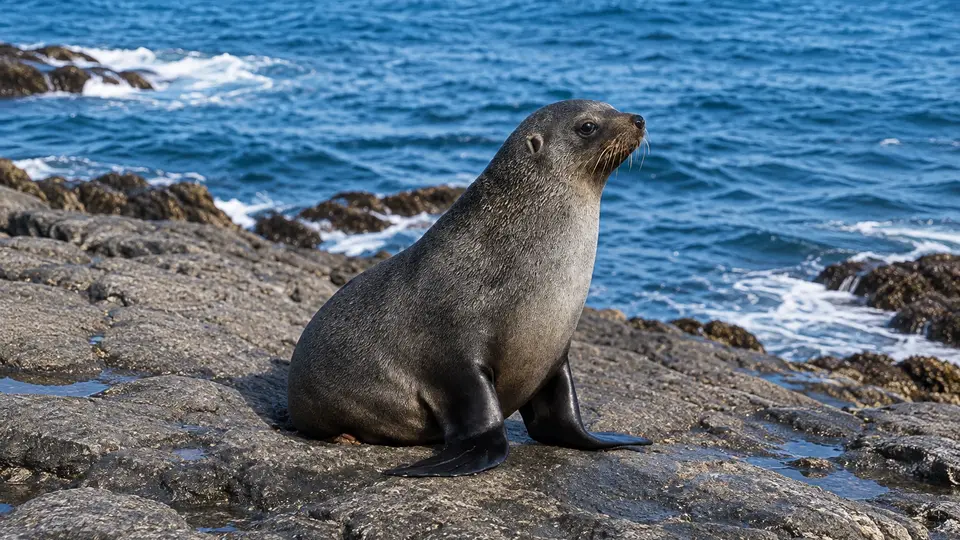
Australian fur seal in its natural habitatAI-modified

Australian fur sealArctocephalus pusillus doriferusWhere and when to see them

Australian fur seal at a glance

The Australian fur seal is the Australian subspecies of the brown fur seal, breeding mainly around Bass Strait and nearby southeastern coasts. It has external ear flaps, dense underfur and strong foreflippers, with adult males far larger than females. Rocky colonies may hold many resting animals, but these are marine mammals that obtain their food at sea. Recovery from historical sealing has not removed threats from entanglement, disturbance and changing marine conditions.

Behaviour & reproduction

Size
Females 1.2–1.8 m (3.9–5.9 ft); males 2–2.3 m (6.6–7.5 ft)
Weight
Females 45–110 kg (99–243 lb); males 200–360 kg (441–794 lb)
Lifespan
15–25 years
Status
Least Concern

During the breeding season, large males establish territories and compete for access to females. Females give birth on land, mate again and alternate nursing visits with foraging trips. Pups remain at the colony while their mothers feed, recognising returning mothers through voice and scent. Outside breeding, seals gather at haul-outs to rest and groom. Even apparently sleeping animals can move quickly across rock, especially if startled or crowded by people. Pups are highly dependent on their mothers for about 10-11 months, although they begin to swim and explore around the colony earlier. During the non-breeding season, seals exhibit extensive dispersal, with individuals often traveling hundreds of kilometers from their birth colonies. Social grooming, or allogrooming, is commonly observed among resting seals at haul-out sites.

Top wildlife locations

Australia wildlife habitatAI-modified

Australia

Bass Strait and southeastern rocky coasts provide the main viewing region, using authorised coastal overlooks or distant deck observation. Most breeding islands are not public landing sites, and some require specialist permitted access.
Destinations describe the species' habitat, not guaranteed cruise stops. Some animals require an optional inland excursion or are found in restricted reserves.

Fun facts about the Australian fur seal

  • It is a subspecies of the same species that includes the Cape fur seal.
  • Adult males can weigh several times as much as females.
  • Females use delayed implantation during their reproductive cycle.
  • Mothers and pups recognise one another among crowded colonies using calls and scent.

Best time to see the Australian fur seal

Seals may be visible at established haul-outs throughout the year, but colony numbers fluctuate. Breeding activity is concentrated in late spring and early summer, when disturbance is especially costly. Seasonal weather and authorised access often matter more for visitors than the mere presence of seals. Peak pupping occurs in late November and December, making early summer a sensitive time for colonies. Visitor numbers should be planned to minimize disturbance, especially during the breeding period. During winter, larger numbers of subadults and non-breeding adults may be present at haul-out sites.

Australian fur seal: season matrix by destination

Travel and observation windows vary by region. Highlighted months are an orientation for planning, not confirmed sightings or a guarantee of access.

Australia

Warmer months offer a practical southeastern coastal travel window and include breeding; haul-outs may be occupied year-round, with weather and restrictions controlling access.

JanFebMarAprMayJunJulAugSepOctNovDec
Cruise ships in Australia

Where the Australian fur seal lives

Breeding and resting habitat consists mainly of rocky offshore islands, reefs and exposed coastal ledges in southeastern Australia. Foraging takes place over continental-shelf waters, often near the seabed. Many colonies are protected or inaccessible, making distant shore overlooks and responsible deck viewing the appropriate options. Australian fur seals range across the southern waters of Australia, with major breeding colonies concentrated in Victoria and Tasmania. Their preferred rocky islands offer protection from terrestrial predators and storm surges. While foraging, they typically dive to depths of 50-100 meters, though they can reach over 200 meters.

What the Australian fur seal eats

Fish, squid, octopus and other marine prey make up the diet. Australian fur seals frequently search near the seabed, although feeding behaviour changes with prey availability. Diet varies among colonies and seasons, reflecting the diverse shelf habitats used during trips away from land. Their diet includes a wide variety of bony fish such as redbait and barracouta, as well as cephalopods like arrow squid. Dietary analysis often relies on scat samples and stomach contents from stranded animals, revealing their opportunistic foraging habits. They are known to consume prey up to several kilograms in weight.

Species at a glance

Common name
Australian fur seal
Scientific name
Arctocephalus pusillus doriferus
Animal group
Mammals
Size
Females 1.2–1.8 m (3.9–5.9 ft); males 2–2.3 m (6.6–7.5 ft)
Weight
Females 45–110 kg (99–243 lb); males 200–360 kg (441–794 lb)
Lifespan
15–25 years
Status
Least Concern
Identification
Compared with the New Zealand fur seal, it generally has a broader, blunter muzzle and a heavier build, though distant identification should also consider location. Adult males are significantly larger, reaching up to 250 kg (551 lb), with a dark brown to black coat and a distinctive mane of coarse hair. Females are smaller, typically up to 100 kg (220 lb), and uniformly grey-brown. Pups are born with a dark, woolly pelage that is shed after several months.

Australian fur seal: frequently asked questions

Where can I see the Australian fur seal?
Australia. Watch from designated overlooks or a compliant vessel, leaving generous space around resting seals. Never stand between a seal and the sea. Keep dogs away, and report entangled animals rather than attempting a rescue. Always maintain a minimum distance of 30 meters from seals on land and 100 meters in the water, as per wildlife viewing guidelines. Observe group dynamics from a distance, noting resting individuals and social interactions. Use binoculars for detailed observation to avoid approaching too closely.
When is the best time to see the Australian fur seal?
Seals may be visible at established haul-outs throughout the year, but colony numbers fluctuate. Breeding activity is concentrated in late spring and early summer, when disturbance is especially costly. Seasonal weather and authorised access often matter more for visitors than the mere presence of seals. Peak pupping occurs in late November and December, making early summer a sensitive time for colonies. Visitor numbers should be planned to minimize disturbance, especially during the breeding period. During winter, larger numbers of subadults and non-breeding adults may be present at haul-out sites.
How big does the Australian fur seal get?
Females 1.2–1.8 m (3.9–5.9 ft); males 2–2.3 m (6.6–7.5 ft). Adult weight: Females 45–110 kg (99–243 lb); males 200–360 kg (441–794 lb). Size varies with age, sex and population.
How should I behave around the Australian fur seal?
Watch from designated overlooks or a compliant vessel, leaving generous space around resting seals. Never stand between a seal and the sea. Keep dogs away, and report entangled animals rather than attempting a rescue. Always maintain a minimum distance of 30 meters from seals on land and 100 meters in the water, as per wildlife viewing guidelines. Observe group dynamics from a distance, noting resting individuals and social interactions. Use binoculars for detailed observation to avoid approaching too closely.
What does the Australian fur seal eat?
Fish, squid, octopus and other marine prey make up the diet. Australian fur seals frequently search near the seabed, although feeding behaviour changes with prey availability. Diet varies among colonies and seasons, reflecting the diverse shelf habitats used during trips away from land. Their diet includes a wide variety of bony fish such as redbait and barracouta, as well as cephalopods like arrow squid. Dietary analysis often relies on scat samples and stomach contents from stranded animals, revealing their opportunistic foraging habits. They are known to consume prey up to several kilograms in weight.
Are wildlife sightings guaranteed on an adventure cruise?
No. Animals move freely and routes, weather, access restrictions and local conditions influence every outing. Confirm the actual itinerary and shore program before booking.

Compare wildlife in the same destinations

Explore other mammals recorded in these destinations. Similar surroundings do not mean the animals share the same habits or viewing season.

Species comparison by animal group and destination
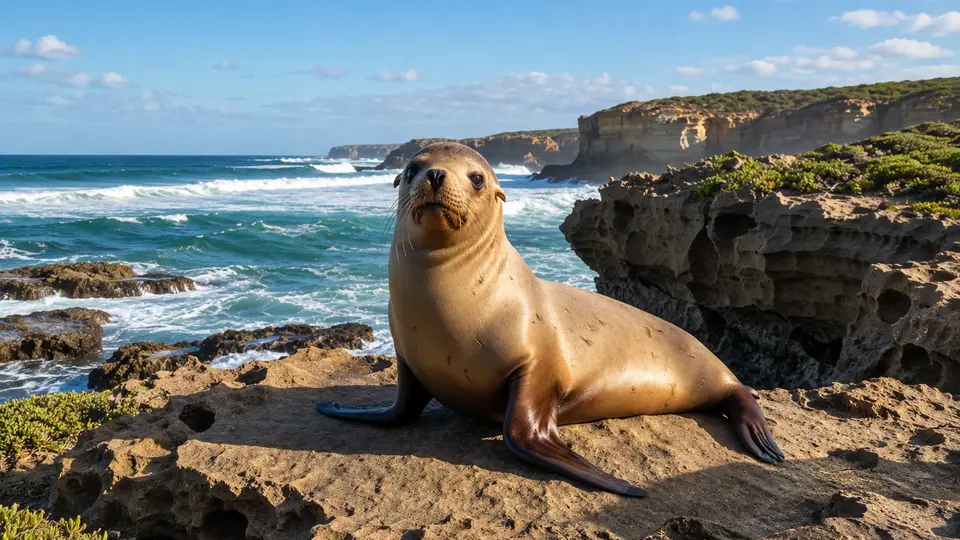
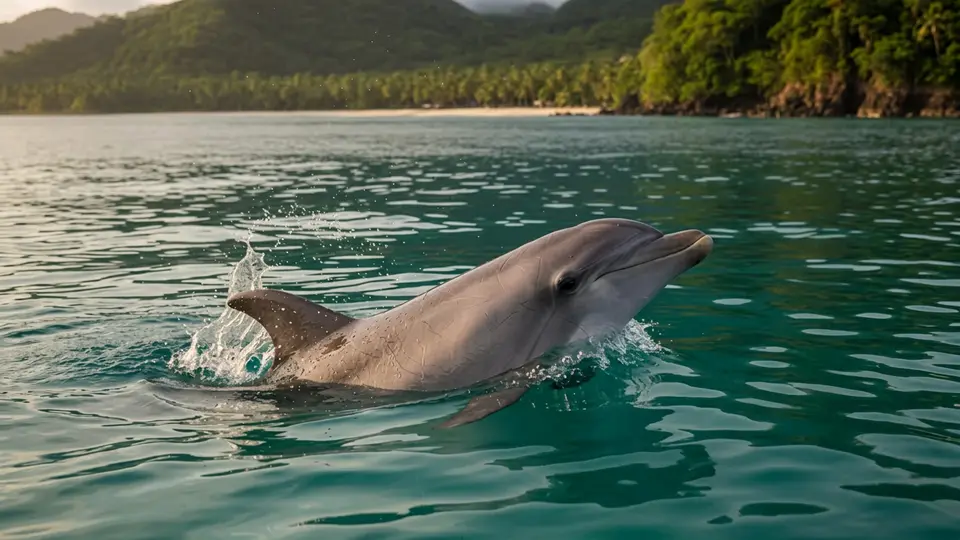
Australian fur sealAI-modifiedAustralian fur sealAustralian sea lionAI-modifiedAustralian sea lionCommon Bottlenose DolphinAI-modifiedCommon Bottlenose Dolphin
Animal groupMammalsAnimal groupMammalsAnimal groupMammals
DestinationsAustraliaDestinationsAustraliaDestinationsCosta Rica, Florida, Galapagos, Mexico, Cape Verde, Croatia, Greece, Portugal, Scotland, Seychelles, Turkey, Maldives, Australia, New Zealand
Scientific nameArctocephalus pusillus doriferusScientific nameScientific name
All wildlife destinations
AI-modified
Plan your trip

Find your next wildlife adventure

Compare destinations, shore programs and dates with the animals and habitats you would love to see.

  • Naturalist-led shore excursions
  • Responsible wildlife watching
  • Small expedition ships