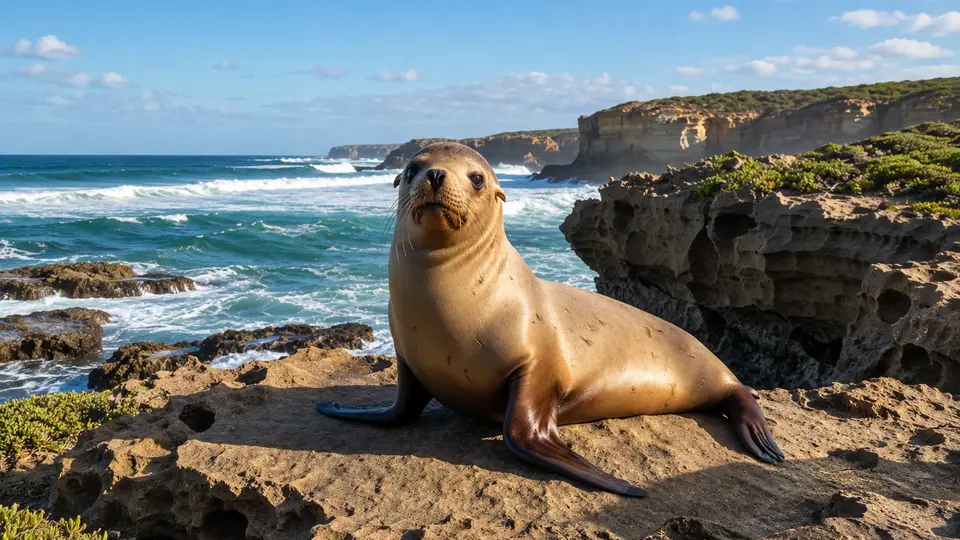
Australian sea lion in its natural habitatAI-modified

Australian sea lionNeophoca cinereaWhere and when to see them

Australian sea lion at a glance

The Australian sea lion is an endangered marine mammal found only in Australia, with colonies along southern and western coasts. Adult males are dark brown with a paler crown, while females are usually silvery grey above and cream below. Unlike fur seals, it lacks a thick woolly underfur layer. Small, scattered breeding populations and strong attachment to natal colonies make local losses difficult to replace, adding urgency to protection from fisheries interactions and disturbance.

Behaviour & reproduction

Size
Females 1.3–1.8 m (4.3–5.9 ft); males 2–2.5 m (6.6–8.2 ft)
Weight
Females 60–110 kg (132–243 lb); males 200–300 kg (441–661 lb)
Lifespan
15–25 years
Status
Endangered

Australian sea lions rest and breed on land but obtain their food at sea, often searching along the seabed. Females alternate feeding trips with nursing visits, and young can remain dependent for an extended period. Breeding follows an unusual cycle of roughly seventeen to eighteen months rather than a simple annual schedule. Different colonies breed at different times. Territorial males and protective females need space, and resting groups can react abruptly to close approaches. Pups are typically born weighing around 6 to 8 kilograms and are covered in a soft, chocolate brown fur. Females show strong site fidelity, often returning to their birth colony to breed.

Top wildlife locations

Australia wildlife habitatAI-modified

Australia

Managed shore viewpoints in South Australia and Western Australia offer the most appropriate access to occupied beaches. Many island colonies are restricted or inaccessible and are explicitly not standard visitor landing sites.
Destinations describe the species' habitat, not guaranteed cruise stops. Some animals require an optional inland excursion or are found in restricted reserves.

Fun facts about the Australian sea lion

  • It is the only living species in the genus Neophoca.
  • Its breeding cycle lasts roughly seventeen to eighteen months.
  • Neighbouring colonies can breed at different times.
  • Females show strong loyalty to their birth colonies, limiting exchange between populations.

Best time to see the Australian sea lion

There is no universal Australian sea lion breeding season because colonies follow asynchronous cycles longer than a year. Some managed viewing locations can be productive in any month. Plan around local access, weather and current colony guidance rather than treating a national travel season as reproductive timing. While specific colony breeding cycles are asynchronous, general viewing opportunities are good year-round, particularly at established viewing platforms. Local tourism operators can provide up-to-date information on the most active colonies for observation.

Australian sea lion: season matrix by destination

Travel and observation windows vary by region. Highlighted months are an orientation for planning, not confirmed sightings or a guarantee of access.

Australia

Some managed sites support year-round observation, but local attendance varies and asynchronous breeding prevents a single national breeding-season window.

JanFebMarAprMayJunJulAugSepOctNovDec
Cruise ships in Australia

Where the Australian sea lion lives

Colonies occupy offshore islands, rocky shores and some sandy mainland beaches in South Australia and Western Australia. Nearby shelf waters provide foraging habitat. Many breeding sites are remote, protected or closed to visitors, while a few managed shore viewpoints allow observation without entering occupied beaches. Australian sea lions are endemic to Australia. Their foraging range typically extends up to 100 kilometers offshore, exploring the continental shelf for prey.

What the Australian sea lion eats

They eat a varied mixture of bottom-associated fish, squid, octopus, cuttlefish and crustaceans, including rock lobsters in some areas. Individuals can develop consistent foraging habits. Their reliance on coastal shelf prey can expose them to fishing gear and other pressures in the same habitats. They are opportunistic feeders and their diet composition can vary geographically and seasonally depending on prey availability. Younger animals tend to consume smaller prey items, transitioning to larger ones as they mature.

Species at a glance

Common name
Australian sea lion
Scientific name
Neophoca cinerea
Animal group
Mammals
Size
Females 1.3–1.8 m (4.3–5.9 ft); males 2–2.5 m (6.6–8.2 ft)
Weight
Females 60–110 kg (132–243 lb); males 200–300 kg (441–661 lb)
Lifespan
15–25 years
Status
Endangered
Identification
Its relatively blunt muzzle, sparse underfur and contrasting adult male crown distinguish it from the more densely furred, pointed-faced fur seals sharing southern Australian coasts. Adult males are significantly larger than females, developing a dark brown coat with a lighter crown and neck at maturity. Females and juveniles are typically silvery grey to brown on their backs, with lighter undersides.

Australian sea lion: frequently asked questions

Where can I see the Australian sea lion?
Australia. Use authorised paths, boardwalks or guided shore access and follow posted separation distances. Never walk between animals and the water or approach pups. Keep dogs away and retreat calmly if a seal becomes alert. Maintain a minimum distance of 30 meters from all sea lions on land and 10 meters in water, or follow local signage which may specify larger distances. Sudden movements or loud noises can disturb resting or nursing animals.
When is the best time to see the Australian sea lion?
There is no universal Australian sea lion breeding season because colonies follow asynchronous cycles longer than a year. Some managed viewing locations can be productive in any month. Plan around local access, weather and current colony guidance rather than treating a national travel season as reproductive timing. While specific colony breeding cycles are asynchronous, general viewing opportunities are good year-round, particularly at established viewing platforms. Local tourism operators can provide up-to-date information on the most active colonies for observation.
How big does the Australian sea lion get?
Females 1.3–1.8 m (4.3–5.9 ft); males 2–2.5 m (6.6–8.2 ft). Adult weight: Females 60–110 kg (132–243 lb); males 200–300 kg (441–661 lb). Size varies with age, sex and population.
How should I behave around the Australian sea lion?
Use authorised paths, boardwalks or guided shore access and follow posted separation distances. Never walk between animals and the water or approach pups. Keep dogs away and retreat calmly if a seal becomes alert. Maintain a minimum distance of 30 meters from all sea lions on land and 10 meters in water, or follow local signage which may specify larger distances. Sudden movements or loud noises can disturb resting or nursing animals.
What does the Australian sea lion eat?
They eat a varied mixture of bottom-associated fish, squid, octopus, cuttlefish and crustaceans, including rock lobsters in some areas. Individuals can develop consistent foraging habits. Their reliance on coastal shelf prey can expose them to fishing gear and other pressures in the same habitats. They are opportunistic feeders and their diet composition can vary geographically and seasonally depending on prey availability. Younger animals tend to consume smaller prey items, transitioning to larger ones as they mature.
Are wildlife sightings guaranteed on an adventure cruise?
No. Animals move freely and routes, weather, access restrictions and local conditions influence every outing. Confirm the actual itinerary and shore program before booking.

Compare wildlife in the same destinations

Explore other mammals recorded in these destinations. Similar surroundings do not mean the animals share the same habits or viewing season.

Species comparison by animal group and destination
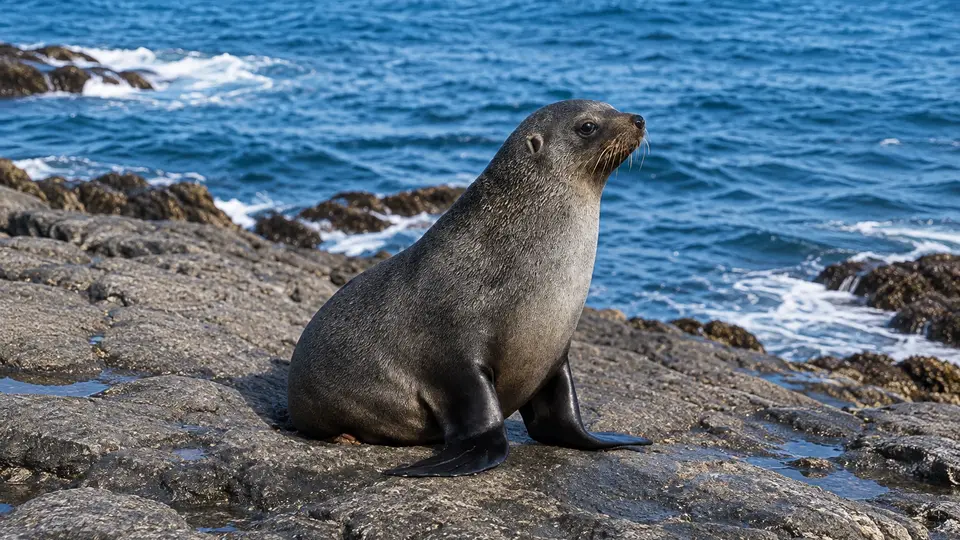
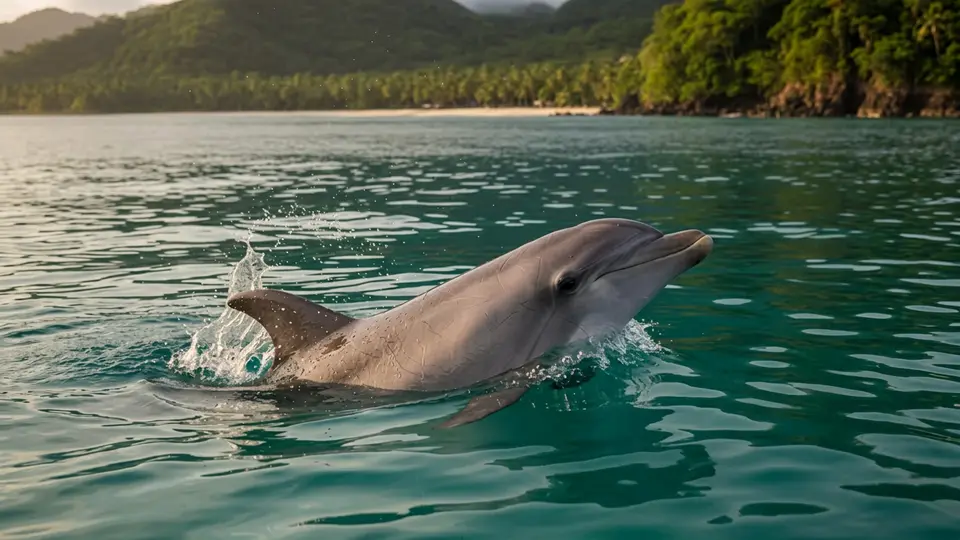
Australian sea lionAI-modifiedAustralian sea lionAustralian fur sealAI-modifiedAustralian fur sealCommon Bottlenose DolphinAI-modifiedCommon Bottlenose Dolphin
Animal groupMammalsAnimal groupMammalsAnimal groupMammals
DestinationsAustraliaDestinationsAustraliaDestinationsCosta Rica, Florida, Galapagos, Mexico, Cape Verde, Croatia, Greece, Portugal, Scotland, Seychelles, Turkey, Maldives, Australia, New Zealand
Scientific nameNeophoca cinereaScientific nameScientific name
All wildlife destinations
AI-modified
Plan your trip

Find your next wildlife adventure

Compare destinations, shore programs and dates with the animals and habitats you would love to see.

  • Naturalist-led shore excursions
  • Responsible wildlife watching
  • Small expedition ships