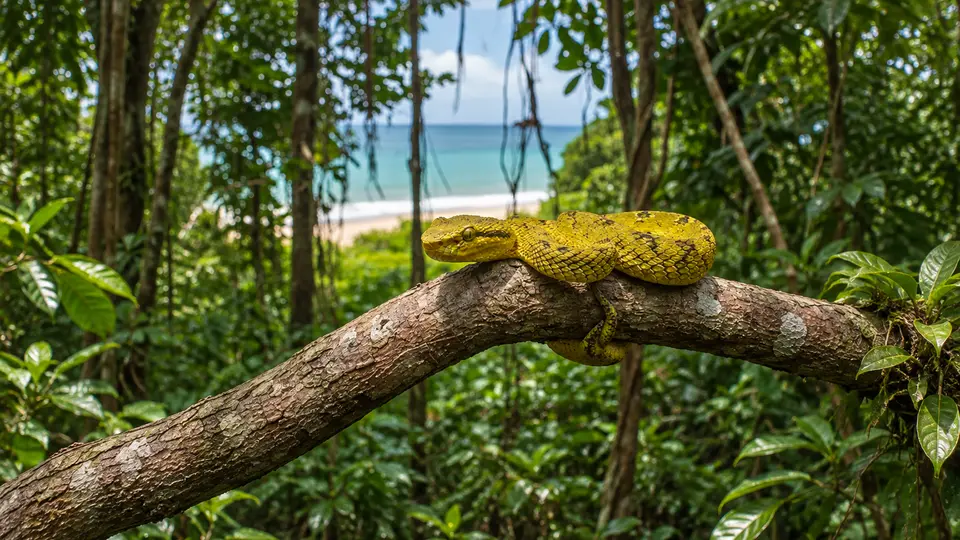
Common Basilisk in its natural habitat, AI illustration
Size60-80 cm including tailLifespanNot reliably establishedStatusLeast Concern

Common Basilisk: where and when to see them

Basiliscus basiliscus

Common Basilisk at a glance

The common basilisk is a long-tailed Central American lizard closely associated with rivers and streams. Usually brown or olive rather than emerald green, it blends into branches, roots and muddy banks. Adult males develop striking crests on the head, back and tail. Its best-known escape response is a rapid dash across the water surface, although this feat is easier for smaller individuals than for heavy adults.

Behaviour & reproduction

Size
60-80 cm including tail
Weight
200-500 g
Lifespan
Not reliably established
Status
Least Concern

Basilisks spend much of the day basking, watching for prey and moving between streamside perches. At night they often sleep on vegetation over water, where an approaching predator can trigger an immediate escape. Males use head movements and displays in territorial interactions. When startled, a basilisk may sprint on its hind legs, using broad, fringed toes to strike the surface before its momentum carries it onward. This remarkable bipedal locomotion, often referred to as 'Jesus Christ lizard' behavior, can cover significant distances across water before the lizard dives and swims. When threatened, they can also remain submerged for extended periods, using their strong tails for propulsion underwater.

Top wildlife locations

Costa Rica wildlife habitat

Costa Rica

Wooded freshwater banks in Pacific lowlands offer plausible viewing from trails and bridges. Coastal excursions may encounter suitable streams, but beach-only visits are insufficient and some sites require inland travel.

Adventure cruises in Costa Rica

Destinations describe the species' habitat, not guaranteed cruise stops. Some animals require an optional inland excursion or are found in restricted reserves.

Fun facts about the Common Basilisk

  • Fringes on the hind toes increase the surface area striking the water.
  • Its tail makes up most of its total length.
  • Young animals generally sustain surface-running more effectively than large adults.
  • Males develop much taller ornamental crests than females.

Best time to see the Common Basilisk

Basilisks may be active throughout the year in warm Costa Rican lowlands. December to April often offers easier access along Pacific-side trails, although stream conditions remain important. Warm mornings with sunshine can encourage basking, without defining a separate nationwide breeding or viewing season. During the drier months, water levels in streams are generally lower, potentially making basilisks more concentrated along remaining water sources and easier to spot. The rainy season, while increasing lushness, can lead to higher, faster-flowing water making observations more challenging.

Common Basilisk: season matrix by destination

Travel and observation windows vary by region. Highlighted months are an orientation for planning, not confirmed sightings or a guarantee of access.

Costa Rica

The Pacific dry season often improves walking access; local water levels and warmth influence activity, and sightings are not assured.

JanFebMarAprMayJunJulAugSepOctNovDec
Cruise ships in Costa Rica

Where the Common Basilisk lives

The species favours warm lowland and foothill environments with freshwater channels, wooded banks and abundant cover. Rivers through forest, secondary growth and agricultural mosaics can all be suitable. Coastal observations generally involve nearby freshwater streams rather than beaches or saline mangrove channels. This adaptability allows them to thrive even in disturbed areas adjacent to human settlements. They are typically found at elevations from sea level up to around 600 meters, preferring the humid tropical and subtropical zones.

What the Common Basilisk eats

Common basilisks are opportunistic omnivores. They take insects, spiders and other small animals, including occasional small vertebrates, while also eating fruit, flowers and leaves. Diet changes with size and opportunity, with larger individuals capable of handling a wider range of food. Juveniles primarily consume smaller insects like ants, crickets, and grasshoppers, alongside some plant matter. Adult basilisks occasionally consume small fish or frogs, showcasing their versatility as opportunistic predators.

Species at a glance

Common name
Common Basilisk
Scientific name
Basiliscus basiliscus
Animal group
Reptiles
Size
60-80 cm including tail
Weight
200-500 g
Lifespan
Not reliably established
Status
Least Concern
Identification
Its mainly brown body and pale flank stripes distinguish it from the vivid green plumed basilisk, while mature males have prominent back and tail crests. Females and juveniles possess smaller, less prominent head crests compared to the dramatic single-lobed crest of adult males. The common basilisk typically ranges from 60 to 80 cm in total length, with about two thirds of that being tail.

Common Basilisk: frequently asked questions

Where can I see the Common Basilisk?
Costa Rica. Scan stream banks from bridges or firm trails without chasing lizards toward the water. Keep clear of slippery edges and avoid handling animals; a basking basilisk may flee before observers notice it. Their excellent camouflage means keen eyes are often needed to spot them amidst riverside foliage. Binoculars are highly recommended for detailed observation of their natural activities without disturbance.
When is the best time to see the Common Basilisk?
Basilisks may be active throughout the year in warm Costa Rican lowlands. December to April often offers easier access along Pacific-side trails, although stream conditions remain important. Warm mornings with sunshine can encourage basking, without defining a separate nationwide breeding or viewing season. During the drier months, water levels in streams are generally lower, potentially making basilisks more concentrated along remaining water sources and easier to spot. The rainy season, while increasing lushness, can lead to higher, faster-flowing water making observations more challenging.
How big does the Common Basilisk get?
60-80 cm including tail. Adult weight: 200-500 g. Size varies with age, sex and population.
How should I behave around the Common Basilisk?
Scan stream banks from bridges or firm trails without chasing lizards toward the water. Keep clear of slippery edges and avoid handling animals; a basking basilisk may flee before observers notice it. Their excellent camouflage means keen eyes are often needed to spot them amidst riverside foliage. Binoculars are highly recommended for detailed observation of their natural activities without disturbance.
What does the Common Basilisk eat?
Common basilisks are opportunistic omnivores. They take insects, spiders and other small animals, including occasional small vertebrates, while also eating fruit, flowers and leaves. Diet changes with size and opportunity, with larger individuals capable of handling a wider range of food. Juveniles primarily consume smaller insects like ants, crickets, and grasshoppers, alongside some plant matter. Adult basilisks occasionally consume small fish or frogs, showcasing their versatility as opportunistic predators.
Are wildlife sightings guaranteed on an adventure cruise?
No. Animals move freely and routes, weather, access restrictions and local conditions influence every outing. Confirm the actual itinerary and shore programme before booking.

Compare wildlife in the same destinations

Explore other reptiles recorded in these destinations. Similar surroundings do not mean the animals share the same habits or viewing season.

Species comparison by animal group and destination
Common BasiliskCommon BasiliskAmerican CrocodileAmerican CrocodileEyelash ViperEyelash Viper
Animal groupReptilesAnimal groupReptilesAnimal groupReptiles
DestinationsCosta RicaDestinationsCosta Rica, FloridaDestinationsCosta Rica
All wildlife destinations
Plan your trip

Find your next wildlife adventure

Compare destinations, shore programmes and dates with the animals and habitats you would love to see.

  • Naturalist-led shore excursions
  • Responsible wildlife watching
  • Small expedition ships

Newsletter

Take Blue Rides with you

Adventure cruise offers, last-minute deals and trip inspiration.

Free, unsubscribe anytime. Details: Privacy Policy

Partner with Blue Rides

Affiliate Program

Recommend adventure cruises and earn commission on every confirmed booking.

Share. Track. Earn.