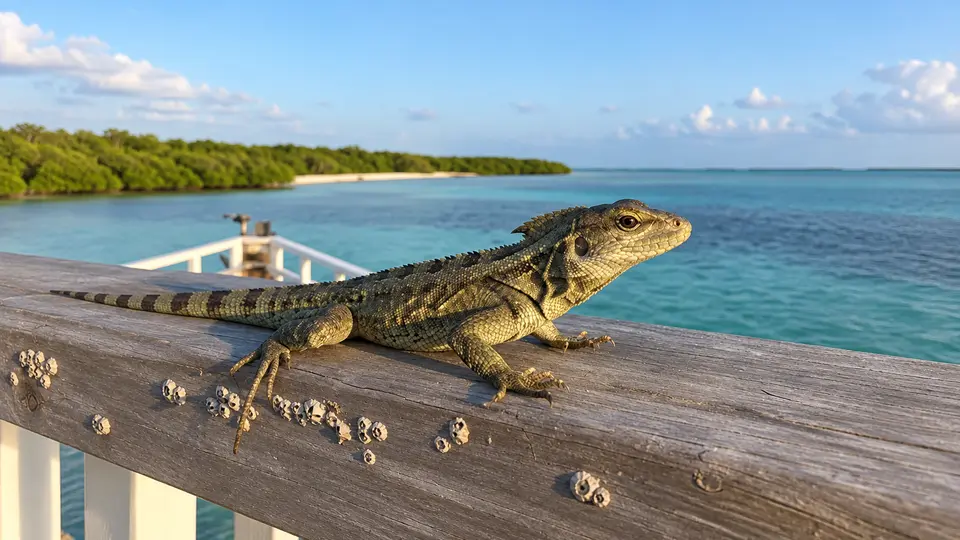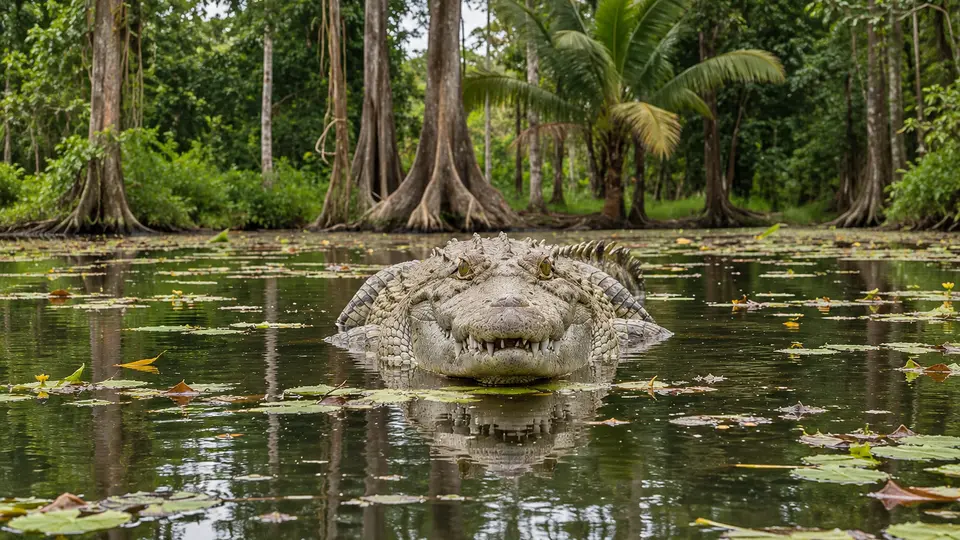
American Crocodile in its natural habitatAI-modified

American CrocodileCrocodylus acutusWhere and when to see them

American Crocodile at a glance

The American crocodile is a large crocodilian of tropical American coasts, with a small northern population in southern Florida. A relatively narrow snout and greyish to olive colouring distinguish it from the American alligator. It is particularly associated with estuaries, lagoons and mangrove systems, although freshwater habitats are also used. Habitat loss, persecution and accidental capture affect populations unevenly, and recovery in some places does not remove the species’ wider conservation concerns.

Behaviour & reproduction

Size
2.5-4.5 m (8.2-14.8 ft) long
Weight
80-400 kg (176-882 lb)
Lifespan
60–70 years
Status
Vulnerable

American crocodiles alternate between water and basking sites to regulate temperature, often becoming less conspicuous during the hottest part of the day. They may rest with the mouth open as part of heat regulation, which is not necessarily a threat display. Females excavate or construct nests according to local substrate and may guard the area. After hatching, mothers can assist young, but observers should never approach either nests or groups of small crocodiles. American crocodiles are largely nocturnal, often hunting under the cover of darkness, though they are also active during the day. They are generally shy and reclusive but will defend themselves if provoked or cornered. Unlike some other crocodilians, they are less known for direct territorial confrontations with conspecifics.

Top wildlife locations

Costa Rica wildlife habitatAI-modified

Costa Rica

Pacific estuaries and large lowland rivers provide plausible views from designated overlooks or safe bridges. A river excursion by road may be required; open banks are hazardous, and crocodile presence never justifies approaching the edge.

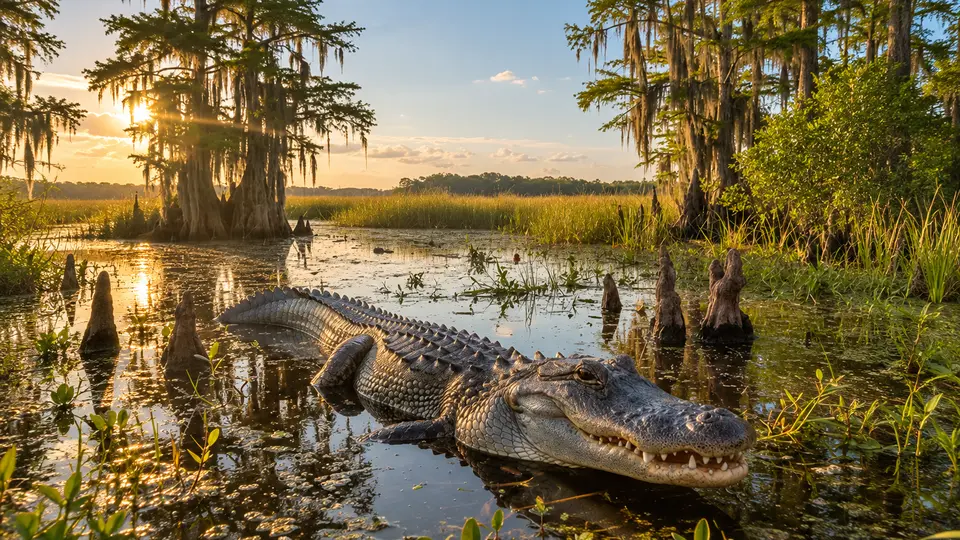
Florida wildlife habitatAI-modified

Florida

Southern Florida’s mangrove lagoons, coastal canals and estuarine margins offer occasional views from managed trails or overlooks. Distribution is localized, sightings are uncertain, and accessible banks should never be treated as safe approach routes.

Destinations describe the species' habitat, not guaranteed cruise stops. Some animals require an optional inland excursion or are found in restricted reserves.

Fun facts about the American Crocodile

  • Salt-excreting glands help it tolerate saline environments.
  • Southern Florida is an area where American crocodiles and alligators coexist.
  • Females may carry hatchlings gently in their mouths.
  • Its range extends along both Caribbean and Pacific parts of tropical America.

Best time to see the American Crocodile

Dry-season travel often makes established viewpoints more accessible, approximately December to April in Pacific Costa Rica and November to April in southern Florida. Crocodiles occur year-round. Regional rainfall differences, water levels and temperature matter more than any single species-wide viewing season. Prime viewing from a vessel often occurs during lower tides in mangrove channels when crocodiles might be more visible on exposed banks. Early mornings and late afternoons are generally more active times for viewing, especially during the dry season. Consider local tide charts in addition to seasonal weather for optimal viewing opportunities.

American Crocodile: season matrix by destination

Travel and observation windows vary by region. Highlighted months are an orientation for planning, not confirmed sightings or a guarantee of access.

Costa Rica

This mainly reflects Pacific dry-season access; Caribbean weather differs, and crocodiles are resident rather than restricted to these months.

JanFebMarAprMayJunJulAugSepOctNovDec
Cruise ships in Costa Rica

Florida

Cooler, drier months usually suit coastal walking and occasional basking observation, without implying a breeding season or guaranteed encounters.

JanFebMarAprMayJunJulAugSepOctNovDec
Cruise ships in Florida

Where the American Crocodile lives

Coastal lagoons, mangrove creeks, estuaries and brackish river mouths are characteristic habitats. The species also occupies rivers, reservoirs and other freshwater environments. Suitable nesting ground must lie above ordinary water levels, making shoreline alteration and disturbance important concerns. This species exhibits a wide salinity tolerance, thriving in both hypersaline and freshwater conditions. They are found in both the Atlantic and Pacific watersheds of Costa Rica, often near human development due to shared water access. Young crocodiles prefer areas with dense vegetation for cover against predators.

What the American Crocodile eats

Fish are important prey, accompanied by crustaceans, turtles, birds and mammals as body size permits. Juveniles take smaller aquatic and terrestrial animals. Adults are opportunistic predators, and their apparent inactivity near a bank does not mean they cannot strike rapidly. Adults employ a 'sit-and-wait' predation strategy, ambushing prey that comes within striking distance. They often consume carrion, contributing to ecosystem cleanup. Their powerful jaws can crush bones, enabling them to tackle large prey items.

Species at a glance

Common name
American Crocodile
Scientific name
Crocodylus acutus
Animal group
Reptiles
Size
2.5-4.5 m (8.2-14.8 ft) long
Weight
80-400 kg (176-882 lb)
Lifespan
60–70 years
Status
Vulnerable
Identification
Its narrower V-shaped snout and exposed lower fourth tooth when the jaws close help separate it from the broad-snouted American alligator. Adult American crocodiles can reach impressive lengths, often exceeding 13 feet, with some males growing much larger. Look for their characteristic gray-green or olive-brown coloration, which helps them camouflage effectively in their environment. Their relatively slender head, compared to other crocodilians, is another key identifier.

American Crocodile: frequently asked questions

Where can I see the American Crocodile?
Costa Rica, Florida. Use designated elevated viewpoints and remain far from the water’s edge. Never feed crocodiles or approach nests, and keep children and pets away from banks. Even a partly submerged animal can launch a sudden attack. Maintain a safe, respectful distance from these powerful reptiles at all times, as they can accelerate with surprising speed. Always follow guide instructions regarding viewing distances and safety protocols. Binoculars or a telephoto lens will enhance observations without disturbing the animals.
When is the best time to see the American Crocodile?
Dry-season travel often makes established viewpoints more accessible, approximately December to April in Pacific Costa Rica and November to April in southern Florida. Crocodiles occur year-round. Regional rainfall differences, water levels and temperature matter more than any single species-wide viewing season. Prime viewing from a vessel often occurs during lower tides in mangrove channels when crocodiles might be more visible on exposed banks. Early mornings and late afternoons are generally more active times for viewing, especially during the dry season. Consider local tide charts in addition to seasonal weather for optimal viewing opportunities.
How big does the American Crocodile get?
2.5-4.5 m (8.2-14.8 ft) long. Adult weight: 80-400 kg (176-882 lb). Size varies with age, sex and population.
How should I behave around the American Crocodile?
Use designated elevated viewpoints and remain far from the water’s edge. Never feed crocodiles or approach nests, and keep children and pets away from banks. Even a partly submerged animal can launch a sudden attack. Maintain a safe, respectful distance from these powerful reptiles at all times, as they can accelerate with surprising speed. Always follow guide instructions regarding viewing distances and safety protocols. Binoculars or a telephoto lens will enhance observations without disturbing the animals.
What does the American Crocodile eat?
Fish are important prey, accompanied by crustaceans, turtles, birds and mammals as body size permits. Juveniles take smaller aquatic and terrestrial animals. Adults are opportunistic predators, and their apparent inactivity near a bank does not mean they cannot strike rapidly. Adults employ a 'sit-and-wait' predation strategy, ambushing prey that comes within striking distance. They often consume carrion, contributing to ecosystem cleanup. Their powerful jaws can crush bones, enabling them to tackle large prey items.
Are wildlife sightings guaranteed on an adventure cruise?
No. Animals move freely and routes, weather, access restrictions and local conditions influence every outing. Confirm the actual itinerary and shore program before booking.

Compare wildlife in the same destinations

Explore other reptiles recorded in these destinations. Similar surroundings do not mean the animals share the same habits or viewing season.

Species comparison by animal group and destination
American CrocodileAI-modifiedAmerican CrocodileAmerican AlligatorAI-modifiedAmerican AlligatorBrown BasiliskAI-modifiedBrown Basilisk
Animal groupReptilesAnimal groupReptilesAnimal groupReptiles
DestinationsCosta Rica, FloridaDestinationsFloridaDestinationsFlorida
Scientific nameCrocodylus acutusScientific nameScientific name
All wildlife destinations
AI-modified
Plan your trip

Find your next wildlife adventure

Compare destinations, shore programs and dates with the animals and habitats you would love to see.

  • Naturalist-led shore excursions
  • Responsible wildlife watching
  • Small expedition ships