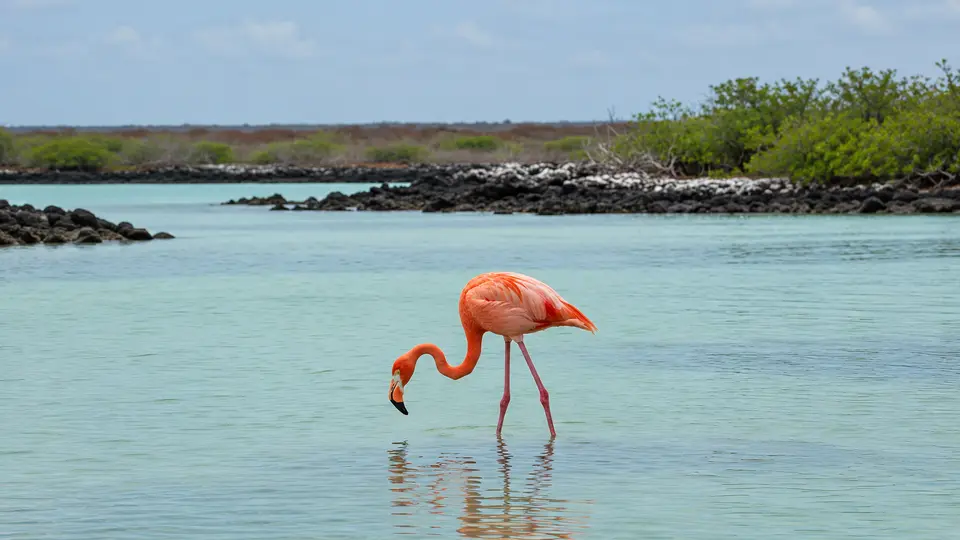
American Flamingo in its natural habitatAI-modified

American FlamingoPhoenicopterus ruberWhere and when to see them

American Flamingo at a glance

The American flamingo is a tall, vividly coloured wading bird of saline and brackish wetlands around the Caribbean and nearby regions, including a small Galápagos population. Its long legs, flexible neck and sharply bent bill are adaptations for feeding in shallow water. Plumage colour depends on pigments obtained through food rather than being produced independently. Local concentrations can change dramatically as water levels and feeding conditions alter, even where flamingos are resident in the broader region.

Behaviour & reproduction

Size
120-145 cm (47.2-57.1 in) tall
Weight
2-3.5 kg (4.4-7.7 lb)
Lifespan
30–40 years in the wild (up to 60 in captivity)
Status
Least Concern

Flamingos feed by lowering the head and working the bill upside down through shallow water or soft sediment. Flocks may move between wetlands as salinity and food availability change. Breeding birds perform coordinated displays involving head movements and wing spreading, then build low mud nests where conditions permit. Both parents incubate and feed the chick with a nutrient-rich secretion. Young birds later gather in groups, but breeding success remains closely tied to wetland conditions. Flamingos are highly social birds, often forming large colonies that can number in the thousands, which aids in protection and locating food. Their unique ability to stand on one leg is thought to conserve body heat or reduce muscle fatigue, though the exact reason is still debated.

Top wildlife locations

Galapagos wildlife habitatAI-modified

Galapagos

Authorized trails beside coastal saline lagoons sometimes provide shore views of small flamingo groups. Access depends on the approved itinerary, and individual lagoons may be empty as birds move between feeding areas.

Mexico wildlife habitatAI-modified

Mexico

Yucatán coastal lagoons and salt wetlands, including the Celestún and Ría Lagartos regions, offer observation from authorized shore viewpoints. Road excursions are usually needed, and seasonal flock movements make any particular viewpoint uncertain.

Destinations describe the species' habitat, not guaranteed cruise stops. Some animals require an optional inland excursion or are found in restricted reserves.

Fun facts about the American Flamingo

  • The bill filters food while held upside down.
  • Chicks hatch with pale down rather than adult pink plumage.
  • Both parents produce a nutritious secretion for their chick.
  • The Galápagos population is geographically isolated from Caribbean populations.

Best time to see the American Flamingo

Galápagos lagoon visits can produce observations throughout the year, although small flocks move between sites. Mexico’s Yucatán also supports year-round birds, with seasonal shifts among wetlands. Choose established local viewpoints based on current conditions rather than assuming that travel season predicts breeding activity. In the Galápagos, visits to sites like Bachas Beach on Santa Cruz or Punta Cormorant on Floreana often yield good sightings year-round. For Mexico, the vast Celestun Biosphere Reserve in Yucatán is a prime location, with peak numbers often observed during the dry season.

American Flamingo: season matrix by destination

Travel and observation windows vary by region. Highlighted months are an orientation for planning, not confirmed sightings or a guarantee of access.

Galapagos

Year-round travel can include suitable lagoon habitat; local water conditions determine use, and breeding is not confined to a dependable visitor window.

JanFebMarAprMayJunJulAugSepOctNovDec
Cruise ships in Galapagos

Mexico

These generally drier travel months suit shore excursions, especially around Celestún; flock distribution varies regionally and does not imply simultaneous breeding.

JanFebMarAprMayJunJulAugSepOctNovDec
Cruise ships in Mexico

Where the American Flamingo lives

Shallow saline lagoons, salt pans, coastal lakes and brackish wetlands provide feeding habitat. Nesting requires relatively secure sites such as mudflats or low islands with suitable material. Wetland depth and salinity influence food availability and can make apparently suitable lagoons temporarily unattractive. Habitat destruction and degradation from human development, pollution, and climate change are significant threats to flamingo populations globally. Preserving these critical wetland ecosystems is essential for their survival, as flamingos are sensitive to changes in water levels and quality.

What the American Flamingo eats

Flamingos filter small organisms from water and sediment, including crustaceans, insect larvae, molluscs and algae. The exact mixture varies between wetlands. Carotenoid pigments in their food contribute to pink and red plumage, while the bill’s internal filtering structures retain edible particles. The specialized lamellae inside the flamingo's bill act like a sieve, filtering out specific food particles. Their diet in the Galápagos often includes brine shrimp, which thrive in hypersaline lagoons and contribute to their vibrant coloration.

Species at a glance

Common name
American Flamingo
Scientific name
Phoenicopterus ruber
Animal group
Birds
Size
120-145 cm (47.2-57.1 in) tall
Weight
2-3.5 kg (4.4-7.7 lb)
Lifespan
30–40 years in the wild (up to 60 in captivity)
Status
Least Concern
Identification
Its strong coral-red plumage and pink bill with a black tip distinguish adults from the paler greater flamingo and the grey-legged Chilean flamingo. Juvenile American flamingos initially have greyish-brown plumage, gradually acquiring their pink coloration over several years as they consume carotenoid-rich foods. They are also noticeably larger than the similar but generally paler Caribbean flamingo, a subspecies of the greater flamingo found in some shared ranges.

American Flamingo: frequently asked questions

Where can I see the American Flamingo?
Galapagos, Mexico. Watch from marked lagoon trails or designated hides with binoculars. Avoid advancing across exposed mudflats, which can disturb feeding birds and nesting areas. Withdraw if birds raise their heads repeatedly or begin moving away together. Always maintain a respectful distance from these easily startled birds, typically at least 50 meters, using binoculars or a spotting scope for close-up views. Approach slowly and quietly, avoiding sudden movements that could cause a flock to take flight, which expends valuable energy.
When is the best time to see the American Flamingo?
Galápagos lagoon visits can produce observations throughout the year, although small flocks move between sites. Mexico’s Yucatán also supports year-round birds, with seasonal shifts among wetlands. Choose established local viewpoints based on current conditions rather than assuming that travel season predicts breeding activity. In the Galápagos, visits to sites like Bachas Beach on Santa Cruz or Punta Cormorant on Floreana often yield good sightings year-round. For Mexico, the vast Celestun Biosphere Reserve in Yucatán is a prime location, with peak numbers often observed during the dry season.
How big does the American Flamingo get?
120-145 cm (47.2-57.1 in) tall. Adult weight: 2-3.5 kg (4.4-7.7 lb). Size varies with age, sex and population.
How should I behave around the American Flamingo?
Watch from marked lagoon trails or designated hides with binoculars. Avoid advancing across exposed mudflats, which can disturb feeding birds and nesting areas. Withdraw if birds raise their heads repeatedly or begin moving away together. Always maintain a respectful distance from these easily startled birds, typically at least 50 meters, using binoculars or a spotting scope for close-up views. Approach slowly and quietly, avoiding sudden movements that could cause a flock to take flight, which expends valuable energy.
What does the American Flamingo eat?
Flamingos filter small organisms from water and sediment, including crustaceans, insect larvae, molluscs and algae. The exact mixture varies between wetlands. Carotenoid pigments in their food contribute to pink and red plumage, while the bill’s internal filtering structures retain edible particles. The specialized lamellae inside the flamingo's bill act like a sieve, filtering out specific food particles. Their diet in the Galápagos often includes brine shrimp, which thrive in hypersaline lagoons and contribute to their vibrant coloration.
Are wildlife sightings guaranteed on an adventure cruise?
No. Animals move freely and routes, weather, access restrictions and local conditions influence every outing. Confirm the actual itinerary and shore program before booking.

Compare wildlife in the same destinations

Explore other birds recorded in these destinations. Similar surroundings do not mean the animals share the same habits or viewing season.

Species comparison by animal group and destination
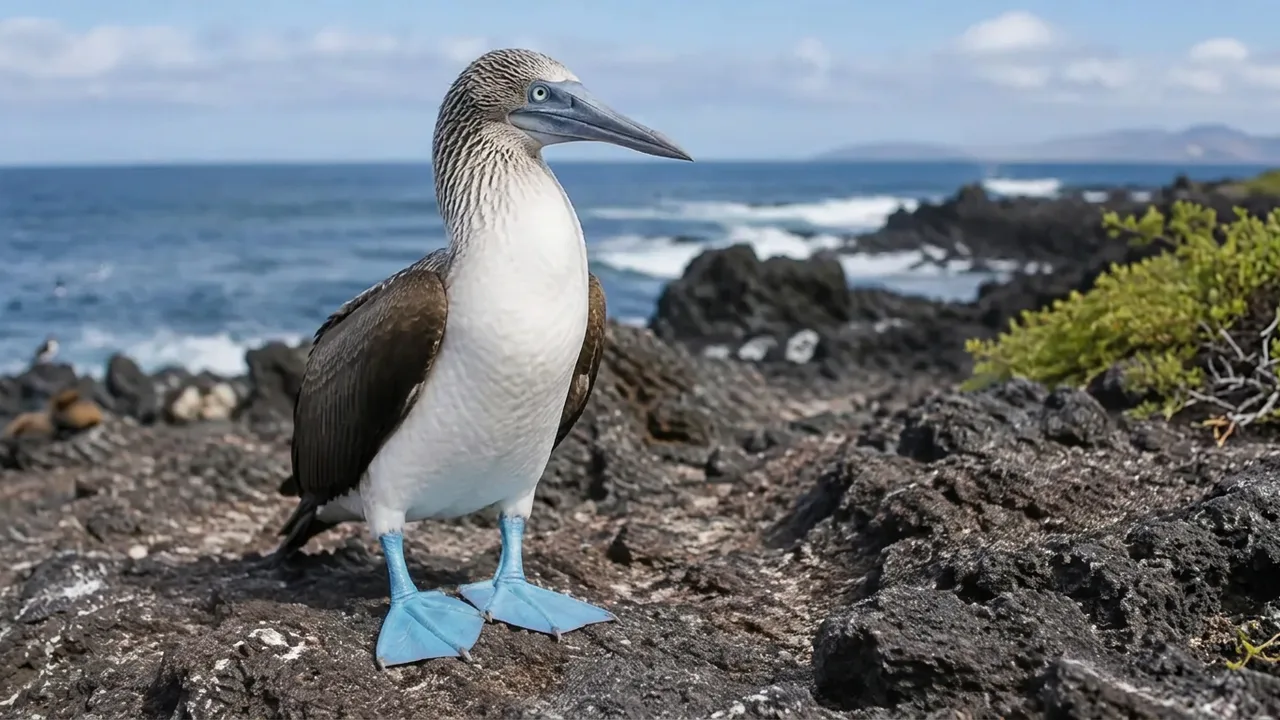
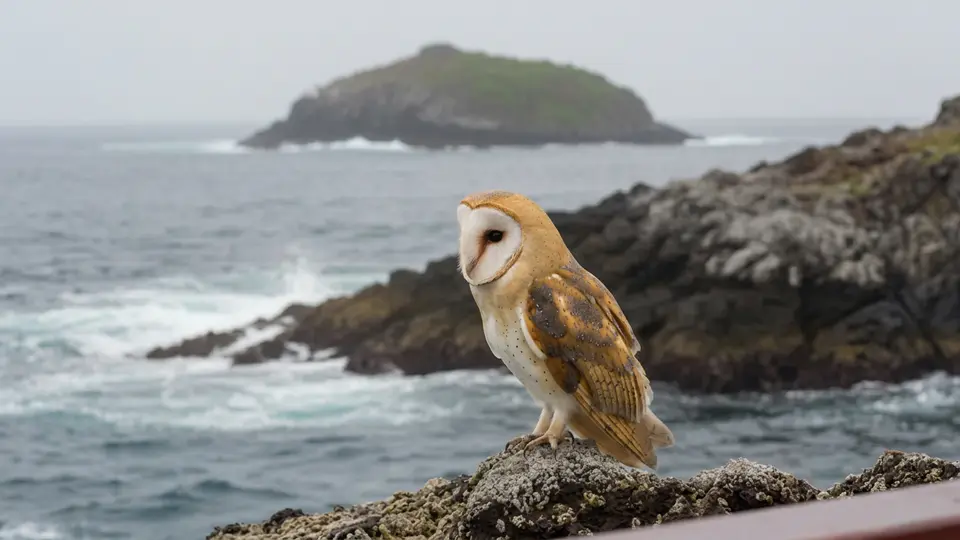
American FlamingoAI-modifiedAmerican FlamingoBarn OwlAI-modifiedBarn OwlBlue-footed BoobyAI-modifiedBlue-footed Booby
Animal groupBirdsAnimal groupBirdsAnimal groupBirds
DestinationsGalapagos, MexicoDestinationsGalapagosDestinationsCosta Rica, Galapagos, Mexico
Scientific namePhoenicopterus ruberScientific nameScientific name
All wildlife destinations
AI-modified
Plan your trip

Find your next wildlife adventure

Compare destinations, shore programs and dates with the animals and habitats you would love to see.

  • Naturalist-led shore excursions
  • Responsible wildlife watching
  • Small expedition ships