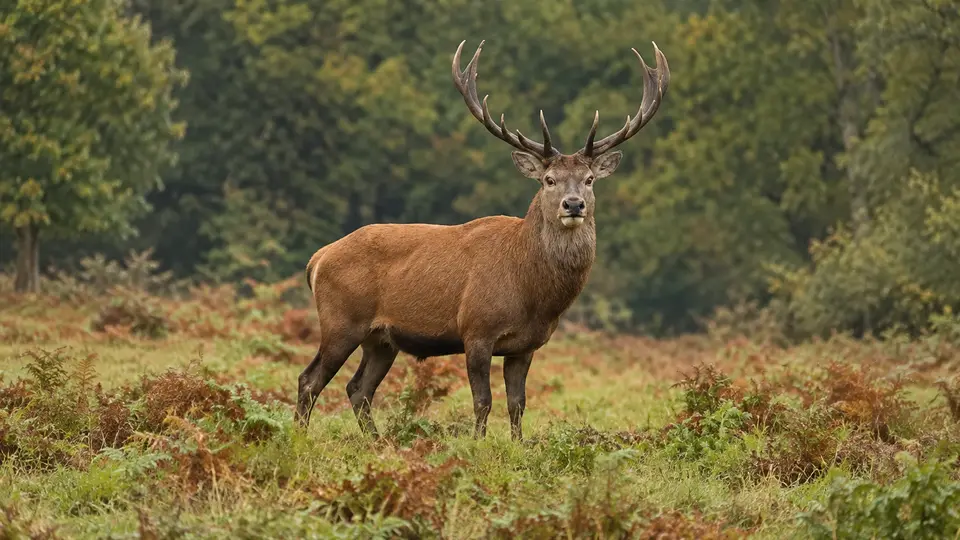
Red Deer in its natural habitat

Red DeerCervus elaphusWhere and when to see them

Red Deer at a glance

Red deer are Scotland's largest native land mammals, with long legs, broad ears and coats that change from reddish summer tones to thicker grey-brown winter fur. Mature males carry branching antlers, while females lack them. Although strongly associated with open Highland scenery, these deer are naturally comfortable in woodland and woodland edges. Their browsing and grazing can substantially influence vegetation, particularly where high densities prevent young trees from becoming established.

Behaviour & reproduction

Size
Shoulder height 95–140 cm
Weight
90–240 kg
Lifespan
10–18 years
Status
Least Concern

Females commonly form groups with calves and related females, while males usually gather separately outside the breeding season. During the autumn rut, mature stags roar, wallow, display and sometimes fight as they compete for access to females. Antlers are shed and regrown annually. Feeding occupies much of the day, interrupted by resting and rumination, and exposed populations often move between sheltered ground and higher slopes as weather and disturbance change. Stags grow progressively larger antlers each year until they reach their prime, which are then shed in late winter or early spring. During the rut, stags often create 'scrapes' on the ground with their antlers and urinate in them, marking their territory and communicating with other deer.

Top wildlife locations

Scotland wildlife habitat

Scotland

Coastal Highland grasslands, sea-loch margins and nearby moorland can offer viewing from roads or established paths. Some populations require an inland excursion, and deer may remain distant or hidden behind broken terrain.
Destinations describe the species' habitat, not guaranteed cruise stops. Some animals require an optional inland excursion or are found in restricted reserves.

Fun facts about the Red Deer

  • A stag's antlers grow beneath a blood-rich covering called velvet.
  • Newborn calves have spotted coats that help conceal them.
  • Stag roars advertise competitive ability during the rut.
  • Red deer have upper canine teeth, sometimes called ivories.

Best time to see the Red Deer

Deer can be observed throughout the year. September and October offer the strongest chance of hearing rutting stags, although timing varies locally. Spring and summer provide longer viewing days, while winter weather may bring animals lower but can make Highland access difficult. Early morning and late evening are often the most productive times for sightings, as deer are generally more active and visible at dawn and dusk. Night vision equipment can sometimes reveal their presence during nocturnal feeding bouts, but this is less common for adventure cruise excursions.

Red Deer: season matrix by destination

Travel and observation windows vary by region. Highlighted months are an orientation for planning, not confirmed sightings or a guarantee of access.

Scotland

Resident year-round; autumn rutting activity is seasonal, while winter travel and visibility depend strongly on weather.

JanFebMarAprMayJunJulAugSepOctNovDec
Cruise ships in Scotland

Where the Red Deer lives

Red deer occupy woodland, scrub, moorland and mountain grassland. Scottish animals frequently use open hills because of land-use history and limited forest cover. Sheltered glens, forest margins and coastal grasslands can also support them, provided food and undisturbed resting places remain available. In Scotland, they can be found from sea level up to alpine pastures. Forest regeneration efforts sometimes include fencing to protect young trees from deer browsing, indicating their significant impact on woodland ecosystems.

What the Red Deer eats

Grasses, sedges and herbs make up much of the diet on open ground. Deer also browse heather, shrubs, leaves and tree shoots, with bark taken under some conditions. As ruminants, they repeatedly chew regurgitated food to help digest fibrous plants. Their diet shifts seasonally, with a higher proportion of woody browse and bark consumed in winter when herbaceous plants are scarce. They typically graze for several hours, then find a safe spot to rest and ruminate.

Species at a glance

Common name
Red Deer
Scientific name
Cervus elaphus
Animal group
Mammals
Size
Shoulder height 95–140 cm
Weight
90–240 kg
Lifespan
10–18 years
Status
Least Concern
Identification
Red deer are larger than roe deer, lack the fallow deer's broad palmate antlers, and usually have a pale rump without the sharply outlined white patch typical of sika. Their coat colour ranges from reddish-brown in summer to grey-brown in winter, offering good camouflage in their environment. Calves are spotted at birth, losing these spots by the end of their first summer.

Red Deer: frequently asked questions

Where can I see the Red Deer?
Scotland. Watch from established paths, roadside viewpoints or a stationary vehicle without blocking traffic. Keep well back from rutting stags and females with calves, never feed deer, and avoid approaching groups to provoke movement or photographs. When observing from a distance, binoculars or spotting scopes enhance detail without disturbing the animals. Approaching too closely can cause stress to the deer, potentially leading them to abandon valuable feeding or resting areas.
When is the best time to see the Red Deer?
Deer can be observed throughout the year. September and October offer the strongest chance of hearing rutting stags, although timing varies locally. Spring and summer provide longer viewing days, while winter weather may bring animals lower but can make Highland access difficult. Early morning and late evening are often the most productive times for sightings, as deer are generally more active and visible at dawn and dusk. Night vision equipment can sometimes reveal their presence during nocturnal feeding bouts, but this is less common for adventure cruise excursions.
How big does the Red Deer get?
Shoulder height 95–140 cm. Adult weight: 90–240 kg. Size varies with age, sex and population.
How should I behave around the Red Deer?
Watch from established paths, roadside viewpoints or a stationary vehicle without blocking traffic. Keep well back from rutting stags and females with calves, never feed deer, and avoid approaching groups to provoke movement or photographs. When observing from a distance, binoculars or spotting scopes enhance detail without disturbing the animals. Approaching too closely can cause stress to the deer, potentially leading them to abandon valuable feeding or resting areas.
What does the Red Deer eat?
Grasses, sedges and herbs make up much of the diet on open ground. Deer also browse heather, shrubs, leaves and tree shoots, with bark taken under some conditions. As ruminants, they repeatedly chew regurgitated food to help digest fibrous plants. Their diet shifts seasonally, with a higher proportion of woody browse and bark consumed in winter when herbaceous plants are scarce. They typically graze for several hours, then find a safe spot to rest and ruminate.
Are wildlife sightings guaranteed on an adventure cruise?
No. Animals move freely and routes, weather, access restrictions and local conditions influence every outing. Confirm the actual itinerary and shore program before booking.

Compare wildlife in the same destinations

Explore other mammals recorded in these destinations. Similar surroundings do not mean the animals share the same habits or viewing season.

Species comparison by animal group and destination
Red DeerRed DeerCommon Bottlenose DolphinCommon Bottlenose DolphinEurasian OtterEurasian Otter
Animal groupMammalsAnimal groupMammalsAnimal groupMammals
DestinationsScotlandDestinationsCosta Rica, Florida, Galapagos, Mexico, Cape Verde, Croatia, Greece, Portugal, Scotland, Seychelles, Turkey, Maldives, Australia, New ZealandDestinationsScotland, Turkey
All wildlife destinations
Plan your trip

Find your next wildlife adventure

Compare destinations, shore programs and dates with the animals and habitats you would love to see.

  • Naturalist-led shore excursions
  • Responsible wildlife watching
  • Small expedition ships

Newsletter

Take Blue Rides with you

Adventure cruise offers, last-minute deals and trip inspiration.

Free, unsubscribe anytime. Details: Privacy Policy

Partner with Blue Rides

Affiliate Program

Recommend adventure cruises and earn commission on every confirmed booking.

Share. Track. Earn.

Your footage, our stage

Send us your videos or pictures.

Captured remarkable nature or wildlife on your journey? Share it with us, we may feature it on Blue Rides.