The humpback whale is a migratory baleen whale found in oceans worldwide. Many populations travel between productive feeding grounds in cooler waters and warmer breeding areas, although migration patterns differ substantially between regions. Its exceptionally long flippers, knobbly head and powerful tail make it distinctive. Historic whaling severely reduced numbers, and recovery remains uneven, with entanglement, vessel strikes, noise and changing food availability continuing to affect populations.
Behaviour & reproduction
Size
12–16 m long
Weight
25–40 tonnes
Lifespan
50–90 years
Status
Least Concern
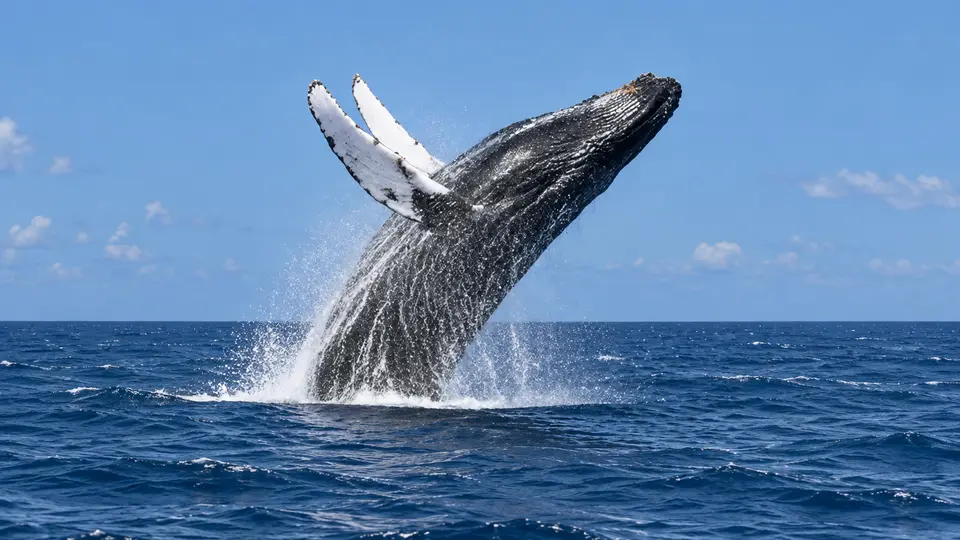
Humpbacks often feed alone or in temporary groups, sometimes coordinating bubble-net feeding to concentrate schooling prey. Breaches, tail slaps and flipper slaps are conspicuous surface behaviours, but their functions vary with context. Males produce elaborate songs, especially around breeding grounds. Mothers maintain close contact with their calves, which depend on rich milk. Individuals can be recognised from the pigmentation and scars on the underside of their tail flukes. Bubble-net feeding involves several whales working together to blow bubbles in a circle around prey, forming a 'net' to trap fish before surfacing to feed. Surface active behaviors like breaching are thought to serve various purposes, including communication, dislodging parasites, or playing. The complex songs produced by males can last for 20 minutes or more and are believed to play a role in mating and social interactions.
Top wildlife locations
Alaska
Sheltered coastal channels and fjord mouths offer potential shore or deck views of feeding whales. Accessible viewpoints exist in some communities, but many productive areas are remote and sightings remain variable.
Pacific headlands and coastal viewpoints overlooking broad bays can provide distant views. Shore detection is variable, and breeding visitors use different stretches of coast rather than every accessible beach.
Pacific headlands and Baja California coastal viewpoints overlook seasonal breeding and migration habitat. Shore views are possible but uneven; many whales remain offshore, requiring binoculars rather than expectations of close encounters.
Outer Cape coastal overlooks and vessel decks can reveal whales using offshore feeding grounds. Shore sightings are less dependable than offshore observations, and exposed headlands require care in wind and swell.
Coastal overlooks on islands such as Boa Vista face seasonal breeding habitat. Distant shore views are possible, but this small breeding aggregation is unevenly distributed and close sightings are not dependable.
Northern fjords and coastal headlands may overlook whales feeding on herring. Road-accessible viewpoints can work locally, but feeding concentrations shift, and winter darkness, ice and weather can restrict safe access.
Destinations describe the species' habitat, not guaranteed cruise stops. Some animals require an optional inland excursion or are found in restricted reserves.
Fun facts about the Humpback Whale
Pectoral flippers can reach roughly one-third of body length.
The underside of the tail flukes provides a natural photographic identification pattern.
Male songs can change across a breeding season and spread between populations.
Some populations undertake migrations of several thousand kilometres between feeding and breeding areas.
Best time to see the Humpback Whale
Choose timing by population rather than hemisphere alone. Alaska and New England favour the warmer feeding season, Antarctica the austral summer, and several tropical regions have winter breeding visitors. Norway also offers autumn and winter feeding opportunities where herring aggregate. In the Southern Hemisphere, humpbacks are primarily observed in Antarctic waters during the austral summer months from December to March for feeding. For tropical breeding grounds such as Fiji, Polynesia, and coastal Mexico, winter to early spring (typically December to April) is the prime viewing period for mothers and calves. Cape Verde and the Seychelles also experience winter breeding visitors, particularly between January and May.
Humpback Whale: season matrix by destination
Travel and observation windows vary by region. Highlighted months are an orientation for planning, not confirmed sightings or a guarantee of access.
Alaska
Late spring through early autumn is a practical coastal travel window overlapping widespread feeding activity; some whales remain outside these months.
Austral winter and spring overlap regional breeding-season movements, but local occurrence remains less predictable than at major breeding concentrations.
This is an entirely marine species using continental shelves, island waters, fjords and open-ocean migration corridors. Feeding grounds generally offer concentrated fish or krill, while many mothers with calves favour relatively sheltered breeding waters. Some populations follow less conventional seasonal movements. Humpbacks are found in all major oceans, undertaking some of the longest migrations of any mammal, sometimes covering thousands of miles between feeding and breeding grounds. While feeding, they prefer colder, productive waters, but they seek warmer, shallow waters for calving and nursing. They are often seen near coastlines, making them more accessible for observation than many other large whale species.
What the Humpback Whale eats
Humpbacks filter small schooling fish and krill through baleen plates, taking large mouthfuls of prey-rich water before expelling the water. Important prey vary geographically and include herring, capelin and sand lance. Many adults feed little during migration and breeding. An adult humpback can consume up to 3,000 pounds of food per day during peak feeding periods to build blubber reserves for migration. In some areas, their diet also includes krill and small crustaceans, which they filter using their fringed baleen plates. These filter-feeders are not equipped with teeth for biting prey.
Species at a glance
Common name
Humpback Whale
Scientific name
Megaptera novaeangliae
Animal group
Mammals
Size
12–16 m long
Weight
25–40 tonnes
Lifespan
50–90 years
Status
Least Concern
Identification
Compared with most other large whales, humpbacks have exceptionally long pectoral flippers, prominent head tubercles and a small dorsal fin set on a variable hump. The underside of their flukes, which they often lift high out of the water before a deep dive, presents unique black and white pigmentation patterns that act like a human fingerprint for individual recognition. Their long pectoral flippers, which can be up to one-third of their body length, are typically white on the underside. The presence of numerous knobby tubercles on their head, each with a single hair follicle, is another key identifier.
Humpback Whale: frequently asked questions
Where can I see the Humpback Whale?
Alaska, Costa Rica, Mexico, New England, Cape Verde, Norway, Portugal, Scotland, Seychelles, Antarctica, Arctic, Australia, Fiji, New Zealand, Polynesia. Watch from coastal viewpoints or a responsible vessel's deck using binoculars. Never encourage an approach, intercept a whale or request closer positioning around calves; follow local distance rules and remain behind secure deck rails. When viewing from a vessel, be prepared for sudden changes in whale direction and maintain a respectful distance at all times, often 100 yards or meters depending on local regulations. Binoculars are essential for observing subtle behaviours and identifying individuals from a safe distance, especially when they are not actively breaching. Always prioritize the whale's well being and avoid disturbing their natural activities.
When is the best time to see the Humpback Whale?
Choose timing by population rather than hemisphere alone. Alaska and New England favour the warmer feeding season, Antarctica the austral summer, and several tropical regions have winter breeding visitors. Norway also offers autumn and winter feeding opportunities where herring aggregate. In the Southern Hemisphere, humpbacks are primarily observed in Antarctic waters during the austral summer months from December to March for feeding. For tropical breeding grounds such as Fiji, Polynesia, and coastal Mexico, winter to early spring (typically December to April) is the prime viewing period for mothers and calves. Cape Verde and the Seychelles also experience winter breeding visitors, particularly between January and May.
How big does the Humpback Whale get?
12–16 m long. Adult weight: 25–40 tonnes. Size varies with age, sex and population.
How should I behave around the Humpback Whale?
Watch from coastal viewpoints or a responsible vessel's deck using binoculars. Never encourage an approach, intercept a whale or request closer positioning around calves; follow local distance rules and remain behind secure deck rails. When viewing from a vessel, be prepared for sudden changes in whale direction and maintain a respectful distance at all times, often 100 yards or meters depending on local regulations. Binoculars are essential for observing subtle behaviours and identifying individuals from a safe distance, especially when they are not actively breaching. Always prioritize the whale's well being and avoid disturbing their natural activities.
What does the Humpback Whale eat?
Humpbacks filter small schooling fish and krill through baleen plates, taking large mouthfuls of prey-rich water before expelling the water. Important prey vary geographically and include herring, capelin and sand lance. Many adults feed little during migration and breeding. An adult humpback can consume up to 3,000 pounds of food per day during peak feeding periods to build blubber reserves for migration. In some areas, their diet also includes krill and small crustaceans, which they filter using their fringed baleen plates. These filter-feeders are not equipped with teeth for biting prey.
Are wildlife sightings guaranteed on an adventure cruise?
No. Animals move freely and routes, weather, access restrictions and local conditions influence every outing. Confirm the actual itinerary and shore program before booking.
Compare wildlife in the same destinations
Explore other mammals recorded in these destinations. Similar surroundings do not mean the animals share the same habits or viewing season.
Species comparison by animal group and destination


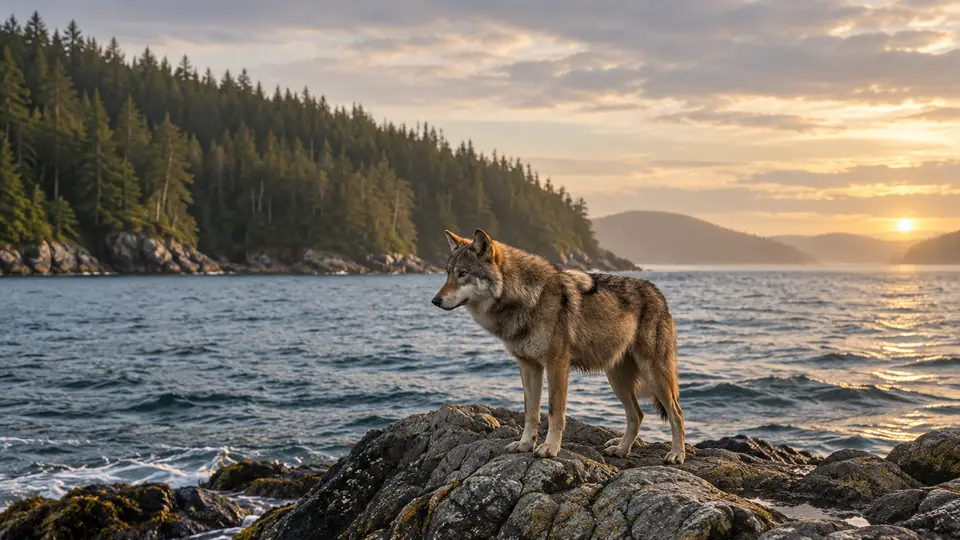 Alexander Archipelago Wolf
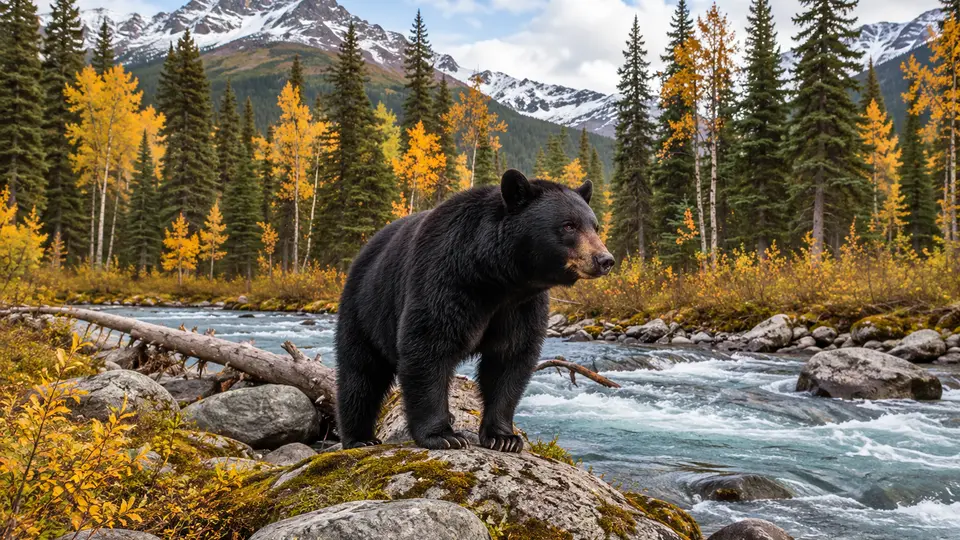 American Black Bear



