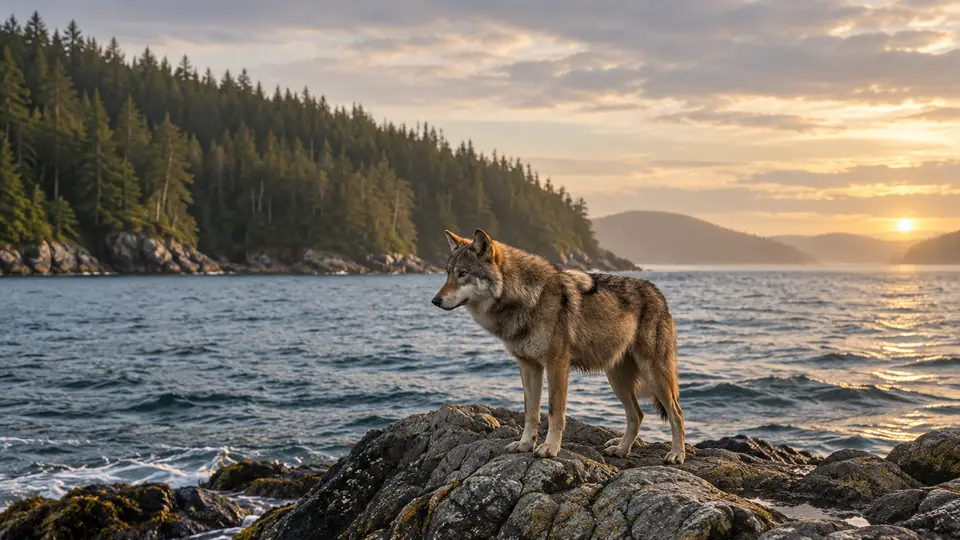
Alexander Archipelago Wolf in its natural habitat, AI illustration

Alexander Archipelago WolfCanis lupus ligoniWhere and when to see them

Alexander Archipelago Wolf at a glance

The Alexander Archipelago wolf is a small coastal form of grey wolf associated with southeastern Alaska’s temperate rainforests and islands. Usually treated as a subspecies, it belongs to a complex of coastal wolf populations whose boundaries and taxonomy remain debated. These wolves link forest and shoreline food webs, hunting deer while also exploiting marine resources. Their conservation circumstances depend on local prey, forest management, trapping and connectivity rather than the global status of grey wolves alone.

Behaviour & reproduction

Size
About 100-120 cm body length, excluding tail
Weight
14-23 kg
Lifespan
Not reliably established
Status
Assessment varies

Family packs maintain territories and cooperate in raising pups, although individuals may travel and forage alone. Wolves follow forest paths, beaches and intertidal margins, leaving tracks that are more frequently noticed than the animals themselves. They can swim between nearby islands and adjust feeding behaviour to locally abundant foods. Packs generally avoid people, and a brief coastal appearance should not be interpreted as tolerance of close approach or an invitation to follow them inland. Communication among pack members often involves howls, barks and body language, though these are rarely observed by humans. Wolves often use established game trails and forest corridors to move efficiently through their dense habitats.

Top wildlife locations

Alaska wildlife habitat

Alaska

Remote southeastern Alaskan beaches and forest edges offer occasional distant deck views. Wolves are rarely seen, many shores are inaccessible, and standard coastal visits should not be treated as reliable wolf-watching opportunities.
Destinations describe the species' habitat, not guaranteed cruise stops. Some animals require an optional inland excursion or are found in restricted reserves.

Fun facts about the Alexander Archipelago Wolf

  • Its name refers to southeastern Alaska’s Alexander Archipelago.
  • Individuals can swim channels between islands.
  • Salmon can connect its diet directly to marine-derived nutrients.
  • Coastal packs differ greatly in how much they rely on deer or marine foods.

Best time to see the Alexander Archipelago Wolf

Late spring through early autumn offers the most practical coastal travel and long daylight for scanning beaches from a distance. There is no dependable visitor season for wolf sightings. Local movements, food availability and avoidance of people matter more than a simple calendar window. While specific sightings are unpredictable, the longer daylight hours of summer maximize opportunities for observing distant shorelines. Patience is key, as most observations are brief and at a considerable distance.

Alexander Archipelago Wolf: season matrix by destination

Travel and observation windows vary by region. Highlighted months are an orientation for planning, not confirmed sightings or a guarantee of access.

Alaska

This is a practical coastal travel window with useful daylight, not evidence of predictable wolf presence along any itinerary.

JanFebMarAprMayJunJulAugSepOctNovDec
Cruise ships in Alaska

Where the Alexander Archipelago Wolf lives

These wolves inhabit southeastern Alaska’s coastal temperate rainforest, including large islands and adjoining mainland areas. Forest cover, productive deer habitat and access to shorelines are important. Roads and fragmented forest can alter human access, mortality risk and the availability of prey. They are primarily found in the Tongass National Forest, a vast temperate rainforest ecosystem. This reliance on a forested, island-rich landscape distinguishes them from other North American wolf populations.

What the Alexander Archipelago Wolf eats

Sitka black-tailed deer are major prey across much of the range. Wolves also take smaller mammals, salmon and carrion, with substantial local variation. Some coastal packs exploit marine mammals, demonstrating that individual populations can rely on very different food combinations. Coastal wolves demonstrate remarkable adaptability, with some populations consuming significant amounts of salmon during spawning season. Their varied diet helps them thrive in an environment where large ungulate populations might be less consistent.

Species at a glance

Common name
Alexander Archipelago Wolf
Scientific name
Canis lupus ligoni
Animal group
Mammals
Size
About 100-120 cm body length, excluding tail
Weight
14-23 kg
Lifespan
Not reliably established
Status
Assessment varies
Identification
Compared with many interior Alaskan wolves, this coastal form is generally smaller and often dark-coated, but appearance alone cannot confirm subspecies identity. Genetic studies confirm their distinctiveness from inland populations, supporting their classification as a unique subspecies. Their slightly smaller size and darker pelage are adaptations to their dense, humid coastal environment.

Alexander Archipelago Wolf: frequently asked questions

Where can I see the Alexander Archipelago Wolf?
Alaska. Scan remote beaches from a deck or established viewpoint using binoculars. Never howl, bait or follow wolves, and keep food secured. If one approaches, stay together, remain upright and withdraw without running. Focus your binoculars on tidelines, estuary mouths and the edges of forest clearings, especially at dawn and dusk. Maintaining a respectful distance is crucial for the animals' long-term well-being and natural behavior.
When is the best time to see the Alexander Archipelago Wolf?
Late spring through early autumn offers the most practical coastal travel and long daylight for scanning beaches from a distance. There is no dependable visitor season for wolf sightings. Local movements, food availability and avoidance of people matter more than a simple calendar window. While specific sightings are unpredictable, the longer daylight hours of summer maximize opportunities for observing distant shorelines. Patience is key, as most observations are brief and at a considerable distance.
How big does the Alexander Archipelago Wolf get?
About 100-120 cm body length, excluding tail. Adult weight: 14-23 kg. Size varies with age, sex and population.
How should I behave around the Alexander Archipelago Wolf?
Scan remote beaches from a deck or established viewpoint using binoculars. Never howl, bait or follow wolves, and keep food secured. If one approaches, stay together, remain upright and withdraw without running. Focus your binoculars on tidelines, estuary mouths and the edges of forest clearings, especially at dawn and dusk. Maintaining a respectful distance is crucial for the animals' long-term well-being and natural behavior.
What does the Alexander Archipelago Wolf eat?
Sitka black-tailed deer are major prey across much of the range. Wolves also take smaller mammals, salmon and carrion, with substantial local variation. Some coastal packs exploit marine mammals, demonstrating that individual populations can rely on very different food combinations. Coastal wolves demonstrate remarkable adaptability, with some populations consuming significant amounts of salmon during spawning season. Their varied diet helps them thrive in an environment where large ungulate populations might be less consistent.
Are wildlife sightings guaranteed on an adventure cruise?
No. Animals move freely and routes, weather, access restrictions and local conditions influence every outing. Confirm the actual itinerary and shore program before booking.

Compare wildlife in the same destinations

Explore other mammals recorded in these destinations. Similar surroundings do not mean the animals share the same habits or viewing season.

Species comparison by animal group and destination
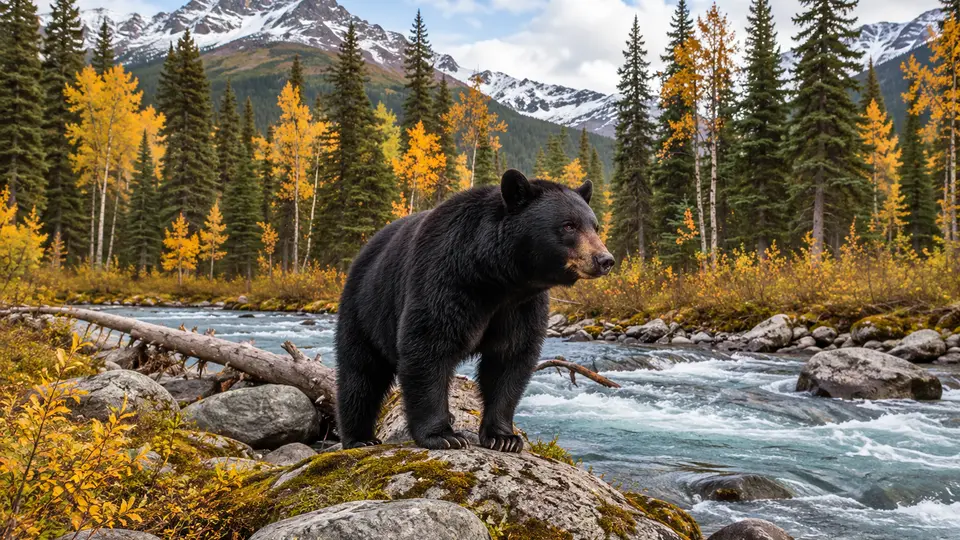
Alexander Archipelago WolfAlexander Archipelago WolfAmerican Black BearAmerican Black BearDall SheepDall Sheep
Animal groupMammalsAnimal groupMammalsAnimal groupMammals
DestinationsAlaskaDestinationsAlaska, New EnglandDestinationsAlaska
All wildlife destinations
Plan your trip

Find your next wildlife adventure

Compare destinations, shore programs and dates with the animals and habitats you would love to see.

  • Naturalist-led shore excursions
  • Responsible wildlife watching
  • Small expedition ships

Newsletter

Take Blue Rides with you

Adventure cruise offers, last-minute deals and trip inspiration.

Free, unsubscribe anytime. Details: Privacy Policy

Partner with Blue Rides

Affiliate Program

Recommend adventure cruises and earn commission on every confirmed booking.

Share. Track. Earn.

Your footage, our stage

Send us your videos or pictures.

Captured remarkable nature or wildlife on your journey? Share it with us, we may feature it on Blue Rides.