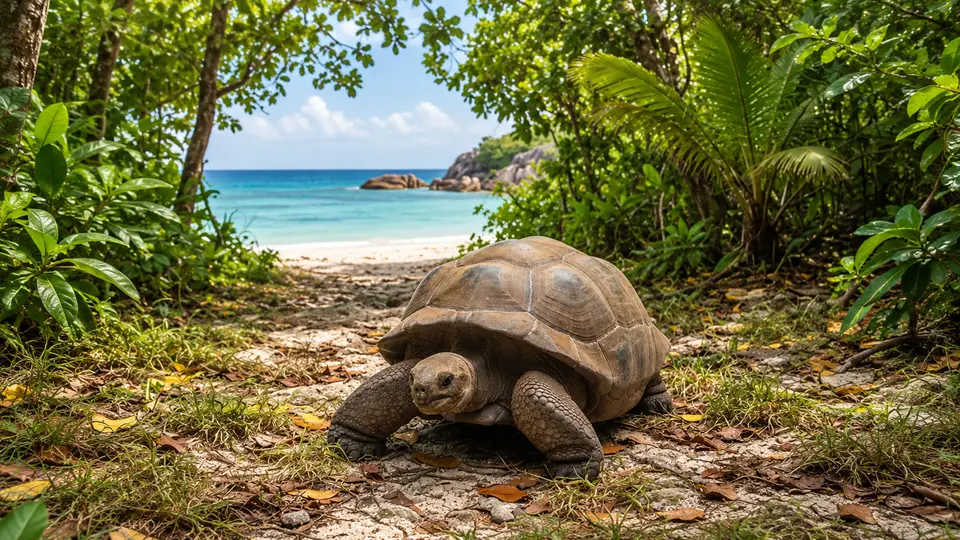
Aldabra Giant Tortoise in its natural habitatAI-modified

Aldabra Giant TortoiseAldabrachelys giganteaWhere and when to see them

Aldabra Giant Tortoise at a glance

The Aldabra giant tortoise is one of the world’s largest living land reptiles and a major ecological influence on its native atoll. Heavy-bodied and long-necked, it grazes low vegetation and moves seeds between feeding areas. Aldabra supports the principal surviving wild population, while introduced and managed groups occur elsewhere in Seychelles. Its abundance on one remote atoll should not obscure its restricted natural distribution or vulnerability to environmental change and introduced threats.

Behaviour & reproduction

Size
90-120 cm (35.4-47.2 in) carapace length
Weight
80-250 kg (176-551 lb)
Lifespan
80-150 years
Status
Vulnerable

Daily activity follows temperature and access to shade. Tortoises often feed in the cooler morning or late afternoon, retreating beneath shrubs or trees during intense heat. They may gather at scarce shade patches or water sources without forming coordinated social groups. Males compete for access to females, and mating can be noisy. Seasonal movements track food availability, while their repeated grazing and passage help maintain open vegetation and well-used routes through the landscape. Courtship rituals involve head bobbing by males, and vocalizations like grunts or hisses can be heard during mating. Their long lifespans, often exceeding 100 years, mean individuals contribute to ecological processes for decades.

Top wildlife locations

Seychelles wildlife habitatAI-modified

Seychelles

Accessible island reserves may offer coastal grassland and woodland views of introduced tortoises. Native Aldabra is remote and strictly controlled, not a routine landing; verify the status and access rules of any population visited.
Destinations describe the species' habitat, not guaranteed cruise stops. Some animals require an optional inland excursion or are found in restricted reserves.

Fun facts about the Aldabra Giant Tortoise

  • Grazing helps create short vegetation known as tortoise turf.
  • Seeds can survive passage through its digestive tract and be dispersed in dung.
  • Males are generally substantially larger than females.
  • Some introduced Seychelles populations are used in ecological restoration projects.

Best time to see the Aldabra Giant Tortoise

Tortoises can be observed year-round at accessible Seychelles sites, with cooler morning hours generally more useful than midday. April to May and October to November often offer calmer travel conditions. Visiting Aldabra itself requires specialist arrangements and remains subject to strict access controls. Prime viewing opportunities are during cooler periods of the day when tortoises are most active. While accessible year-round, travel during the inter-monsoon periods (April/May, Oct/Nov) generally offers the calmest seas for reaching outer islands.

Aldabra Giant Tortoise: season matrix by destination

Travel and observation windows vary by region. Highlighted months are an orientation for planning, not confirmed sightings or a guarantee of access.

Seychelles

These are practical calmer-weather travel windows, not a tortoise breeding calendar; accessible populations can be active throughout the year.

JanFebMarAprMayJunJulAugSepOctNovDec
Cruise ships in Seychelles

Where the Aldabra Giant Tortoise lives

Native habitat includes Aldabra’s coastal grasslands, scrub, open woodland and vegetation growing over coral limestone. Shade and access to fresh plant growth influence local distribution. Animals elsewhere in Seychelles may occupy restored island habitats, reserves or managed grounds rather than native populations. Coastal lagoons and inland freshwater pools provide important drinking sites and wallows, especially during dry seasons. Some populations thrive in human-modified landscapes such as old plantations or resort grounds, indicating adaptability.

What the Aldabra Giant Tortoise eats

Grasses, sedges, herbs, fallen leaves and fruit make up most of the diet. Individuals also browse low shrubs when reachable. Although primarily herbivorous, giant tortoises occasionally consume animal material, so their feeding ecology is broader than a strict grass-only description suggests. Their broad diet includes scavenging on carrion and occasionally consuming faeces, contributing to nutrient cycling. Tortoises play a vital role as keystone herbivores, shaping plant communities through their grazing pressure.

Species at a glance

Common name
Aldabra Giant Tortoise
Scientific name
Aldabrachelys gigantea
Animal group
Reptiles
Size
90-120 cm (35.4-47.2 in) carapace length
Weight
80-250 kg (176-551 lb)
Lifespan
80-150 years
Status
Vulnerable
Identification
Its enormous domed shell, thick columnar legs and long neck distinguish it from Seychelles’ much smaller freshwater turtles and marine turtles. Their scaly skin is typically grey to dark brown, providing camouflage within their varied habitats. Younger tortoises often have a smoother, more rounded shell before developing the more pronounced domed shape with age.

Aldabra Giant Tortoise: frequently asked questions

Where can I see the Aldabra Giant Tortoise?
Seychelles. Give tortoises room to move and never sit on, lift or feed them. Keep hands away from the mouth, avoid blocking routes to shade, and distinguish managed encounters from observation of free-ranging animals. Approach slowly and quietly, giving them a wide berth to avoid causing stress or altering natural behavior. Respect their natural pace and allow them to initiate or conclude any interaction by moving away freely.
When is the best time to see the Aldabra Giant Tortoise?
Tortoises can be observed year-round at accessible Seychelles sites, with cooler morning hours generally more useful than midday. April to May and October to November often offer calmer travel conditions. Visiting Aldabra itself requires specialist arrangements and remains subject to strict access controls. Prime viewing opportunities are during cooler periods of the day when tortoises are most active. While accessible year-round, travel during the inter-monsoon periods (April/May, Oct/Nov) generally offers the calmest seas for reaching outer islands.
How big does the Aldabra Giant Tortoise get?
90-120 cm (35.4-47.2 in) carapace length. Adult weight: 80-250 kg (176-551 lb). Size varies with age, sex and population.
How should I behave around the Aldabra Giant Tortoise?
Give tortoises room to move and never sit on, lift or feed them. Keep hands away from the mouth, avoid blocking routes to shade, and distinguish managed encounters from observation of free-ranging animals. Approach slowly and quietly, giving them a wide berth to avoid causing stress or altering natural behavior. Respect their natural pace and allow them to initiate or conclude any interaction by moving away freely.
What does the Aldabra Giant Tortoise eat?
Grasses, sedges, herbs, fallen leaves and fruit make up most of the diet. Individuals also browse low shrubs when reachable. Although primarily herbivorous, giant tortoises occasionally consume animal material, so their feeding ecology is broader than a strict grass-only description suggests. Their broad diet includes scavenging on carrion and occasionally consuming faeces, contributing to nutrient cycling. Tortoises play a vital role as keystone herbivores, shaping plant communities through their grazing pressure.
Are wildlife sightings guaranteed on an adventure cruise?
No. Animals move freely and routes, weather, access restrictions and local conditions influence every outing. Confirm the actual itinerary and shore program before booking.

Compare wildlife in the same destinations

Explore other reptiles recorded in these destinations. Similar surroundings do not mean the animals share the same habits or viewing season.

Species comparison by animal group and destination
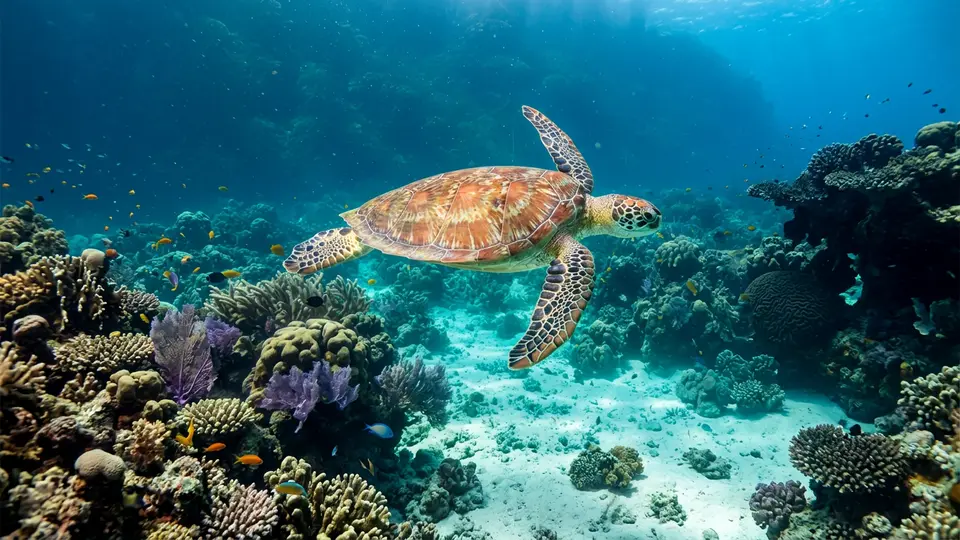
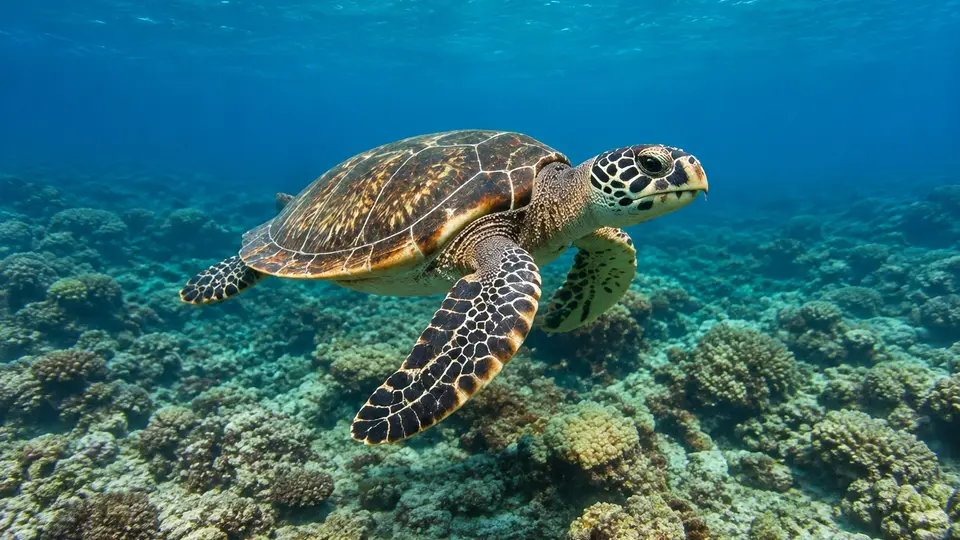
Aldabra Giant TortoiseAI-modifiedAldabra Giant TortoiseGreen Sea TurtleAI-modifiedGreen Sea TurtleHawksbill Sea TurtleAI-modifiedHawksbill Sea Turtle
Animal groupReptilesAnimal groupReptilesAnimal groupReptiles
DestinationsSeychellesDestinationsCosta Rica, Florida, Galapagos, Mexico, Cape Verde, Egypt, Greece, Seychelles, Turkey, Indonesia, Maldives, Thailand, Vietnam, Australia, Fiji, PolynesiaDestinationsEgypt, Seychelles, Indonesia, Maldives, Thailand, Vietnam, Fiji, Polynesia
Scientific nameAldabrachelys giganteaScientific nameScientific name
All wildlife destinations
AI-modified
Plan your trip

Find your next wildlife adventure

Compare destinations, shore programs and dates with the animals and habitats you would love to see.

  • Naturalist-led shore excursions
  • Responsible wildlife watching
  • Small expedition ships