Bluerides – Blue Rides - Book dykkecruise over hele verdenOCEAN ADVENTURES
Ekspedisjonscruise

Adventure Cruise destinations

Small ships, remarkable places and unforgettable wildlife.

  • AlaskaAlaskaAmericas
  • Costa RicaCosta RicaAmericas
  • FloridaFloridaAmericas
  • GalápagosGalápagosAmericas
  • MexicoMexicoAmericas
  • New EnglandNew EnglandAmericas
  • Cape VerdeCape VerdeEMEA
  • CroatiaCroatiaEMEA
Adventure CruisesAdventure Cruise search
TilbudNatur og dyrelivVårt løfteKontakt
EkspedisjonscruiseTilbudNatur og dyrelivVårt løfteKontaktLogg inn

Kontakt

Ta kontakt

Ta gjerne kontakt, vi hjelper deg med å finne riktig tur eller svare på spørsmål.

E-postSkriv til oss, vi svarer som regel i løpet av få timer.
contact@bluerides.com
WhatsAppSend oss en melding på WhatsApp, man–fre 10:00–16:00 (CET).
Start WhatsApp-chat
TelefonRing oss, vi hjelper deg gjerne.
Gratis samtale, man–fre 10:00–20:00 (CET).
Europa+49 800 1144 990USA+1 888 557 7735Storbritannia+44 800 707 4152Australia+61 2 8599 6113Canada+1 888 557 7735
Which expedition is yours?Answer 8 quick questions and find the adventure cruise that fits you.
8 questions, 1 minute·Plus Gift
Sikre betalingsmåterDine betalinger er fullt sikret med AES-256-kryptering.
Drevet avStripeWiseAMEXPayGoogle PaySEPABank
Kolofon·Vilkår og betingelser·Personvern·Om oss·Kontakt·Ansvarsfraskrivelse·Partnerprogram·
Besøk oss her

© 2026 Blue Rides. Alle rettigheter reservert.·

Bluerides – Blue Rides - Book dykkecruise over hele verdenOCEAN ADVENTURES
Ekspedisjonscruise

Adventure Cruise destinations

Small ships, remarkable places and unforgettable wildlife.

  • AlaskaAlaskaAmericas
  • Costa RicaCosta RicaAmericas
  • FloridaFloridaAmericas
  • GalápagosGalápagosAmericas
  • MexicoMexicoAmericas
  • New EnglandNew EnglandAmericas
  • Cape VerdeCape VerdeEMEA
  • CroatiaCroatiaEMEA
Adventure CruisesAdventure Cruise search
TilbudNatur og dyrelivVårt løfteKontakt
EkspedisjonscruiseTilbudNatur og dyrelivVårt løfteKontaktLogg inn
Small-ship adventure cruise scenery in New Zealand
Hjem›Adventure Cruises›New Zealand
New Zealand · Small-ship exploration

New Zealand Cruises

Fiords, native forest and southern islands

Small ships

Personal, guided voyages

Choose your season

Nov – Mar

Shore experiences

On your confirmed itinerary

Nature & wildlife

Coasts, trails & island habitats

Fiords, native forest and southern islands

The destination is the experience

New Zealand expedition routes can explore Fiordland, coastal wildlife habitats and subantarctic islands. The gateway and season depend on the actual region, while protected landings often require specific permits and strict biosecurity.
AI-generated illustration of Milford Sound

A journey through Milford Sound and the surrounding region brings the landscape into focus. Your ship connects the coastal places while guided excursions reveal the details that are easy to miss from the deck.

Choose the actual stops on the program, not just the destination name. Routes that include Doubtful Sound can offer a different balance of nature and culture from those centred on Southern coastal harbours. Activities, permits and walking demands vary by voyage.

When to go

Best time to travel: seasons & weather

Match your New Zealand route to the season, the shore experiences you want and local conditions. Coastal regions can differ considerably within the same destination.

Shore-excursion season in New Zealand at a glance

JanFebMarAprMayJunJulAugSepOctNovDec
ExcellentGoodOff-season

Excellent, peak season (Nov – Mar)

Summer: fjord walks, native bird sanctuaries, sub-Antarctic island landings and long daylight.

Good, shoulder season (Apr & Oct)

Autumn and spring bring crisp air and fewer visitors.

Off-season (May – Sep)

Winter weather in the south; few expedition cruises.

Typical patterns for planning shore excursions; weather varies year to year and is never guaranteed.

Peak season · Nov – Mar

Summer: fjord walks, native bird sanctuaries, sub-Antarctic island landings and long daylight.

Shoulder season · Apr & Oct

Autumn and spring bring crisp air and fewer visitors.

Season & shore-walk conditions

Jan
Peak
304 mm
Seasonal
Feb
Peak
310 mm
Seasonal
Mar
Peak
260 mm
Seasonal
Apr
Variable
282 mm
Seasonal
May
Limited
341 mm
Limited
Jun
Limited
231 mm
Limited
Jul
Limited
288 mm
Limited
Aug
Limited
267 mm
Limited
Sep
Limited
369 mm
Limited
Oct
Variable
322 mm
Seasonal
Nov
Peak
303 mm
Seasonal
Dec
Peak
316 mm
Seasonal
Season & shore-walk conditions
Typical patternJanFebMarAprMayJunJulAugSepOctNovDec
Shore conditionsPeakPeakPeakVariableLimitedLimitedLimitedLimitedLimitedVariablePeakPeak
Rain / snow · mm304310260282341231288267369322303316
CruisesSeasonalSeasonalSeasonalSeasonalLimitedLimitedLimitedLimitedLimitedSeasonalSeasonalSeasonal

Temperatures describe the Milford Sound area. Subantarctic islands and northern New Zealand differ. Cruise operation depends on the published itinerary, not the weather rating.

Air temperatures through the year

Average daily highAverage daily low
-5°C4°C13°C21°C30°CJanFebMarAprMayJunJulAugSepOctNovDec

Temperatures in Milford Sound shift clearly through the year: January is the warmest month with average highs near 22°C, while July is the coolest at around 10°C, a swing of roughly 12°C. Nights typically run about 9°C below the daytime high, so a layer for evenings is worth packing. The months between these extremes warm up and cool down gradually rather than abruptly.

Milford Sound · 2015–2024. Monthly averages, rounded for planning; not a forecast or a local station measurement. Rainfall includes water-equivalent snowfall where relevant.

Wildlife on land & along the coast

Meet the locals

The most memorable encounters often happen at walking pace. Animals live in specific habitats, so the places on your route matter as much as the month. Follow local wildlife distances and your guide.
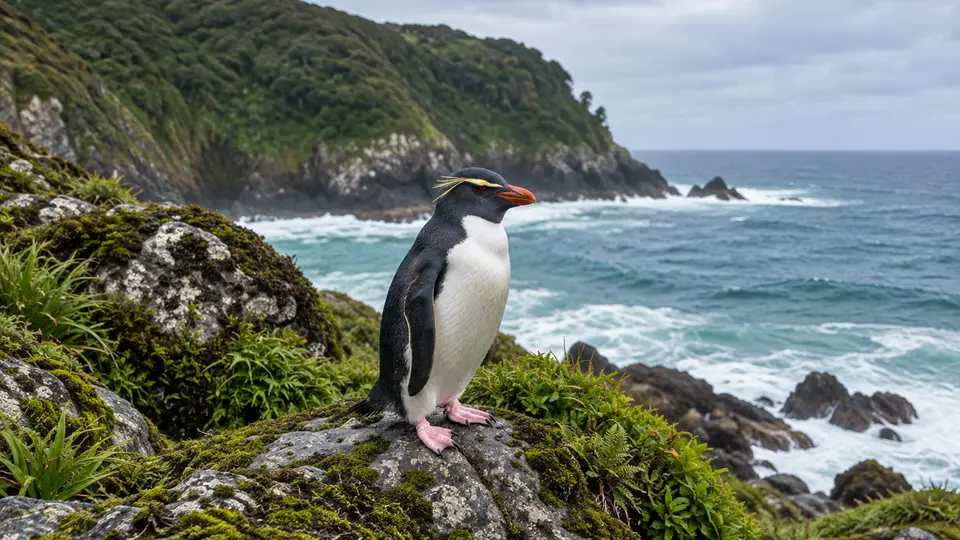
AI-generated illustration of Fiordland penguin

Breeding season, access-dependent

Fiordland penguin

Southwestern South Island & Stewart Island

Visit approved viewing areas over forest-backed shores where tawaki breed.

AI-generated illustration of New Zealand sea lion

Year-round (mainland)

New Zealand sea lion

Southern mainland beaches & dunes

Watch southern mainland beaches for this rare sea lion; subantarctic colonies need permits.

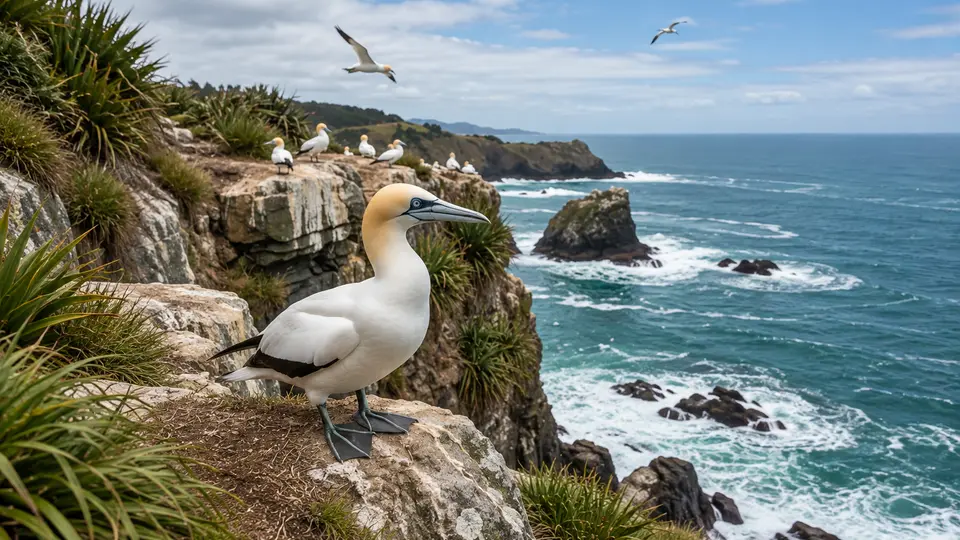
AI-generated illustration of Australasian gannet

Spring–summer (nesting)

Australasian gannet

Established coastal gannet colonies

Visit managed headland colonies to watch nesting gannets with their golden heads.

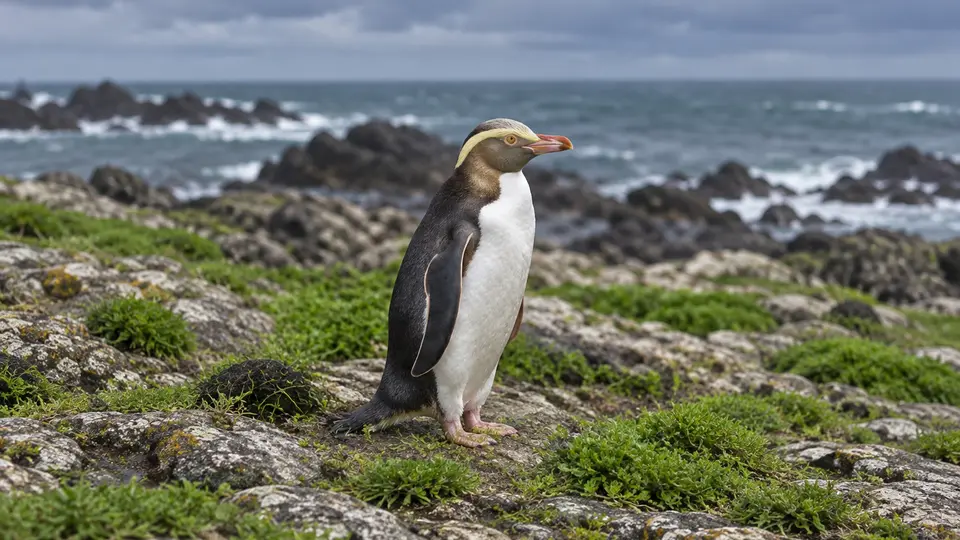
AI-generated illustration of Yellow-eyed penguin

Check current local access

Yellow-eyed penguin

Southeastern South Island viewpoints

Watch managed viewpoints over nesting coasts for this rare, pale-eyed penguin.

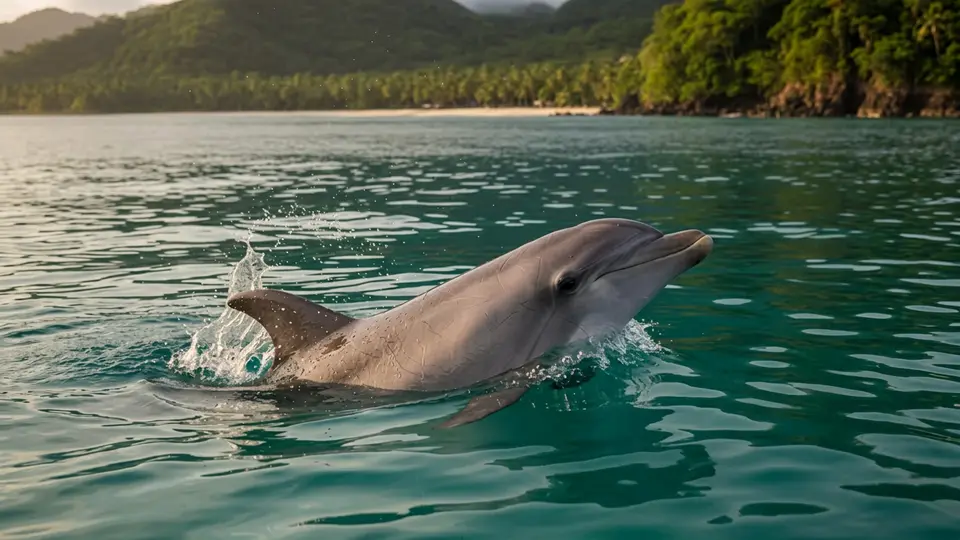
AI-generated illustration of Bottlenose dolphin

Austral summer

Bottlenose dolphin

Northern bays & southern fiords

Scan northern coastal bays and southern fiord waters for resident dolphin pods.

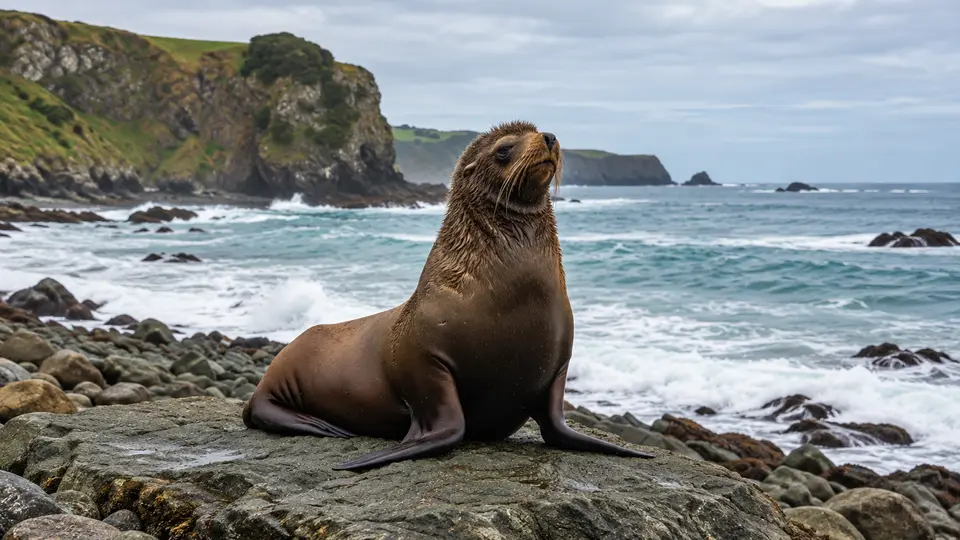
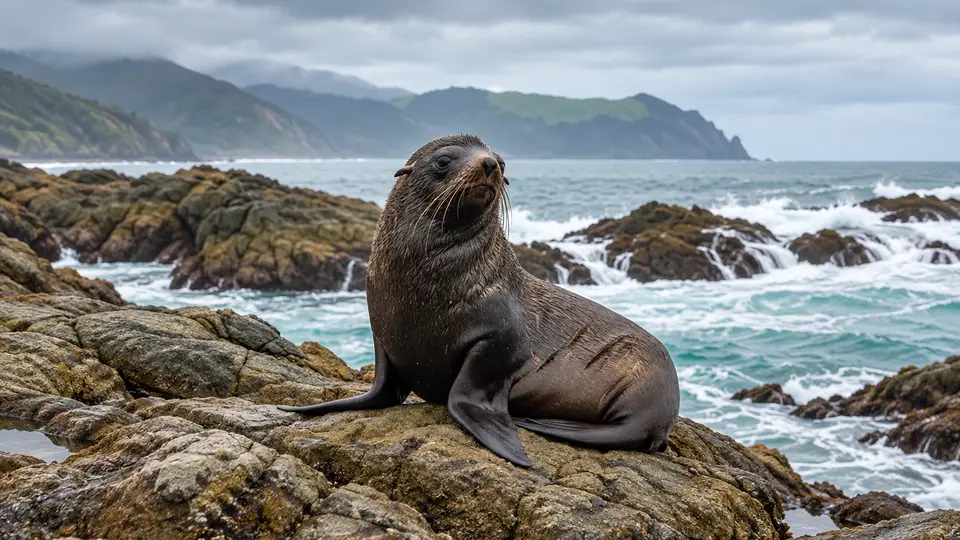
AI-generated illustration of New Zealand fur seal

Year-round, breeding in summer

New Zealand fur seal

Rocky coastal viewpoints

Watch rocky coastal viewpoints for hauled-out seals and breeding colonies.

Wildlife is wild: sightings, courtship displays and nesting activity cannot be guaranteed. Species occur in different parts of the region, not at every landing.

Show all other animals

Every shore tells a different story

Shore excursions worth planning around

These are examples of places and experiences, not a promised itinerary. Look for the actual landing names and included transfers in your ship’s day-by-day program.

01 · Coastal landscapes

Milford Sound

Steep mountain walls and waterfalls create a dramatic fiord setting. Visits depend on the voyage route.

Check access, activity level and inclusion on your confirmed itinerary.

02 · Local heritage

Doubtful Sound

A more remote fiord with forested slopes and sheltered inlets.

Check access, activity level and inclusion on your confirmed itinerary.

03 · Guided exploration

Fiordland forest

Wet native forest supports ferns, mosses and endemic birds, seen on authorised trails.

Check access, activity level and inclusion on your confirmed itinerary.

04 · Nature ashore

Subantarctic islands

Specialist voyages may reach protected southern island groups with controlled landings and biosecurity.

Check access, activity level and inclusion on your confirmed itinerary.

05 · Island experiences

Southern coastal harbours

Ports such as Dunedin or Bluff provide gateways for southern expedition programs.

Check access, activity level and inclusion on your confirmed itinerary.

06 · Route highlights

Native island habitats

Island sanctuaries protect native wildlife

Check access, activity level and inclusion on your confirmed itinerary.

AI-generated illustration of Glacial fiords

Glacial fiords

Ice carved deep valleys, now filled by the sea and bordered by steep mountain walls.

AI-generated illustration of Temperate native forest

Temperate native forest

High rainfall supports native forest, mosses and ferns, especially in Fiordland.

AI-generated illustration of Biosecurity & sanctuaries

Biosecurity & sanctuaries

Protected islands have strict biosecurity. Clean all equipment and keep wildlife distances set by the guide.

Choose places before cabins

Which New Zealand route is right for you?

Route labels vary between operators. Compare the actual ports, landings and shore programs, not just the regional name.
AI-generated illustration of Fiordland

Fiordland

Choose the actual sounds and permitted shore walks rather than a generic South Island label.

AI-generated illustration of Southern coastal routes

Southern coastal routes

Coastal journeys combine ports, wildlife habitats and route-specific land visits.

AI-generated illustration of Subantarctic expeditions

Subantarctic expeditions

Longer ocean voyages require permits, strict cleaning checks and tolerance for rougher seas.

View New Zealand cruise departures

Your base between shore days

New Zealand cruise ships

Explore the cruise ships already in our collection. Compare cabins, guest numbers and day-by-day routes; daily prices appear only when current pricing is available.

Loading New Zealand cruise ships…

Flights & arrival

How to get to New Zealand

Fly into Auckland (AKL), Christchurch (CHC) or Queenstown (ZQN), depending on the route.
AKL

Flight gateway

Auckland Airport

Subantarctic voyages often depart from Bluff or Dunedin (DUD). Confirm the onward flight or harbour transfer from Auckland Airport with your operator before booking.

CHC

Flight gateway

Christchurch International

Subantarctic voyages often depart from Bluff or Dunedin (DUD). Confirm the onward flight or harbour transfer from Christchurch International with your operator before booking.

ZQN

Flight gateway

Queenstown Airport

An inland arrival option. Confirm the complete road journey to the embarkation town and plan to reach that town at least a day before departure.

DUD

Flight gateway

Dunedin Airport

Subantarctic voyages often depart from Bluff or Dunedin (DUD). Confirm the onward flight or harbour transfer from Dunedin Airport with your operator before booking.

Connections & onward transfers

Onward journey

Subantarctic voyages often depart from Bluff or Dunedin (DUD).

Before departure

Arrive one day early.

Arrive early, protect your departure

We recommend reaching the embarkation town at least one day before departure. Allow more time for remote destinations, separate flights, ferries or long transfers, and follow any earlier arrival or briefing required by your operator.

  • Confirm the embarkation town, harbour meeting point and check-in time before buying flights.
  • Ask which airport transfer, ferry or domestic connection is included in the cruise.
  • Book flexible connections where possible and allow extra time for remote routes.
  • The airports listed are alternatives for different routes, not confirmed flights for this ship. Check the port, meeting time and transfers in your final travel documents.

Flight schedules and entry requirements change. Confirm current arrangements with your operator before booking.

Before you set sail

A little preparation makes a big difference

Pack for the landings

  • Grippy walking shoes and suitable footwear for wet landings
  • Sun hat, high-protection sunscreen and refillable water bottle
  • Light rain jacket and a wind layer for boat transfers
  • Binoculars and a camera, with no flash around wildlife
  • Personal medication and motion-sickness advice before departure

Respect the destination

  • Follow local guides, landing permissions and protected-area rules
  • Keep the required distance from wildlife and avoid nesting or resting areas
  • Never feed or touch animals; do not collect natural objects
  • Clean footwear and equipment before sensitive island landings
  • Respect local dress, community invitations and photography permission
AI-generated illustration of Native island habitats

Discuss health, mobility and dietary needs before choosing a route. Remote areas may have limited medical facilities; travel insurance should cover your activities and any necessary evacuation.

Good to know

New Zealand cruise questions

When is the best time for a New Zealand cruise?
Summer: fjord walks, native bird sanctuaries, sub-Antarctic island landings and long daylight. Autumn and spring bring crisp air and fewer visitors. The climate chart describes Milford Sound; conditions elsewhere on the route can differ.
Which New Zealand route should I choose?
Fiordland: Choose the actual sounds and permitted shore walks rather than a generic South Island label. Southern coastal routes: Coastal journeys combine ports, wildlife habitats and route-specific land visits. Subantarctic expeditions: Longer ocean voyages require permits, strict cleaning checks and tolerance for rougher seas.
Are shore excursions included?
Check the inclusions and actual day-by-day program. Visits such as Milford Sound or Doubtful Sound require the right route; park entry, transfers and optional activities may cost extra.
What wildlife can I see in New Zealand?
The region supports species such as Fiordland penguin, New Zealand sea lion, Australasian gannet. Different species use different habitats; not every animal occurs at every port. Sightings are never guaranteed.
Do I need to be an experienced hiker?
Not necessarily, but uneven paths, steps and wet transfers can be demanding. Ask about the exact walking distances, terrain and assistance before choosing your voyage.
Can the itinerary change?
Yes. Weather, sea state, tides, ice, permits and wildlife protection can change landings. Your captain and expedition team determine safe alternatives.
What entry documents do I need for New Zealand?
Your cruise visits New Zealand. Visa requirements, electronic travel authorisations and passport-validity rules depend on your nationality and travel documents. Check the current official guidance linked below, including transit-country rules, before travelling.Official entry guidance
When should I arrive before the cruise?
Reach the confirmed embarkation town at least one day early, or earlier if your operator requires briefing nights. Allow extra time for domestic flights, ferries and remote gateways.
On this page
  • 01Why this destination
  • 02Seasons & weather
  • 03Wildlife on land
  • 04Shore excursions
  • 05Choose your route
  • 06Cruise ships
  • 07Getting there
  • 08Plan your visit
  • 09Questions & answers

Find your adventure cruise

Planlegg reisen

Your New Zealand story starts here

Find the ship, route and travel dates that suit you.

  • Small-ship exploration
  • Individual shore programs
  • Routes for your travel season
Search New Zealand cruises