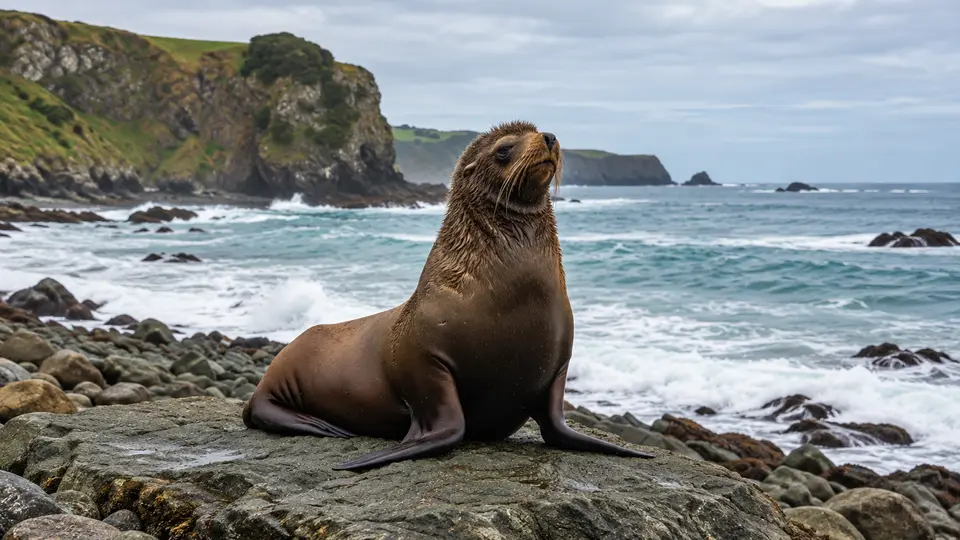
New Zealand sea lion in its natural habitatAI-modified

New Zealand sea lionPhocarctos hookeriWhere and when to see them

New Zealand sea lion at a glance

The New Zealand sea lion, or rāpoka, is one of the world's most geographically restricted sea lions. Most breeding occurs on New Zealand's subantarctic islands, with a recovering presence on parts of the mainland. Mature males are much larger and darker than females and develop a heavy mane. Although they feed at sea, they regularly rest on beaches and may travel through dunes or coastal forest, sometimes appearing surprisingly far from the water.

Behaviour & reproduction

Size
1.8-3.5 m (5.9-11.5 ft) body length
Weight
90-450 kg (198-992 lb)
Lifespan
15-25 years
Status
Endangered

Breeding males establish territories among groups of females, while mothers alternate nursing with feeding trips at sea. On land, sea lions sleep, socialize and occasionally move inland into sheltered vegetation. Their apparent sluggishness is misleading: an alert animal can move quickly over short distances. Young animals may be inquisitive, but approaching or encouraging contact can create danger. Mainland females sometimes choose secluded places for pups away from the most visible beach groups. Pups are highly dependent on their mothers for several months, often remaining in crèches while mothers forage. Vocalizations, including roars from males and barks from females, are common, especially during the breeding season. They exhibit both aquatic and terrestrial behaviours, hauling out to rest, breed, and moult.

Top wildlife locations

New Zealand wildlife habitatAI-modified

New Zealand

Southern mainland beaches and dune margins can provide shore views, while major subantarctic colonies require permitted, weather-dependent access. Some resting sites are closed or inaccessible, and animals may be absent during a visit.
Destinations describe the species' habitat, not guaranteed cruise stops. Some animals require an optional inland excursion or are found in restricted reserves.

Fun facts about the New Zealand sea lion

  • Adult males can weigh several times as much as females.
  • Females sometimes take pups into coastal forest or dense vegetation.
  • External ear flaps distinguish sea lions and fur seals from true seals.
  • A small mainland breeding population has re-established after a long historical absence.

Best time to see the New Zealand sea lion

Austral summer overlaps pupping at major breeding colonies, but access to subantarctic shores is tightly managed and weather-dependent. Mainland sea lions may be encountered in any season. Summer visitor convenience should not be confused with permission to approach breeding groups or secluded mothers. In the subantarctic islands, pupping occurs from December to January, offering a unique but regulated viewing experience. During the breeding season, large aggregations of animals can be seen on beaches, particularly at dawn and dusk. Mainland animals are increasingly found year-round along specific stretches of coastline, making encounters possible outside the breeding season.

New Zealand sea lion: season matrix by destination

Travel and observation windows vary by region. Highlighted months are an orientation for planning, not confirmed sightings or a guarantee of access.

New Zealand

A practical southern coastal and subantarctic travel window; mainland occurrence is year-round, and breeding access remains restricted.

JanFebMarAprMayJunJulAugSepOctNovDec
Cruise ships in New Zealand

Where the New Zealand sea lion lives

Marine feeding grounds connect with sandy beaches, rocky shores, dunes and coastal vegetation used for resting and breeding. The Auckland and Campbell islands hold major breeding populations. Mainland animals occur especially in the southern South Island and Stewart Island region. These subantarctic island populations face threats like fishing bycatch and disease, while mainland animals are recolonizing former habitats. Coastal habitats vary from exposed sandy beaches to rocky headlands and sheltered dune systems. Their range extends from the subantarctic islands north to the South Island mainland.

What the New Zealand sea lion eats

Fish and cephalopods form much of the diet, with prey varying by location and sex. Some individuals also take crustaceans or larger prey such as seabirds. Feeding occurs at sea, sometimes far from the beaches where visitors encounter resting animals. Their foraging dives can be deep and prolonged, demonstrating their adaptation to a diverse marine food web. The diet of males and females can differ significantly, with males often taking larger prey items. They are opportunistic predators, adapting their diet to the availability of local prey.

Species at a glance

Common name
New Zealand sea lion
Scientific name
Phocarctos hookeri
Animal group
Mammals
Size
1.8-3.5 m (5.9-11.5 ft) body length
Weight
90-450 kg (198-992 lb)
Lifespan
15-25 years
Status
Endangered
Identification
Compared with New Zealand fur seals, sea lions have broader, blunter muzzles, less pointed faces and more massive bodies, especially the dark-maned adult males. Females are typically lighter in colour, often a pale tan or cream, and lack the prominent dark mane of adult males. Pups are born with a dark, woolly coat, which is shed after a few months. Their large, dark eyes and relatively short, thick whiskers are also distinguishing features.

New Zealand sea lion: frequently asked questions

Where can I see the New Zealand sea lion?
New Zealand. Stay at least 20 metres away where possible and follow stricter local guidance. Never block access to the sea or pass between a mother and pup. If approached, remain calm and back away without running. Be aware of local signage and the instructions of your guide, as rules can vary by location. Maintaining a quiet presence ensures minimal disturbance to the animals. Always give animals a clear escape route to the sea.
When is the best time to see the New Zealand sea lion?
Austral summer overlaps pupping at major breeding colonies, but access to subantarctic shores is tightly managed and weather-dependent. Mainland sea lions may be encountered in any season. Summer visitor convenience should not be confused with permission to approach breeding groups or secluded mothers. In the subantarctic islands, pupping occurs from December to January, offering a unique but regulated viewing experience. During the breeding season, large aggregations of animals can be seen on beaches, particularly at dawn and dusk. Mainland animals are increasingly found year-round along specific stretches of coastline, making encounters possible outside the breeding season.
How big does the New Zealand sea lion get?
1.8-3.5 m (5.9-11.5 ft) body length. Adult weight: 90-450 kg (198-992 lb). Size varies with age, sex and population.
How should I behave around the New Zealand sea lion?
Stay at least 20 metres away where possible and follow stricter local guidance. Never block access to the sea or pass between a mother and pup. If approached, remain calm and back away without running. Be aware of local signage and the instructions of your guide, as rules can vary by location. Maintaining a quiet presence ensures minimal disturbance to the animals. Always give animals a clear escape route to the sea.
What does the New Zealand sea lion eat?
Fish and cephalopods form much of the diet, with prey varying by location and sex. Some individuals also take crustaceans or larger prey such as seabirds. Feeding occurs at sea, sometimes far from the beaches where visitors encounter resting animals. Their foraging dives can be deep and prolonged, demonstrating their adaptation to a diverse marine food web. The diet of males and females can differ significantly, with males often taking larger prey items. They are opportunistic predators, adapting their diet to the availability of local prey.
Are wildlife sightings guaranteed on an adventure cruise?
No. Animals move freely and routes, weather, access restrictions and local conditions influence every outing. Confirm the actual itinerary and shore program before booking.

Compare wildlife in the same destinations

Explore other mammals recorded in these destinations. Similar surroundings do not mean the animals share the same habits or viewing season.

Species comparison by animal group and destination
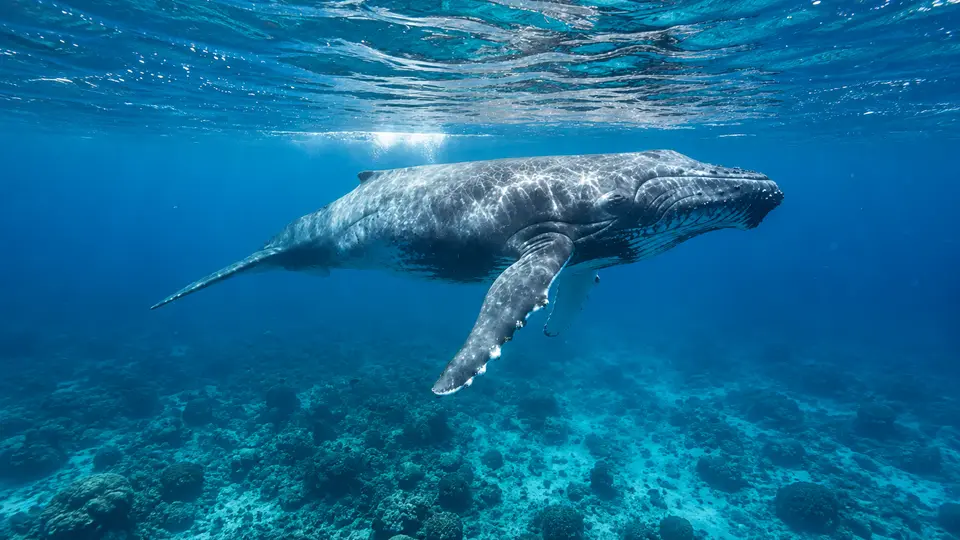
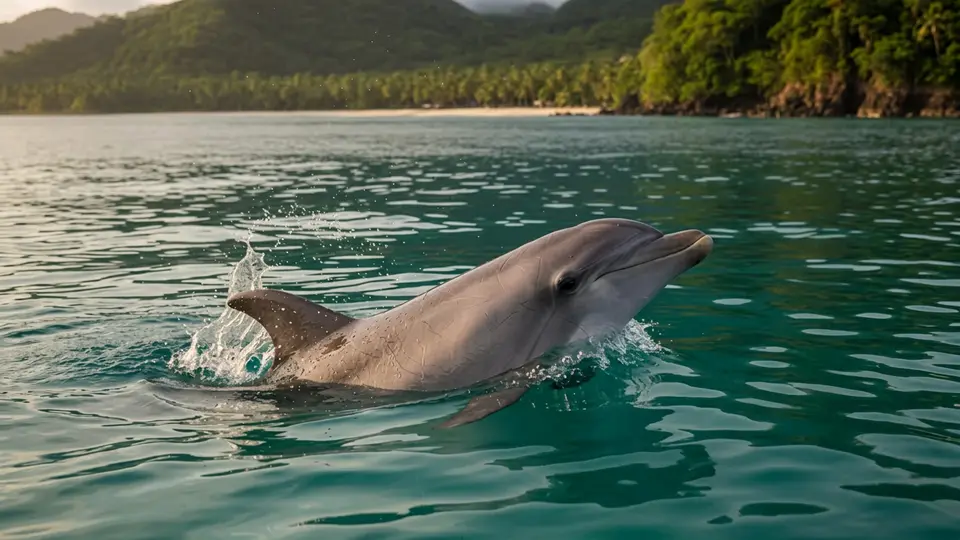
New Zealand sea lionAI-modifiedNew Zealand sea lionBlue WhaleAI-modifiedBlue WhaleCommon Bottlenose DolphinAI-modifiedCommon Bottlenose Dolphin
Animal groupMammalsAnimal groupMammalsAnimal groupMammals
DestinationsNew ZealandDestinationsMexico, Norway, Portugal, Antarctica, Arctic, Maldives, New ZealandDestinationsCosta Rica, Florida, Galapagos, Mexico, Cape Verde, Croatia, Greece, Portugal, Scotland, Seychelles, Turkey, Maldives, Australia, New Zealand
Scientific namePhocarctos hookeriScientific nameScientific name
All wildlife destinations
AI-modified
Plan your trip

Find your next wildlife adventure

Compare destinations, shore programs and dates with the animals and habitats you would love to see.

  • Naturalist-led shore excursions
  • Responsible wildlife watching
  • Small expedition ships