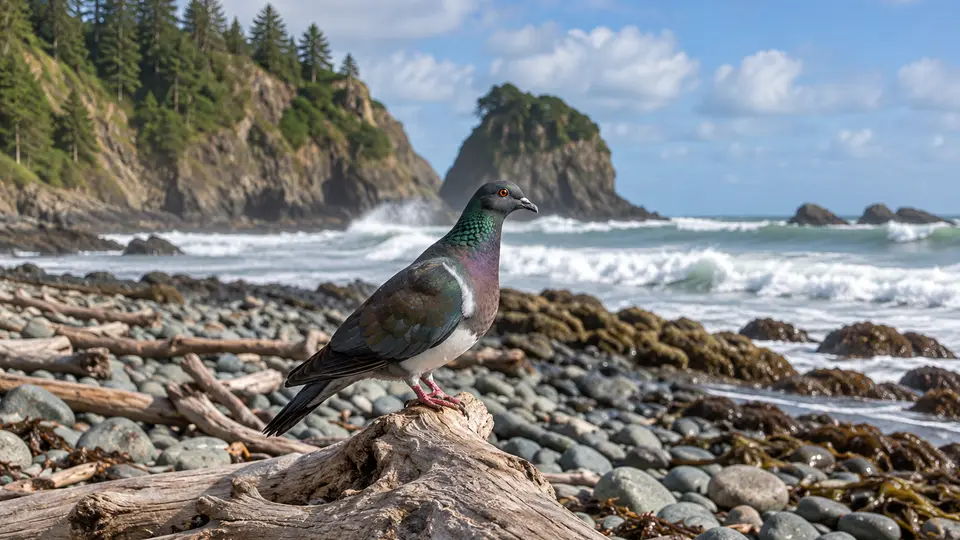
New Zealand pigeon in its natural habitatAI-modified

New Zealand pigeonHemiphaga novaeseelandiaeWhere and when to see them

New Zealand pigeon at a glance

The New Zealand pigeon, widely known as kererū, is a large endemic forest pigeon with an iridescent green-purple upper body and a clean white belly. It plays an important ecological role by swallowing native fruits and dispersing their seeds. Because few remaining native birds can swallow the largest fruits, its contribution is difficult to replace. Kererū also visit leafy suburbs and gardens, bringing a conspicuous part of New Zealand's forest fauna into settled areas.

Behaviour & reproduction

Size
46-50 cm (18.1-19.7 in) body length
Weight
550-850 g (19.4-30.0 oz)
Lifespan
Not reliably established
Status
Least Concern

Kererū often sit quietly in the canopy for long periods before moving with powerful, noisy wingbeats. When fruit is abundant, several birds may gather in the same tree. Males perform steep display flights followed by dramatic descending arcs. Nesting involves a relatively simple platform of twigs, and both parents incubate the single egg and feed the chick. Seasonal movements follow changing food supplies rather than a regular long-distance migration. Their powerful flight muscles allow for long-distance movements between food sources, but they are generally slow and deliberate in their movements within a tree. When feeding, they can often be observed hanging upside down to reach fruit. They are largely solitary outside of breeding and abundant feeding events, though small groups may form when food is plentiful.

Top wildlife locations

New Zealand wildlife habitatAI-modified

New Zealand

Coastal forest reserves, wooded gardens and public parks with fruiting trees offer plausible shore-excursion opportunities. Inland travel is not essential in suitable districts, but local food supply strongly affects where birds appear.
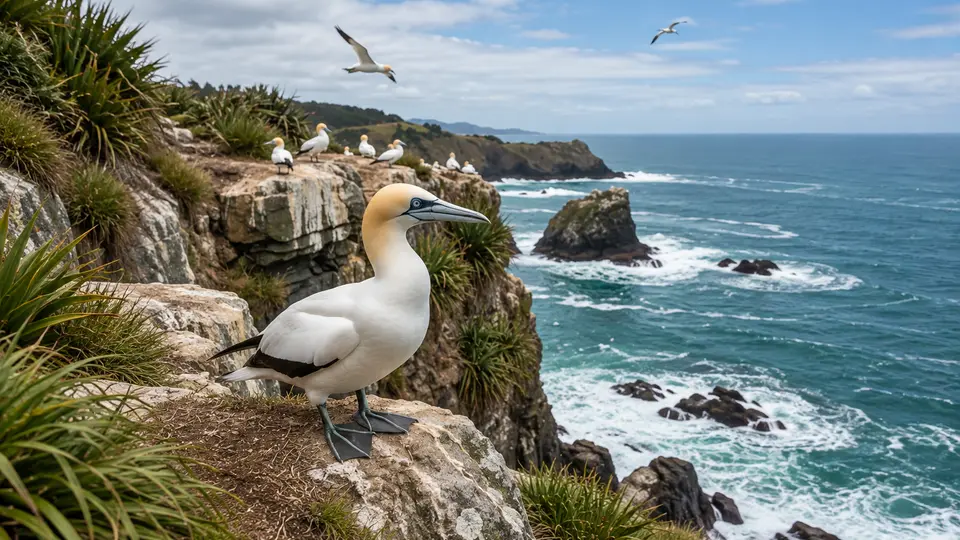
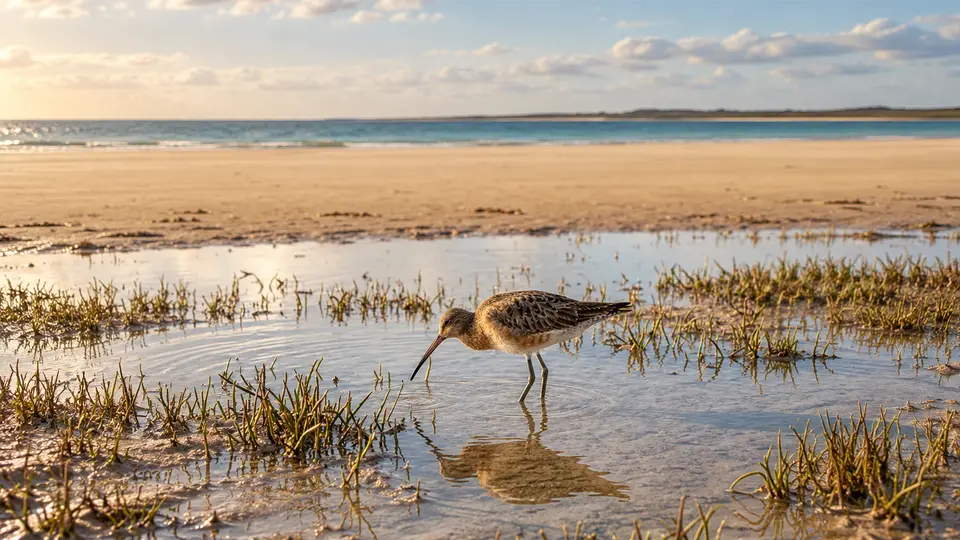
Destinations describe the species' habitat, not guaranteed cruise stops. Some animals require an optional inland excursion or are found in restricted reserves.

Fun facts about the New Zealand pigeon

  • A typical clutch consists of just one egg.
  • Both parents produce crop milk for the newly hatched chick.
  • Kererū can disperse seeds from fruits too large for most other surviving native birds.
  • Their wingbeats often produce a distinctive loud whooshing sound.

Best time to see the New Zealand pigeon

Kererū can be observed throughout the year, but local fruiting trees often determine where they gather. Spring and summer may bring display flights and nesting activity. Regional plant calendars are more useful for predicting feeding concentrations than a single nationwide visitor season. The timing of peak fruiting for certain key tree species, such as tawa and miro, often dictates the best times and locations for concentrated viewing. During nesting season, typically late spring to early summer, adult birds may be more consistently found near their breeding sites. Local knowledge or park rangers can often provide updated information on current feeding hotspots.

New Zealand pigeon: season matrix by destination

Travel and observation windows vary by region. Highlighted months are an orientation for planning, not confirmed sightings or a guarantee of access.

New Zealand

Resident year-round; regional fruiting and flowering cycles, rather than migration, shape local observation opportunities.

JanFebMarAprMayJunJulAugSepOctNovDec
Cruise ships in New Zealand

Where the New Zealand pigeon lives

Native forest, secondary woodland, wooded farmland and well-vegetated urban areas all provide habitat. Coastal forest remnants can support birds if fruiting and leafy food trees are available. Landscapes with connected tree cover generally offer better feeding and movement opportunities than isolated plantings. The species thrives in areas with diverse native plant communities, which provide a consistent supply of food throughout the year. Their presence often indicates a healthy, connected forest ecosystem. They can also utilize exotic tree species for food and shelter when native options are limited.

What the New Zealand pigeon eats

Fruits are especially important, including those of native trees such as tawa, miro and pūriri where available. Leaves, buds and flowers supplement the diet when fruit is scarce. Kererū swallow many fruits whole and later pass their seeds away from the parent tree. Their broad diet of fruits, leaves, and flowers makes them crucial seed dispersers, aiding forest regeneration. They are particularly important for dispersing large-seeded native trees that no other bird can swallow. The varied diet allows them to adapt to seasonal changes in food availability.

Species at a glance

Common name
New Zealand pigeon
Scientific name
Hemiphaga novaeseelandiae
Animal group
Birds
Size
46-50 cm (18.1-19.7 in) body length
Weight
550-850 g (19.4-30.0 oz)
Lifespan
Not reliably established
Status
Least Concern
Identification
The bold white belly and green-purple head and breast separate kererū from introduced pigeons, while the related Chatham pigeon is larger and geographically restricted. Their large size and characteristic iridescent green and bronze upperparts contrast sharply with their pristine white underparts, making them unmistakable. The bill is reddish with a pale tip, and their legs and eyes are also reddish. Juveniles have duller plumage and a less defined white belly band.

New Zealand pigeon: frequently asked questions

Where can I see the New Zealand pigeon?
New Zealand. Watch fruiting canopy trees from public paths without standing directly beneath an active nest. Never offer bread or encourage birds toward roads. Drive carefully around feeding trees, since heavy pigeons may cross at vehicle height. When observing, look for movements or splashes of color in the upper canopy, as their cryptic coloration can make them hard to spot when still. Patience is key, as they often spend extended periods motionless while digesting. Binoculars are highly recommended for detailed observation of their plumage and feeding habits.
When is the best time to see the New Zealand pigeon?
Kererū can be observed throughout the year, but local fruiting trees often determine where they gather. Spring and summer may bring display flights and nesting activity. Regional plant calendars are more useful for predicting feeding concentrations than a single nationwide visitor season. The timing of peak fruiting for certain key tree species, such as tawa and miro, often dictates the best times and locations for concentrated viewing. During nesting season, typically late spring to early summer, adult birds may be more consistently found near their breeding sites. Local knowledge or park rangers can often provide updated information on current feeding hotspots.
How big does the New Zealand pigeon get?
46-50 cm (18.1-19.7 in) body length. Adult weight: 550-850 g (19.4-30.0 oz). Size varies with age, sex and population.
How should I behave around the New Zealand pigeon?
Watch fruiting canopy trees from public paths without standing directly beneath an active nest. Never offer bread or encourage birds toward roads. Drive carefully around feeding trees, since heavy pigeons may cross at vehicle height. When observing, look for movements or splashes of color in the upper canopy, as their cryptic coloration can make them hard to spot when still. Patience is key, as they often spend extended periods motionless while digesting. Binoculars are highly recommended for detailed observation of their plumage and feeding habits.
What does the New Zealand pigeon eat?
Fruits are especially important, including those of native trees such as tawa, miro and pūriri where available. Leaves, buds and flowers supplement the diet when fruit is scarce. Kererū swallow many fruits whole and later pass their seeds away from the parent tree. Their broad diet of fruits, leaves, and flowers makes them crucial seed dispersers, aiding forest regeneration. They are particularly important for dispersing large-seeded native trees that no other bird can swallow. The varied diet allows them to adapt to seasonal changes in food availability.
Are wildlife sightings guaranteed on an adventure cruise?
No. Animals move freely and routes, weather, access restrictions and local conditions influence every outing. Confirm the actual itinerary and shore program before booking.

Compare wildlife in the same destinations

Explore other birds recorded in these destinations. Similar surroundings do not mean the animals share the same habits or viewing season.

Species comparison by animal group and destination
New Zealand pigeonAI-modifiedNew Zealand pigeonAustralasian gannetAI-modifiedAustralasian gannetBar-tailed godwitAI-modifiedBar-tailed godwit
Animal groupBirdsAnimal groupBirdsAnimal groupBirds
DestinationsNew ZealandDestinationsNew ZealandDestinationsAustralia, New Zealand
Scientific nameHemiphaga novaeseelandiaeScientific nameScientific name
All wildlife destinations
AI-modified
Plan your trip

Find your next wildlife adventure

Compare destinations, shore programs and dates with the animals and habitats you would love to see.

  • Naturalist-led shore excursions
  • Responsible wildlife watching
  • Small expedition ships