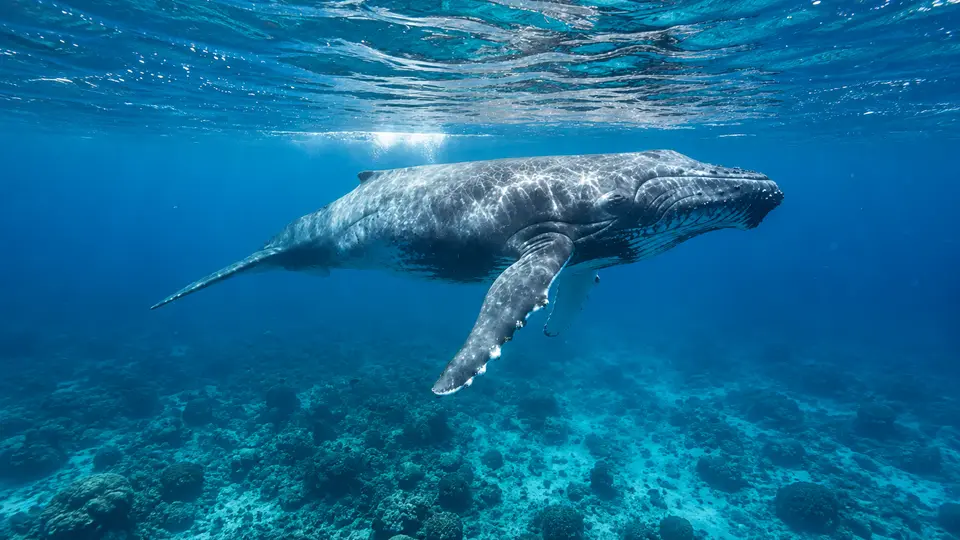
Blue Whale in its natural habitatAI-modified

Blue WhaleBalaenoptera musculusWhere and when to see them

Blue Whale at a glance

The blue whale is the largest living animal, a fully marine mammal sustained mainly by dense concentrations of tiny crustaceans. Its long, mottled blue-grey body can appear surprisingly slender, and the small dorsal fin sits far behind the head. Populations differ in size, movements and seasonal use of feeding grounds. Recovery from industrial whaling remains uneven, while ship strikes, entanglement, noise and changes in prey distribution continue to affect this wide-ranging ocean giant.

Behaviour & reproduction

Size
24–30 m (79–98 ft) long, varying by population
Weight
70–150 tonnes (77–165 tons)
Lifespan
70–90 years
Status
Endangered

Blue whales often travel alone or in loose associations rather than tight social groups. At the surface, a tall blow may precede a long view of the back, with the dorsal fin appearing later. Feeding involves engulfing prey-rich water and straining it through baleen. Low-frequency calls can travel great distances. Movements broadly connect productive feeding areas with other seasonal habitats, but some populations show less clearly defined migration than a simple polar-to-tropical pattern suggests. Blue whales are highly vocal, producing powerful low-frequency calls that are among the loudest sounds made by any animal and used for long-range communication. Although generally solitary, loose aggregations can occur in highly productive feeding areas, sometimes with a mother and calf pair.

Top wildlife locations

Mexico wildlife habitatAI-modified

Mexico

Elevated viewpoints along parts of the Gulf of California offer possible distant views over productive channels. Shore sightings remain uncommon and localized; a general Mexican coastal visit is not a reliable opportunity.

Norway wildlife habitatAI-modified

Norway

Deep offshore waters and northern island margins provide plausible habitat, but mainland shore sightings are rare. Distant deck observation is more realistic than expecting animals close to harbours or routine coastal viewpoints.

Portugal wildlife habitatAI-modified

Portugal

In the Azores, elevated coastal lookouts overlook migration waters and offer a possibility of very distant views. Mainland Portugal is not equivalent habitat for predictable observation, and shore identification can remain difficult.

Antarctica wildlife habitatAI-modified

Antarctica

Productive Southern Ocean waters offer plausible habitat, usually viewed from a distant vessel deck. Shore observation is exceptionally limited, and standard coastal visits do not necessarily overlap the species' scattered offshore feeding areas.

Arctic wildlife habitatAI-modified

Arctic

Atlantic-sector shelf edges and waters near Svalbard can provide suitable summer habitat. Much of this habitat is inaccessible from shore, and occurrence should not be generalized to every Arctic region or coastal itinerary.

Maldives wildlife habitatAI-modified

Maldives

Deep ocean beyond atoll margins lies within the wider Indian Ocean range, but Maldives shore records are too limited for dependable guidance. Any distant deck encounter would be unusual and require careful identification.

Destinations describe the species' habitat, not guaranteed cruise stops. Some animals require an optional inland excursion or are found in restricted reserves.

Fun facts about the Blue Whale

  • Blue whales have baleen plates instead of teeth.
  • The dorsal fin appears well after the head during many surface sequences.
  • Individuals can be recognized from patterns of mottling and fin shape.
  • Antarctic blue whales generally grow larger than pygmy blue whales.

Best time to see the Blue Whale

Useful windows are regional: winter and early spring in parts of Mexico, spring around the Azores, and austral summer in Antarctic waters. Northern waters are generally more accessible in summer. These patterns do not establish reliable seasons for poorly documented destinations such as Maldives. Peak viewing for blue whales off the coast of New Zealand typically occurs during summer months, especially in the South Taranaki Bight. In the Arctic, their presence is linked to summer krill blooms, with specific hotspots near ice edges or productive fjords.

Blue Whale: season matrix by destination

Travel and observation windows vary by region. Highlighted months are an orientation for planning, not confirmed sightings or a guarantee of access.

Mexico

A credible seasonal presence window for parts of the Gulf of California, not all Mexican coasts or a guaranteed shore-viewing period.

JanFebMarAprMayJunJulAugSepOctNovDec
Cruise ships in Mexico

Norway

Summer and early autumn offer northern access and daylight; distribution is variable and often far offshore.

JanFebMarAprMayJunJulAugSepOctNovDec
Cruise ships in Norway

Portugal

Spring is a recognized passage period around the Azores; this window should not be generalized to the mainland.

JanFebMarAprMayJunJulAugSepOctNovDec
Cruise ships in Portugal

Antarctica

Austral summer combines access with seasonal feeding activity, but blue whales remain uncommon on many visitor routes.

JanFebMarAprMayJunJulAugSepOctNovDec
Cruise ships in Antarctica

Arctic

A broad Atlantic Arctic travel and feeding-season window, not a circumpolar prediction of sightings.

JanFebMarAprMayJunJulAugSepOctNovDec
Cruise ships in Arctic

Maldives

No sufficiently supported Maldives-specific shore or deck observation season is available; tourist weather seasons are not evidence of whale occurrence.

JanFebMarAprMayJunJulAugSepOctNovDec
Cruise ships in Maldives

New Zealand

Whales use New Zealand waters across the year, but that does not establish a dependable seasonal shore-observation window.

JanFebMarAprMayJunJulAugSepOctNovDec
Cruise ships in New Zealand

Where the Blue Whale lives

Blue whales occupy oceans from tropical waters to polar feeding regions, using both offshore basins and productive shelf margins. Their distribution follows prey concentrations, currents and seasonal productivity. Proximity to a coastline does not imply regular shore visibility, even within a recognized regional range. The global population is divided into several distinct populations that inhabit specific ocean basins, each with its own migratory routes and feeding grounds. While they range widely, blue whales are generally found in temperate and polar waters during feeding seasons and migrate to warmer, lower latitude breeding grounds.

What the Blue Whale eats

Krill dominate the diet, although prey species and occasional use of other small crustaceans vary between populations. Expandable throat pleats allow enormous mouthfuls of prey-laden water. Baleen then retains food as water is expelled, making dense prey patches essential to efficient feeding. Calanoid copepods are also consumed by some populations when krill is scarce, though these are typically smaller prey. A single blue whale can consume up to 4 tons of krill per day, highlighting their critical role in ocean ecosystems.

Species at a glance

Common name
Blue Whale
Scientific name
Balaenoptera musculus
Animal group
Mammals
Size
24–30 m (79–98 ft) long, varying by population
Weight
70–150 tonnes (77–165 tons)
Lifespan
70–90 years
Status
Endangered
Identification
The mottled blue-grey body, broad flat head and very small rear-set dorsal fin distinguish it from the sleeker, asymmetrically coloured fin whale. Their vast size, up to 30 meters (98 feet), is an immediate clue, making them the largest animal on Earth. The dorsal fin, appearing only briefly before a dive, is very small and set far back on the body, contrasting with other large baleen whales.

Blue Whale: frequently asked questions

Where can I see the Blue Whale?
Mexico, Norway, Portugal, Antarctica, Arctic, Maldives, New Zealand. Watch only at distance from coastal viewpoints or an existing vessel deck. Never encourage interception or pursuit; its immense body may extend well beyond visible features, and a distant blow alone rarely confirms identification. Be alert for characteristic V-shaped blows, which can reach heights of 9 meters (30 feet), often visible from great distances. Patience is key, as blue whales may spend 10-20 minutes submerged between surfacing to breathe.
When is the best time to see the Blue Whale?
Useful windows are regional: winter and early spring in parts of Mexico, spring around the Azores, and austral summer in Antarctic waters. Northern waters are generally more accessible in summer. These patterns do not establish reliable seasons for poorly documented destinations such as Maldives. Peak viewing for blue whales off the coast of New Zealand typically occurs during summer months, especially in the South Taranaki Bight. In the Arctic, their presence is linked to summer krill blooms, with specific hotspots near ice edges or productive fjords.
How big does the Blue Whale get?
24–30 m (79–98 ft) long, varying by population. Adult weight: 70–150 tonnes (77–165 tons). Size varies with age, sex and population.
How should I behave around the Blue Whale?
Watch only at distance from coastal viewpoints or an existing vessel deck. Never encourage interception or pursuit; its immense body may extend well beyond visible features, and a distant blow alone rarely confirms identification. Be alert for characteristic V-shaped blows, which can reach heights of 9 meters (30 feet), often visible from great distances. Patience is key, as blue whales may spend 10-20 minutes submerged between surfacing to breathe.
What does the Blue Whale eat?
Krill dominate the diet, although prey species and occasional use of other small crustaceans vary between populations. Expandable throat pleats allow enormous mouthfuls of prey-laden water. Baleen then retains food as water is expelled, making dense prey patches essential to efficient feeding. Calanoid copepods are also consumed by some populations when krill is scarce, though these are typically smaller prey. A single blue whale can consume up to 4 tons of krill per day, highlighting their critical role in ocean ecosystems.
Are wildlife sightings guaranteed on an adventure cruise?
No. Animals move freely and routes, weather, access restrictions and local conditions influence every outing. Confirm the actual itinerary and shore program before booking.

Compare wildlife in the same destinations

Explore other mammals recorded in these destinations. Similar surroundings do not mean the animals share the same habits or viewing season.

Species comparison by animal group and destination
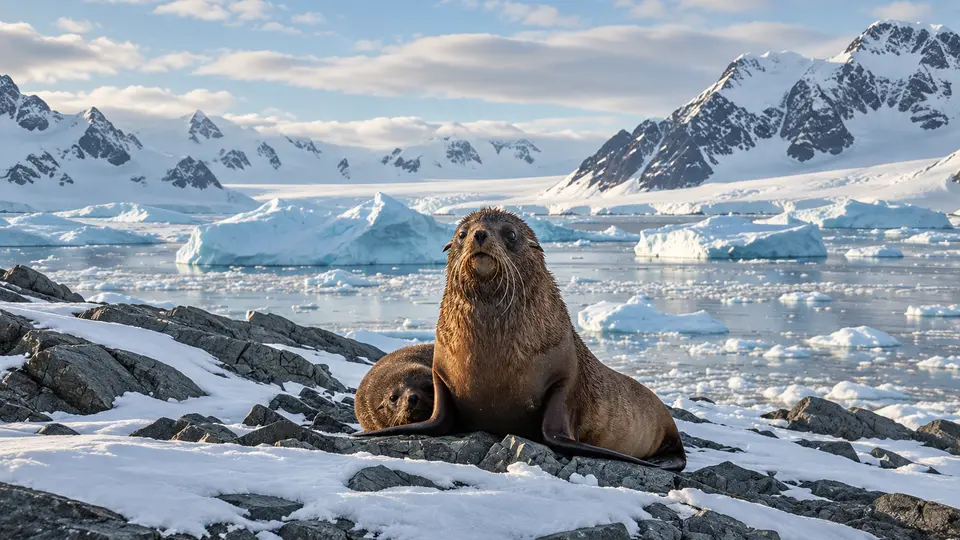
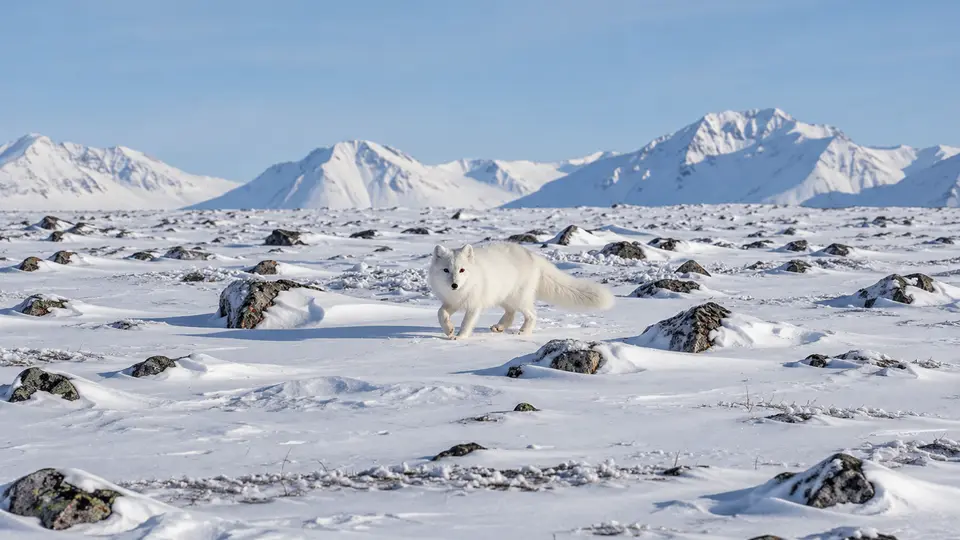
Blue WhaleAI-modifiedBlue WhaleAntarctic Fur SealAI-modifiedAntarctic Fur SealArctic FoxAI-modifiedArctic Fox
Animal groupMammalsAnimal groupMammalsAnimal groupMammals
DestinationsMexico, Norway, Portugal, Antarctica, Arctic, Maldives, New ZealandDestinationsAntarcticaDestinationsNorway, Arctic
Scientific nameBalaenoptera musculusScientific nameScientific name
All wildlife destinations
AI-modified
Plan your trip

Find your next wildlife adventure

Compare destinations, shore programs and dates with the animals and habitats you would love to see.

  • Naturalist-led shore excursions
  • Responsible wildlife watching
  • Small expedition ships