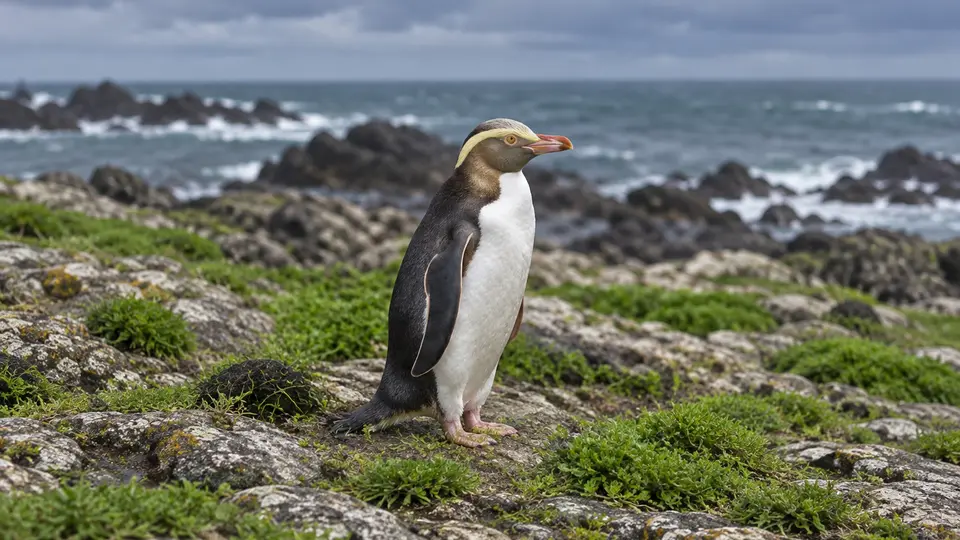
Yellow-eyed penguin in its natural habitatAI-modified

Yellow-eyed penguinMegadyptes antipodesWhere and when to see them

Yellow-eyed penguin at a glance

The yellow-eyed penguin, or hoiho, is a rare New Zealand penguin distinguished by pale yellow eyes and a yellow head band. It breeds along parts of the southeastern South Island and on Stewart Island and subantarctic islands. Unlike penguins that nest in dense open colonies, hoiho usually seek visual separation from neighbors. Disease, introduced predators, disturbance and pressures in their marine feeding environment contribute to serious conservation concerns, making carefully managed shore observation essential.

Behaviour & reproduction

Size
62-79 cm (24.4-31.1 in) height
Weight
3-8 kg (6.6-17.6 lb)
Lifespan
10-20 years
Status
Endangered

Adults commonly leave land to feed during daylight and return later, although timing varies with breeding duties and local conditions. Pairs nest among vegetation or other sheltered cover, often out of sight of neighboring nests. Both parents incubate and provision chicks. Birds moving between sea and nest may stop or turn back when people block their route, spending valuable time and energy waiting rather than reaching chicks or resting areas. Courtship displays and pair bonding involve mutual preening and vocalizations, particularly during the early breeding season. They are primarily solitary foragers at sea, traveling long distances from their nesting sites to feed before returning to land.

Top wildlife locations

New Zealand wildlife habitatAI-modified

New Zealand

Managed viewpoints on the southeastern South Island offer distant views of vegetated nesting coasts and access beaches. Many sites are closed or restricted; subantarctic populations are remote and not ordinary shore excursions.
Destinations describe the species' habitat, not guaranteed cruise stops. Some animals require an optional inland excursion or are found in restricted reserves.

Fun facts about the Yellow-eyed penguin

  • Hoiho is a Māori name commonly translated as noise shouter.
  • Pairs usually prefer nesting positions screened from neighboring birds.
  • Adults replace their entire plumage during an annual molt and cannot feed at sea until it is complete.
  • Young birds lack the full yellow head band seen in adults.

Best time to see the Yellow-eyed penguin

Mainland observation is possible during much of the year where managed viewing operates. Spring and summer overlap breeding, but also demand especially careful disturbance controls. During the late-summer and autumn molt, birds remain ashore; this vulnerable period is not a reason to approach them. Breeding season, from September to February, offers the highest chance of seeing adult birds attending nests or chicks. However, the pre-molt period in late summer can also bring more birds ashore as they gain weight for the upcoming feather replacement.

Yellow-eyed penguin: season matrix by destination

Travel and observation windows vary by region. Highlighted months are an orientation for planning, not confirmed sightings or a guarantee of access.

New Zealand

These months cover common mainland viewing operations, breeding and molt, but closures and conservation needs override access; check current local arrangements.

JanFebMarAprMayJunJulAugSepOctNovDec
Cruise ships in New Zealand

Where the Yellow-eyed penguin lives

Hoiho depend on coastal nesting cover, including native forest, scrub and dense vegetation, beside suitable marine feeding areas. Landing beaches and access corridors connect these environments. Many nesting sections are closed or tightly managed, and subantarctic populations occupy remote, restricted-access islands. Coastal nesting sites are often well-vegetated slopes and gullies, sometimes located several hundred meters inland. They typically nest individually or in very loose colonies, unlike many other penguin species.

What the Yellow-eyed penguin eats

Small fish and squid form the core diet, with prey composition varying among regions and years. Birds often forage near the seabed over the continental shelf. Shore observers should focus on distant arrivals and departures rather than expecting to see feeding behavior. Their diet primarily consists of arrow squid and small fish like opalfish and sprat. These penguins are benthic foragers, meaning they typically hunt close to the seafloor.

Species at a glance

Common name
Yellow-eyed penguin
Scientific name
Megadyptes antipodes
Animal group
Birds
Size
62-79 cm (24.4-31.1 in) height
Weight
3-8 kg (6.6-17.6 lb)
Lifespan
10-20 years
Status
Endangered
Identification
Adults have yellow eyes and a pale yellow band around the back of the head, rather than the projecting yellow crests of Fiordland and other crested penguins. Juveniles lack the distinctive yellow band on the head and have gray eyes, gradually developing adult plumage and eye color. The scientific name, Megadyptes, translates to "large diver," a nod to their substantial size among penguins.

Yellow-eyed penguin: frequently asked questions

Where can I see the Yellow-eyed penguin?
New Zealand. Use managed hides or distant authorized viewpoints and follow local closures. Never stand between a penguin and the sea, approach resting birds, or use flash; if a bird hesitates, withdraw farther and remain out of sight. Maintain at least 50 meters distance from birds, especially when they are on land or approaching the shore. Binoculars are essential for distant viewing to minimize disturbance and observe natural behaviors.
When is the best time to see the Yellow-eyed penguin?
Mainland observation is possible during much of the year where managed viewing operates. Spring and summer overlap breeding, but also demand especially careful disturbance controls. During the late-summer and autumn molt, birds remain ashore; this vulnerable period is not a reason to approach them. Breeding season, from September to February, offers the highest chance of seeing adult birds attending nests or chicks. However, the pre-molt period in late summer can also bring more birds ashore as they gain weight for the upcoming feather replacement.
How big does the Yellow-eyed penguin get?
62-79 cm (24.4-31.1 in) height. Adult weight: 3-8 kg (6.6-17.6 lb). Size varies with age, sex and population.
How should I behave around the Yellow-eyed penguin?
Use managed hides or distant authorized viewpoints and follow local closures. Never stand between a penguin and the sea, approach resting birds, or use flash; if a bird hesitates, withdraw farther and remain out of sight. Maintain at least 50 meters distance from birds, especially when they are on land or approaching the shore. Binoculars are essential for distant viewing to minimize disturbance and observe natural behaviors.
What does the Yellow-eyed penguin eat?
Small fish and squid form the core diet, with prey composition varying among regions and years. Birds often forage near the seabed over the continental shelf. Shore observers should focus on distant arrivals and departures rather than expecting to see feeding behavior. Their diet primarily consists of arrow squid and small fish like opalfish and sprat. These penguins are benthic foragers, meaning they typically hunt close to the seafloor.
Are wildlife sightings guaranteed on an adventure cruise?
No. Animals move freely and routes, weather, access restrictions and local conditions influence every outing. Confirm the actual itinerary and shore program before booking.

Compare wildlife in the same destinations

Explore other birds recorded in these destinations. Similar surroundings do not mean the animals share the same habits or viewing season.

Species comparison by animal group and destination
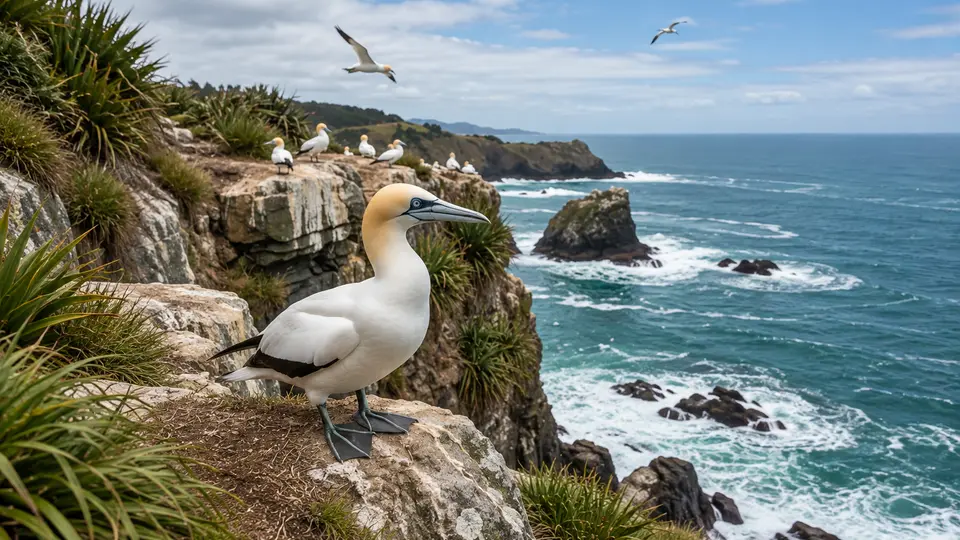
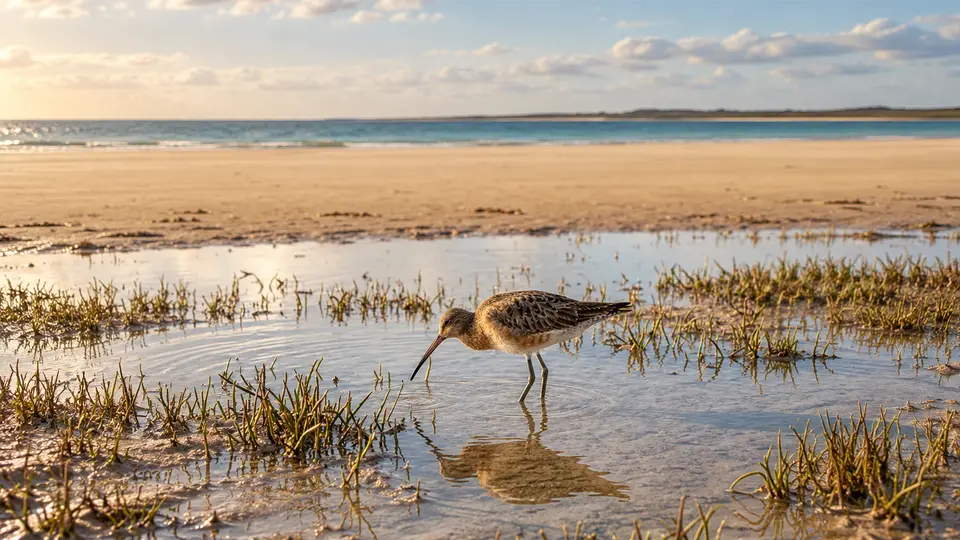
Yellow-eyed penguinAI-modifiedYellow-eyed penguinAustralasian gannetAI-modifiedAustralasian gannetBar-tailed godwitAI-modifiedBar-tailed godwit
Animal groupBirdsAnimal groupBirdsAnimal groupBirds
DestinationsNew ZealandDestinationsNew ZealandDestinationsAustralia, New Zealand
Scientific nameMegadyptes antipodesScientific nameScientific name
All wildlife destinations
AI-modified
Plan your trip

Find your next wildlife adventure

Compare destinations, shore programs and dates with the animals and habitats you would love to see.

  • Naturalist-led shore excursions
  • Responsible wildlife watching
  • Small expedition ships