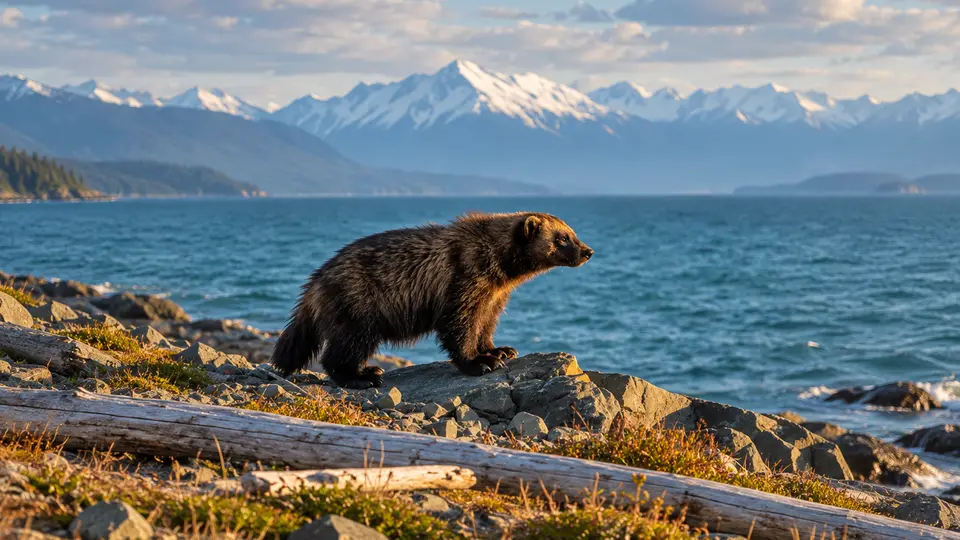
Wolverine in its natural habitat, AI illustration

Wolverine: where and when to see them

Gulo gulo

Wolverine at a glance

The wolverine is a powerful northern mustelid, built more like a compact bear than its smaller weasel relatives. Broad feet, heavy jaws and dense fur support a life in cold, remote landscapes where food can be widely scattered. Alaska contains extensive habitat, but individuals range over enormous areas at low densities. Even in suitable country, seeing one is exceptional, and ordinary coastal travel should never be presented as a reliable wolverine-watching opportunity.

Behaviour & reproduction

Size
65-105 cm head-body length
Weight
8-18 kg
Lifespan
7-12 years
Status
Least Concern

Wolverines are mainly solitary and travel long distances while searching for carrion, hunting and checking stored food. They mark their ranges with scent and can move efficiently across deep snow. Females give birth in secluded dens, commonly associated with persistent snow and complex terrain. Despite a reputation for aggression, they generally avoid people; their strength is most evident in handling carcasses and defending valuable food against other scavengers. Wolverines are known for their exceptional strength to weight ratio and often cache large pieces of meat they cannot consume at once. They are highly active, constantly moving across their large territories in search of food.

Top wildlife locations

Alaska wildlife habitat

Alaska

Remote coastal mountains, tundra and boreal margins offer suitable habitat, but sightings are extremely rare. An inland wilderness excursion may reach better terrain; no ordinary shore stop should be treated as a viewing site.

Adventure cruises in Alaska
Destinations describe the species' habitat, not guaranteed cruise stops. Some animals require an optional inland excursion or are found in restricted reserves.

Fun facts about the Wolverine

  • It is the largest predominantly terrestrial member of the weasel family.
  • Its broad feet help spread its weight over snow.
  • Females use delayed implantation, separating mating from the main period of embryo development.
  • Individuals store food in cold, sheltered caches for later use.

Best time to see the Wolverine

There is no reliable public viewing season in Alaska. Summer usually offers the most practical access to remote trails and open landscapes, while snow can reveal winter tracks. Denning areas should not be sought out, and seasonal travel convenience does not imply increased sighting probability. In Alaska, viewing from cruise ships or shore excursions is exceptionally rare due to their remote and elusive nature. Wildlife tours sometimes offer trips to areas known for other predators, where a wolverine sighting would be an unexpected bonus.

Wolverine: season matrix by destination

Travel and observation windows vary by region. Highlighted months are an orientation for planning, not confirmed sightings or a guarantee of access.

Alaska

These months reflect practical summer access to many landscapes, not a dependable biological viewing peak; local weather and remoteness remain major limitations.

JanFebMarAprMayJunJulAugSepOctNovDec
Cruise ships in Alaska

Where the Wolverine lives

They inhabit tundra, boreal forest and alpine landscapes across northern regions. Large connected areas with limited disturbance are important, while persistent spring snow often supports maternal denning. Some Alaskan coastal mountains are suitable, but most potential viewing habitat is remote and inaccessible. They are highly adaptable, occupying a vast range from high Arctic to temperate forests in mountainous regions. Wolverines require vast territories, with male home ranges often exceeding hundreds of square kilometers.

What the Wolverine eats

Carrion is especially valuable in winter, including remains of ungulates killed by predators or harsh conditions. Wolverines also hunt smaller mammals and occasionally larger prey, and eat birds, eggs and berries. Food is frequently cached in snow, rocks or other protected places. They possess an acute sense of smell, which helps them locate buried carrion, especially under snow. Their powerful jaws and teeth are well-suited for crushing bones and frozen meat.

Species at a glance

Common name
Wolverine
Scientific name
Gulo gulo
Animal group
Mammals
Size
65-105 cm head-body length
Weight
8-18 kg
Lifespan
7-12 years
Status
Least Concern
Identification
A bushy tail, pale flank bands and a low, heavy mustelid build distinguish a wolverine from a small bear or the slimmer fisher. Their robust build, short legs, and large paws with semi-retractable claws are adaptations for moving efficiently over snow and digging. The broad head and small, rounded ears are also distinctive features.

Wolverine: frequently asked questions

Where can I see the Wolverine?
Alaska. Scan distant open slopes from established routes and treat any sighting as a chance event. Never approach carcasses, caches or dens, secure food, and give an animal ample space to move away without being followed. Be aware of their remarkable strength and tenacity, especially if encountering them near a food source. Binoculars or spotting scopes are essential for observing these typically distant animals without disturbing them.
When is the best time to see the Wolverine?
There is no reliable public viewing season in Alaska. Summer usually offers the most practical access to remote trails and open landscapes, while snow can reveal winter tracks. Denning areas should not be sought out, and seasonal travel convenience does not imply increased sighting probability. In Alaska, viewing from cruise ships or shore excursions is exceptionally rare due to their remote and elusive nature. Wildlife tours sometimes offer trips to areas known for other predators, where a wolverine sighting would be an unexpected bonus.
How big does the Wolverine get?
65-105 cm head-body length. Adult weight: 8-18 kg. Size varies with age, sex and population.
How should I behave around the Wolverine?
Scan distant open slopes from established routes and treat any sighting as a chance event. Never approach carcasses, caches or dens, secure food, and give an animal ample space to move away without being followed. Be aware of their remarkable strength and tenacity, especially if encountering them near a food source. Binoculars or spotting scopes are essential for observing these typically distant animals without disturbing them.
What does the Wolverine eat?
Carrion is especially valuable in winter, including remains of ungulates killed by predators or harsh conditions. Wolverines also hunt smaller mammals and occasionally larger prey, and eat birds, eggs and berries. Food is frequently cached in snow, rocks or other protected places. They possess an acute sense of smell, which helps them locate buried carrion, especially under snow. Their powerful jaws and teeth are well-suited for crushing bones and frozen meat.
Are wildlife sightings guaranteed on an adventure cruise?
No. Animals move freely and routes, weather, access restrictions and local conditions influence every outing. Confirm the actual itinerary and shore programme before booking.

Compare wildlife in the same destinations

Explore other mammals recorded in these destinations. Similar surroundings do not mean the animals share the same habits or viewing season.

Species comparison by animal group and destination
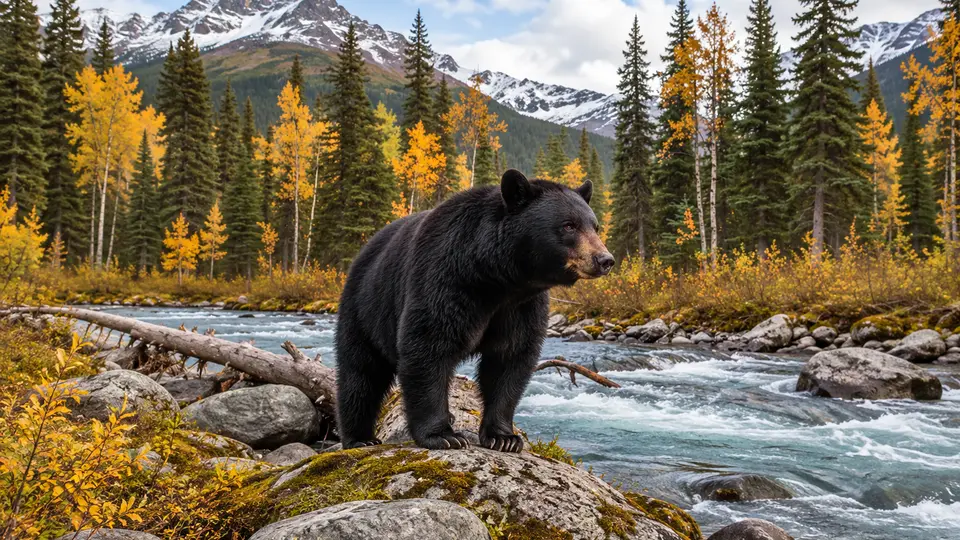
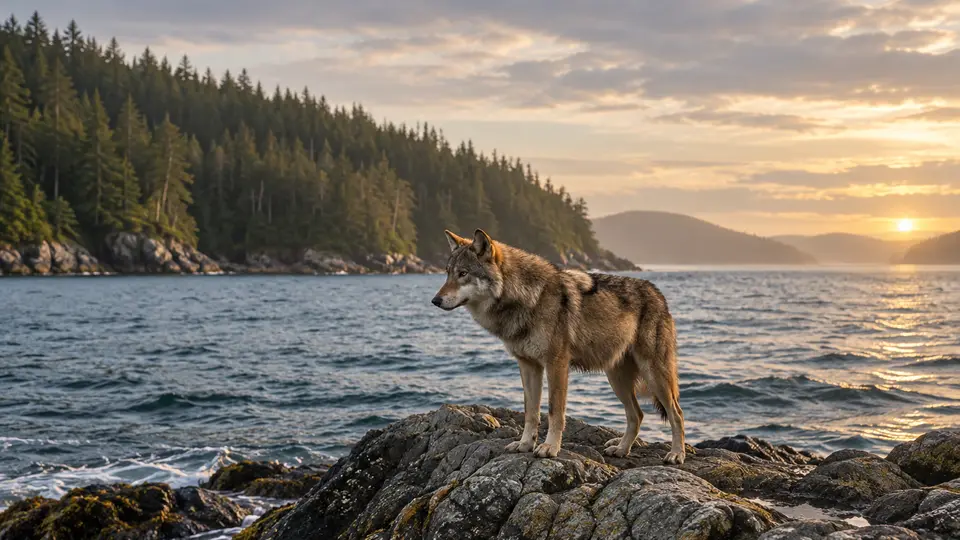
WolverineWolverineAlexander Archipelago WolfAlexander Archipelago WolfAmerican Black BearAmerican Black Bear
Animal groupMammalsAnimal groupMammalsAnimal groupMammals
DestinationsAlaskaDestinationsAlaskaDestinationsAlaska, New England
All wildlife destinations
Plan your trip

Find your next wildlife adventure

Compare destinations, shore programmes and dates with the animals and habitats you would love to see.

  • Naturalist-led shore excursions
  • Responsible wildlife watching
  • Small expedition ships

Newsletter

Take Blue Rides with you

Adventure cruise offers, last-minute deals and trip inspiration.

Free, unsubscribe anytime. Details: Privacy Policy

Partner with Blue Rides

Affiliate Program

Recommend adventure cruises and earn commission on every confirmed booking.

Share. Track. Earn.