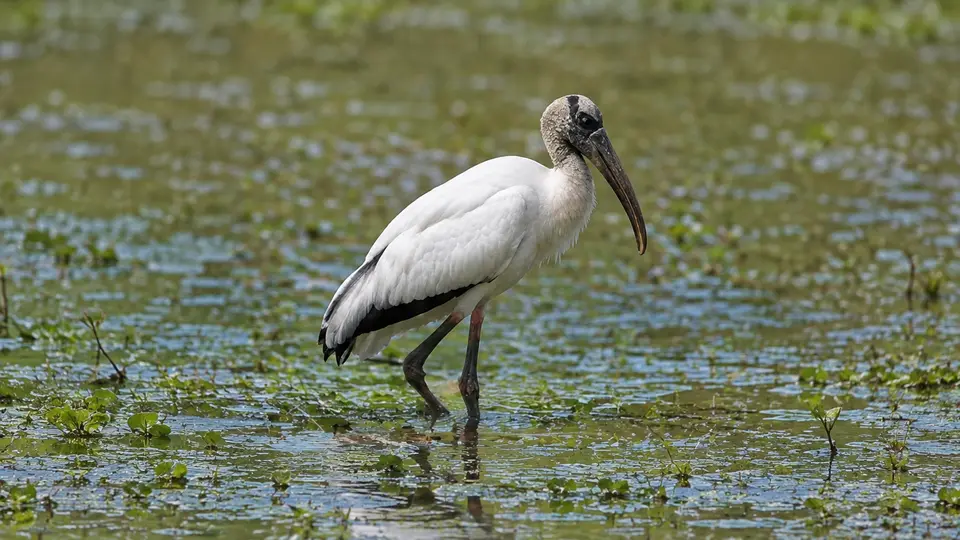
Wood Stork in its natural habitatAI-modified

Wood StorkMycteria americanaWhere and when to see them

Wood Stork at a glance

The wood stork is a large American wading bird with a bare, dark head, a heavy downcurved bill and striking black flight feathers against a white body. It occurs from the southeastern United States through much of tropical America. Rather than relying mainly on sight, it catches prey by touch in shallow water. Florida and Costa Rica both offer suitable wetlands, although local water levels can move feeding concentrations substantial distances.

Behaviour & reproduction

Size
85-115 cm (33.5-45.3 in) height
Weight
2-3.3 kg (4.4-7.3 lb)
Lifespan
Not reliably established
Status
Least Concern

A feeding wood stork walks slowly with its bill partly open in the water, snapping it shut when prey makes contact. Birds may stir the bottom with a foot to disturb small animals. They nest colonially in trees, often over water that helps limit access by terrestrial predators. Adults commute between colonies and feeding wetlands, and broad-winged groups frequently circle on rising warm air rather than using continuous flapping flight. When soaring, wood storks utilize thermals, often reaching considerable altitudes as they travel between distant feeding sites. This energy-efficient flight allows them to cover large territories daily. Nesting colonies can contain hundreds of pairs, creating a bustling spectacle of parental care and chick-rearing activities. Their social nature extends to feeding, where groups can sometimes be seen foraging together in particularly rich patches of water.

Top wildlife locations

Costa Rica wildlife habitatAI-modified

Costa Rica

Pacific lowland marshes, estuary margins and shallow seasonal pools offer plausible viewing from public paths. An inland wetland excursion may be needed; birds can leave coastal sites when feeding depths become unsuitable.

Florida wildlife habitatAI-modified

Florida

Coastal freshwater marshes, mangrove-fringed wetlands and managed ponds can be watched from established boardwalks. Some productive sites require a short inland excursion; colonies may be closed or screened from public access.

Destinations describe the species' habitat, not guaranteed cruise stops. Some animals require an optional inland excursion or are found in restricted reserves.

Fun facts about the Wood Stork

  • It is the only stork species that regularly breeds in the United States.
  • Its touch-triggered feeding method works even in muddy water.
  • Young birds have feathered heads that become bare as they mature.
  • Black flight feathers are much more conspicuous when its wings are spread.

Best time to see the Wood Stork

In Florida, the cooler dry-season months often provide accessible wetland viewing, although breeding timing varies geographically. Costa Rica's Pacific lowlands can be productive during the dry season as water recedes. Water management and rainfall should guide site choice rather than assuming a fixed annual peak. In both regions, monitoring local water conditions and reports from naturalists or park rangers will be more effective than relying on fixed seasonal calendars. The timing of their breeding season, which typically involves nesting in large colonies, is directly tied to the availability of concentrated food sources. This makes dry seasons, when water recedes, generally more productive for sightings.

Wood Stork: season matrix by destination

Travel and observation windows vary by region. Highlighted months are an orientation for planning, not confirmed sightings or a guarantee of access.

Costa Rica

The Pacific dry season often improves access and concentrates prey, but local water conditions matter and this is not a countrywide breeding calendar.

JanFebMarAprMayJunJulAugSepOctNovDec
Cruise ships in Costa Rica

Florida

Cooler dry-season conditions commonly favor wetland visits; birds occur year-round, with feeding concentrations and nesting schedules varying across Florida.

JanFebMarAprMayJunJulAugSepOctNovDec
Cruise ships in Florida

Where the Wood Stork lives

Wood storks use shallow freshwater marshes, wet prairies, ponds, mangrove margins and seasonally flooded landscapes. Nest colonies require suitable trees and dependable nearby feeding habitat. Coastal wetlands are useful viewing places, but changing water depth is more important than proximity to the sea. Wood storks prefer environments with fluctuating water levels, which concentrate prey and are crucial for successful foraging. They often select nesting sites in isolated trees or cypress swamps that offer protection from predators. These wetlands can span vast areas, requiring birds to travel significant distances between nesting and foraging grounds.

What the Wood Stork eats

Small fish dominate many meals, supplemented by crustaceans, aquatic insects, frogs and other small aquatic animals. Effective feeding requires prey to be concentrated in shallow water. Deep flooding or severe drying can make an apparently suitable wetland temporarily unproductive. Their unique tactile foraging method, known as 'grope-feeding' or 'bill-snapping,' allows them to hunt efficiently in murky waters where vision is limited. While primarily piscivorous, they are opportunistic feeders and will consume whatever small aquatic animals are most abundant. This feeding strategy makes them highly dependent on hydrological cycles that concentrate food.

Species at a glance

Common name
Wood Stork
Scientific name
Mycteria americana
Animal group
Birds
Size
85-115 cm (33.5-45.3 in) height
Weight
2-3.3 kg (4.4-7.3 lb)
Lifespan
Not reliably established
Status
Least Concern
Identification
The bare dark head and thick downcurved bill distinguish adult wood storks from white ibises, which have slimmer reddish bills and fully feathered heads. Juvenile wood storks have a feathered, yellowish-gray head that gradually loses its feathers and darkens with age, reaching the adult's bare, dark appearance after about three years. Their large size, standing nearly a meter tall with a wingspan over 1.5 meters, further distinguishes them from most other wetland birds. The overall white plumage with black flight feathers is another key identifier.

Wood Stork: frequently asked questions

Where can I see the Wood Stork?
Costa Rica, Florida. Watch from boardwalks, public wetland paths or distant coastal viewpoints. Keep away from nesting trees and avoid driving birds from feeding pools; in Florida and Costa Rica, remain alert to crocodilians near wetland edges. While observing from a distance, look for their distinctive feeding posture with the bill partially submerged. Binoculars are essential for appreciating details of their plumage and unique head shape from observation points. Their large size makes them relatively easy to spot even from cruise ship decks if they are feeding in accessible coastal estuaries or flying overhead.
When is the best time to see the Wood Stork?
In Florida, the cooler dry-season months often provide accessible wetland viewing, although breeding timing varies geographically. Costa Rica's Pacific lowlands can be productive during the dry season as water recedes. Water management and rainfall should guide site choice rather than assuming a fixed annual peak. In both regions, monitoring local water conditions and reports from naturalists or park rangers will be more effective than relying on fixed seasonal calendars. The timing of their breeding season, which typically involves nesting in large colonies, is directly tied to the availability of concentrated food sources. This makes dry seasons, when water recedes, generally more productive for sightings.
How big does the Wood Stork get?
85-115 cm (33.5-45.3 in) height. Adult weight: 2-3.3 kg (4.4-7.3 lb). Size varies with age, sex and population.
How should I behave around the Wood Stork?
Watch from boardwalks, public wetland paths or distant coastal viewpoints. Keep away from nesting trees and avoid driving birds from feeding pools; in Florida and Costa Rica, remain alert to crocodilians near wetland edges. While observing from a distance, look for their distinctive feeding posture with the bill partially submerged. Binoculars are essential for appreciating details of their plumage and unique head shape from observation points. Their large size makes them relatively easy to spot even from cruise ship decks if they are feeding in accessible coastal estuaries or flying overhead.
What does the Wood Stork eat?
Small fish dominate many meals, supplemented by crustaceans, aquatic insects, frogs and other small aquatic animals. Effective feeding requires prey to be concentrated in shallow water. Deep flooding or severe drying can make an apparently suitable wetland temporarily unproductive. Their unique tactile foraging method, known as 'grope-feeding' or 'bill-snapping,' allows them to hunt efficiently in murky waters where vision is limited. While primarily piscivorous, they are opportunistic feeders and will consume whatever small aquatic animals are most abundant. This feeding strategy makes them highly dependent on hydrological cycles that concentrate food.
Are wildlife sightings guaranteed on an adventure cruise?
No. Animals move freely and routes, weather, access restrictions and local conditions influence every outing. Confirm the actual itinerary and shore program before booking.

Compare wildlife in the same destinations

Explore other birds recorded in these destinations. Similar surroundings do not mean the animals share the same habits or viewing season.

Species comparison by animal group and destination
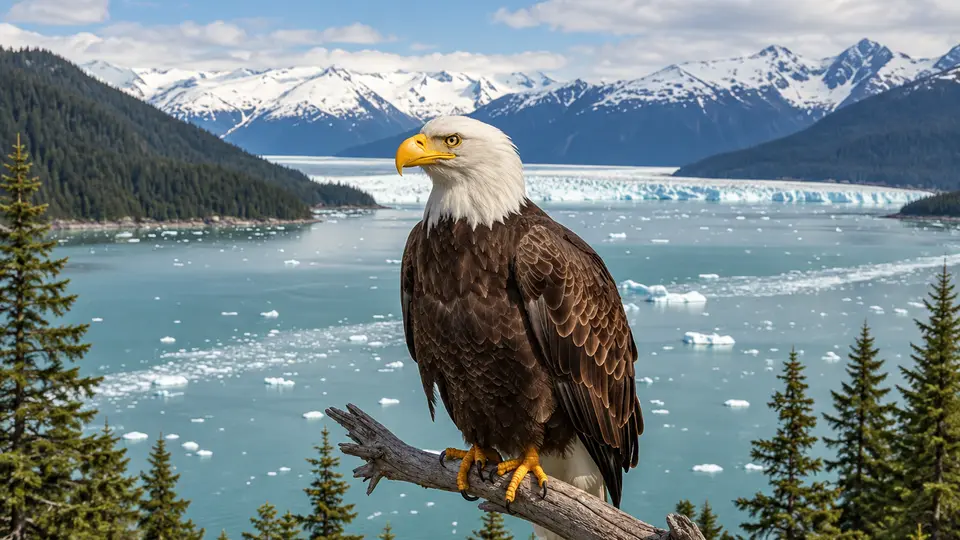
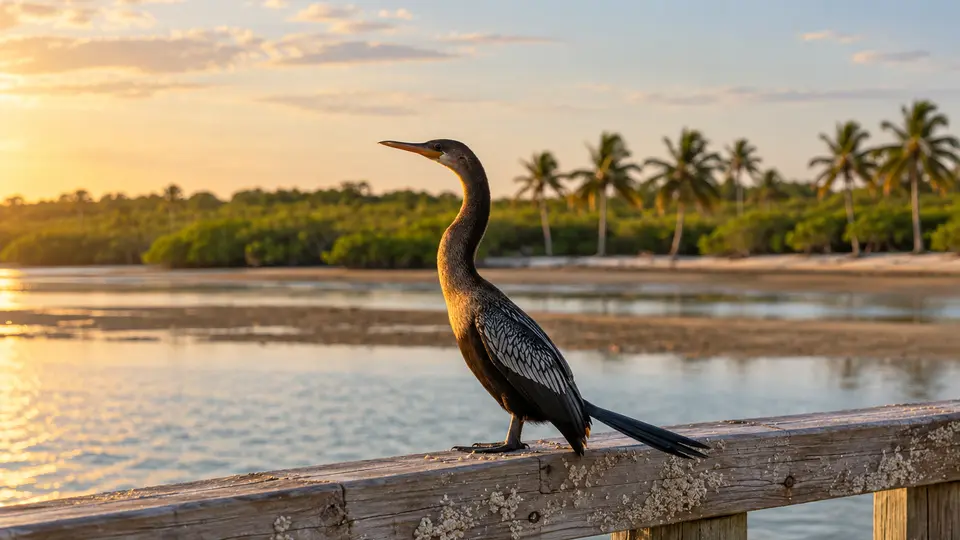
Wood StorkAI-modifiedWood StorkAnhingaAI-modifiedAnhingaBald EagleAI-modifiedBald Eagle
Animal groupBirdsAnimal groupBirdsAnimal groupBirds
DestinationsCosta Rica, FloridaDestinationsFloridaDestinationsAlaska, Florida, New England
Scientific nameMycteria americanaScientific nameScientific name
All wildlife destinations
AI-modified
Plan your trip

Find your next wildlife adventure

Compare destinations, shore programs and dates with the animals and habitats you would love to see.

  • Naturalist-led shore excursions
  • Responsible wildlife watching
  • Small expedition ships