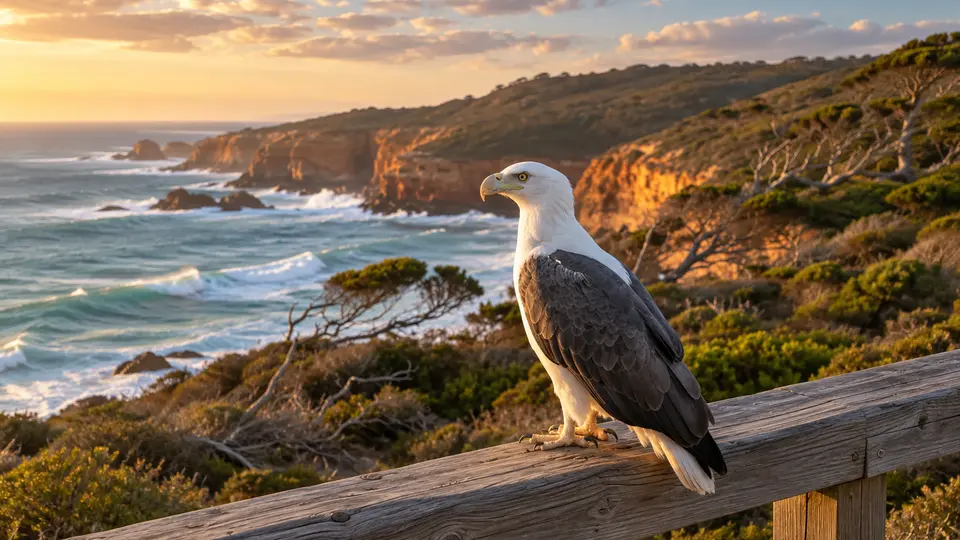
White-bellied sea eagle in its natural habitat, AI illustration

White-bellied sea eagle: where and when to see them

Icthyophaga leucogaster

White-bellied sea eagle at a glance

The white-bellied sea eagle is a powerful fish-eating raptor distributed from South Asia through Southeast Asia to Australia. Adults have a white head and underparts, gray upperwings and dark flight feathers, producing a striking pattern when seen overhead. Despite its name, it also occupies large inland waters. Coastal pairs depend on productive feeding areas and secure nest trees or other elevated sites, making disturbance and shoreline development important local concerns.

Behaviour & reproduction

Size
70-85 cm long; wingspan 180-220 cm
Weight
2.5-4.5 kg
Lifespan
Not reliably established
Status
Least Concern

Pairs often patrol a territory by soaring, then wait on a prominent perch overlooking water. Prey is taken with the feet, sometimes in a low sweeping pass across the surface. These eagles also scavenge and steal food from other birds. Courtship can include coordinated flight displays, while breeding adults maintain bulky stick nests. Their loud, goose-like calls are surprisingly different from the piercing cries commonly associated with large eagles. Vocalizations are common and distinctive, often a loud, honking 'goose-like' call or a series of clanging notes. During hunting, they perform a shallow dive from a perch or while soaring, grasping prey with powerful talons without fully submerging.

Top wildlife locations

Indonesia wildlife habitat

Indonesia

Mangrove-fringed bays, estuaries and wooded island coasts offer plausible shore viewing. Resident pairs are unevenly distributed across the archipelago, and some nesting shores are remote or protected rather than accessible visitor stops.

Adventure cruises in Indonesia
Thailand wildlife habitat

Thailand

Coastal headlands, mangrove estuaries and wooded islands in southern Thailand provide suitable viewing habitat. Watch from established shore access; occupied nest trees and protected island areas may be inaccessible or subject to restrictions.

Adventure cruises in Thailand
Vietnam wildlife habitat

Vietnam

Wooded island shores and quiet coastal bays offer plausible habitat, but the eagle is localized and should not be expected along every coast. Protected nesting areas may be inaccessible, and current local guidance is useful.

Adventure cruises in Vietnam
Australia wildlife habitat

Australia

Estuaries, coastal lakes and wooded headlands offer accessible shore-viewing habitat in many regions. Birds can be resident, but nests require distance and some territories lie on remote shores beyond ordinary visitor access.

Adventure cruises in Australia

Destinations describe the species' habitat, not guaranteed cruise stops. Some animals require an optional inland excursion or are found in restricted reserves.

Fun facts about the White-bellied sea eagle

  • Females are generally larger than males.
  • Its calls are often described as goose-like honks.
  • It can take prey from other fishing birds through aerial harassment.
  • Young birds are largely brown and acquire the clean adult pattern gradually.

Best time to see the White-bellied sea eagle

Resident birds can be observed year-round where territories persist. Favor local dry or settled weather for shore watching, but do not interpret tourism seasons as nesting calendars. Breeding timing differs substantially between tropical Southeast Asia and Australia's temperate and tropical coastal regions. In tropical regions like Southeast Asia, breeding may occur throughout the year, peaking during the dry season when prey is more concentrated. In Australia, northern populations often breed in the dry season (April-October), while southern populations breed in the wet season (August-February).

White-bellied sea eagle: season matrix by destination

Travel and observation windows vary by region. Highlighted months are an orientation for planning, not confirmed sightings or a guarantee of access.

Indonesia

These are generally workable travel months in much of southern Indonesia; rainfall patterns differ elsewhere and birds are not restricted to this season.

JanFebMarAprMayJunJulAugSepOctNovDec
Cruise ships in Indonesia

Thailand

This is a broadly useful coastal travel window, especially on the Andaman coast; Gulf weather differs and breeding timing is locally variable.

JanFebMarAprMayJunJulAugSepOctNovDec
Cruise ships in Thailand

Vietnam

Vietnam's coastal weather varies strongly by region, and no single destination-wide observation window is well supported.

JanFebMarAprMayJunJulAugSepOctNovDec
Cruise ships in Vietnam

Australia

Year-round observation is plausible across the national range; choose regional weather conditions and respect locally varying nesting seasons.

JanFebMarAprMayJunJulAugSepOctNovDec
Cruise ships in Australia

Where the White-bellied sea eagle lives

Habitats include sea coasts, offshore islands, estuaries, mangroves, broad rivers and large lakes. Tall trees are important nesting and lookout structures in many regions, although cliffs may also be used. Extensive wetlands and relatively undisturbed shorelines can support resident pairs. Though adaptable, they generally avoid densely forested inland areas and arid zones. Their presence often indicates a healthy coastal or freshwater ecosystem, supporting diverse fish and prey populations.

What the White-bellied sea eagle eats

Fish form a major part of the diet, but the species also takes waterbirds, reptiles and small mammals, and consumes carrion. Food may be captured directly, scavenged along shorelines or stolen from other hunters, depending on locally available opportunities. They are opportunistic predators, often taking a wide variety of fish species, marine snakes, and even sea turtles. Chicks are fed a diet of small, easily digestible prey items, gradually shifting to larger prey as they grow.

Species at a glance

Common name
White-bellied sea eagle
Scientific name
Icthyophaga leucogaster
Animal group
Birds
Size
70-85 cm long; wingspan 180-220 cm
Weight
2.5-4.5 kg
Lifespan
Not reliably established
Status
Least Concern
Identification
Adults differ from the smaller brahminy kite in having gray rather than chestnut upperparts, a wedge-shaped white tail and much broader wings. Juveniles are largely brown with a streaky underside, gradually acquiring the adult white head and underparts over several years. Their broad, 'plank-like' wings are held in a slight 'V' shape when soaring, distinguishing them from other large raptors.

White-bellied sea eagle: frequently asked questions

Where can I see the White-bellied sea eagle?
Indonesia, Thailand, Vietnam, Australia. Scan distant perches and soaring birds from public shore paths. Stay well away from nest trees, particularly when adults call persistently or circle overhead, and never use fish or other bait to draw birds closer. From the deck of a cruise ship, look for them perched on channel markers, buoys, or cliff faces along the coastline. During shore excursions, their large size and distinct white underparts make them easily visible against the sky as they soar over waterways.
When is the best time to see the White-bellied sea eagle?
Resident birds can be observed year-round where territories persist. Favor local dry or settled weather for shore watching, but do not interpret tourism seasons as nesting calendars. Breeding timing differs substantially between tropical Southeast Asia and Australia's temperate and tropical coastal regions. In tropical regions like Southeast Asia, breeding may occur throughout the year, peaking during the dry season when prey is more concentrated. In Australia, northern populations often breed in the dry season (April-October), while southern populations breed in the wet season (August-February).
How big does the White-bellied sea eagle get?
70-85 cm long; wingspan 180-220 cm. Adult weight: 2.5-4.5 kg. Size varies with age, sex and population.
How should I behave around the White-bellied sea eagle?
Scan distant perches and soaring birds from public shore paths. Stay well away from nest trees, particularly when adults call persistently or circle overhead, and never use fish or other bait to draw birds closer. From the deck of a cruise ship, look for them perched on channel markers, buoys, or cliff faces along the coastline. During shore excursions, their large size and distinct white underparts make them easily visible against the sky as they soar over waterways.
What does the White-bellied sea eagle eat?
Fish form a major part of the diet, but the species also takes waterbirds, reptiles and small mammals, and consumes carrion. Food may be captured directly, scavenged along shorelines or stolen from other hunters, depending on locally available opportunities. They are opportunistic predators, often taking a wide variety of fish species, marine snakes, and even sea turtles. Chicks are fed a diet of small, easily digestible prey items, gradually shifting to larger prey as they grow.
Are wildlife sightings guaranteed on an adventure cruise?
No. Animals move freely and routes, weather, access restrictions and local conditions influence every outing. Confirm the actual itinerary and shore program before booking.

Compare wildlife in the same destinations

Explore other birds recorded in these destinations. Similar surroundings do not mean the animals share the same habits or viewing season.

Species comparison by animal group and destination
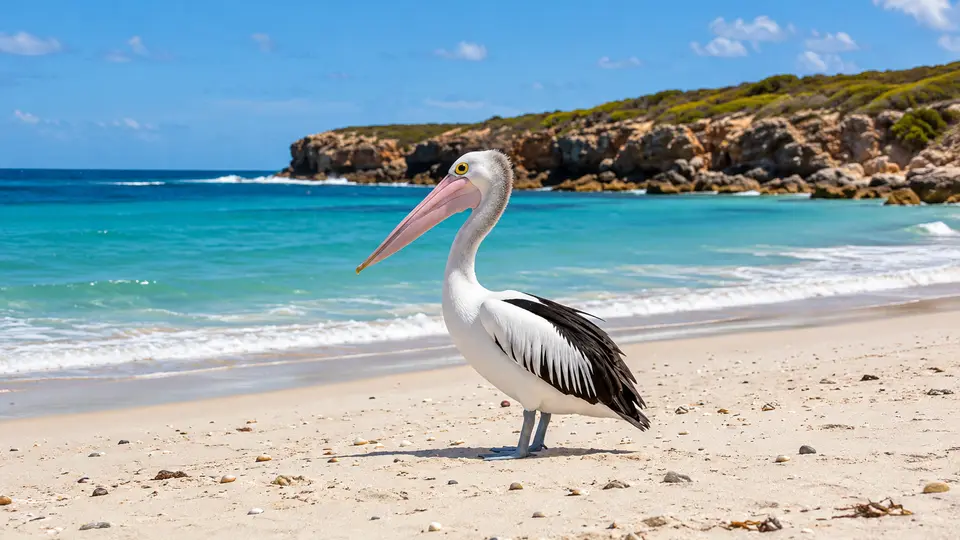
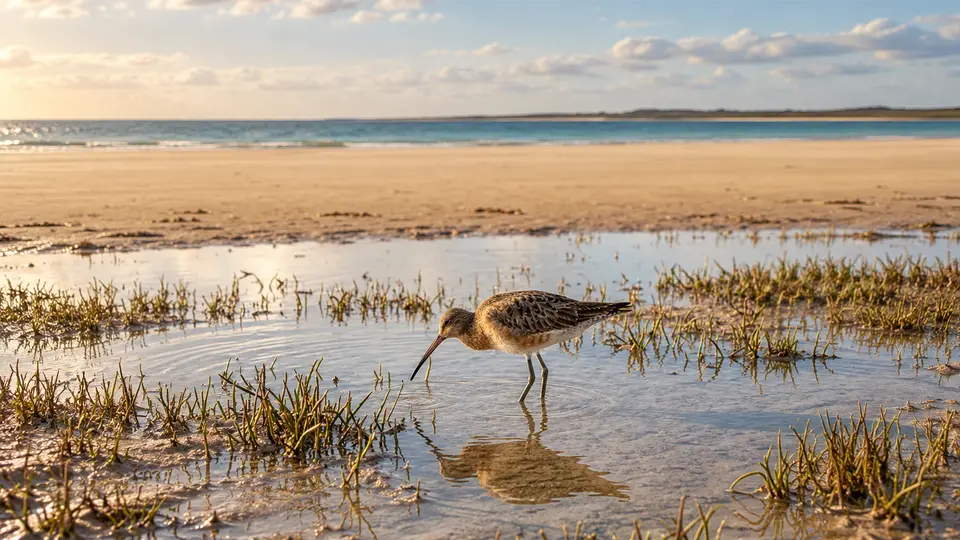
White-bellied sea eagleWhite-bellied sea eagleAustralian pelicanAustralian pelicanBar-tailed godwitBar-tailed godwit
Animal groupBirdsAnimal groupBirdsAnimal groupBirds
DestinationsIndonesia, Thailand, Vietnam, AustraliaDestinationsAustraliaDestinationsAustralia, New Zealand
All wildlife destinations
Plan your trip

Find your next wildlife adventure

Compare destinations, shore programs and dates with the animals and habitats you would love to see.

  • Naturalist-led shore excursions
  • Responsible wildlife watching
  • Small expedition ships

Newsletter

Take Blue Rides with you

Adventure cruise offers, last-minute deals and trip inspiration.

Free, unsubscribe anytime. Details: Privacy Policy

Partner with Blue Rides

Affiliate Program

Recommend adventure cruises and earn commission on every confirmed booking.

Share. Track. Earn.

Your footage, our stage

Send us your videos or pictures.

Captured beautiful landscapes or wildlife? Share your videos and pictures with us, we may feature them on Blue Rides.