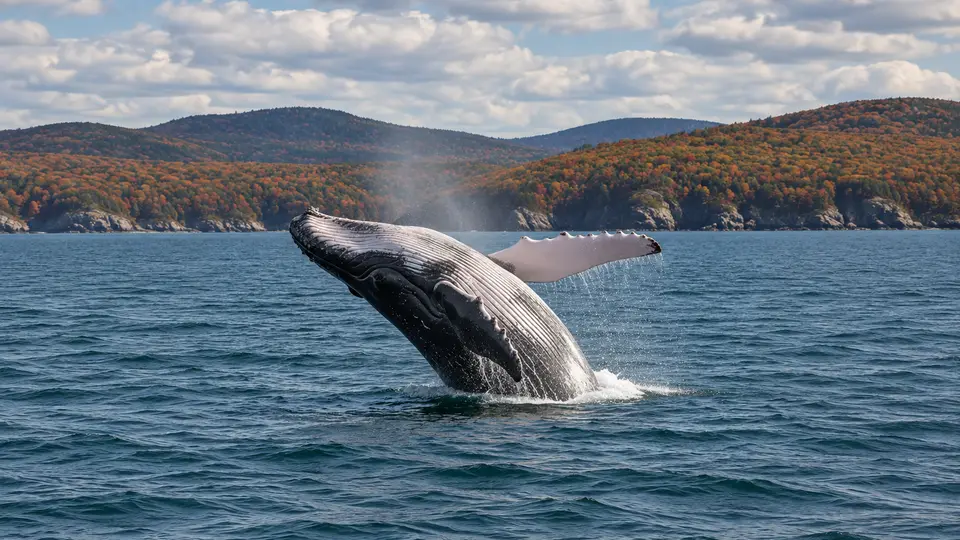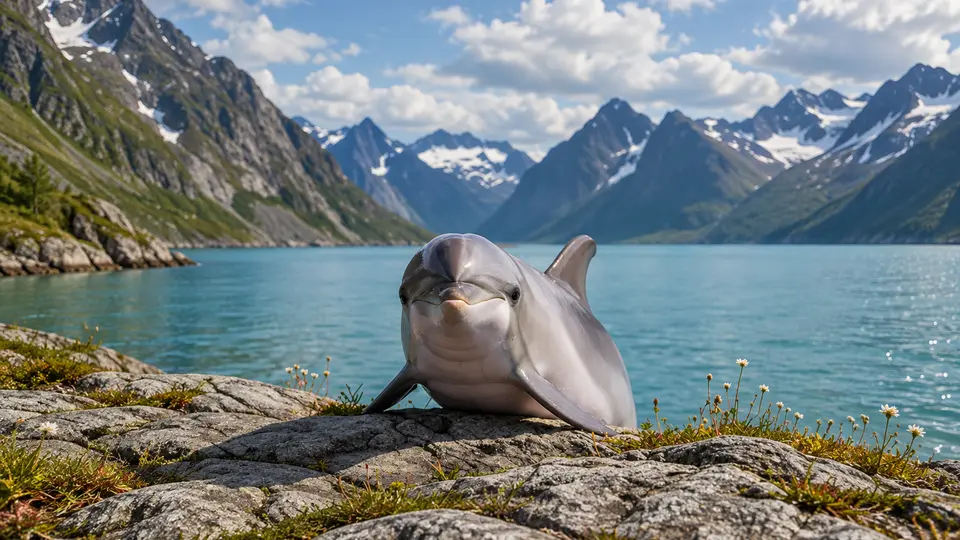
White-beaked Dolphin in its natural habitat, AI illustration
Size2.4-3.1 m longLifespanNot reliably establishedStatusLeast Concern

White-beaked Dolphin: where and when to see them

Lagenorhynchus albirostris

White-beaked Dolphin at a glance

The white-beaked dolphin is a robust marine mammal of cool North Atlantic waters, including seas around Norway. Its short beak, tall dorsal fin and contrasting pale flank markings are more useful than its common name alone, because the beak is not always conspicuously white. It inhabits continental-shelf waters rather than being a land animal, and most observations require distant views from a vessel deck or a suitably positioned coastal headland.

Behaviour & reproduction

Size
2.4-3.1 m long
Weight
180-350 kg
Lifespan
Not reliably established
Status
Least Concern

Groups commonly travel and feed together, sometimes joining larger temporary aggregations where fish are concentrated. Individuals may leap clear of the water, creating conspicuous splashes visible at a distance. They use echolocation to investigate their surroundings and locate prey, and maintain social contact through sound. Associations with other cetaceans occur, but movements are strongly influenced by changing food availability, so repeated presence near any one headland cannot be assumed. They are highly social, living in dynamic groups with fluid membership, and communicate through a repertoire of whistles, clicks, and pulsed calls. Their curiosity may occasionally lead them to approach boats, though this is not a consistent behavior.

Top wildlife locations

Norway wildlife habitat

Norway

Exposed coastal headlands and vessel decks overlooking continental-shelf waters provide plausible distant viewing. Dolphins are mobile and may remain far offshore, so shore sightings are irregular and sheltered inner fjords are not dependable locations.

Adventure cruises in Norway
Destinations describe the species' habitat, not guaranteed cruise stops. Some animals require an optional inland excursion or are found in restricted reserves.

Fun facts about the White-beaked Dolphin

  • A white beak is not present on every individual despite the common name.
  • Its range is centered on the North Atlantic rather than tropical oceans.
  • Echolocation clicks help it locate prey in water with limited visibility.
  • Individuals sometimes leap repeatedly, making them detectable well before markings can be resolved.

Best time to see the White-beaked Dolphin

Late spring through summer offers long daylight and generally more workable deck and coastal viewing conditions in Norway. This is an observation advantage, not a fixed migration or breeding season. White-beaked dolphins occur in Norwegian waters beyond summer, but local encounters remain unpredictable. While summer offers optimal viewing, their presence is not restricted to specific migratory seasons, as they are considered residents in parts of their range. Long periods of daylight during the Norwegian summer also facilitate longer viewing windows.

White-beaked Dolphin: season matrix by destination

Travel and observation windows vary by region. Highlighted months are an orientation for planning, not confirmed sightings or a guarantee of access.

Norway

Long daylight and potentially calmer conditions favor observation; these months do not represent a confirmed local occurrence or breeding schedule.

JanFebMarAprMayJunJulAugSepOctNovDec
Cruise ships in Norway

Where the White-beaked Dolphin lives

This dolphin favors temperate and subarctic North Atlantic shelf waters, often in relatively shallow seas compared with oceanic dolphin habitats. Around Norway it may occur along exposed coasts and offshore banks, with local distribution influenced by water conditions and prey movements. They are typically found in waters between 50 and 200 meters deep, preferring areas with strong currents and upwelling. While widespread, their distribution is patchy, often correlating with nutrient-rich areas supporting their prey.

What the White-beaked Dolphin eats

Fish are the principal prey, especially schooling and bottom-associated species such as cod-family fishes, herring and sandeels. Squid and crustaceans are also eaten. Feeding opportunities shift with prey abundance, helping explain why dolphins can appear irregularly within otherwise suitable coastal waters. Prey capture often involves coordinated herding, trapping schooling fish against the surface or seabed. They exhibit dietary flexibility, adapting to local and seasonal variations in prey availability.

Species at a glance

Common name
White-beaked Dolphin
Scientific name
Lagenorhynchus albirostris
Animal group
Marine life
Size
2.4-3.1 m long
Weight
180-350 kg
Lifespan
Not reliably established
Status
Least Concern
Identification
Compared with the Atlantic white-sided dolphin, it is stockier and lacks the latter's distinct yellowish rear-flank patch, with a shorter, often pale beak. The prominent, short white beak, which gives the species its name, is a key diagnostic feature, contrasting with their dark grey or black body. They also have a white belly and a light grey patch behind the dorsal fin, though this is less extensive than in some other dolphin species.

White-beaked Dolphin: frequently asked questions

Where can I see the White-beaked Dolphin?
Norway. Use binoculars from stable decks or safe headlands, keeping well back from exposed cliff edges. Do not encourage pursuit or close approaches; distant surfacing sequences and group movement provide useful observations without disturbing feeding dolphins. Look for groups of 5-15 individuals, though larger temporary aggregations can occur where food is abundant. Their relatively fast swimming and often exuberant surfacing can make them conspicuous even at a distance.
When is the best time to see the White-beaked Dolphin?
Late spring through summer offers long daylight and generally more workable deck and coastal viewing conditions in Norway. This is an observation advantage, not a fixed migration or breeding season. White-beaked dolphins occur in Norwegian waters beyond summer, but local encounters remain unpredictable. While summer offers optimal viewing, their presence is not restricted to specific migratory seasons, as they are considered residents in parts of their range. Long periods of daylight during the Norwegian summer also facilitate longer viewing windows.
How big does the White-beaked Dolphin get?
2.4-3.1 m long. Adult weight: 180-350 kg. Size varies with age, sex and population.
How should I behave around the White-beaked Dolphin?
Use binoculars from stable decks or safe headlands, keeping well back from exposed cliff edges. Do not encourage pursuit or close approaches; distant surfacing sequences and group movement provide useful observations without disturbing feeding dolphins. Look for groups of 5-15 individuals, though larger temporary aggregations can occur where food is abundant. Their relatively fast swimming and often exuberant surfacing can make them conspicuous even at a distance.
What does the White-beaked Dolphin eat?
Fish are the principal prey, especially schooling and bottom-associated species such as cod-family fishes, herring and sandeels. Squid and crustaceans are also eaten. Feeding opportunities shift with prey abundance, helping explain why dolphins can appear irregularly within otherwise suitable coastal waters. Prey capture often involves coordinated herding, trapping schooling fish against the surface or seabed. They exhibit dietary flexibility, adapting to local and seasonal variations in prey availability.
Are wildlife sightings guaranteed on an adventure cruise?
No. Animals move freely and routes, weather, access restrictions and local conditions influence every outing. Confirm the actual itinerary and shore programme before booking.

Compare wildlife in the same destinations

Explore other marine life recorded in these destinations. Similar surroundings do not mean the animals share the same habits or viewing season.

Species comparison by animal group and destination
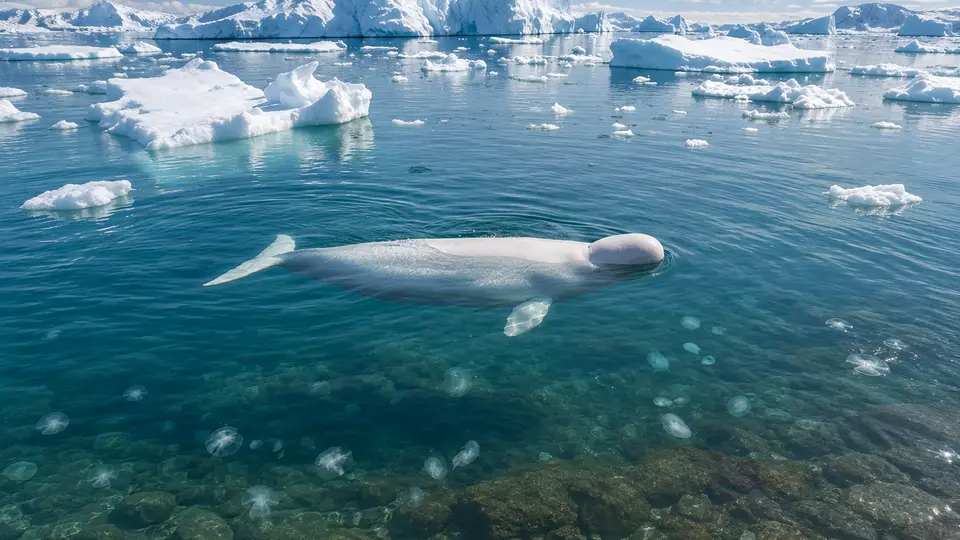
White-beaked DolphinWhite-beaked DolphinBeluga WhaleBeluga WhaleFin WhaleFin Whale
Animal groupMarine lifeAnimal groupMarine lifeAnimal groupMarine life
DestinationsNorwayDestinationsNorway, ArcticDestinationsMexico, New England, Croatia, Greece, Norway, Portugal, Antarctica, Arctic
All wildlife destinations
Plan your trip

Find your next wildlife adventure

Compare destinations, shore programmes and dates with the animals and habitats you would love to see.

  • Naturalist-led shore excursions
  • Responsible wildlife watching
  • Small expedition ships

Newsletter

Take Blue Rides with you

Adventure cruise offers, last-minute deals and trip inspiration.

Free, unsubscribe anytime. Details: Privacy Policy

Partner with Blue Rides

Affiliate Program

Recommend adventure cruises and earn commission on every confirmed booking.

Share. Track. Earn.