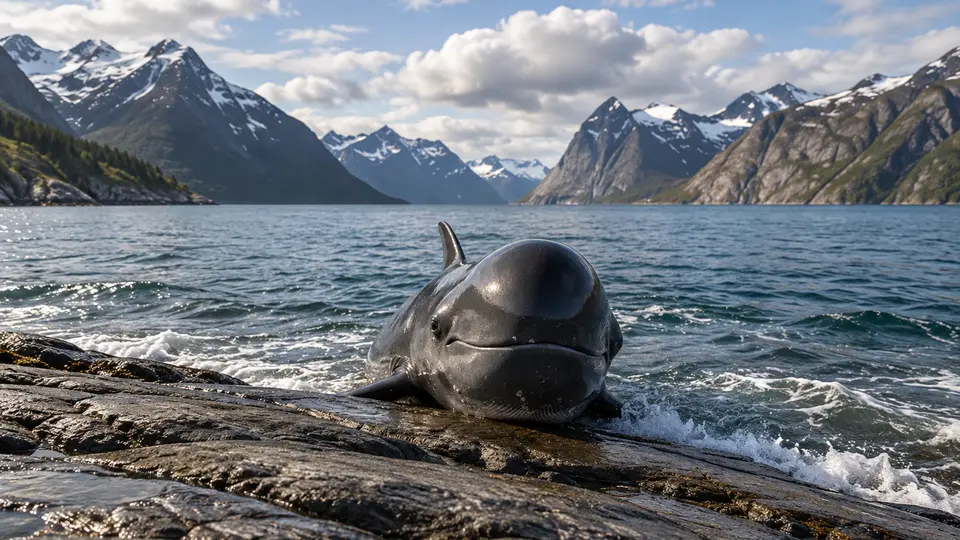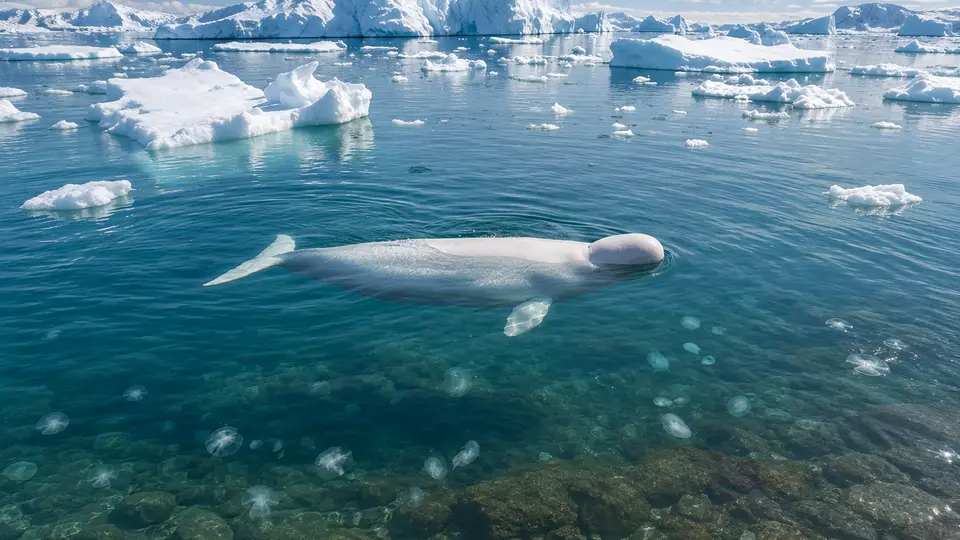
Beluga Whale in its natural habitat, AI illustration
Size3–5.5 m longLifespan35–60 yearsStatusLeast Concern

Beluga Whale: where and when to see them

Delphinapterus leucas

Beluga Whale at a glance

The beluga is a toothed whale of Arctic and subarctic seas, recognised by its pale adult colour and rounded forehead. It is a fully marine mammal that sometimes enters estuaries and rivers, not a land animal. Populations differ markedly in migration routes, seasonal habitat and conservation pressures. The species' global assessment therefore does not describe every local population, some of which face much greater risk than the worldwide category suggests.

Behaviour & reproduction

Size
3–5.5 m long
Weight
500–1,600 kg
Lifespan
35–60 years
Status
Least Concern

Belugas are social and communicate using a varied repertoire of whistles, clicks and other sounds. Group composition changes with season, age and reproductive status, and large seasonal gatherings occur in some regions. They use echolocation to locate prey and navigate. Unlike most whales, they can turn their heads quite freely because their neck vertebrae are not fused, while coordinated movement helps groups negotiate ice and coastal channels. Belugas are known for their ability to navigate complex ice environments, often using polynyas and lead systems. Their highly flexible neck allows for a wide range of head movements, aiding in hunting and navigating through confined spaces. Social structures within groups can be fluid, with individuals moving between pods, especially during large summer gatherings.

Top wildlife locations

Norway wildlife habitat

Norway

Svalbard's fjords and shallow coastal margins offer plausible distant shore or deck views. Mainland Norway is not a dependable viewing destination, and access to Arctic shores is restricted by safety conditions.

Adventure cruises in Norway
Arctic wildlife habitat

Arctic

Some Arctic estuaries and coastal channels support seasonal beluga use, with observation possible from authorised shores or distant decks. Many population areas are remote, inaccessible or subject to community-specific restrictions.

Adventure cruises in Arctic

Destinations describe the species' habitat, not guaranteed cruise stops. Some animals require an optional inland excursion or are found in restricted reserves.

Fun facts about the Beluga Whale

  • Calves are grey or brownish and become pale as they mature.
  • The flexible neck allows unusually noticeable head movements for a whale.
  • Their varied vocalisations inspired the nickname sea canary.
  • Belugas have a low dorsal ridge instead of a dorsal fin.

Best time to see the Beluga Whale

Summer generally provides the best daylight and coastal access for distant Arctic observation. Some populations use predictable seasonal areas, but this cannot be generalised to all shores. Around Svalbard, June through August is a practical travel window rather than a promise of whales. Prime viewing opportunities often coincide with their summer aggregations in warmer, shallower waters, making these months popular for expedition cruises. Local ice conditions and specific population movements are key factors determining access to their habitats. While summer is generally preferred, some overwintering populations can be observed in specific areas with permanent open leads.

Beluga Whale: season matrix by destination

Travel and observation windows vary by region. Highlighted months are an orientation for planning, not confirmed sightings or a guarantee of access.

Norway

Summer improves Svalbard access and visibility; beluga movements remain variable and are not guaranteed along visitor routes.

JanFebMarAprMayJunJulAugSepOctNovDec
Cruise ships in Norway

Arctic

This is a broad coastal travel window; individual populations have different schedules, and some areas are unsuitable for visitor observation.

JanFebMarAprMayJunJulAugSepOctNovDec
Cruise ships in Arctic

Where the Beluga Whale lives

Belugas occupy cold shelf seas, coastal channels, estuaries and seasonally ice-covered waters. Some populations gather in relatively warm, shallow estuaries during summer, while others remain closely associated with Arctic coasts. Winter habitat may include pack ice with dependable breathing openings. They are predominantly an Arctic and sub-Arctic species, with a circumpolar distribution across North America, Greenland, and Eurasia. Belugas are one of only two whale species found exclusively in Arctic and sub-Arctic waters. Their adaptability allows them to thrive in varied conditions, from deep offshore areas to shallow estuarine environments.

What the Beluga Whale eats

Diet varies among populations and seasons, including fish such as Arctic cod, capelin and other locally abundant species, plus shrimps, squid and bottom-dwelling invertebrates. Belugas capture individual prey using teeth and suction rather than filtering plankton from the water. Prey is typically consumed whole or in large pieces rather than extensively chewed. Their flexible necks and varied hunting techniques allow them to forage effectively near the seabed as well as in the water column. They are opportunistic feeders, adjusting their diet based on local availability and seasonal migrations of prey.

Species at a glance

Common name
Beluga Whale
Scientific name
Delphinapterus leucas
Animal group
Marine life
Size
3–5.5 m long
Weight
500–1,600 kg
Lifespan
35–60 years
Status
Least Concern
Identification
Adult belugas are white with a rounded melon and no dorsal fin, unlike narwhals, which usually remain mottled and may carry a long tusk. Juvenile belugas are typically gray or mottled brown, gradually lightening to white over several years, which helps distinguish them from adults. The absence of a dorsal fin, which is instead replaced by a tough dorsal ridge, is a key field mark for this species. Their robust, torpedo-shaped body and prominent 'melon' forehead are distinctive features.

Beluga Whale: frequently asked questions

Where can I see the Beluga Whale?
Norway, Arctic. Use binoculars from shore or an existing vessel route and allow whales to pass undisturbed. Never feed, pursue or attempt contact, and respect local approach limits, particularly around calves and narrow coastal channels. Maintain a quiet presence and avoid sudden movements when belugas are sighted from shore or zodiacs. It is crucial to respect all marine mammal regulations, which often include minimum approach distances and speed limits for vessels. Look for their characteristic white bodies contrasting with the dark water, especially in open leads or near ice edges.
When is the best time to see the Beluga Whale?
Summer generally provides the best daylight and coastal access for distant Arctic observation. Some populations use predictable seasonal areas, but this cannot be generalised to all shores. Around Svalbard, June through August is a practical travel window rather than a promise of whales. Prime viewing opportunities often coincide with their summer aggregations in warmer, shallower waters, making these months popular for expedition cruises. Local ice conditions and specific population movements are key factors determining access to their habitats. While summer is generally preferred, some overwintering populations can be observed in specific areas with permanent open leads.
How big does the Beluga Whale get?
3–5.5 m long. Adult weight: 500–1,600 kg. Size varies with age, sex and population.
How should I behave around the Beluga Whale?
Use binoculars from shore or an existing vessel route and allow whales to pass undisturbed. Never feed, pursue or attempt contact, and respect local approach limits, particularly around calves and narrow coastal channels. Maintain a quiet presence and avoid sudden movements when belugas are sighted from shore or zodiacs. It is crucial to respect all marine mammal regulations, which often include minimum approach distances and speed limits for vessels. Look for their characteristic white bodies contrasting with the dark water, especially in open leads or near ice edges.
What does the Beluga Whale eat?
Diet varies among populations and seasons, including fish such as Arctic cod, capelin and other locally abundant species, plus shrimps, squid and bottom-dwelling invertebrates. Belugas capture individual prey using teeth and suction rather than filtering plankton from the water. Prey is typically consumed whole or in large pieces rather than extensively chewed. Their flexible necks and varied hunting techniques allow them to forage effectively near the seabed as well as in the water column. They are opportunistic feeders, adjusting their diet based on local availability and seasonal migrations of prey.
Are wildlife sightings guaranteed on an adventure cruise?
No. Animals move freely and routes, weather, access restrictions and local conditions influence every outing. Confirm the actual itinerary and shore programme before booking.

Compare wildlife in the same destinations

Explore other marine life recorded in these destinations. Similar surroundings do not mean the animals share the same habits or viewing season.

Species comparison by animal group and destination
Beluga WhaleBeluga WhaleFin WhaleFin WhaleLong-finned Pilot WhaleLong-finned Pilot Whale
Animal groupMarine lifeAnimal groupMarine lifeAnimal groupMarine life
DestinationsNorway, ArcticDestinationsMexico, New England, Croatia, Greece, Norway, Portugal, Antarctica, ArcticDestinationsNorway
All wildlife destinations
Plan your trip

Find your next wildlife adventure

Compare destinations, shore programmes and dates with the animals and habitats you would love to see.

  • Naturalist-led shore excursions
  • Responsible wildlife watching
  • Small expedition ships

Newsletter

Take Blue Rides with you

Adventure cruise offers, last-minute deals and trip inspiration.

Free, unsubscribe anytime. Details: Privacy Policy

Partner with Blue Rides

Affiliate Program

Recommend adventure cruises and earn commission on every confirmed booking.

Share. Track. Earn.