White Tern in its natural habitat

White TernGygis albaWhere and when to see them

White Tern at a glance

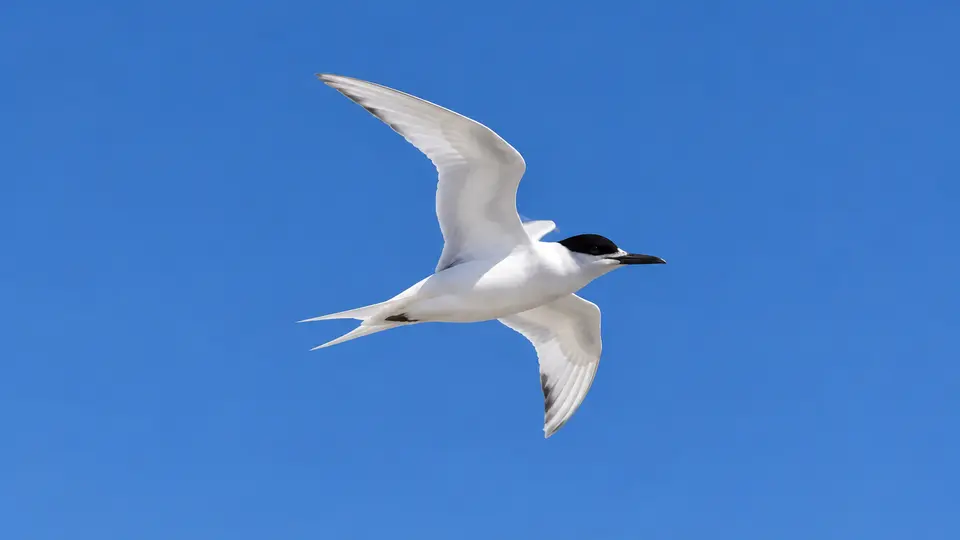
The white tern is a delicate tropical seabird with entirely white plumage, large dark eyes and a sharply pointed bill. It ranges widely across warm oceans, nesting on islands rather than constructing conventional nests. A single egg may rest directly on a bare branch or other narrow support. Although graceful and conspicuous around some island settlements, its distribution is uneven, and apparently suitable islands may hold few birds or none.

Behaviour & reproduction

Size
28-33 cm (11-13 in) long; wingspan 66-78 cm (26-31 in)
Weight
90-140 g (3.2-4.9 oz)
Lifespan
Not reliably established
Status
Least Concern

White terns often forage singly or in loose associations, hovering briefly before taking small prey at the sea surface. Pairs perform aerial courtship and may remain associated with the same nesting area over multiple seasons. Both parents incubate the precariously placed egg and feed the chick. Young birds grip their support with strong claws, while adults approach carefully with small fish held crosswise in the bill for delivery. The eggs are surprisingly stable due to their conical shape and rough surface, which prevents them from rolling off narrow perches. Courtship involves elaborate aerial chases and fish-carrying displays between pairs. They are known for their tameness around humans on remote islands, often allowing close observation without fear.

Top wildlife locations

Seychelles wildlife habitat

Seychelles

Mature trees beside beaches, village paths and island gardens provide plausible shore-viewing habitat on occupied islands. Access varies with island ownership and protection, and nesting branches should always be observed without approaching.

Maldives wildlife habitat

Maldives

The species is particularly associated with the far southern Maldives, including Addu, where mature coastal trees offer viewing opportunities. It is not a routine bird of every resort island, so location matters greatly.

Polynesia wildlife habitat

Polynesia

Wooded island shores and mature village trees can support white terns across parts of Polynesia. The destination spans many archipelagos, so access, local abundance and identification of related white terns require island-specific checking.

Destinations describe the species' habitat, not guaranteed cruise stops. Some animals require an optional inland excursion or are found in restricted reserves.

Fun facts about the White Tern

  • It lays a single egg without building a conventional nest.
  • A chick has well-developed claws that help it cling to its branch.
  • Adults can carry multiple fish at once for their chick.
  • The species is also widely known as the fairy tern, a name used for other terns elsewhere.

Best time to see the White Tern

White terns may be present throughout the year on occupied tropical islands, but breeding schedules vary among archipelagos and even individual colonies. Choose comfortable local shore-travel conditions rather than assuming a universal nesting season; recent local information is especially valuable where populations are localized. In some regions like the Seychelles, they can breed year-round, with peaks often coinciding with periods of abundant food availability or specific wind patterns. Due to their prolonged parental care, it's common to see nests with eggs or chicks at various stages for much of the year in stable populations. Check with local guides for recent nesting activity in specific anchorages.

White Tern: season matrix by destination

Travel and observation windows vary by region. Highlighted months are an orientation for planning, not confirmed sightings or a guarantee of access.

Seychelles

Transition months often offer comfortable coastal observation conditions; birds may occur year-round and nesting is not confined to this window.

JanFebMarAprMayJunJulAugSepOctNovDec
Cruise ships in Seychelles

Maldives

These are practical shore-travel months, not a defined breeding season; southern weather and local bird presence remain variable.

JanFebMarAprMayJunJulAugSepOctNovDec
Cruise ships in Maldives

Polynesia

Polynesia is too geographically broad for a defensible single shore-observation window; obtain island-specific weather and occurrence information.

JanFebMarAprMayJunJulAugSepOctNovDec
Cruise ships in Polynesia

Where the White Tern lives

Breeding habitat includes wooded oceanic islands, coastal groves and mature trees within settlements. Bare branches, forks and occasionally artificial ledges serve as egg supports. Feeding takes place over surrounding marine waters, sometimes close enough to beaches or headlands for distant observation. They are often found on atolls and low coral islands, preferring areas with native broadleaf trees like Pisonia or Tournefortia that offer suitable nesting sites. While highly adapted to island life, they avoid continental landmasses for breeding. Their small size helps them navigate dense foliage.

What the White Tern eats

Small fish dominate the diet, supplemented by squid and other suitably sized marine prey. Birds capture food near the surface rather than scavenging routinely on land. An adult can carry several small fish in its bill when returning to feed its chick. They employ a 'dip-fishing' technique, gracefully snatching small fish and invertebrates from just below the water's surface without diving. Schooling fish, such as anchovies and sardines, form a significant part of their diet. This specialized feeding limits their foraging to calm, clear waters.

Species at a glance

Common name
White Tern
Scientific name
Gygis alba
Animal group
Birds
Size
28-33 cm (11-13 in) long; wingspan 66-78 cm (26-31 in)
Weight
90-140 g (3.2-4.9 oz)
Lifespan
Not reliably established
Status
Least Concern
Identification
Its entirely white plumage, dark eyes and slender dark bill distinguish it from most noddies, although small white-tern relatives require closer regional identification. The White tern is unique in that it builds no nest; the single egg is laid directly on a branch, a rare adaptation among birds. While the entirely white body and black eye-ring are key, note the short, slightly upturned dark bill. Juvenile birds can sometimes have a faint grayish wash on their back or dusky markings behind the eye, but this fades quickly.

White Tern: frequently asked questions

Where can I see the White Tern?
Seychelles, Maldives, Polynesia. Look from beaches or public paths into mature coastal trees. Never touch an egg or chick on an exposed branch, and avoid lingering beneath a nest, where disturbance can interrupt incubation or feeding. Their striking white plumage makes them stand out against dark tree branches, especially at dawn or dusk. Binoculars are highly recommended for detailed observation of their nesting behaviors and intricate balancing acts. Listen for their soft, high-pitched calls, which can help pinpoint their locations in dense canopies.
When is the best time to see the White Tern?
White terns may be present throughout the year on occupied tropical islands, but breeding schedules vary among archipelagos and even individual colonies. Choose comfortable local shore-travel conditions rather than assuming a universal nesting season; recent local information is especially valuable where populations are localized. In some regions like the Seychelles, they can breed year-round, with peaks often coinciding with periods of abundant food availability or specific wind patterns. Due to their prolonged parental care, it's common to see nests with eggs or chicks at various stages for much of the year in stable populations. Check with local guides for recent nesting activity in specific anchorages.
How big does the White Tern get?
28-33 cm (11-13 in) long; wingspan 66-78 cm (26-31 in). Adult weight: 90-140 g (3.2-4.9 oz). Size varies with age, sex and population.
How should I behave around the White Tern?
Look from beaches or public paths into mature coastal trees. Never touch an egg or chick on an exposed branch, and avoid lingering beneath a nest, where disturbance can interrupt incubation or feeding. Their striking white plumage makes them stand out against dark tree branches, especially at dawn or dusk. Binoculars are highly recommended for detailed observation of their nesting behaviors and intricate balancing acts. Listen for their soft, high-pitched calls, which can help pinpoint their locations in dense canopies.
What does the White Tern eat?
Small fish dominate the diet, supplemented by squid and other suitably sized marine prey. Birds capture food near the surface rather than scavenging routinely on land. An adult can carry several small fish in its bill when returning to feed its chick. They employ a 'dip-fishing' technique, gracefully snatching small fish and invertebrates from just below the water's surface without diving. Schooling fish, such as anchovies and sardines, form a significant part of their diet. This specialized feeding limits their foraging to calm, clear waters.
Are wildlife sightings guaranteed on an adventure cruise?
No. Animals move freely and routes, weather, access restrictions and local conditions influence every outing. Confirm the actual itinerary and shore program before booking.

Compare wildlife in the same destinations

Explore other birds recorded in these destinations. Similar surroundings do not mean the animals share the same habits or viewing season.

Species comparison by animal group and destination
White TernWhite TernAsian koelAsian koelAudubon's shearwaterAudubon's shearwater
Animal groupBirdsAnimal groupBirdsAnimal groupBirds
DestinationsSeychelles, Maldives, PolynesiaDestinationsMaldivesDestinationsMaldives
Scientific nameGygis albaScientific nameScientific name
All wildlife destinations
Plan your trip

Find your next wildlife adventure

Compare destinations, shore programs and dates with the animals and habitats you would love to see.

  • Naturalist-led shore excursions
  • Responsible wildlife watching
  • Small expedition ships