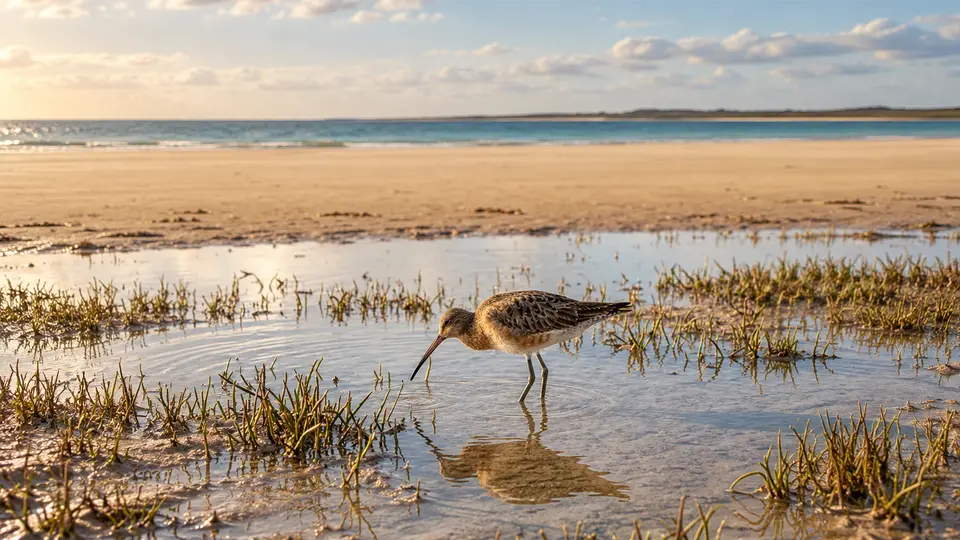
Bar-tailed godwit in its natural habitatAI-modified

Bar-tailed godwitLimosa lapponicaWhere and when to see them

Bar-tailed godwit at a glance

The bar-tailed godwit is a long-billed migratory shorebird linking Arctic breeding grounds with temperate and tropical coasts. Birds reaching Australia and New Zealand depend on networks of estuaries and tidal flats across the Pacific and eastern Asia. Their extraordinary journeys are matched by intense feeding between flights. Loss and degradation of coastal feeding habitat, especially at migration staging areas, make protection of the entire route essential.

Behaviour & reproduction

Size
37–41 cm (14.6–16.1 in) long
Weight
200–500 g (7.1–17.6 oz), varying with sex and migration stage
Lifespan
15–25 years
Status
Near Threatened

Godwits probe soft sediment with repeated bill movements, often feeding together across an exposed mudflat. As the tide rises, they gather at high-tide roosts where disturbance can consume energy needed for migration. Breeding birds display over Arctic tundra, far from their southern nonbreeding grounds. Before departure, individuals accumulate large fat reserves and change plumage, with males becoming especially rich chestnut below rather than remaining winter-grey. Before their epic migration, they undergo hyperphagia, significantly increasing their food intake to build up fat reserves, sometimes doubling their body weight. These massive fat deposits provide the energy for their non-stop flights across oceans. Males typically depart earlier than females and juveniles, often showing more advanced pre-nuptial plumage changes. Their highly synchronized migrations are among the longest non-stop flights known for any bird.

Top wildlife locations

Australia wildlife habitatAI-modified

Australia

Sheltered estuaries and tidal flats offer shore-based watching from paths and bird hides. Some roosts are inaccessible or protected, and the best viewpoint shifts with the tide rather than a fixed daily schedule.

New Zealand wildlife habitatAI-modified

New Zealand

Harbours, estuarine mudflats and adjacent high-tide roosts provide viewing from established coastal lookouts. Access to roost islands or sensitive sandspits may be restricted, so distant shore observation is preferable.

Destinations describe the species' habitat, not guaranteed cruise stops. Some animals require an optional inland excursion or are found in restricted reserves.

Fun facts about the Bar-tailed godwit

  • Tracked birds have completed nonstop migrations exceeding 12,000 km (7,456 mi).
  • Females typically have longer bills than males.
  • They can greatly increase body mass before migration.
  • Some young birds remain in southern nonbreeding areas instead of travelling north.

Best time to see the Bar-tailed godwit

September through March is a broad nonbreeding observation window in Australia and New Zealand. Arrival and departure vary by population and latitude, and some immature birds remain through the southern winter. Tide timing often determines viewing quality more directly than the month. Peak numbers are typically observed in the southern hemisphere from October to March, following their long-distance migrations. Early arrivals can be seen in September, and stragglers or non-breeding immatures may persist throughout the southern winter. Optimal viewing often coincides with falling tides, as mudflats become exposed and feeding opportunities increase.

Bar-tailed godwit: season matrix by destination

Travel and observation windows vary by region. Highlighted months are an orientation for planning, not confirmed sightings or a guarantee of access.

Australia

A broad southern nonbreeding window; regional arrival dates differ, and some birds remain outside these months.

JanFebMarAprMayJunJulAugSepOctNovDec
Cruise ships in Australia

New Zealand

Most migrants are present during the southern spring and summer; departures generally build in March, with some nonbreeders staying longer.

JanFebMarAprMayJunJulAugSepOctNovDec
Cruise ships in New Zealand

Where the Bar-tailed godwit lives

Outside breeding, sheltered estuaries, tidal mudflats, sandflats and coastal lagoons are important. Safe high-tide roosts must lie within reach of feeding areas. Breeding takes place on Arctic and subarctic tundra, not on Australian or New Zealand summer beaches. Coastal lagoons offer important feeding and roosting sites, especially those with extensive mudflats. They also utilize intertidal sandflats and open coastlines for foraging, adapting to various soft-bottom environments. The presence of suitable, undisturbed roosting sites is critical for their survival, particularly during high tides and pre-migratory staging.

What the Bar-tailed godwit eats

Marine worms, small bivalves, crustaceans and other invertebrates are extracted from soft sediment. Long bills allow access to buried prey, and females generally probe deeper than shorter-billed males. On breeding grounds, insects and other terrestrial invertebrates become more important. Their diet varies regionally, incorporating polychaete worms, small crustaceans, and mollusks like bivalves and gastropods. The long, sensitive bill acts as a highly effective tactile probe, allowing them to locate prey hidden deep within the substrate. On breeding grounds, they also consume seeds and berries in addition to insects, diversifying their intake for energy requirements.

Species at a glance

Common name
Bar-tailed godwit
Scientific name
Limosa lapponica
Animal group
Birds
Size
37–41 cm (14.6–16.1 in) long
Weight
200–500 g (7.1–17.6 oz), varying with sex and migration stage
Lifespan
15–25 years
Status
Near Threatened
Identification
A slightly upturned bill, barred tail and lack of the black-tailed godwit's bold white wingbar distinguish it most clearly in flight. Beyond the bill and tail, the Bar-tailed Godwit can be differentiated from other large waders by its relatively short legs and stocky build. In flight, their pointed wings and fast, direct flight path are characteristic. Look for the white wedge extending up the back from the tail, a key field mark when compared to other godwit species.

Bar-tailed godwit: frequently asked questions

Where can I see the Bar-tailed godwit?
Australia, New Zealand. Watch feeding flats and roosts through binoculars or a telescope. Keep dogs away and never push a flock into flight, especially before migration; use designated viewpoints and avoid crossing soft, rapidly flooding tidal ground. Focus on areas where tidal currents concentrate invertebrates, such as the edges of channels or embayments, where godwits often congregate. Consider visiting at low tide when feeding activity is highest, or at high tide to observe roosting flocks. Always maintain a respectful distance to avoid disturbing the birds, especially during pre-migratory fattening.
When is the best time to see the Bar-tailed godwit?
September through March is a broad nonbreeding observation window in Australia and New Zealand. Arrival and departure vary by population and latitude, and some immature birds remain through the southern winter. Tide timing often determines viewing quality more directly than the month. Peak numbers are typically observed in the southern hemisphere from October to March, following their long-distance migrations. Early arrivals can be seen in September, and stragglers or non-breeding immatures may persist throughout the southern winter. Optimal viewing often coincides with falling tides, as mudflats become exposed and feeding opportunities increase.
How big does the Bar-tailed godwit get?
37–41 cm (14.6–16.1 in) long. Adult weight: 200–500 g (7.1–17.6 oz), varying with sex and migration stage. Size varies with age, sex and population.
How should I behave around the Bar-tailed godwit?
Watch feeding flats and roosts through binoculars or a telescope. Keep dogs away and never push a flock into flight, especially before migration; use designated viewpoints and avoid crossing soft, rapidly flooding tidal ground. Focus on areas where tidal currents concentrate invertebrates, such as the edges of channels or embayments, where godwits often congregate. Consider visiting at low tide when feeding activity is highest, or at high tide to observe roosting flocks. Always maintain a respectful distance to avoid disturbing the birds, especially during pre-migratory fattening.
What does the Bar-tailed godwit eat?
Marine worms, small bivalves, crustaceans and other invertebrates are extracted from soft sediment. Long bills allow access to buried prey, and females generally probe deeper than shorter-billed males. On breeding grounds, insects and other terrestrial invertebrates become more important. Their diet varies regionally, incorporating polychaete worms, small crustaceans, and mollusks like bivalves and gastropods. The long, sensitive bill acts as a highly effective tactile probe, allowing them to locate prey hidden deep within the substrate. On breeding grounds, they also consume seeds and berries in addition to insects, diversifying their intake for energy requirements.
Are wildlife sightings guaranteed on an adventure cruise?
No. Animals move freely and routes, weather, access restrictions and local conditions influence every outing. Confirm the actual itinerary and shore program before booking.

Compare wildlife in the same destinations

Explore other birds recorded in these destinations. Similar surroundings do not mean the animals share the same habits or viewing season.

Species comparison by animal group and destination
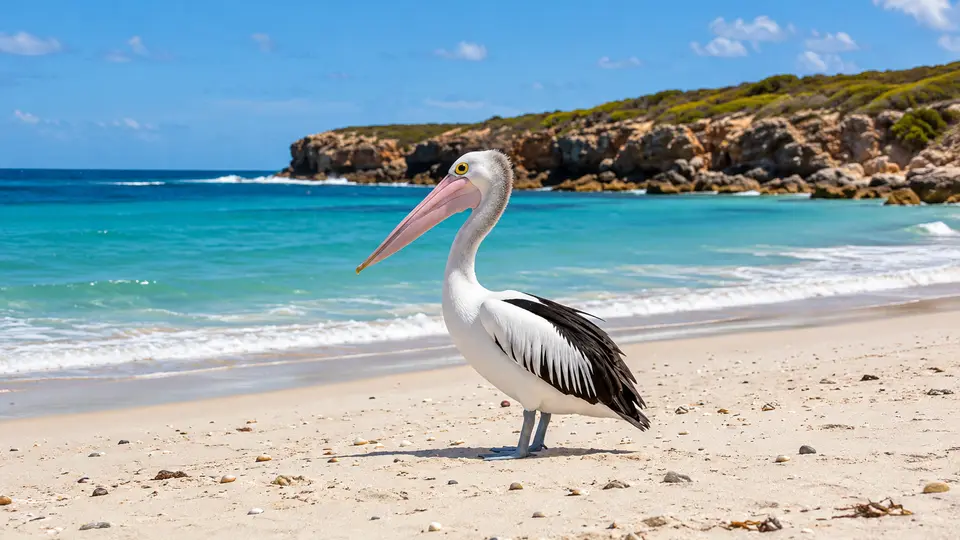
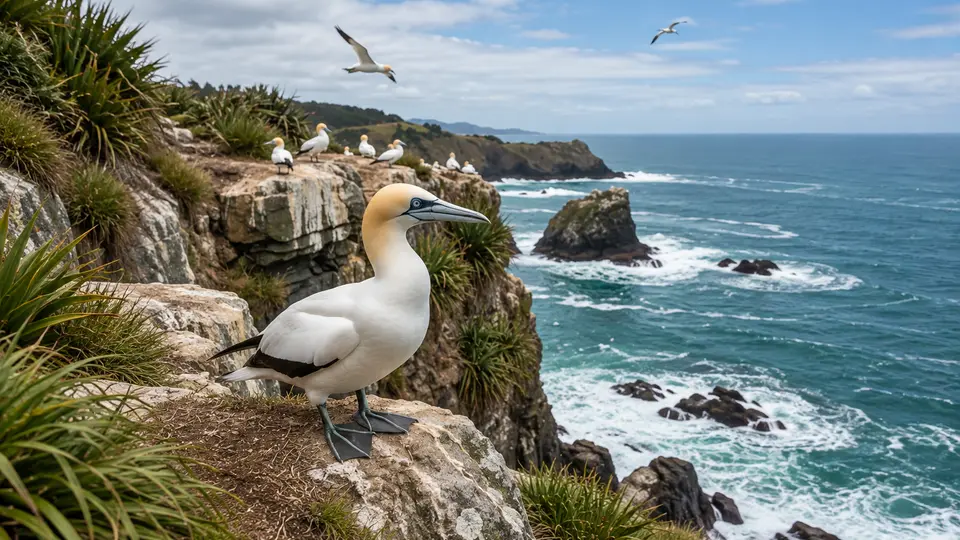
Bar-tailed godwitAI-modifiedBar-tailed godwitAustralasian gannetAI-modifiedAustralasian gannetAustralian pelicanAI-modifiedAustralian pelican
Animal groupBirdsAnimal groupBirdsAnimal groupBirds
DestinationsAustralia, New ZealandDestinationsNew ZealandDestinationsAustralia
Scientific nameLimosa lapponicaScientific nameScientific name
All wildlife destinations
AI-modified
Plan your trip

Find your next wildlife adventure

Compare destinations, shore programs and dates with the animals and habitats you would love to see.

  • Naturalist-led shore excursions
  • Responsible wildlife watching
  • Small expedition ships