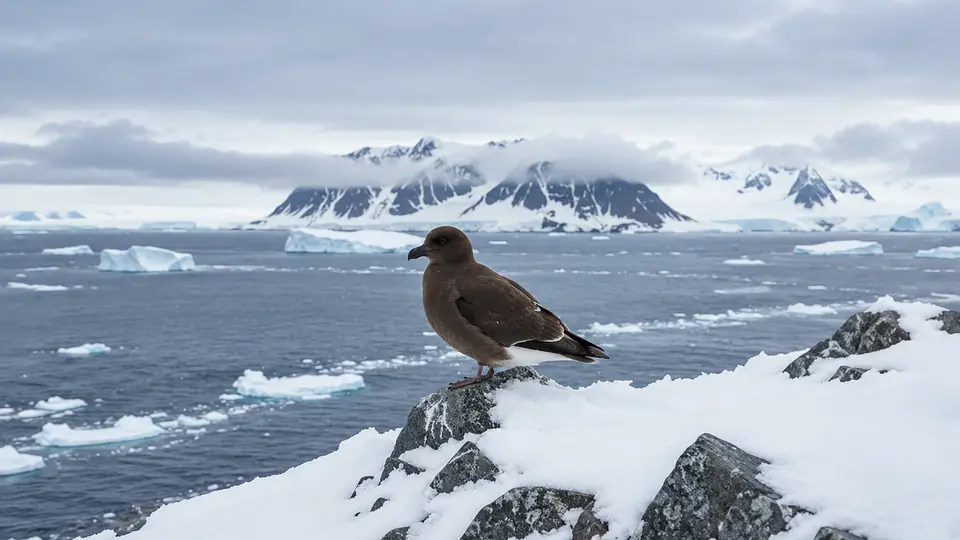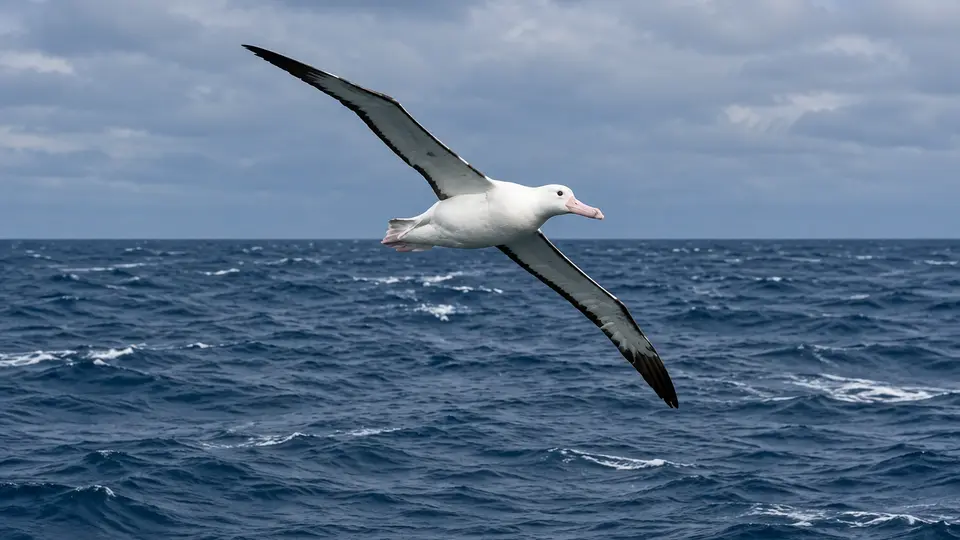
Wandering Albatross in its natural habitat, AI illustration

Wandering Albatross: where and when to see them

Diomedea exulans

Wandering Albatross at a glance

The wandering albatross is one of the world's largest flying birds, using exceptionally long wings to cross immense stretches of the Southern Ocean. It breeds on subantarctic islands rather than the Antarctic mainland. Adults become progressively whiter with age, while younger birds can look extensively brown. Slow reproduction and deaths associated with fishing gear make population recovery difficult, even when breeding colonies receive strong protection on their remote island homes.

Behaviour & reproduction

Size
1.1–1.35 m body length; 2.5–3.5 m wingspan
Weight
6–12 kg
Lifespan
40–60 years
Status
Vulnerable

Wandering albatrosses harvest energy from winds above ocean waves, alternating sweeping climbs and descents with very little flapping. They range widely between scattered feeding opportunities and may follow vessels at a distance. On breeding islands, established pairs perform elaborate displays involving wing spreading, bill movements and calls. Raising one chick takes so long that successful adults usually skip the following breeding season before attempting to reproduce again with their partner. Wandering albatrosses harvest energy from winds above ocean waves, alternating sweeping climbs and descents with very little flapping. They range widely between scattered feeding opportunities and may follow vessels at a distance. On breeding islands, established pairs perform elaborate displays involving wing spreading, bill movements and calls. Raising one chick takes so long that successful adults usually skip the following breeding season before attempting to reproduce again with their partner. They are monogamous and mate for life, with pairs returning to the same nest site annually. Their incredible efficiency in flight allows them to circumnavigate the globe in just a few weeks.

Top wildlife locations

Antarctica wildlife habitat

Antarctica

Distant deck sightings are plausible on Southern Ocean crossings associated with Antarctic travel, especially farther north. Continental shore sightings are uncommon, and breeding colonies lie on remote subantarctic islands rather than standard Antarctic landings.

Adventure cruises in Antarctica
Destinations describe the species' habitat, not guaranteed cruise stops. Some animals require an optional inland excursion or are found in restricted reserves.

Fun facts about the Wandering Albatross

  • It has one of the largest wingspans of any living bird.
  • A shoulder-locking mechanism helps support extended wings during gliding.
  • Successful pairs normally breed only every other year.
  • Juveniles spend several years at sea before returning to breeding colonies.

Best time to see the Wandering Albatross

November to March is the usual Antarctic expedition travel window and offers opportunities for distant deck observation on Southern Ocean crossings. Wandering albatrosses occur at sea throughout the year, however, and route, wind and latitude influence encounters more than the continental visitor season. November to March is the usual Antarctic expedition travel window and offers opportunities for distant deck observation on Southern Ocean crossings. Wandering albatrosses occur at sea throughout the year, however, and route, wind and latitude influence encounters more than the continental visitor season. While less common closer to the Antarctic continent, they are frequently seen in the Drake Passage and Scotia Sea during these months. Young, non-breeding birds may be found further north during the breeding season.

Wandering Albatross: season matrix by destination

Travel and observation windows vary by region. Highlighted months are an orientation for planning, not confirmed sightings or a guarantee of access.

Antarctica

These are common Antarctic travel months, not a guarantee of albatross presence or access to breeding islands.

JanFebMarAprMayJunJulAugSepOctNovDec
Cruise ships in Antarctica

Where the Wandering Albatross lives

This is an oceanic bird of windy Southern Ocean waters, especially subantarctic and adjacent temperate zones. Breeding requires open, generally grassy terrain on isolated islands. Along Antarctic travel routes, birds are more likely over offshore passages than beside continental ice shores. This is an oceanic bird of windy Southern Ocean waters, especially subantarctic and adjacent temperate zones. Breeding requires open, generally grassy terrain on isolated islands. Along Antarctic travel routes, birds are more likely over offshore passages than beside continental ice shores. They are circumpolar in distribution, occurring across the Southern Hemisphere from 30° to 60°S. Breeding colonies are typically found on remote islands such as South Georgia, Prince Edward Island, and Crozet Islands.

What the Wandering Albatross eats

Squid, fish and carrion form much of the diet, collected mainly at or near the sea surface. Birds may also consume fishery waste. Their attraction to baited hooks creates a serious bycatch risk, particularly where effective mitigation measures are absent. Squid, fish and carrion form much of the diet, collected mainly at or near the sea surface. Birds may also consume fishery waste. Their attraction to baited hooks creates a serious bycatch risk, particularly where effective mitigation measures are absent. They locate prey visually or by olfaction, often following cetaceans or fishing vessels to exploit discards. These birds are known to travel vast distances in search of food, covering thousands of kilometers between meals.

Species at a glance

Common name
Wandering Albatross
Scientific name
Diomedea exulans
Animal group
Birds
Size
1.1–1.35 m body length; 2.5–3.5 m wingspan
Weight
6–12 kg
Lifespan
40–60 years
Status
Vulnerable
Identification
Its immense wings and age-dependent white plumage suggest a wandering albatross, but separating it from other wandering-type great albatrosses often requires range, age and detailed plumage assessment. Its immense wings and age-dependent white plumage suggest a wandering albatross, but separating it from other wandering-type great albatrosses often requires range, age and detailed plumage assessment. Adults are almost entirely white with black wingtips and a small black line on the trailing edge of the wing. Juveniles are initially chocolate brown, gradually becoming whiter over many years through successive molts, making age a critical factor in identification.

Wandering Albatross: frequently asked questions

Where can I see the Wandering Albatross?
Antarctica. Use binoculars from a secure deck position and keep clear of working equipment in rough weather. Never throw food to attract birds. Identification may require photographs because other great albatrosses can look very similar at distance. Use binoculars from a secure deck position and keep clear of working equipment in rough weather. Never throw food to attract birds. Identification may require photographs because other great albatrosses can look very similar at distance. Be prepared for strong winds and cold temperatures when observing from deck. Patience is key as they glide effortlessly, often appearing and disappearing quickly with changes in wind and wave.
When is the best time to see the Wandering Albatross?
November to March is the usual Antarctic expedition travel window and offers opportunities for distant deck observation on Southern Ocean crossings. Wandering albatrosses occur at sea throughout the year, however, and route, wind and latitude influence encounters more than the continental visitor season. November to March is the usual Antarctic expedition travel window and offers opportunities for distant deck observation on Southern Ocean crossings. Wandering albatrosses occur at sea throughout the year, however, and route, wind and latitude influence encounters more than the continental visitor season. While less common closer to the Antarctic continent, they are frequently seen in the Drake Passage and Scotia Sea during these months. Young, non-breeding birds may be found further north during the breeding season.
How big does the Wandering Albatross get?
1.1–1.35 m body length; 2.5–3.5 m wingspan. Adult weight: 6–12 kg. Size varies with age, sex and population.
How should I behave around the Wandering Albatross?
Use binoculars from a secure deck position and keep clear of working equipment in rough weather. Never throw food to attract birds. Identification may require photographs because other great albatrosses can look very similar at distance. Use binoculars from a secure deck position and keep clear of working equipment in rough weather. Never throw food to attract birds. Identification may require photographs because other great albatrosses can look very similar at distance. Be prepared for strong winds and cold temperatures when observing from deck. Patience is key as they glide effortlessly, often appearing and disappearing quickly with changes in wind and wave.
What does the Wandering Albatross eat?
Squid, fish and carrion form much of the diet, collected mainly at or near the sea surface. Birds may also consume fishery waste. Their attraction to baited hooks creates a serious bycatch risk, particularly where effective mitigation measures are absent. Squid, fish and carrion form much of the diet, collected mainly at or near the sea surface. Birds may also consume fishery waste. Their attraction to baited hooks creates a serious bycatch risk, particularly where effective mitigation measures are absent. They locate prey visually or by olfaction, often following cetaceans or fishing vessels to exploit discards. These birds are known to travel vast distances in search of food, covering thousands of kilometers between meals.
Are wildlife sightings guaranteed on an adventure cruise?
No. Animals move freely and routes, weather, access restrictions and local conditions influence every outing. Confirm the actual itinerary and shore programme before booking.

Compare wildlife in the same destinations

Explore other birds recorded in these destinations. Similar surroundings do not mean the animals share the same habits or viewing season.

Species comparison by animal group and destination
Wandering AlbatrossWandering AlbatrossAdélie PenguinAdélie PenguinAntarctic PetrelAntarctic Petrel
Animal groupBirdsAnimal groupBirdsAnimal groupBirds
DestinationsAntarcticaDestinationsAntarcticaDestinationsAntarctica
All wildlife destinations
Plan your trip

Find your next wildlife adventure

Compare destinations, shore programmes and dates with the animals and habitats you would love to see.

  • Naturalist-led shore excursions
  • Responsible wildlife watching
  • Small expedition ships

Newsletter

Take Blue Rides with you

Adventure cruise offers, last-minute deals and trip inspiration.

Free, unsubscribe anytime. Details: Privacy Policy

Partner with Blue Rides

Affiliate Program

Recommend adventure cruises and earn commission on every confirmed booking.

Share. Track. Earn.