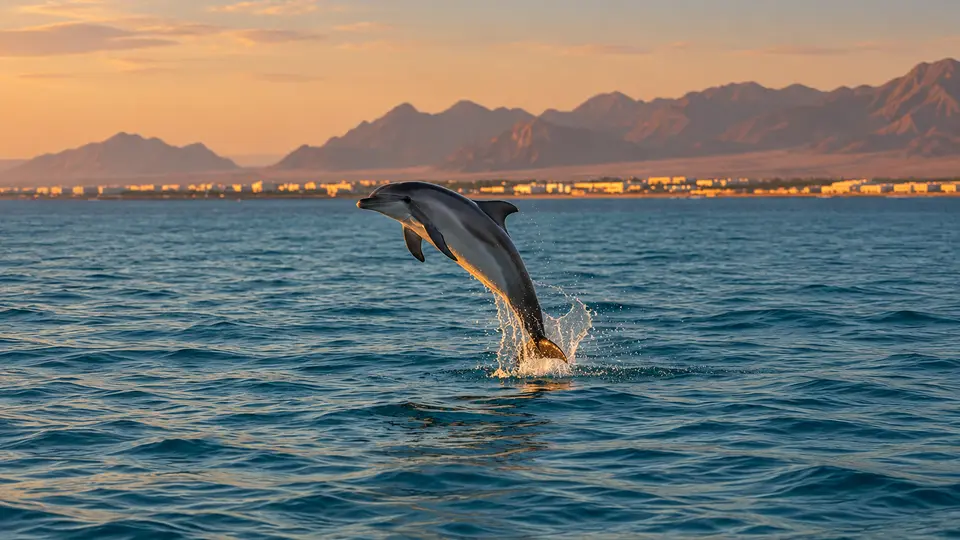
Spinner Dolphin in its natural habitat, AI illustration

Spinner Dolphin: where and when to see them

Stenella longirostris

Spinner Dolphin at a glance

The spinner dolphin is a slender tropical ocean dolphin famous for rotating leaps above the surface. A long narrow beak and contrasting dark back, grey flanks and pale underside characterise many populations, although regional forms differ. Some island-associated groups rest near sheltered coasts during daylight and feed offshore at night. Others remain pelagic. These are marine mammals, and responsible viewing is limited here to distant shore or deck observation.

Behaviour & reproduction

Size
Length 1.3–2.4 m
Weight
25–80 kg
Lifespan
Not reliably established
Status
Least Concern

In many island populations, daily movements link sheltered resting areas with deeper offshore feeding grounds. Resting groups may travel slowly and breathe in a coordinated pattern, while more active groups leap, spin and slap the surface. Social organisation is flexible, with individuals joining and separating from larger gatherings. Daytime rest is biologically important, so even dolphins that appear quiet or approachable can be harmed by repeated disturbance. Daily patterns of foraging offshore and resting inshore are common in many populations, particularly around oceanic islands. Their highly social nature is evident in their large, fluid groups that can number in the hundreds. Mother-calf pairs are often observed in the more sheltered parts of their resting areas, highlighting the importance of these locations for reproduction.

Top wildlife locations

Egypt wildlife habitat

Egypt

Red Sea reef-associated resting areas support some spinner dolphin groups, but ordinary beaches offer limited prospects. Distant deck observation is more plausible offshore, with protected-area restrictions and resting-group safeguards essential.

Adventure cruises in Egypt
Seychelles wildlife habitat

Seychelles

Outer island slopes and offshore tropical waters provide potential habitat, while shore sightings from beaches or headlands are irregular. Deck observation may be possible along lawful passages, but no island stop guarantees dolphins.

Adventure cruises in Seychelles
Indonesia wildlife habitat

Indonesia

Island margins and deep channels provide suitable habitat in parts of Indonesia. Coastal headlands offer occasional distant prospects, but deck sightings are route-dependent and many shoreline visitor areas have no predictable groups.

Adventure cruises in Indonesia
Maldives wildlife habitat

Maldives

Outer atoll waters offer plausible distant deck observation, and occasional groups may be visible from ocean-facing shores. Lagoon beaches alone are unreliable viewing sites, and resting dolphins should never be approached or surrounded.

Adventure cruises in Maldives
Fiji wildlife habitat

Fiji

Deep channels and reef-adjacent coastal waters provide possible habitat, with irregular sightings from ocean-facing headlands. Distant deck observation may offer better coverage, but access and dolphin presence vary among island groups.

Adventure cruises in Fiji
Polynesia wildlife habitat

Polynesia

Some island populations use sheltered coastal waters near deep ocean, offering possible distant shore views. Resting areas can be regulated or inaccessible, and the broad destination label cannot establish a dependable viewing location.

Adventure cruises in Polynesia

Destinations describe the species' habitat, not guaranteed cruise stops. Some animals require an optional inland excursion or are found in restricted reserves.

Fun facts about the Spinner Dolphin

  • Some leaps include several complete rotations around the body's long axis.
  • Many island-associated populations feed mainly at night.
  • The eastern Pacific and Indo-Pacific contain distinct regional forms.
  • Calves learn the daily movement patterns of their social companions.

Best time to see the Spinner Dolphin

Observation opportunities depend on local residency, winds and sea state rather than a universal migration season. Calm mornings can improve distant viewing, but they may also coincide with sensitive resting periods. Use regional weather windows only as planning guidance, never as evidence that dolphins will appear. In some regions, their presence is predictable year-round, while in others, seasonal shifts in prey distribution influence their movements. Local regulations and environmental conditions, such as cyclone seasons, are more critical for planning than broad seasonal patterns. Observing them from deck or shore is often opportunistic rather than scheduled by specific seasons.

Spinner Dolphin: season matrix by destination

Travel and observation windows vary by region. Highlighted months are an orientation for planning, not confirmed sightings or a guarantee of access.

Egypt

These shoulder-season months often suit coastal travel; wind varies, and the window does not describe dolphin breeding or guarantee presence.

JanFebMarAprMayJunJulAugSepOctNovDec
Cruise ships in Egypt

Seychelles

Inter-monsoon periods often bring calmer conditions for distant scanning; local dolphin occurrence is not restricted to these months.

JanFebMarAprMayJunJulAugSepOctNovDec
Cruise ships in Seychelles

Indonesia

A national window is unsupported because monsoon exposure and dolphin use differ substantially among islands and coastal regions.

JanFebMarAprMayJunJulAugSepOctNovDec
Cruise ships in Indonesia

Maldives

Typically a useful fair-weather scanning window, not a seasonal guarantee; spinner dolphins occur in Maldivian waters beyond these months.

JanFebMarAprMayJunJulAugSepOctNovDec
Cruise ships in Maldives

Fiji

The generally drier travel period supports planning, although trade winds can reduce visibility and this is not a dolphin breeding calendar.

JanFebMarAprMayJunJulAugSepOctNovDec
Cruise ships in Fiji

Polynesia

Island-specific climate, access rules and dolphin habitat use are needed before assigning a credible seasonal window across Polynesia.

JanFebMarAprMayJunJulAugSepOctNovDec
Cruise ships in Polynesia

Where the Spinner Dolphin lives

Warm tropical and subtropical seas support spinner dolphins, including oceanic waters and island margins. Some populations use sheltered bays or reef-associated resting areas near deep water. Such patterns are local rather than universal, and many suitable-looking coastal lagoons have no regular dolphin presence. Coastal populations often show strong site fidelity to specific bays or atolls, while oceanic populations range more widely. Their habitat choices are often dictated by the availability of prey and safe resting areas. These dolphins are not found in polar or cold temperate waters.

What the Spinner Dolphin eats

Small schooling fish, squid and crustaceans are principal foods. Many populations feed at night as deep scattering-layer animals move closer to the surface. Dolphins can coordinate their movements while foraging, but prey choice and feeding schedules vary with local oceanography and population ecology. Prey consumed includes myctophids, mesopelagic squids, and small epipelagic fish like flying fish. They typically consume several different prey species in a single foraging bout, reflecting opportunistic feeding. Their deep diving for prey often occurs after dusk and before dawn.

Species at a glance

Common name
Spinner Dolphin
Scientific name
Stenella longirostris
Animal group
Mammals
Size
Length 1.3–2.4 m
Weight
25–80 kg
Lifespan
Not reliably established
Status
Least Concern
Identification
A very long slender beak, slim body and typically three-part colour pattern distinguish it from the stockier bottlenose dolphin, although spinning alone is not diagnostic. The Hawaiian spinner dolphin (S. l. longirostris) is one of four recognized subspecies, each with subtle morphological differences. While the common name comes from their acrobatic leaps and spins, not all dolphins seen spinning are spinner dolphins. Their often dark dorsal and lighter ventral coloration, separated by a mid-lateral gray stripe, is a key field mark.

Spinner Dolphin: frequently asked questions

Where can I see the Spinner Dolphin?
Egypt, Seychelles, Indonesia, Maldives, Fiji, Polynesia. Watch quietly through binoculars from shore or a vessel maintaining lawful separation. Do not encourage circling, pursuit or approaches to resting groups, and avoid interpreting aerial activity as an invitation to approach. Recognize that 'spinning' is a natural behavior, not an invitation for closer interaction. If dolphins change their direction or swimming speed in response to your presence, you are too close. Binoculars are essential for respectful and rewarding distant viewing, especially from a moving vessel.
When is the best time to see the Spinner Dolphin?
Observation opportunities depend on local residency, winds and sea state rather than a universal migration season. Calm mornings can improve distant viewing, but they may also coincide with sensitive resting periods. Use regional weather windows only as planning guidance, never as evidence that dolphins will appear. In some regions, their presence is predictable year-round, while in others, seasonal shifts in prey distribution influence their movements. Local regulations and environmental conditions, such as cyclone seasons, are more critical for planning than broad seasonal patterns. Observing them from deck or shore is often opportunistic rather than scheduled by specific seasons.
How big does the Spinner Dolphin get?
Length 1.3–2.4 m. Adult weight: 25–80 kg. Size varies with age, sex and population.
How should I behave around the Spinner Dolphin?
Watch quietly through binoculars from shore or a vessel maintaining lawful separation. Do not encourage circling, pursuit or approaches to resting groups, and avoid interpreting aerial activity as an invitation to approach. Recognize that 'spinning' is a natural behavior, not an invitation for closer interaction. If dolphins change their direction or swimming speed in response to your presence, you are too close. Binoculars are essential for respectful and rewarding distant viewing, especially from a moving vessel.
What does the Spinner Dolphin eat?
Small schooling fish, squid and crustaceans are principal foods. Many populations feed at night as deep scattering-layer animals move closer to the surface. Dolphins can coordinate their movements while foraging, but prey choice and feeding schedules vary with local oceanography and population ecology. Prey consumed includes myctophids, mesopelagic squids, and small epipelagic fish like flying fish. They typically consume several different prey species in a single foraging bout, reflecting opportunistic feeding. Their deep diving for prey often occurs after dusk and before dawn.
Are wildlife sightings guaranteed on an adventure cruise?
No. Animals move freely and routes, weather, access restrictions and local conditions influence every outing. Confirm the actual itinerary and shore programme before booking.

Compare wildlife in the same destinations

Explore other mammals recorded in these destinations. Similar surroundings do not mean the animals share the same habits or viewing season.

Species comparison by animal group and destination
Spinner DolphinSpinner DolphinAnoaAnoaBabirusaBabirusa
Animal groupMammalsAnimal groupMammalsAnimal groupMammals
DestinationsEgypt, Seychelles, Indonesia, Maldives, Fiji, PolynesiaDestinationsIndonesiaDestinationsIndonesia
All wildlife destinations
Plan your trip

Find your next wildlife adventure

Compare destinations, shore programmes and dates with the animals and habitats you would love to see.

  • Naturalist-led shore excursions
  • Responsible wildlife watching
  • Small expedition ships

Newsletter

Take Blue Rides with you

Adventure cruise offers, last-minute deals and trip inspiration.

Free, unsubscribe anytime. Details: Privacy Policy

Partner with Blue Rides

Affiliate Program

Recommend adventure cruises and earn commission on every confirmed booking.

Share. Track. Earn.