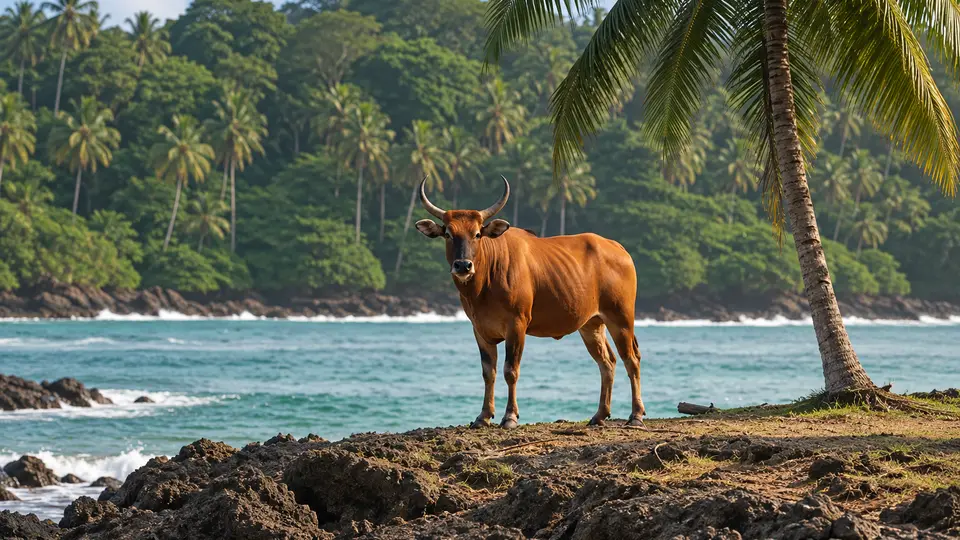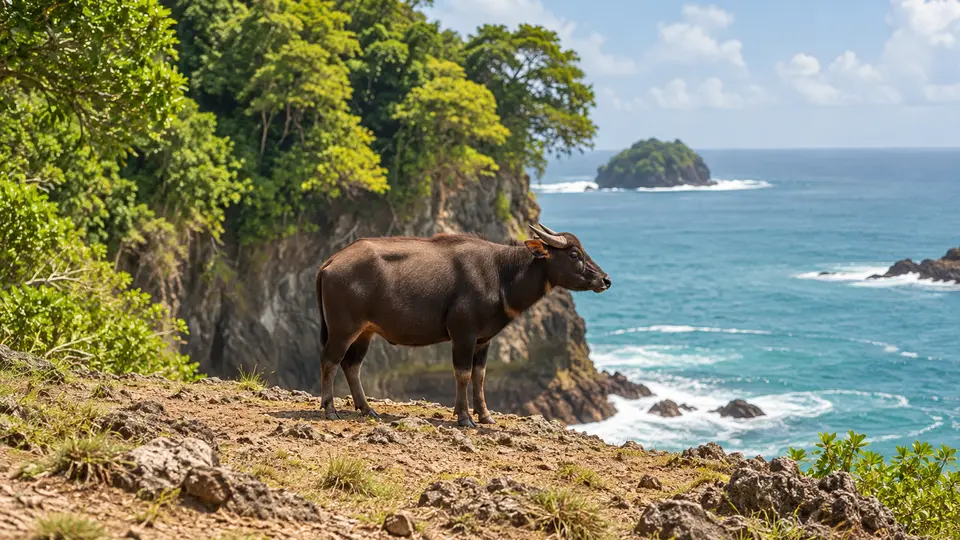
Anoa in its natural habitat, AI illustration

AnoaWhere and when to see them

Anoa at a glance

Anoa is a collective name for two small wild cattle native to Sulawesi and nearby Buton: the lowland anoa and mountain anoa. Both are compact, dark forest browsers with backward-pointing horns, but they differ in size, coat and aspects of distribution. Their taxonomy and field identification can be challenging. Hunting and forest loss threaten both species, making this a conservation-sensitive catalog entry rather than a single, easily identifiable animal.

Behaviour & reproduction

Size
70-105 cm shoulder height
Weight
150-300 kg
Lifespan
Not reliably established
Status
Assessment varies / Check current assessment

Unlike many cattle, anoas usually live alone or in small family associations rather than large herds. They move through dense vegetation along established trails and may rest in shaded cover during hotter hours. Mud wallows and water help with cooling and skin care. Normally elusive, they can become dangerous when cornered, particularly females with young. Much detailed behavioural knowledge comes from managed animals because wild anoas are difficult to study. Anoas are known to be largely diurnal, though some nocturnal activity has been recorded, especially in areas with human disturbance. Their solitary or small group structure helps them move discreetly through thick undergrowth, making them difficult to spot. Wallowing in mud not only aids in thermoregulation but also helps remove parasites and protect their skin from insect bites.

Top wildlife locations

Indonesia wildlife habitat

Indonesia

Anoas inhabit Sulawesi and Buton forests, not routine coastal wildlife stops. Suitable habitat is generally reached through an authorized inland forest excursion; wild encounters are rare and coastal viewpoints offer little realistic opportunity.
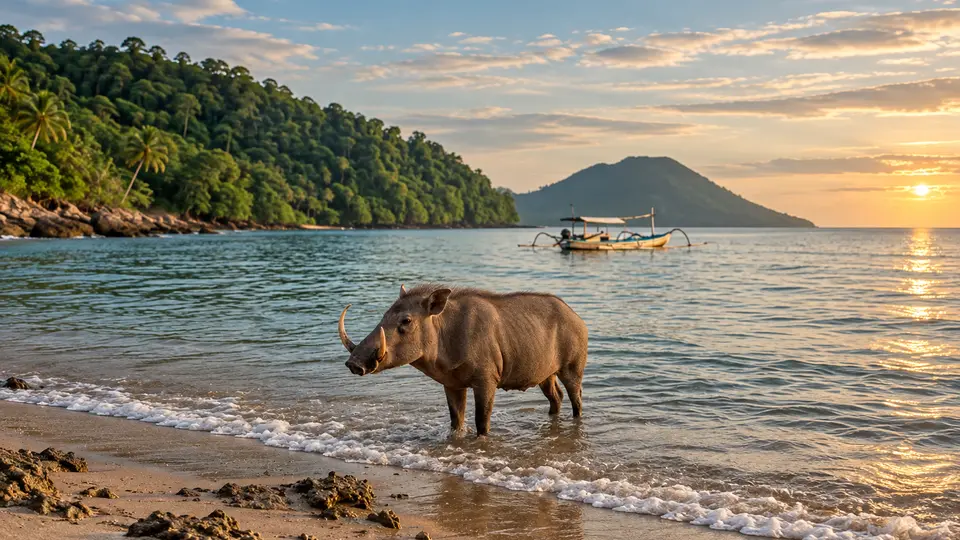
Destinations describe the species' habitat, not guaranteed cruise stops. Some animals require an optional inland excursion or are found in restricted reserves.

Fun facts about the Anoa

  • Both anoa species belong to the buffalo genus Bubalus.
  • Females as well as males carry horns.
  • Anoas occur naturally only on Sulawesi and nearby Buton.
  • Their small body size is unusual among living wild cattle.

Best time to see the Anoa

There is no dependable wild anoa viewing season. Relatively drier months can make forest access easier in parts of Sulawesi, but rainfall patterns differ sharply across the island. Any visit should be arranged around local conservation advice rather than an assumed breeding calendar. Rainfall and local conditions on Sulawesi are highly variable, meaning that a 'best' season is less about anoa activity and more about practical access for observers. Even during drier periods, expect challenging terrain and dense vegetation which can obscure sightings. Consult local conservationists to understand regional weather patterns and their impact on trail conditions and animal distribution.

Anoa: season matrix by destination

Travel and observation windows vary by region. Highlighted months are an orientation for planning, not confirmed sightings or a guarantee of access.

Indonesia

No broadly supported shore-observation window exists; forest access and rainfall vary locally, and neither establishes a reliable encounter season.

JanFebMarAprMayJunJulAugSepOctNovDec
Cruise ships in Indonesia

Where the Anoa lives

Anoas occupy tropical forest on Sulawesi and Buton, including lowland rainforests, river valleys and upland forest. The two named species are not separated by a simple elevation boundary. Remaining populations depend on forest cover and areas with limited hunting pressure. The two named species, lowland and mountain anoa, are endemic to the Indonesian islands of Sulawesi and Buton. Their fragmented populations often persist in areas too steep or remote for extensive human settlement or agriculture. While protected, habitat loss due to logging and conversion to agricultural land remains a significant threat to their survival.

What the Anoa eats

Their diet includes leaves, shoots, grasses, ferns and fallen fruit, with proportions changing among habitats and seasons. As ruminants, they digest fibrous plants through microbial fermentation. Visits to mineral-rich sites may supplement nutrients that are scarce in forest vegetation. Their ruminant digestive system allows them to process tough plant material, playing a role in forest ecology by dispersing seeds. Though primarily herbivorous, there are occasional reports of anoas consuming small amounts of animal matter or soil to supplement their mineral intake. This adaptable diet helps them thrive in varying forest conditions throughout the year.

Species at a glance

Common name
Anoa
Scientific name
Name covers more than one taxon
Animal group
Mammals
Size
70-105 cm shoulder height
Weight
150-300 kg
Lifespan
Not reliably established
Status
Assessment varies / Check current assessment
Identification
Anoas are small, straight-horned forest cattle, but distinguishing lowland from mountain anoa reliably may require expert assessment rather than size or altitude alone. Lowland anoas (Bubalus depressicornis) tend to be larger with longer, more triangular horns, while mountain anoas (Bubalus quarlesi) are smaller, shaggier, and have more rounded horns. However, these characteristics can vary, and hybridization between species has been documented in some areas. Accurate identification in the field by non-experts can be challenging due to individual variation and brief sighting opportunities.

Anoa: frequently asked questions

Where can I see the Anoa?
Indonesia. Wild observation requires a specialist inland forest excursion and remains unlikely. Stay with authorized guides, keep escape routes open, and never approach a calf or corner an adult with sharp horns. Anoas are considered critically endangered, and their elusive nature makes direct observation extremely rare even for experienced field researchers. Success often relies on patient stakeouts near water sources, mineral licks, or established trails, often using camera traps. Respect designated protected areas and strictly follow all instructions from local guides and conservation authorities to minimize disturbance.
When is the best time to see the Anoa?
There is no dependable wild anoa viewing season. Relatively drier months can make forest access easier in parts of Sulawesi, but rainfall patterns differ sharply across the island. Any visit should be arranged around local conservation advice rather than an assumed breeding calendar. Rainfall and local conditions on Sulawesi are highly variable, meaning that a 'best' season is less about anoa activity and more about practical access for observers. Even during drier periods, expect challenging terrain and dense vegetation which can obscure sightings. Consult local conservationists to understand regional weather patterns and their impact on trail conditions and animal distribution.
How big does the Anoa get?
70-105 cm shoulder height. Adult weight: 150-300 kg. Size varies with age, sex and population.
How should I behave around the Anoa?
Wild observation requires a specialist inland forest excursion and remains unlikely. Stay with authorized guides, keep escape routes open, and never approach a calf or corner an adult with sharp horns. Anoas are considered critically endangered, and their elusive nature makes direct observation extremely rare even for experienced field researchers. Success often relies on patient stakeouts near water sources, mineral licks, or established trails, often using camera traps. Respect designated protected areas and strictly follow all instructions from local guides and conservation authorities to minimize disturbance.
What does the Anoa eat?
Their diet includes leaves, shoots, grasses, ferns and fallen fruit, with proportions changing among habitats and seasons. As ruminants, they digest fibrous plants through microbial fermentation. Visits to mineral-rich sites may supplement nutrients that are scarce in forest vegetation. Their ruminant digestive system allows them to process tough plant material, playing a role in forest ecology by dispersing seeds. Though primarily herbivorous, there are occasional reports of anoas consuming small amounts of animal matter or soil to supplement their mineral intake. This adaptable diet helps them thrive in varying forest conditions throughout the year.
Are wildlife sightings guaranteed on an adventure cruise?
No. Animals move freely and routes, weather, access restrictions and local conditions influence every outing. Confirm the actual itinerary and shore program before booking.

Compare wildlife in the same destinations

Explore other mammals recorded in these destinations. Similar surroundings do not mean the animals share the same habits or viewing season.

Species comparison by animal group and destination
AnoaAnoaBabirusaBabirusaBantengBanteng
Animal groupMammalsAnimal groupMammalsAnimal groupMammals
DestinationsIndonesiaDestinationsIndonesiaDestinationsIndonesia
All wildlife destinations
Plan your trip

Find your next wildlife adventure

Compare destinations, shore programs and dates with the animals and habitats you would love to see.

  • Naturalist-led shore excursions
  • Responsible wildlife watching
  • Small expedition ships

Newsletter

Take Blue Rides with you

Adventure cruise offers, last-minute deals and trip inspiration.

Free, unsubscribe anytime. Details: Privacy Policy

Partner with Blue Rides

Affiliate Program

Recommend adventure cruises and earn commission on every confirmed booking.

Share. Track. Earn.

Your footage, our stage

Send us your videos or pictures.

Captured remarkable nature or wildlife on your journey? Share it with us, we may feature it on Blue Rides.