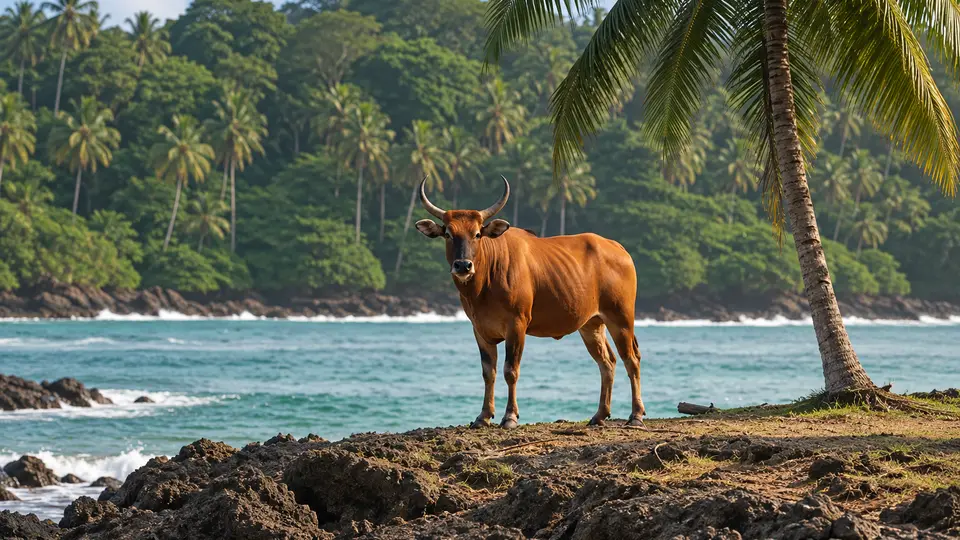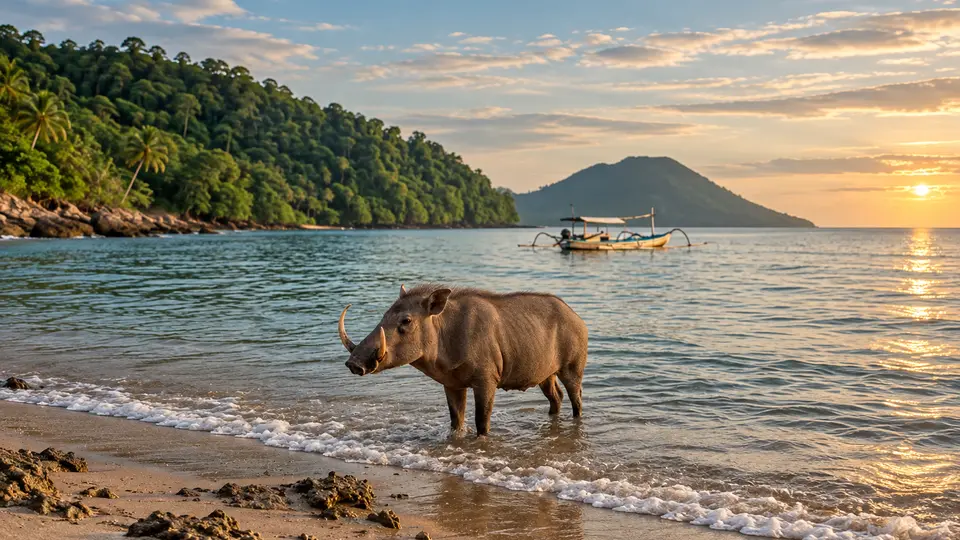
Babirusa in its natural habitat, AI illustration

BabirusaWhere and when to see them

Babirusa at a glance

Babirusa is a collective name for several Indonesian pig species in the genus Babyrousa, rather than one unambiguous species. Their most striking feature is the male's upper canine teeth, which grow upward through the snout and curve backward. Different species occupy Sulawesi and several surrounding island groups. Hunting and forest loss threaten populations, while their restricted island distributions make careful identification and locality information essential.

Behaviour & reproduction

Size
85–110 cm head-body length, varying by species
Weight
40–100 kg, varying by species
Lifespan
Not reliably established
Status
Assessment varies

Babirusas are generally active during daylight, although disturbance can alter their schedule. Females and young often travel together, while mature males are frequently solitary. They visit wallows and mineral-rich sites and move through forest with an unexpectedly light-footed gait. Males may rear up during contests. Their conspicuous tusks are not straightforward digging tools, and the role of their elaborate shape remains more complex than appearance alone suggests. Babirusas are known to be selective feeders, often targeting specific fruits or plants. They possess a surprisingly agile and swift movement through dense undergrowth, despite their somewhat bulky appearance.

Top wildlife locations

Indonesia wildlife habitat

Indonesia

A specialist inland forest excursion within the appropriate species' island range is normally required. Coastal forest alone does not establish presence, and babirusas are not routine wildlife at standard shore stops.
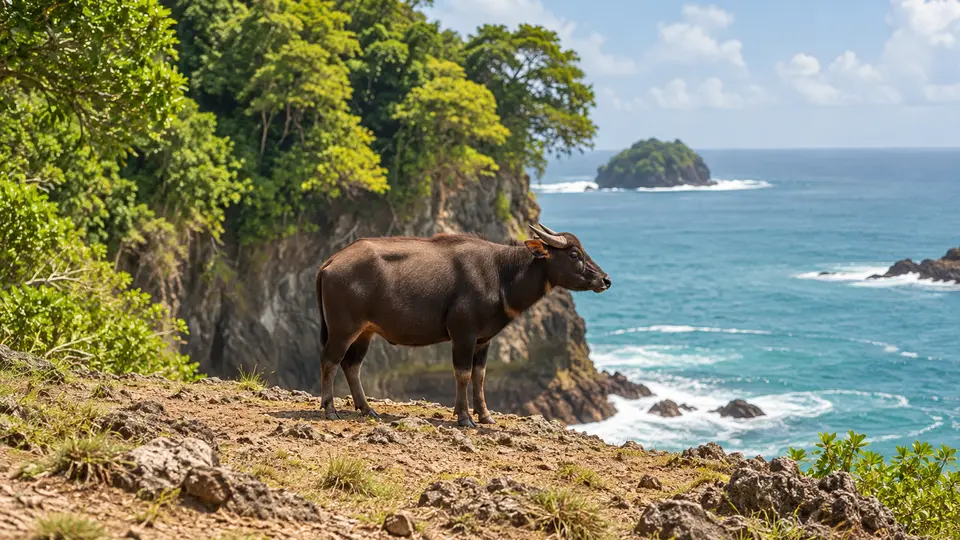
Destinations describe the species' habitat, not guaranteed cruise stops. Some animals require an optional inland excursion or are found in restricted reserves.

Fun facts about the Babirusa

  • The name babirusa is commonly translated as pig-deer.
  • The upper tusks pierce the skin of the male's snout as they grow.
  • Recognized species differ markedly in hairiness and tusk form.
  • Females usually have smaller litters than many other wild pigs.

Best time to see the Babirusa

There is no single reliable observation season across all babirusa species and islands. Locally drier months can improve forest access, but rainfall patterns differ across Indonesia. Select an appropriate reserve and obtain current ranger advice rather than using a national travel calendar. Babirusa populations are small and fragmented, making sightings unpredictable regardless of the season. Local guides are crucial for understanding recent movements and identifying areas with higher activity, which can change seasonally due to fruit availability.

Babirusa: season matrix by destination

Travel and observation windows vary by region. Highlighted months are an orientation for planning, not confirmed sightings or a guarantee of access.

Indonesia

The key covers multiple species and islands with different rainfall regimes; a defensible observation window requires a specified locality.

JanFebMarAprMayJunJulAugSepOctNovDec
Cruise ships in Indonesia

Where the Babirusa lives

Depending on the species, babirusas inhabit tropical lowland forest, river margins, swampy ground and some upland forest. Access to water and muddy wallows is important. They are primarily forest mammals, not animals routinely encountered on open beaches or ordinary coastal walks. They are endemic to a few Indonesian islands, with different species found on Sulawesi, Taliabu, Buru, and Mangole. These islands offer the specific primary and secondary forest habitats necessary for their survival.

What the Babirusa eats

Fallen fruit, leaves, roots and other plant material make up much of the diet, supplemented by animal foods when available. Their snouts are less suited to forceful rooting than those of many other pigs, so surface feeding is particularly important. Their unique dental structure, with upper canines growing through the snout, means they cannot use them for rooting. Instead, they rely on a diet of soft vegetation, fallen fruits, fungi, and invertebrates found near the surface.

Species at a glance

Common name
Babirusa
Scientific name
Name covers more than one taxon
Animal group
Mammals
Size
85–110 cm head-body length, varying by species
Weight
40–100 kg, varying by species
Lifespan
Not reliably established
Status
Assessment varies
Identification
Male babirusas differ from Indonesia's other wild pigs in having upper canines that emerge through the top of the snout, although identifying the species also requires locality and pelage details. The prominent upper canines of the male babirusa, which curve upwards and backwards towards the forehead, are a key distinguishing feature from other pig species. Females have much smaller, or sometimes absent, upper canines and less conspicuous lower canines.

Babirusa: frequently asked questions

Where can I see the Babirusa?
Indonesia. Observe from established trails or authorized hides with a local guide. Never approach piglets, obstruct a forest escape route or offer food; babirusas are powerful wild pigs, and sightings often require substantial patience. Babirusa sightings are rare and require significant effort, often involving long treks into dense forest. Their keen sense of smell helps them detect observers, so quiet movement and patience are essential.
When is the best time to see the Babirusa?
There is no single reliable observation season across all babirusa species and islands. Locally drier months can improve forest access, but rainfall patterns differ across Indonesia. Select an appropriate reserve and obtain current ranger advice rather than using a national travel calendar. Babirusa populations are small and fragmented, making sightings unpredictable regardless of the season. Local guides are crucial for understanding recent movements and identifying areas with higher activity, which can change seasonally due to fruit availability.
How big does the Babirusa get?
85–110 cm head-body length, varying by species. Adult weight: 40–100 kg, varying by species. Size varies with age, sex and population.
How should I behave around the Babirusa?
Observe from established trails or authorized hides with a local guide. Never approach piglets, obstruct a forest escape route or offer food; babirusas are powerful wild pigs, and sightings often require substantial patience. Babirusa sightings are rare and require significant effort, often involving long treks into dense forest. Their keen sense of smell helps them detect observers, so quiet movement and patience are essential.
What does the Babirusa eat?
Fallen fruit, leaves, roots and other plant material make up much of the diet, supplemented by animal foods when available. Their snouts are less suited to forceful rooting than those of many other pigs, so surface feeding is particularly important. Their unique dental structure, with upper canines growing through the snout, means they cannot use them for rooting. Instead, they rely on a diet of soft vegetation, fallen fruits, fungi, and invertebrates found near the surface.
Are wildlife sightings guaranteed on an adventure cruise?
No. Animals move freely and routes, weather, access restrictions and local conditions influence every outing. Confirm the actual itinerary and shore program before booking.

Compare wildlife in the same destinations

Explore other mammals recorded in these destinations. Similar surroundings do not mean the animals share the same habits or viewing season.

Species comparison by animal group and destination
BabirusaBabirusaAnoaAnoaBantengBanteng
Animal groupMammalsAnimal groupMammalsAnimal groupMammals
DestinationsIndonesiaDestinationsIndonesiaDestinationsIndonesia
All wildlife destinations
Plan your trip

Find your next wildlife adventure

Compare destinations, shore programs and dates with the animals and habitats you would love to see.

  • Naturalist-led shore excursions
  • Responsible wildlife watching
  • Small expedition ships

Newsletter

Take Blue Rides with you

Adventure cruise offers, last-minute deals and trip inspiration.

Free, unsubscribe anytime. Details: Privacy Policy

Partner with Blue Rides

Affiliate Program

Recommend adventure cruises and earn commission on every confirmed booking.

Share. Track. Earn.

Your footage, our stage

Send us your videos or pictures.

Captured remarkable nature or wildlife on your journey? Share it with us, we may feature it on Blue Rides.