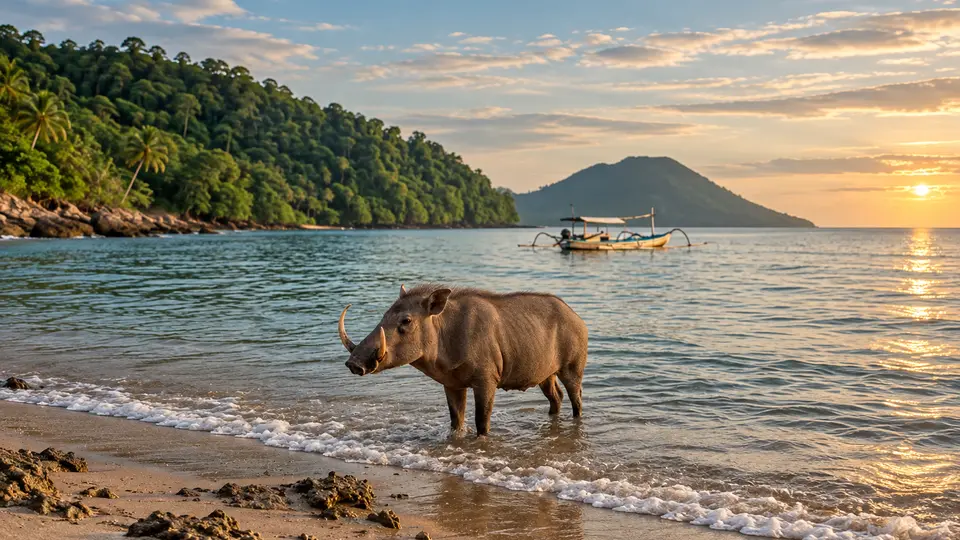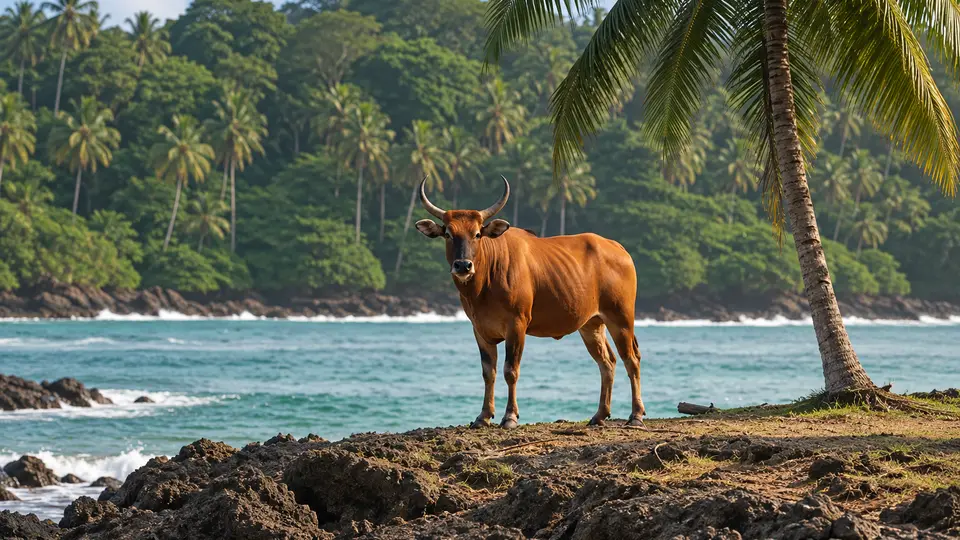
Banteng in its natural habitat

BantengBos javanicusWhere and when to see them

Banteng at a glance

The banteng is a wild Southeast Asian cattle species with white lower legs and a conspicuous pale rump patch. Mature bulls are generally darker and heavier than females, although coloration varies geographically. Wild populations have declined severely through hunting, habitat loss and contact with domestic cattle. Indonesia retains important populations, but domestic Bali cattle descend from banteng and should not be mistaken for evidence of free-ranging wild herds.

Behaviour & reproduction

Size
1.9–2.3 m head-body length; 1.3–1.7 m shoulder height
Weight
400–800 kg
Lifespan
15–20 years
Status
Endangered

Females and young usually form herds, while adult bulls may live alone or associate with groups during breeding. Banteng graze in openings and retreat into forest for cover and rest. Where people disturb them, they can become more nocturnal and difficult to observe. Their vigilance makes quiet, distant watching essential. Herd movements follow forage, water and security rather than a predictable schedule suited to casual visitors. Banteng are crepuscular, often most active during dawn and dusk, which are prime times for observing them as they emerge to feed. Dominant bulls may display aggression by pawing the ground, snorting, and presenting their broadsides as a warning.

Top wildlife locations

Indonesia wildlife habitat

Indonesia

Authorized viewpoints overlooking grassland beside forest in Java's protected areas offer possibilities. A dedicated land excursion is normally required, and cattle seen near coastal settlements may be domestic rather than wild banteng.
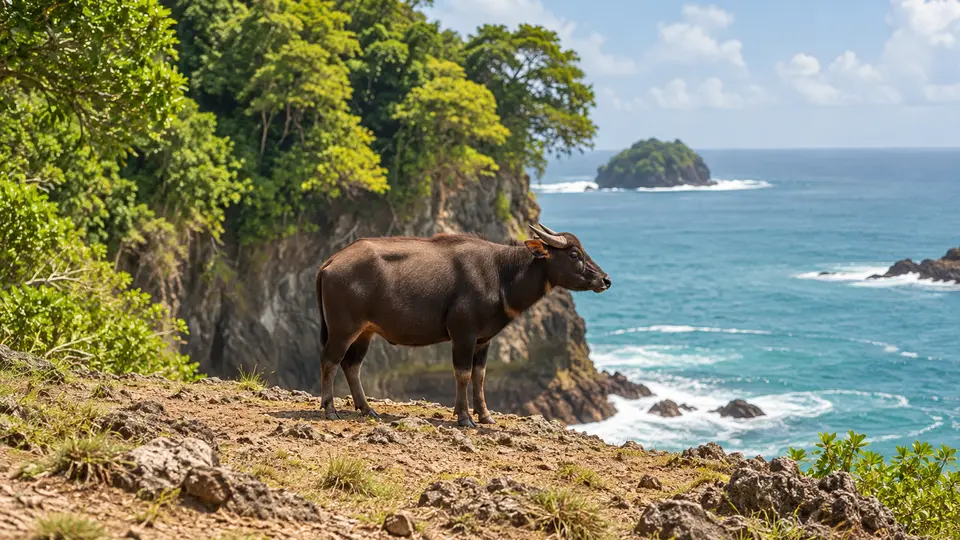
Destinations describe the species' habitat, not guaranteed cruise stops. Some animals require an optional inland excursion or are found in restricted reserves.

Fun facts about the Banteng

  • Bali cattle are a domesticated form derived from banteng.
  • Both sexes have horns, with heavier horns in bulls.
  • Young males are generally browner than mature bulls.
  • Wild populations can be threatened by disease and genetic mixing with domestic cattle.

Best time to see the Banteng

In parts of Java, the drier months can improve reserve access and visibility around open feeding habitat. Timing differs elsewhere in Indonesia, and heat can limit daytime activity. Local reserve guidance is more useful than assuming all banteng share one seasonal pattern. In Sumatra and Borneo, the dry season (typically May to September) can concentrate animals around permanent water sources, potentially increasing viewing opportunities. However, heavy rains can make some reserve roads impassable, even outside peak monsoon periods.

Banteng: season matrix by destination

Travel and observation windows vary by region. Highlighted months are an orientation for planning, not confirmed sightings or a guarantee of access.

Indonesia

A practical drier-season window for some Javan reserves, not a uniform Indonesian season or a guarantee of visible herds.

JanFebMarAprMayJunJulAugSepOctNovDec
Cruise ships in Indonesia

Where the Banteng lives

Banteng use mosaics of forest, grassy clearings, woodland and bamboo, with access to water and sheltered resting areas. In Indonesia, protected forest-grassland landscapes are particularly important. Suitable coastal plains exist, but most visitors need a dedicated terrestrial reserve excursion. They are often found near freshwater sources in lowland areas, particularly thriving in secondary growth forests that provide a mix of dense cover and open grazing. While naturally occurring in various Southeast Asian islands, Indonesian populations are now fragmented and largely confined to protected areas.

What the Banteng eats

Grasses are central to the diet, supplemented by leaves, shoots, herbs and other browse. The balance changes with habitat and season. As ruminants, banteng ferment plant material in a specialized stomach and later chew regurgitated cud to improve digestion. Their preference for fresh, young growth means they often graze in recently disturbed areas or clearings. The specific plant species consumed vary widely by location, reflecting the diverse flora of Indonesian forests and grasslands.

Species at a glance

Common name
Banteng
Scientific name
Bos javanicus
Animal group
Mammals
Size
1.9–2.3 m head-body length; 1.3–1.7 m shoulder height
Weight
400–800 kg
Lifespan
15–20 years
Status
Endangered
Identification
White stockings and a broad white rump patch distinguish banteng from gaur, but separating wild banteng from domestic Bali cattle also requires provenance and context. Beyond the white markings, male banteng are typically dark brown or black with a thick neck and impressive, curving horns, while females are reddish-brown with slender horns. Calves are born a uniform reddish-brown color, regardless of their eventual adult coloration.

Banteng: frequently asked questions

Where can I see the Banteng?
Indonesia. Use authorized viewpoints with a ranger and maintain a substantial distance. Never approach a bull, enter a herd or stand between cows and calves; retreat calmly if animals stop feeding and watch you intently. Always remain downwind to avoid alerting animals to your presence, as their sense of smell is keen. Look for signs such as fresh tracks, dung piles, and grazed vegetation, which can indicate recent activity in an area.
When is the best time to see the Banteng?
In parts of Java, the drier months can improve reserve access and visibility around open feeding habitat. Timing differs elsewhere in Indonesia, and heat can limit daytime activity. Local reserve guidance is more useful than assuming all banteng share one seasonal pattern. In Sumatra and Borneo, the dry season (typically May to September) can concentrate animals around permanent water sources, potentially increasing viewing opportunities. However, heavy rains can make some reserve roads impassable, even outside peak monsoon periods.
How big does the Banteng get?
1.9–2.3 m head-body length; 1.3–1.7 m shoulder height. Adult weight: 400–800 kg. Size varies with age, sex and population.
How should I behave around the Banteng?
Use authorized viewpoints with a ranger and maintain a substantial distance. Never approach a bull, enter a herd or stand between cows and calves; retreat calmly if animals stop feeding and watch you intently. Always remain downwind to avoid alerting animals to your presence, as their sense of smell is keen. Look for signs such as fresh tracks, dung piles, and grazed vegetation, which can indicate recent activity in an area.
What does the Banteng eat?
Grasses are central to the diet, supplemented by leaves, shoots, herbs and other browse. The balance changes with habitat and season. As ruminants, banteng ferment plant material in a specialized stomach and later chew regurgitated cud to improve digestion. Their preference for fresh, young growth means they often graze in recently disturbed areas or clearings. The specific plant species consumed vary widely by location, reflecting the diverse flora of Indonesian forests and grasslands.
Are wildlife sightings guaranteed on an adventure cruise?
No. Animals move freely and routes, weather, access restrictions and local conditions influence every outing. Confirm the actual itinerary and shore program before booking.

Compare wildlife in the same destinations

Explore other mammals recorded in these destinations. Similar surroundings do not mean the animals share the same habits or viewing season.

Species comparison by animal group and destination
BantengBantengAnoaAnoaBabirusaBabirusa
Animal groupMammalsAnimal groupMammalsAnimal groupMammals
DestinationsIndonesiaDestinationsIndonesiaDestinationsIndonesia
All wildlife destinations
Plan your trip

Find your next wildlife adventure

Compare destinations, shore programs and dates with the animals and habitats you would love to see.

  • Naturalist-led shore excursions
  • Responsible wildlife watching
  • Small expedition ships