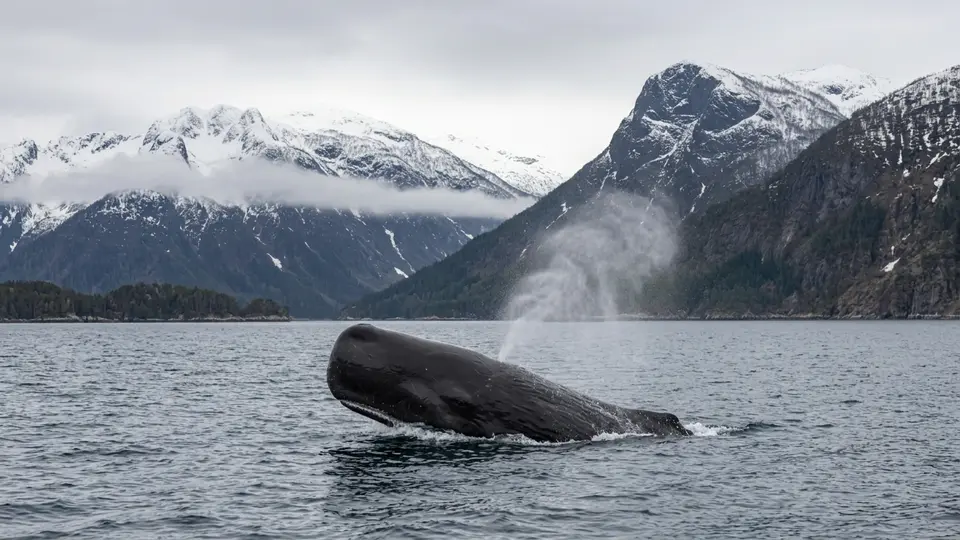
Sperm Whale in its natural habitat, AI illustration

Sperm WhalePhyseter macrocephalusWhere and when to see them

Sperm Whale at a glance

The sperm whale is the largest toothed whale, with an enormous squared head and a body adapted to feeding in deep ocean waters. Females and young usually occupy warmer seas, while mature males range into colder latitudes. It is entirely marine, so coastal sightings depend on deep water lying close to shore or a distant view from a vessel's deck. Historical whaling greatly reduced many populations.

Behaviour & reproduction

Size
Length 11–18 m
Weight
15–50 tonnes
Lifespan
60–70 years
Status
Vulnerable

Females and young form enduring social units, maintaining contact through patterned sequences of clicks called codas. Mature males become more solitary or join loose male groups, periodically visiting warmer breeding areas. Whales spend long intervals feeding far below the surface, followed by recovery periods when their blows may be visible. Group members sometimes support calves or injured companions, demonstrating social relationships that extend beyond a mother and her offspring. Communication among social units is complex, involving various click patterns and codas that can signify identity or context. Males can travel vast distances between breeding and feeding grounds, sometimes covering thousands of kilometers. Females show strong maternal bonds, and alloparental care, where other females assist in raising calves, has been observed within social groups.

Top wildlife locations

Galapagos wildlife habitat

Galapagos

Deep ocean around the islands provides suitable habitat, but sightings from shore are rare. Distant deck scanning during permitted passages is more plausible than expecting whales beside accessible coastal visitor areas.

Mexico wildlife habitat

Mexico

Deep Gulf of California waters and Pacific slopes offer potential habitat. Coastal headlands provide only distant, rare prospects, with deck observation more plausible where lawful routes pass offshore deep water.

Greece wildlife habitat

Greece

The deep Hellenic Trench off western and southern Greece supports sperm whales. Shore sightings are rare even from elevated headlands; distant deck observation depends on routes reaching appropriate offshore waters.

Norway wildlife habitat

Norway

Northern coastal areas near steep continental slopes offer plausible distant observation, particularly around Vesterålen. Elevated shore viewpoints have limited prospects; deck sightings depend on offshore routes, weather and whale movements.

Portugal wildlife habitat

Portugal

The Azores offer deep ocean close to volcanic coastlines, making elevated shore lookouts plausible but uncertain. Mainland shore sightings are much rarer, and distant deck observation generally offers broader search coverage.

Turkey wildlife habitat

Turkey

Deep Mediterranean waters off southern Turkey are potential habitat, but accessible shoreline sightings are exceptional. Coastal headlands or distant deck scans offer only incidental prospects, not a dependable species-focused stop.

Destinations describe the species' habitat, not guaranteed cruise stops. Some animals require an optional inland excursion or are found in restricted reserves.

Fun facts about the Sperm Whale

  • The blowhole sits asymmetrically near the left front of the head.
  • Sperm whales have the largest brains of any living animal.
  • Social groups can share characteristic coda patterns.
  • Mature males are substantially larger than adult females.

Best time to see the Sperm Whale

There is no single worldwide viewing season. Some deepwater coastal areas support whales in many months, while weather and sea conditions determine practical observation opportunities. Clear horizons and calm seas improve detection of distant blows; regional travel windows should not be interpreted as breeding periods. In the Azores and Madeira, large numbers of females and calves are present during spring and summer months, coinciding with peak squid availability. Conversely, off Norway, males are often sighted during the summer as they feed in the rich Arctic waters. Monitoring local research or tour operator reports can help determine regional viewing opportunities.

Sperm Whale: season matrix by destination

Travel and observation windows vary by region. Highlighted months are an orientation for planning, not confirmed sightings or a guarantee of access.

Galapagos

Occurrence is irregular and no dependable shore-observation window is established here; sea conditions and permitted itineraries govern practical opportunities.

JanFebMarAprMayJunJulAugSepOctNovDec
Cruise ships in Galapagos

Mexico

Mexico spans distinct marine regions, so a single credible shore-viewing season would be misleading without a specified locality.

JanFebMarAprMayJunJulAugSepOctNovDec
Cruise ships in Mexico

Greece

These months commonly offer workable coastal travel and calmer observation conditions, not a defined whale migration or breeding season.

JanFebMarAprMayJunJulAugSepOctNovDec
Cruise ships in Greece

Norway

Long daylight supports visual searching in these months; males can occur outside this window and sightings remain uncertain.

JanFebMarAprMayJunJulAugSepOctNovDec
Cruise ships in Norway

Portugal

This is a practical Azorean observation-weather window; sperm whales can occur year-round and these months do not define breeding.

JanFebMarAprMayJunJulAugSepOctNovDec
Cruise ships in Portugal

Turkey

Available regional occurrence does not support a reliable Turkish shore-viewing season; ordinary summer travel conditions should not be mistaken for whale availability.

JanFebMarAprMayJunJulAugSepOctNovDec
Cruise ships in Turkey

Indonesia

Regional monsoons and whale occurrence vary too much for a single national shore-observation window without a specified island or passage.

JanFebMarAprMayJunJulAugSepOctNovDec
Cruise ships in Indonesia

Maldives

Often relatively favourable weather for scanning offshore water; this is a travel and visibility window, not evidence of seasonal whale concentration.

JanFebMarAprMayJunJulAugSepOctNovDec
Cruise ships in Maldives

New Zealand

Whales occur off Kaikōura throughout the year, but weather can prevent effective observation in any month.

JanFebMarAprMayJunJulAugSepOctNovDec
Cruise ships in New Zealand

Polynesia

Polynesia encompasses many islands and climates; no defensible shared shore-observation season can be assigned without a more precise locality.

JanFebMarAprMayJunJulAugSepOctNovDec
Cruise ships in Polynesia

Where the Sperm Whale lives

Sperm whales inhabit deep offshore waters worldwide, especially continental slopes, submarine canyons and oceanic island margins. Productive underwater terrain can bring suitable feeding habitat relatively close to land. Shallow coastal bays generally offer poor prospects, even within countries where the species is regularly recorded. The species is found from the equator to the edge of the pack ice in both hemispheres. Females and young tend to remain in tropical and temperate waters, while mature males migrate to higher latitudes. These deeper, colder waters offer rich feeding grounds for the larger males.

What the Sperm Whale eats

Squid form the main prey, supplemented by deepwater fish and some octopuses. Prey composition differs between regions, sexes and body sizes. Echolocation helps whales locate food in darkness, and suction assists capture; their conspicuous lower-jaw teeth are not essential for every feeding event. In some regions, they are known to consume colossal squid, which can be larger than the whales themselves. Stomach contents have also revealed sharks, skates, and even bottom-dwelling fish, indicating their versatile hunting strategies. Their specialized teeth in the lower jaw are primarily for grasping, not chewing, and they often swallow prey whole.

Species at a glance

Common name
Sperm Whale
Scientific name
Physeter macrocephalus
Animal group
Mammals
Size
Length 11–18 m
Weight
15–50 tonnes
Lifespan
60–70 years
Status
Vulnerable
Identification
Its huge block-shaped head, low knobbly dorsal hump and forward-left angled blow distinguish it from baleen whales and smaller toothed whales. The skin is often wrinkled, particularly around the head, and can range from dark grey to brownish. Their small, paddle-shaped flippers are tucked close to the body, and the caudal fin (flukes) is triangular with a deep notch. Unlike baleen whales, they possess only a single blowhole, positioned on the left side of their head.

Sperm Whale: frequently asked questions

Where can I see the Sperm Whale?
Galapagos, Mexico, Greece, Norway, Portugal, Turkey, Indonesia, Maldives, New Zealand, Polynesia. Use binoculars from a safe coastal lookout or vessel deck to search for angled blows. Keep observations distant, follow local whale regulations, and never request pursuit or interception of a surfacing whale. Be alert for the characteristic single, bushy blow that points forward and to the left, which is a key identification feature. After a series of short, shallow dives and breaths, they often raise their massive flukes high before a deep dive, which can last for over an hour. Patience is crucial, as they spend significant time submerged hunting for food.
When is the best time to see the Sperm Whale?
There is no single worldwide viewing season. Some deepwater coastal areas support whales in many months, while weather and sea conditions determine practical observation opportunities. Clear horizons and calm seas improve detection of distant blows; regional travel windows should not be interpreted as breeding periods. In the Azores and Madeira, large numbers of females and calves are present during spring and summer months, coinciding with peak squid availability. Conversely, off Norway, males are often sighted during the summer as they feed in the rich Arctic waters. Monitoring local research or tour operator reports can help determine regional viewing opportunities.
How big does the Sperm Whale get?
Length 11–18 m. Adult weight: 15–50 tonnes. Size varies with age, sex and population.
How should I behave around the Sperm Whale?
Use binoculars from a safe coastal lookout or vessel deck to search for angled blows. Keep observations distant, follow local whale regulations, and never request pursuit or interception of a surfacing whale. Be alert for the characteristic single, bushy blow that points forward and to the left, which is a key identification feature. After a series of short, shallow dives and breaths, they often raise their massive flukes high before a deep dive, which can last for over an hour. Patience is crucial, as they spend significant time submerged hunting for food.
What does the Sperm Whale eat?
Squid form the main prey, supplemented by deepwater fish and some octopuses. Prey composition differs between regions, sexes and body sizes. Echolocation helps whales locate food in darkness, and suction assists capture; their conspicuous lower-jaw teeth are not essential for every feeding event. In some regions, they are known to consume colossal squid, which can be larger than the whales themselves. Stomach contents have also revealed sharks, skates, and even bottom-dwelling fish, indicating their versatile hunting strategies. Their specialized teeth in the lower jaw are primarily for grasping, not chewing, and they often swallow prey whole.
Are wildlife sightings guaranteed on an adventure cruise?
No. Animals move freely and routes, weather, access restrictions and local conditions influence every outing. Confirm the actual itinerary and shore program before booking.

Compare wildlife in the same destinations

Explore other mammals recorded in these destinations. Similar surroundings do not mean the animals share the same habits or viewing season.

Species comparison by animal group and destination
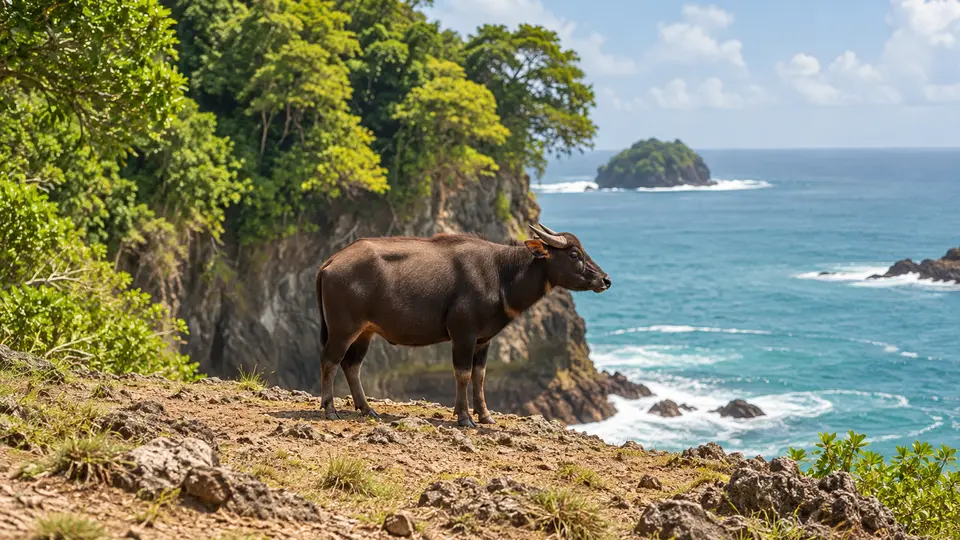
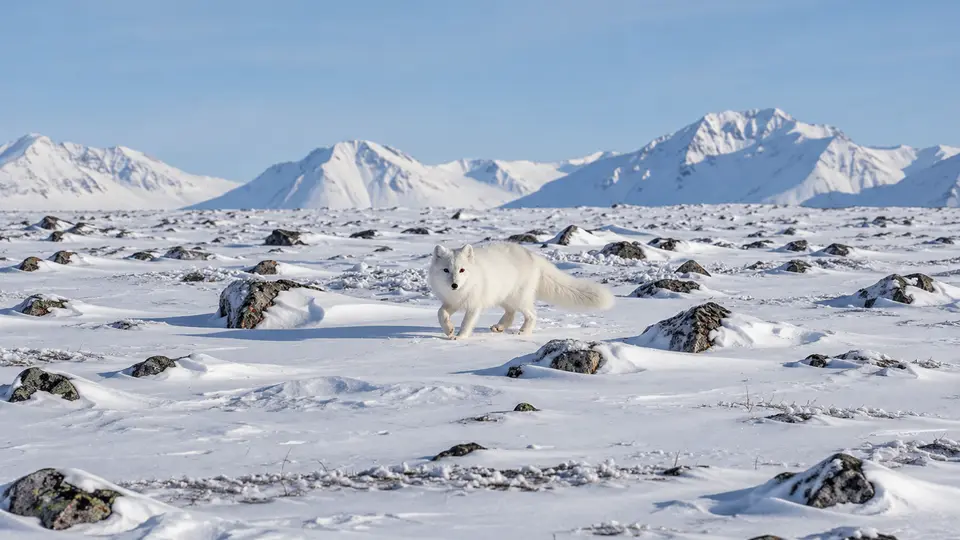
Sperm WhaleSperm WhaleAnoaAnoaArctic FoxArctic Fox
Animal groupMammalsAnimal groupMammalsAnimal groupMammals
DestinationsGalapagos, Mexico, Greece, Norway, Portugal, Turkey, Indonesia, Maldives, New Zealand, PolynesiaDestinationsIndonesiaDestinationsNorway, Arctic
All wildlife destinations
Plan your trip

Find your next wildlife adventure

Compare destinations, shore programs and dates with the animals and habitats you would love to see.

  • Naturalist-led shore excursions
  • Responsible wildlife watching
  • Small expedition ships

Newsletter

Take Blue Rides with you

Adventure cruise offers, last-minute deals and trip inspiration.

Free, unsubscribe anytime. Details: Privacy Policy

Partner with Blue Rides

Affiliate Program

Recommend adventure cruises and earn commission on every confirmed booking.

Share. Track. Earn.

Your footage, our stage

Send us your videos or pictures.

Captured remarkable nature or wildlife on your journey? Share it with us, we may feature it on Blue Rides.