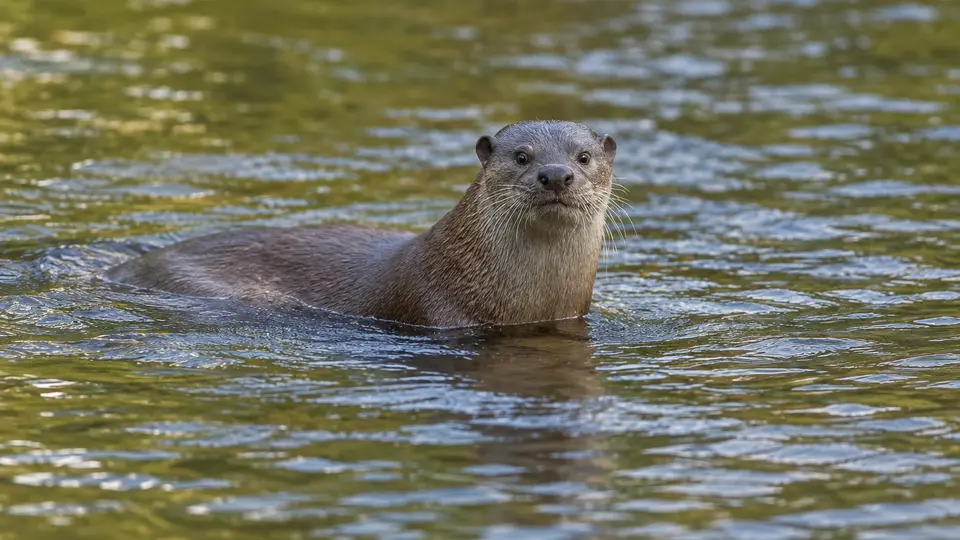
Smooth-coated otter in its natural habitat, AI illustration

Smooth-coated otter: where and when to see them

Lutrogale perspicillata

Smooth-coated otter at a glance

The smooth-coated otter is a large, social Asian otter associated with productive rivers, wetlands and some coastal habitats. Its short, sleek fur, rounded head and flattened tail distinguish it from several smaller regional relatives. Family groups can be conspicuous where protected, yet many populations remain difficult to observe. Wetland drainage, pollution, fishing-gear entanglement and illegal capture have reduced its security across much of its range, making undisturbed banks and reliable food supplies especially important.

Behaviour & reproduction

Size
59-79 cm head-body length; 37-50 cm tail
Weight
7-11 kg
Lifespan
Not reliably established
Status
Vulnerable

Family groups travel, rest and forage together, communicating through calls, scent marks and close physical contact. They use repeated resting places and communal latrines along banks. Adults may cooperate while pursuing fish, although hunting methods vary with habitat and prey. Activity can shift toward quieter hours where people cause disturbance, so a normally social and active species may appear elusive in heavily used landscapes. Smooth-coated otters are highly vocal, utilizing a range of chirps, whistles, and growls for communication within their family groups. They often engage in social grooming and play, which are crucial for maintaining group cohesion and developing motor skills among younger individuals.

Top wildlife locations

Thailand wildlife habitat

Thailand

Protected river margins, freshwater marshes and some mangrove edges offer plausible habitat. Sightings are localized and often rare; a specialist wetland excursion may be needed rather than a general beach visit.

Adventure cruises in Thailand
Vietnam wildlife habitat

Vietnam

Lowland marshes and delta waterways retain potential habitat, but remaining populations are localized and difficult to observe. An inland wetland excursion is usually more realistic than watching from a coastal resort.

Adventure cruises in Vietnam

Destinations describe the species' habitat, not guaranteed cruise stops. Some animals require an optional inland excursion or are found in restricted reserves.

Fun facts about the Smooth-coated otter

  • Its tail is flattened rather than evenly cylindrical.
  • Family members maintain contact using several vocal signals.
  • Communal latrines carry scent information between otters.
  • Groups sometimes coordinate movements while pursuing fish.

Best time to see the Smooth-coated otter

Drier months can improve access to wetland trails and riverbanks in parts of mainland Southeast Asia, but the best window varies by region. These otters are resident, and changing water levels, disturbance and local protection are more relevant than a migration season. In some regions, the dry season concentrates fish in dwindling water bodies, potentially making otters more visible as they exploit these temporary abundances. However, their nocturnal or crepuscular activity patterns often mean that early morning or late afternoon are generally the best times for viewing year-round.

Smooth-coated otter: season matrix by destination

Travel and observation windows vary by region. Highlighted months are an orientation for planning, not confirmed sightings or a guarantee of access.

Thailand

This is a practical dry-season access window for many mainland wetlands, not all Thai coasts; local rainfall and verified recent records should guide site choice.

JanFebMarAprMayJunJulAugSepOctNovDec
Cruise ships in Thailand

Vietnam

These months broadly suit access in southern lowland wetlands; they do not establish occurrence at any site or represent a nationwide otter season.

JanFebMarAprMayJunJulAugSepOctNovDec
Cruise ships in Vietnam

Where the Smooth-coated otter lives

Large rivers, freshwater marshes, floodplains, lakes and mangrove-fringed waterways provide suitable habitat. Banks with vegetation, secure resting cover and abundant prey are important. Otters can use modified wetlands, but hardened shorelines, depleted fisheries and persistent disturbance reduce their suitability. They demonstrate a strong preference for slow-moving or stagnant water bodies and require dense vegetation cover along banks for shelter and den sites. In coastal areas, they often inhabit estuaries and muddy intertidal zones, adapting their foraging to tidal cycles.

What the Smooth-coated otter eats

Fish usually dominate the diet, with crustaceans, amphibians and other available animals taken opportunistically. Prey composition changes among rivers, marshes and coastal wetlands. Competition with fisheries can create conflict, especially where otters encounter concentrated fish stocks or unattended nets. Individual otters may consume up to 10% of their body weight in food daily, demonstrating their high energy demands. They exhibit remarkable agility in water, actively pursuing fish rather than waiting for them, using their vibrissae to detect prey in murky conditions.

Species at a glance

Common name
Smooth-coated otter
Scientific name
Lutrogale perspicillata
Animal group
Mammals
Size
59-79 cm head-body length; 37-50 cm tail
Weight
7-11 kg
Lifespan
Not reliably established
Status
Vulnerable
Identification
Compared with Asian small-clawed otters, smooth-coated otters are much larger, with a broader muzzle, fully developed claws and a conspicuously flattened tail. Their pelage is typically a uniform olive brown to reddish brown, with a slightly paler underside that lacks prominent markings. The distinctly flattened, almost rudder-like tail, which is about two-thirds the length of their head and body, aids significantly in propulsion and steering during swimming.

Smooth-coated otter: frequently asked questions

Where can I see the Smooth-coated otter?
Thailand, Vietnam. Watch from designated bank paths or hides and leave resting families undisturbed. Keep away from dens and young, never feed otters, and avoid standing between a group and its water access. Be aware that otters can dive and resurface unexpectedly, so maintain a continuous scan of the water and shorelines. Patience is key, as otters may emerge from dense cover or water only after a period of quiet observation from a distance.
When is the best time to see the Smooth-coated otter?
Drier months can improve access to wetland trails and riverbanks in parts of mainland Southeast Asia, but the best window varies by region. These otters are resident, and changing water levels, disturbance and local protection are more relevant than a migration season. In some regions, the dry season concentrates fish in dwindling water bodies, potentially making otters more visible as they exploit these temporary abundances. However, their nocturnal or crepuscular activity patterns often mean that early morning or late afternoon are generally the best times for viewing year-round.
How big does the Smooth-coated otter get?
59-79 cm head-body length; 37-50 cm tail. Adult weight: 7-11 kg. Size varies with age, sex and population.
How should I behave around the Smooth-coated otter?
Watch from designated bank paths or hides and leave resting families undisturbed. Keep away from dens and young, never feed otters, and avoid standing between a group and its water access. Be aware that otters can dive and resurface unexpectedly, so maintain a continuous scan of the water and shorelines. Patience is key, as otters may emerge from dense cover or water only after a period of quiet observation from a distance.
What does the Smooth-coated otter eat?
Fish usually dominate the diet, with crustaceans, amphibians and other available animals taken opportunistically. Prey composition changes among rivers, marshes and coastal wetlands. Competition with fisheries can create conflict, especially where otters encounter concentrated fish stocks or unattended nets. Individual otters may consume up to 10% of their body weight in food daily, demonstrating their high energy demands. They exhibit remarkable agility in water, actively pursuing fish rather than waiting for them, using their vibrissae to detect prey in murky conditions.
Are wildlife sightings guaranteed on an adventure cruise?
No. Animals move freely and routes, weather, access restrictions and local conditions influence every outing. Confirm the actual itinerary and shore programme before booking.

Compare wildlife in the same destinations

Explore other mammals recorded in these destinations. Similar surroundings do not mean the animals share the same habits or viewing season.

Species comparison by animal group and destination
Smooth-coated otterSmooth-coated otterBryde's WhaleBryde's WhaleCat Ba langurCat Ba langur
Animal groupMammalsAnimal groupMammalsAnimal groupMammals
DestinationsThailand, VietnamDestinationsGalapagos, Mexico, Egypt, Thailand, VietnamDestinationsVietnam
All wildlife destinations
Plan your trip

Find your next wildlife adventure

Compare destinations, shore programmes and dates with the animals and habitats you would love to see.

  • Naturalist-led shore excursions
  • Responsible wildlife watching
  • Small expedition ships

Newsletter

Take Blue Rides with you

Adventure cruise offers, last-minute deals and trip inspiration.

Free, unsubscribe anytime. Details: Privacy Policy

Partner with Blue Rides

Affiliate Program

Recommend adventure cruises and earn commission on every confirmed booking.

Share. Track. Earn.