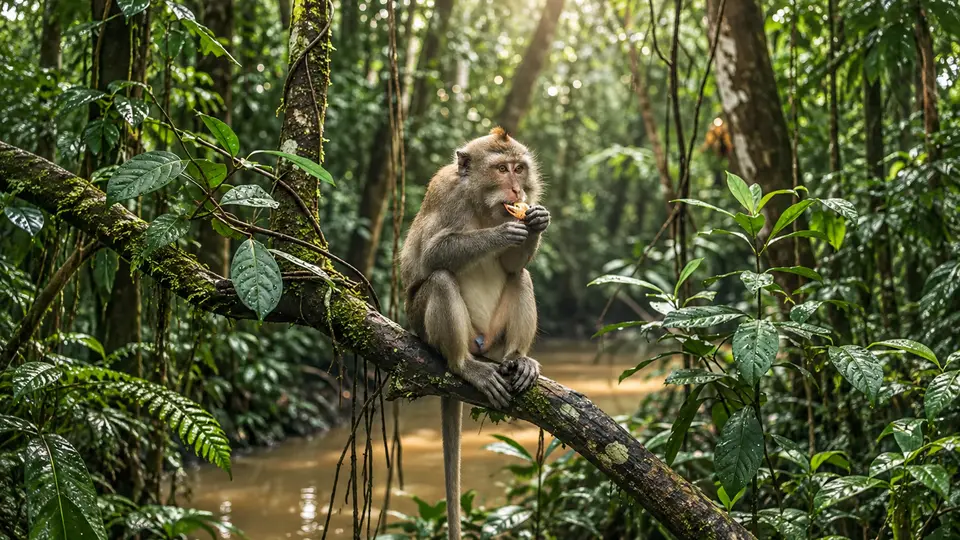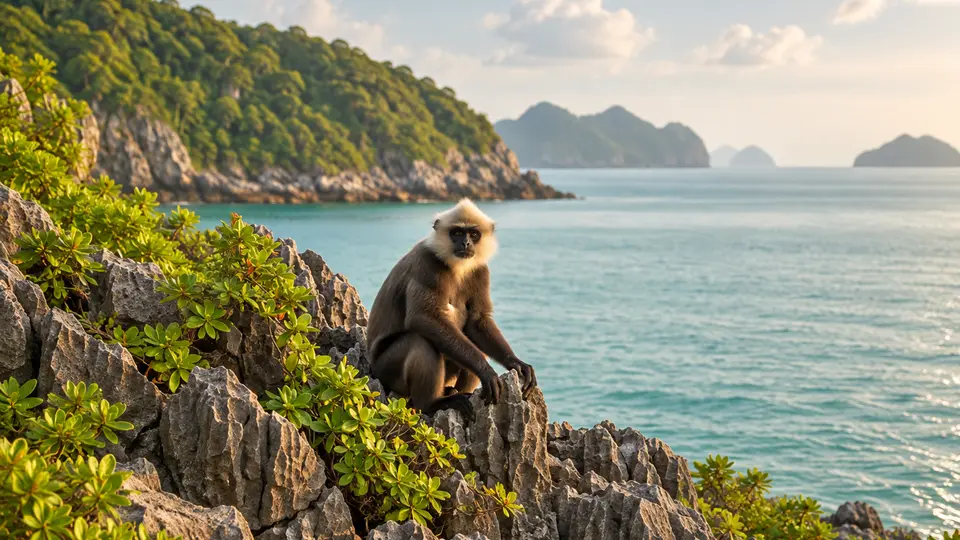
Cat Ba langur in its natural habitat, AI illustration

Cat Ba langurTrachypithecus poliocephalusWhere and when to see them

Cat Ba langur at a glance

The Cat Ba langur is a critically endangered leaf-eating monkey restricted to Cat Ba Island in northern Vietnam. Adults have a dark body and a contrasting golden to pale head, rather than the white head implied by some broad catalog labels. It is distinct from the white-headed langur of southern China. Its tiny, fragmented population occupies rugged limestone habitat, making protection from disturbance and the recovery of safe connections between groups especially important.

Behaviour & reproduction

Size
47-65 cm head-body; tail 65-90 cm
Weight
6-9 kg
Lifespan
Not reliably established
Status
Critically Endangered

Cat Ba langurs move through trees and across steep limestone slopes in small social groups. Feeding and resting occupy much of their day, consistent with a leaf-rich diet that requires lengthy digestion. Sheltered cliff ledges and caves provide sleeping places. Infants have conspicuously bright golden-orange fur before developing adult coloration. Groups can be difficult to locate without disturbing them, and responsible observation prioritizes distance over obtaining a close view or photograph. White-headed langurs live in small multi-female groups typically consisting of one adult male, several adult females, and their offspring. Group cohesion is maintained through various vocalizations, although these calls are rarely heard by distant observers.

Top wildlife locations

Vietnam wildlife habitat

Vietnam

Only Cat Ba's limestone coastal landscape is relevant, with any views limited to authorized viewpoints or distant decks. Core refuges are restricted or inaccessible, not standard landings, and sightings are exceptionally uncertain.
Destinations describe the species' habitat, not guaranteed cruise stops. Some animals require an optional inland excursion or are found in restricted reserves.

Fun facts about the Cat Ba langur

  • Its natural range is confined to Cat Ba Island.
  • Infants have bright golden-orange fur.
  • A specialized stomach allows microbial digestion of fibrous leaves.
  • Limestone caves and sheltered ledges can serve as overnight refuges.

Best time to see the Cat Ba langur

March-April and October-November can offer relatively comfortable conditions for permitted outdoor travel around Cat Ba. These are weather-based windows, not reliable langur-viewing seasons. Any observation should depend on current conservation guidance, and access may be inappropriate regardless of otherwise favorable weather. The dry season, from November to April, may offer clearer skies and more stable weather conditions for cruising Ha Long Bay. However, the langurs' movements are influenced by food availability and social dynamics, not tourist seasons.

Cat Ba langur: season matrix by destination

Travel and observation windows vary by region. Highlighted months are an orientation for planning, not confirmed sightings or a guarantee of access.

Vietnam

These months concern outdoor travel conditions only; conservation restrictions, group movements and limited visibility prevent a reliable species-observation season.

JanFebMarAprMayJunJulAugSepOctNovDec
Cruise ships in Vietnam

Where the Cat Ba langur lives

The species inhabits limestone karst forest, scrub-covered cliffs and rocky slopes on Cat Ba Island. Some habitat overlooks coastal bays, but this does not make groups readily accessible. Important refuges are steep, protected and unsuitable for ordinary visitor access or casual exploration. This critically endangered primate is endemic to Cat Ba Island and a few smaller adjacent islets within Ha Long Bay. Their specialized habitat provides unique foraging opportunities but also limits their population expansion and genetic exchange.

What the Cat Ba langur eats

Leaves make up much of the diet, supplemented by shoots, fruit, flowers and other plant parts. A specialized, multi-chambered stomach supports microbial fermentation of fibrous foods. Local plant diversity and access to seasonal foliage are important within its restricted limestone habitat. Their diet primarily consists of the leaves of 36-40 plant species, with figs and other fruits consumed opportunistically when available. This specialized folivory means their survival is intimately tied to the health and diversity of specific plant communities in their karst environment.

Species at a glance

Common name
Cat Ba langur
Scientific name
Trachypithecus poliocephalus
Animal group
Mammals
Size
47-65 cm head-body; tail 65-90 cm
Weight
6-9 kg
Lifespan
Not reliably established
Status
Critically Endangered
Identification
Its golden-pale head and dark body distinguish the Cat Ba langur from the more sharply white-headed Trachypithecus leucocephalus of southern China. Beyond the golden-pale head, individuals may also have a faint pale patch on their chest. Their long tail, often held above the body, helps with balance on vertical limestone surfaces and distinguishes them from some other primate species in the region.

Cat Ba langur: frequently asked questions

Where can I see the Cat Ba langur?
Vietnam. Observe only from authorized public viewpoints or distant vessel decks if conservation rules permit. Never seek sleeping caves, use calls or approach groups; breeding refuges and core habitat are not standard visitor landings. Binoculars or a spotting scope are essential for any meaningful observation due to the distances involved and the animals' cryptic coloration. Respecting buffer zones and avoiding any disturbance to their feeding or resting sites is paramount for their conservation.
When is the best time to see the Cat Ba langur?
March-April and October-November can offer relatively comfortable conditions for permitted outdoor travel around Cat Ba. These are weather-based windows, not reliable langur-viewing seasons. Any observation should depend on current conservation guidance, and access may be inappropriate regardless of otherwise favorable weather. The dry season, from November to April, may offer clearer skies and more stable weather conditions for cruising Ha Long Bay. However, the langurs' movements are influenced by food availability and social dynamics, not tourist seasons.
How big does the Cat Ba langur get?
47-65 cm head-body; tail 65-90 cm. Adult weight: 6-9 kg. Size varies with age, sex and population.
How should I behave around the Cat Ba langur?
Observe only from authorized public viewpoints or distant vessel decks if conservation rules permit. Never seek sleeping caves, use calls or approach groups; breeding refuges and core habitat are not standard visitor landings. Binoculars or a spotting scope are essential for any meaningful observation due to the distances involved and the animals' cryptic coloration. Respecting buffer zones and avoiding any disturbance to their feeding or resting sites is paramount for their conservation.
What does the Cat Ba langur eat?
Leaves make up much of the diet, supplemented by shoots, fruit, flowers and other plant parts. A specialized, multi-chambered stomach supports microbial fermentation of fibrous foods. Local plant diversity and access to seasonal foliage are important within its restricted limestone habitat. Their diet primarily consists of the leaves of 36-40 plant species, with figs and other fruits consumed opportunistically when available. This specialized folivory means their survival is intimately tied to the health and diversity of specific plant communities in their karst environment.
Are wildlife sightings guaranteed on an adventure cruise?
No. Animals move freely and routes, weather, access restrictions and local conditions influence every outing. Confirm the actual itinerary and shore program before booking.

Compare wildlife in the same destinations

Explore other mammals recorded in these destinations. Similar surroundings do not mean the animals share the same habits or viewing season.

Species comparison by animal group and destination
Cat Ba langurCat Ba langurBryde's WhaleBryde's WhaleCrab-eating macaqueCrab-eating macaque
Animal groupMammalsAnimal groupMammalsAnimal groupMammals
DestinationsVietnamDestinationsGalapagos, Mexico, Egypt, Thailand, VietnamDestinationsIndonesia, Thailand, Vietnam
All wildlife destinations
Plan your trip

Find your next wildlife adventure

Compare destinations, shore programs and dates with the animals and habitats you would love to see.

  • Naturalist-led shore excursions
  • Responsible wildlife watching
  • Small expedition ships

Newsletter

Take Blue Rides with you

Adventure cruise offers, last-minute deals and trip inspiration.

Free, unsubscribe anytime. Details: Privacy Policy

Partner with Blue Rides

Affiliate Program

Recommend adventure cruises and earn commission on every confirmed booking.

Share. Track. Earn.

Your footage, our stage

Send us your videos or pictures.

Captured remarkable nature or wildlife on your journey? Share it with us, we may feature it on Blue Rides.