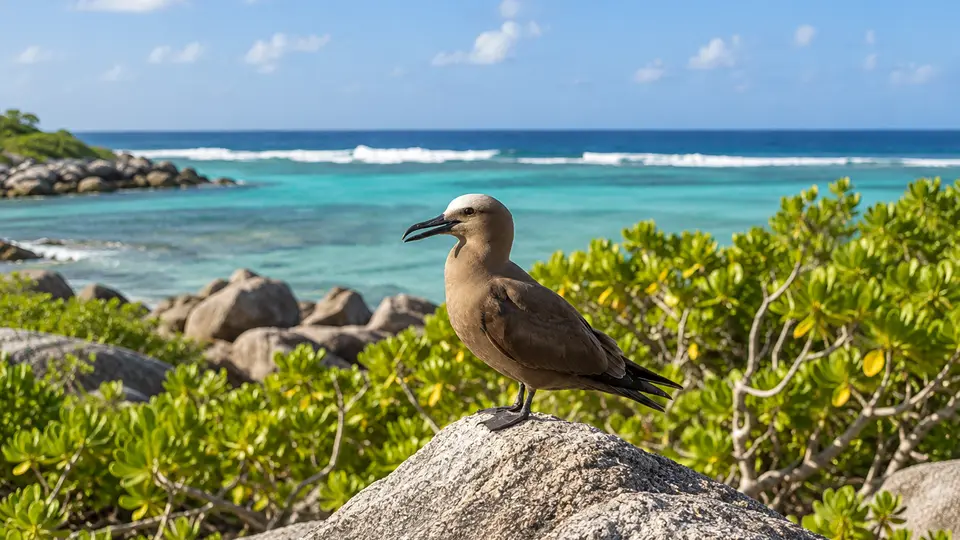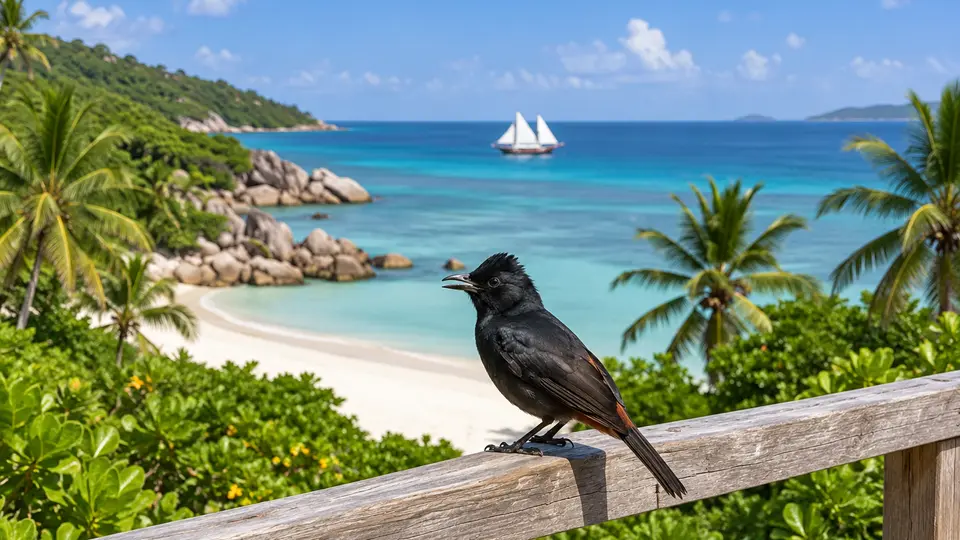
Seychelles Bulbul in its natural habitat, AI illustration

Seychelles Bulbul: where and when to see them

Hypsipetes crassirostris

Seychelles Bulbul at a glance

The Seychelles bulbul is a robust, vocal songbird endemic to the granitic Seychelles. Its olive-brown plumage is understated, but a shaggy head and strong orange bill give it considerable character. It remains relatively widespread within suitable habitat on several islands, using native forest as well as modified landscapes. Its varied diet and willingness to forage at different heights help it exploit changing food supplies without depending on a single plant species.

Behaviour & reproduction

Size
24–25 cm body length
Weight
Not reliably established
Lifespan
Not reliably established
Status
Least Concern

Bulbuls commonly move in pairs or small groups, advertising their presence with loud, varied calls. They forage through foliage, investigate fruiting branches and make short flights to catch or collect animal prey. Breeding pairs build an open cup nest supported by vegetation. Birds may be conspicuous along forest edges, but persistent alarm calling can indicate that an observer is too close to a nest or dependent young. Their vocalizations are complex, including chattering, whistling, and harsh alarm calls, serving various social and territorial functions. They are often seen mobbing larger birds like raptors or owls, demonstrating a protective instinct for their nesting or roosting areas.

Top wildlife locations

Seychelles wildlife habitat

Seychelles

Vegetated coastal paths, gardens and forest edges on Mahé, Praslin and La Digue offer suitable habitat. An inland excursion is optional, although hill forests provide additional opportunities away from busy shorelines.

Adventure cruises in Seychelles
Destinations describe the species' habitat, not guaranteed cruise stops. Some animals require an optional inland excursion or are found in restricted reserves.

Fun facts about the Seychelles Bulbul

  • It is one of the endemic land birds still found on several granitic islands.
  • Its scientific species name refers to its thick bill.
  • A mixed fruit-and-invertebrate diet lets it use both native and planted vegetation.
  • Its loud calls often reveal its presence before its subdued plumage becomes visible.

Best time to see the Seychelles Bulbul

Seychelles bulbuls are resident and can be sought throughout the year. April to May and October to November often offer pleasant conditions for walking and listening. Early morning activity is generally more useful than choosing a narrow seasonal window. Breeding activity peaks between September and March, coinciding with abundant food resources, though they can breed year-round if conditions are favorable. Observing them during the drier months might offer clearer views as foliage is less dense and birds may forage more openly.

Seychelles Bulbul: season matrix by destination

Travel and observation windows vary by region. Highlighted months are an orientation for planning, not confirmed sightings or a guarantee of access.

Seychelles

The listed months favour comfortable walking between stronger wind regimes; resident bulbuls may be observed in other months under suitable local conditions.

JanFebMarAprMayJunJulAugSepOctNovDec
Cruise ships in Seychelles

Where the Seychelles Bulbul lives

Native forest, secondary growth, scrub and well-vegetated gardens all provide habitat. The species occurs from lowland areas into hill forest where cover and food remain available. Wooded coastal paths can be suitable, unlike exposed sandy beaches or heavily built shorelines. They are highly adaptable and thrive in human-modified environments like plantations and home gardens, demonstrating a tolerance for some habitat disturbance. While present on most granitic islands, their distribution is restricted to areas with sufficient tree cover and freshwater access.

What the Seychelles Bulbul eats

Fruit and invertebrates form the core diet, with flowers and other plant material also used. Birds glean insects from vegetation and exploit locally abundant berries. This mixture allows them to feed in both relatively intact forest and planted landscapes. They play a role in seed dispersal for various native and introduced plant species, aiding forest regeneration and spread. Their diet shifts seasonally, with fruit consumption increasing when berries are ripe and invertebrate intake rising during insect breeding periods.

Species at a glance

Common name
Seychelles Bulbul
Scientific name
Hypsipetes crassirostris
Animal group
Birds
Size
24–25 cm body length
Weight
Not reliably established
Lifespan
Not reliably established
Status
Least Concern
Identification
Its large orange bill, shaggy crown and brownish body distinguish it from the slimmer Seychelles warbler and the dark, yellow-billed introduced common myna. Juveniles have a duller bill and less pronounced shaggy crest than adults, acquiring full adult plumage over several months. The bright rufous-orange bill, often described as carrot-like, is a key distinguishing feature even in poor light conditions.

Seychelles Bulbul: frequently asked questions

Where can I see the Seychelles Bulbul?
Seychelles. Listen from shaded paths and allow feeding birds to approach naturally. If a pair begins repeated alarm calling, move away promptly; avoid playback, nest photography at close range and offering human food. Patient observers might spot them bathing in shallow pools or foraging low in shrubs during the heat of the day. Using binoculars to scan the canopy and understory along forest trails will help locate these active birds, even when they are not vocalizing.
When is the best time to see the Seychelles Bulbul?
Seychelles bulbuls are resident and can be sought throughout the year. April to May and October to November often offer pleasant conditions for walking and listening. Early morning activity is generally more useful than choosing a narrow seasonal window. Breeding activity peaks between September and March, coinciding with abundant food resources, though they can breed year-round if conditions are favorable. Observing them during the drier months might offer clearer views as foliage is less dense and birds may forage more openly.
How big does the Seychelles Bulbul get?
24–25 cm body length. Adult weight: Not reliably established. Size varies with age, sex and population.
How should I behave around the Seychelles Bulbul?
Listen from shaded paths and allow feeding birds to approach naturally. If a pair begins repeated alarm calling, move away promptly; avoid playback, nest photography at close range and offering human food. Patient observers might spot them bathing in shallow pools or foraging low in shrubs during the heat of the day. Using binoculars to scan the canopy and understory along forest trails will help locate these active birds, even when they are not vocalizing.
What does the Seychelles Bulbul eat?
Fruit and invertebrates form the core diet, with flowers and other plant material also used. Birds glean insects from vegetation and exploit locally abundant berries. This mixture allows them to feed in both relatively intact forest and planted landscapes. They play a role in seed dispersal for various native and introduced plant species, aiding forest regeneration and spread. Their diet shifts seasonally, with fruit consumption increasing when berries are ripe and invertebrate intake rising during insect breeding periods.
Are wildlife sightings guaranteed on an adventure cruise?
No. Animals move freely and routes, weather, access restrictions and local conditions influence every outing. Confirm the actual itinerary and shore programme before booking.

Compare wildlife in the same destinations

Explore other birds recorded in these destinations. Similar surroundings do not mean the animals share the same habits or viewing season.

Species comparison by animal group and destination
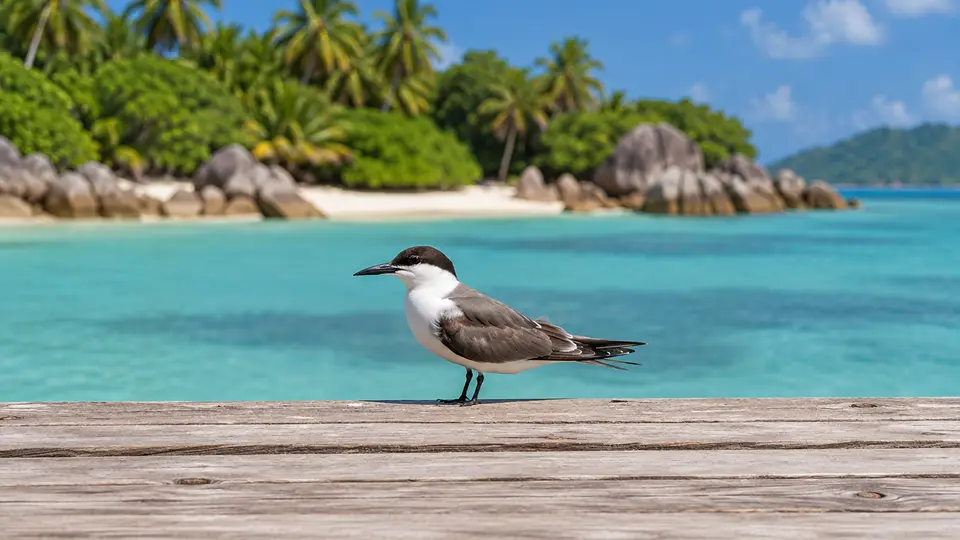
Seychelles BulbulSeychelles BulbulBridled TernBridled TernBrown NoddyBrown Noddy
Animal groupBirdsAnimal groupBirdsAnimal groupBirds
DestinationsSeychellesDestinationsSeychellesDestinationsSeychelles, Maldives, Fiji
All wildlife destinations
Plan your trip

Find your next wildlife adventure

Compare destinations, shore programmes and dates with the animals and habitats you would love to see.

  • Naturalist-led shore excursions
  • Responsible wildlife watching
  • Small expedition ships

Newsletter

Take Blue Rides with you

Adventure cruise offers, last-minute deals and trip inspiration.

Free, unsubscribe anytime. Details: Privacy Policy

Partner with Blue Rides

Affiliate Program

Recommend adventure cruises and earn commission on every confirmed booking.

Share. Track. Earn.