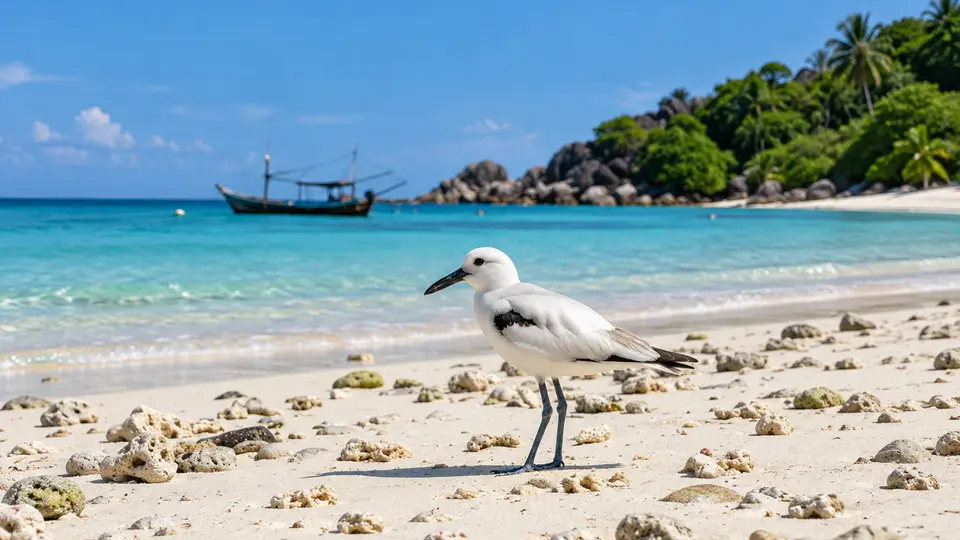
Bridled Tern in its natural habitat, AI illustration

Bridled TernOnychoprion anaethetusWhere and when to see them

Bridled Tern at a glance

The bridled tern is a graceful tropical seabird associated with offshore waters and rocky or vegetated islands. Its dark upperparts, white forehead and narrow white eyebrow create the facial pattern behind its English name. Compared with many beach-nesting terns, it often chooses sheltered nest positions beneath rocks or vegetation. In Seychelles it belongs to a diverse island seabird community, but colony access and seasonal attendance vary, making distant coastal watching the appropriate approach.

Behaviour & reproduction

Size
30-32 cm long
Weight
100-150 g
Lifespan
Not reliably established
Status
Least Concern

Bridled terns forage with light, agile flight, dipping to take prey near the sea surface. They may gather around floating material or feeding predatory fish that make small prey accessible. At colonies, pairs occupy shaded spaces under ledges, roots or low vegetation rather than always nesting in exposed scrapes. Adults defend their immediate nest surroundings and alternate parental duties. Outside breeding, birds disperse more widely over tropical seas and can become less predictable near land. Courtship displays often involve aerial chases and fish offerings between mates. Unlike many other tern species, they are primarily nocturnal foragers, especially when feeding in moonlit conditions far offshore.

Top wildlife locations

Seychelles wildlife habitat

Seychelles

Rocky island shores and vegetated seabird islands provide plausible viewing from permitted paths or offshore decks. Some colonies are protected or inaccessible, and birds should not be expected at every island.
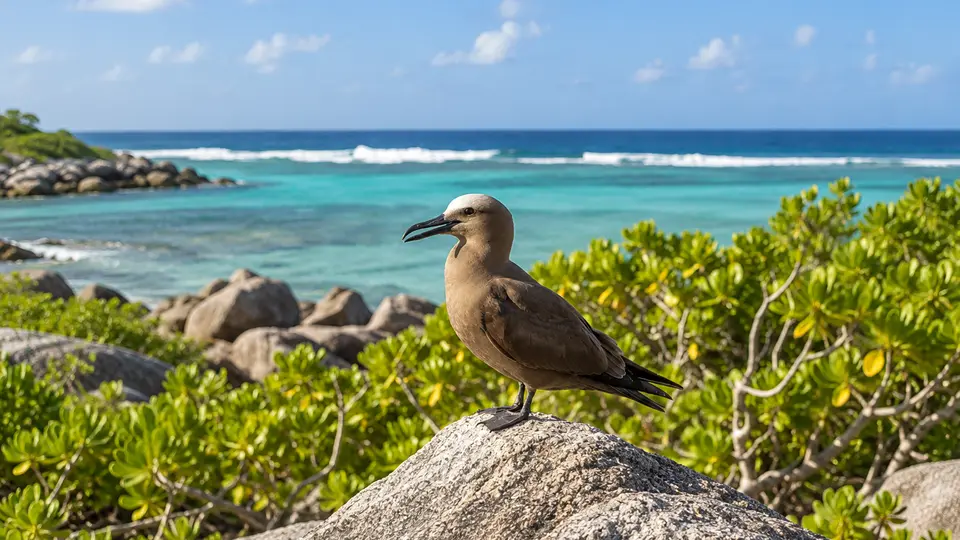
Destinations describe the species' habitat, not guaranteed cruise stops. Some animals require an optional inland excursion or are found in restricted reserves.

Fun facts about the Bridled Tern

  • Its white facial stripe gives it the appearance of wearing a bridle.
  • A breeding attempt normally involves a single egg.
  • Nests are often sheltered beneath rocks or vegetation.
  • Birds sometimes use floating debris as resting platforms far offshore.

Best time to see the Bridled Tern

In Seychelles, breeding schedules differ among islands and may not follow one simple annual calendar. April to May and October to November often offer relatively manageable coastal conditions. Confirm current colony activity and access locally rather than treating these travel windows as a guaranteed nesting season. Breeding often occurs in synchronized colonies, which can present a spectacular viewing opportunity if timed correctly with local information. The specific timing of peak activity varies greatly between the inner granite islands and outer coral atolls.

Bridled Tern: season matrix by destination

Travel and observation windows vary by region. Highlighted months are an orientation for planning, not confirmed sightings or a guarantee of access.

Seychelles

These transition months often suit coastal travel; breeding attendance varies by colony and year, so local confirmation is necessary.

JanFebMarAprMayJunJulAugSepOctNovDec
Cruise ships in Seychelles

Where the Bridled Tern lives

Warm offshore waters provide feeding habitat, while small islands, rocky coastlines and coral cays offer nesting ground. Sheltered crevices and low coastal vegetation are especially useful at colonies. Birds may rest on floating objects at sea, sometimes well away from the nearest island. Bridled terns typically favor uninhabited islands or remote islets where they can nest free from human disturbance and terrestrial predators. Their affinity for coral cays highlights their reliance on healthy reef ecosystems in tropical regions.

What the Bridled Tern eats

Small schooling fish dominate the diet, supplemented by squid and marine invertebrates. Prey is usually taken from the surface or just below it. Associations with larger predatory fish can improve feeding opportunities, but these temporary gatherings are not dependable coastal viewing events. They often take advantage of feeding frenzies initiated by tuna or other large pelagic fish that drive schooling prey to the surface. This opportunistic feeding strategy allows them to conserve energy while efficiently acquiring food.

Species at a glance

Common name
Bridled Tern
Scientific name
Onychoprion anaethetus
Animal group
Birds
Size
30-32 cm long
Weight
100-150 g
Lifespan
Not reliably established
Status
Least Concern
Identification
Compared with the larger, blacker sooty tern, the bridled tern has greyer-brown upperparts and a longer white eyebrow extending behind the eye. Note the dark cap extending to just below the eye and the prominent white forehead patch that forms a distinct V shape. In flight, their relatively long, slender wings and deeply forked tail are noticeable features.

Bridled Tern: frequently asked questions

Where can I see the Bridled Tern?
Seychelles. Use binoculars from authorized shore viewpoints or decks. Stay clear of shaded rock gaps and vegetation around colonies, where eggs can be concealed, and withdraw if adults repeatedly circle or alarm-call. When viewing from a boat, maintain a respectful distance to avoid disturbing nesting or roosting birds, especially during breeding season. Pay attention to their flight patterns over water, as they often make short, hovering dives to catch prey.
When is the best time to see the Bridled Tern?
In Seychelles, breeding schedules differ among islands and may not follow one simple annual calendar. April to May and October to November often offer relatively manageable coastal conditions. Confirm current colony activity and access locally rather than treating these travel windows as a guaranteed nesting season. Breeding often occurs in synchronized colonies, which can present a spectacular viewing opportunity if timed correctly with local information. The specific timing of peak activity varies greatly between the inner granite islands and outer coral atolls.
How big does the Bridled Tern get?
30-32 cm long. Adult weight: 100-150 g. Size varies with age, sex and population.
How should I behave around the Bridled Tern?
Use binoculars from authorized shore viewpoints or decks. Stay clear of shaded rock gaps and vegetation around colonies, where eggs can be concealed, and withdraw if adults repeatedly circle or alarm-call. When viewing from a boat, maintain a respectful distance to avoid disturbing nesting or roosting birds, especially during breeding season. Pay attention to their flight patterns over water, as they often make short, hovering dives to catch prey.
What does the Bridled Tern eat?
Small schooling fish dominate the diet, supplemented by squid and marine invertebrates. Prey is usually taken from the surface or just below it. Associations with larger predatory fish can improve feeding opportunities, but these temporary gatherings are not dependable coastal viewing events. They often take advantage of feeding frenzies initiated by tuna or other large pelagic fish that drive schooling prey to the surface. This opportunistic feeding strategy allows them to conserve energy while efficiently acquiring food.
Are wildlife sightings guaranteed on an adventure cruise?
No. Animals move freely and routes, weather, access restrictions and local conditions influence every outing. Confirm the actual itinerary and shore program before booking.

Compare wildlife in the same destinations

Explore other birds recorded in these destinations. Similar surroundings do not mean the animals share the same habits or viewing season.

Species comparison by animal group and destination
Bridled TernBridled TernBrown NoddyBrown NoddyCrab-ploverCrab-plover
Animal groupBirdsAnimal groupBirdsAnimal groupBirds
DestinationsSeychellesDestinationsSeychelles, Maldives, FijiDestinationsEgypt, Seychelles
All wildlife destinations
Plan your trip

Find your next wildlife adventure

Compare destinations, shore programs and dates with the animals and habitats you would love to see.

  • Naturalist-led shore excursions
  • Responsible wildlife watching
  • Small expedition ships

Newsletter

Take Blue Rides with you

Adventure cruise offers, last-minute deals and trip inspiration.

Free, unsubscribe anytime. Details: Privacy Policy

Partner with Blue Rides

Affiliate Program

Recommend adventure cruises and earn commission on every confirmed booking.

Share. Track. Earn.

Your footage, our stage

Send us your videos or pictures.

Captured remarkable nature or wildlife on your journey? Share it with us, we may feature it on Blue Rides.