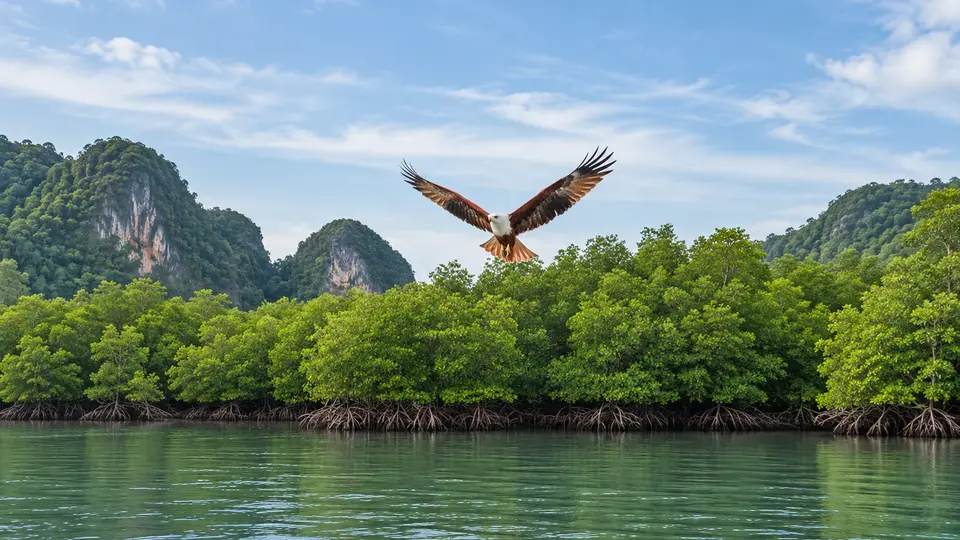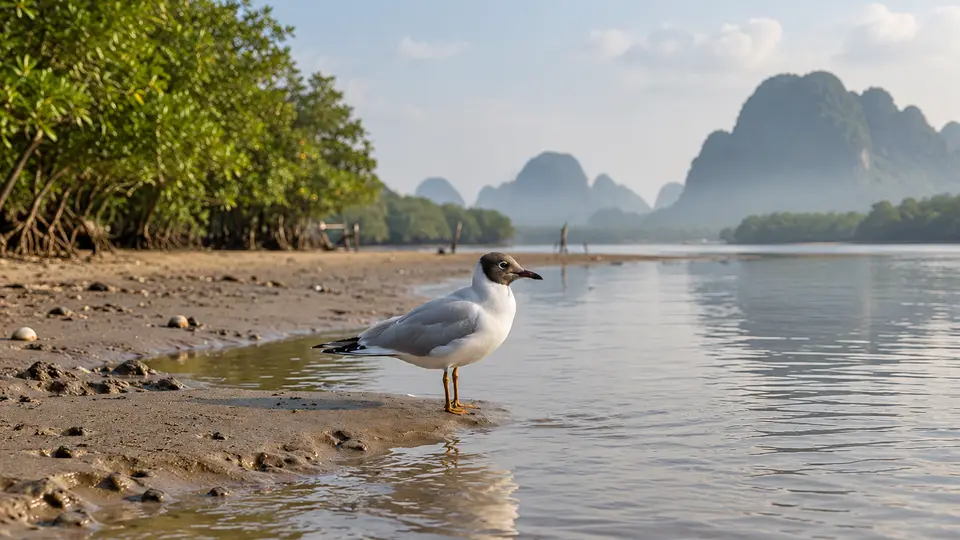
Saunders's gull in its natural habitat, AI illustration

Saunders's gull: where and when to see them

Saundersilarus saundersi

Saunders's gull at a glance

Saunders's gull is a small East Asian coastal gull with a short black bill and specialized ties to intertidal wetlands. It breeds mainly along China's coast and spends the nonbreeding season farther south and elsewhere around East Asia. Vietnam is near the southern part of its regular wintering range, especially along northern coasts. Loss and alteration of tidal flats threaten both feeding habitat and the saltmarsh landscapes used for nesting.

Behaviour & reproduction

Size
29–32 cm long
Weight
150–230 g
Lifespan
Not reliably established
Status
Vulnerable

Saunders's gulls often forage low over exposed mud, hovering briefly before dropping to seize prey. They also walk across tidal flats and gather at safe roosts when incoming water covers feeding areas. Breeding birds nest in loose colonies within coastal vegetation. Outside breeding, their daily schedule follows the tide more closely than the clock, with feeding opportunities shifting across a wetland as water levels rise and fall. They are quite skittish and easily disturbed, especially when roosting. When not feeding, they often rest in dense flocks with other small gulls and terns on sand spits or mud banks. Their communal roosting behavior provides safety in numbers from potential predators.

Top wildlife locations

Vietnam wildlife habitat

Vietnam

Northern coastal estuaries, including the Red River Delta region, provide plausible winter mudflat habitat. Viewing may require an overland coastal excursion, and this threatened gull is localized rather than routine.

Adventure cruises in Vietnam
Destinations describe the species' habitat, not guaranteed cruise stops. Some animals require an optional inland excursion or are found in restricted reserves.

Fun facts about the Saunders's gull

  • It is the only living species placed in Saundersilarus.
  • Its breeding hood is black, whereas black-headed gull has a dark brown hood.
  • Hovering over mudflats is a characteristic feeding technique.
  • Protecting high-tide roosts is important because feeding flats disappear beneath the water each tidal cycle.

Best time to see the Saunders's gull

Northern Vietnam offers the most plausible observation window during the cooler nonbreeding months, broadly November through March. Actual opportunities depend on local winter presence and tidal conditions. This period represents wintering habitat use, not the species' breeding season in Vietnam. During winter, large congregations can form at suitable sites, offering excellent viewing opportunities. The cooler months provide a more comfortable experience for observers. These periods are crucial for the species to refuel and rest before their northward migration.

Saunders's gull: season matrix by destination

Travel and observation windows vary by region. Highlighted months are an orientation for planning, not confirmed sightings or a guarantee of access.

Vietnam

These months match the broad nonbreeding window in northern Vietnam; current records, tide timing and accessible viewpoints determine realistic opportunities.

JanFebMarAprMayJunJulAugSepOctNovDec
Cruise ships in Vietnam

Where the Saunders's gull lives

The species depends on coastal mudflats, estuaries and saltmarshes, with nearby undisturbed places for high-tide roosting. Breeding occurs in low coastal vegetation above ordinary tidal flooding. Wintering birds may use managed coastal wetlands, but these do not fully replace natural intertidal habitat. This species is restricted to the East Asian Flyway. Its reliance on intertidal zones makes it highly vulnerable to habitat loss from coastal development and reclamation. Breeding colonies are typically found on secluded islands or mainland coastlines that remain undisturbed.

What the Saunders's gull eats

Small crabs and other intertidal invertebrates are important foods, supplemented by small fish and additional animal prey. Birds capture prey from exposed mud or shallow water. Their short bill and hovering approach help distinguish their feeding style from that of larger coastal gulls. They often specialize in small crustaceans like fiddler crabs, probing into the mud with their short bills. Their diet reflects the abundance of readily available invertebrates in their preferred estuarine environments. Occasionally, they will also take insects or small marine worms.

Species at a glance

Common name
Saunders's gull
Scientific name
Saundersilarus saundersi
Animal group
Birds
Size
29–32 cm long
Weight
150–230 g
Lifespan
Not reliably established
Status
Vulnerable
Identification
Compared with black-headed gull, Saunders's gull is smaller with a shorter black bill, black legs and a distinctive limited black pattern on otherwise pale outer wings. Their dark hood is restricted to the crown and nape, extending only slightly below the eye, a key feature distinguishing it from other hooded gulls. The underparts are pure white, contrasting with the black primaries. Juveniles have a mottled brown back and a less defined hood.

Saunders's gull: frequently asked questions

Where can I see the Saunders's gull?
Vietnam. Scan estuary flats from established dikes or viewpoints with a telescope. Avoid advancing onto soft tidal mud or flushing high-tide roosts; incoming water and disturbance can quickly remove safe feeding and resting space. Look for them actively foraging on receding tides when extensive mudflats are exposed. Binoculars are essential for distant observations from shore. On cruises, a high-powered scope from a stable deck can offer detailed views if the vessel passes close to suitable habitats.
When is the best time to see the Saunders's gull?
Northern Vietnam offers the most plausible observation window during the cooler nonbreeding months, broadly November through March. Actual opportunities depend on local winter presence and tidal conditions. This period represents wintering habitat use, not the species' breeding season in Vietnam. During winter, large congregations can form at suitable sites, offering excellent viewing opportunities. The cooler months provide a more comfortable experience for observers. These periods are crucial for the species to refuel and rest before their northward migration.
How big does the Saunders's gull get?
29–32 cm long. Adult weight: 150–230 g. Size varies with age, sex and population.
How should I behave around the Saunders's gull?
Scan estuary flats from established dikes or viewpoints with a telescope. Avoid advancing onto soft tidal mud or flushing high-tide roosts; incoming water and disturbance can quickly remove safe feeding and resting space. Look for them actively foraging on receding tides when extensive mudflats are exposed. Binoculars are essential for distant observations from shore. On cruises, a high-powered scope from a stable deck can offer detailed views if the vessel passes close to suitable habitats.
What does the Saunders's gull eat?
Small crabs and other intertidal invertebrates are important foods, supplemented by small fish and additional animal prey. Birds capture prey from exposed mud or shallow water. Their short bill and hovering approach help distinguish their feeding style from that of larger coastal gulls. They often specialize in small crustaceans like fiddler crabs, probing into the mud with their short bills. Their diet reflects the abundance of readily available invertebrates in their preferred estuarine environments. Occasionally, they will also take insects or small marine worms.
Are wildlife sightings guaranteed on an adventure cruise?
No. Animals move freely and routes, weather, access restrictions and local conditions influence every outing. Confirm the actual itinerary and shore program before booking.

Compare wildlife in the same destinations

Explore other birds recorded in these destinations. Similar surroundings do not mean the animals share the same habits or viewing season.

Species comparison by animal group and destination
Saunders's gullSaunders's gullBlack-faced spoonbillBlack-faced spoonbillBrahminy kiteBrahminy kite
Animal groupBirdsAnimal groupBirdsAnimal groupBirds
DestinationsVietnamDestinationsVietnamDestinationsIndonesia, Thailand, Vietnam
All wildlife destinations
Plan your trip

Find your next wildlife adventure

Compare destinations, shore programs and dates with the animals and habitats you would love to see.

  • Naturalist-led shore excursions
  • Responsible wildlife watching
  • Small expedition ships

Newsletter

Take Blue Rides with you

Adventure cruise offers, last-minute deals and trip inspiration.

Free, unsubscribe anytime. Details: Privacy Policy

Partner with Blue Rides

Affiliate Program

Recommend adventure cruises and earn commission on every confirmed booking.

Share. Track. Earn.

Your footage, our stage

Send us your videos or pictures.

Captured beautiful landscapes or wildlife? Share your videos and pictures with us, we may feature them on Blue Rides.