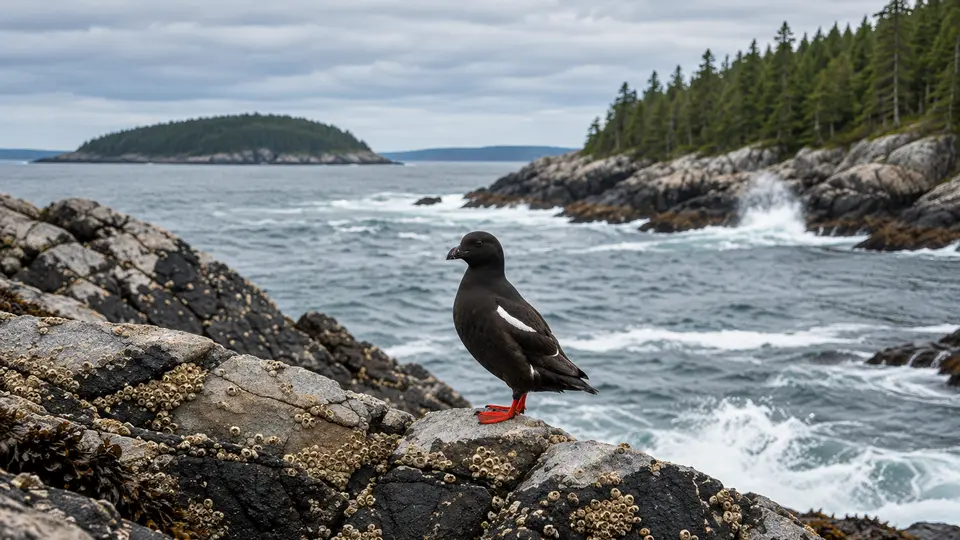
Red-throated Loon in its natural habitat, AI illustration
SizeLength 53–69 cmLifespanNot reliably establishedStatusLeast Concern

Red-throated Loon: where and when to see them

Gavia stellata

Red-throated Loon at a glance

Known in Britain as the red-throated diver, this slender waterbird breeds on small northern freshwater pools and often feeds at sea. Its breeding plumage combines a grey head, finely striped hindneck and deep reddish throat patch. Winter birds become much paler and less distinctive. Scotland supports important breeding populations, especially in the north and west, but their quiet nesting lochans are sensitive places where distant observation is essential and close approach is inappropriate.

Behaviour & reproduction

Size
Length 53–69 cm
Weight
1.2–2.5 kg
Lifespan
Not reliably established
Status
Least Concern

Pairs defend nesting pools and communicate with far-carrying calls and coordinated displays. Unlike larger loons, red-throated loons can take flight from relatively small bodies of water, allowing them to use modest breeding ponds. Adults frequently commute to coastal feeding areas and bring fish back to their chicks. Nests sit close to the water's edge, making eggs vulnerable to disturbance and changing water levels. Outside breeding, birds often occur singly or in loose coastal gatherings. Courtship displays involve synchronized swimming, mutual preening, and various calls to solidify pair bonds. Chicks are semi-precocial, able to swim shortly after hatching but dependent on parental feeding and protection for several weeks. Unlike many seabirds, they do not nest in colonies, preferring solitary territories for breeding success.

Top wildlife locations

Scotland wildlife habitat

Scotland

Northern and western coastal bays offer distant views of feeding birds from shore. Breeding lochans may require inland excursions and must not be approached; coastal watching is the less intrusive alternative during nesting.

Adventure cruises in Scotland

Destinations describe the species' habitat, not guaranteed cruise stops. Some animals require an optional inland excursion or are found in restricted reserves.

Fun facts about the Red-throated Loon

  • It is the smallest living loon species.
  • Its legs sit far back on the body, making walking difficult.
  • Parents often carry fish from the sea to freshwater-reared chicks.
  • It can use smaller breeding pools than the larger loon species.

Best time to see the Red-throated Loon

May through August offers breeding-plumage views in northern and western Scotland, preferably at coastal feeding areas rather than nests. Autumn and winter can also suit seawatching in sheltered bays. Weather, visibility and local movements matter more than a guaranteed seasonal concentration. Prime viewing from cruise ship decks can occur during migration periods, especially along coastal routes in spring and autumn. During the breeding season, quiet observation from land-based tours at designated viewpoints is best to avoid disturbance. Local birdwatching guides can advise on specific sheltered bays and estuaries known for wintering populations.

Red-throated Loon: season matrix by destination

Travel and observation windows vary by region. Highlighted months are an orientation for planning, not confirmed sightings or a guarantee of access.

Scotland

Coastal observation is possible year-round, but breeding plumage, local distribution and weather vary substantially by season.

JanFebMarAprMayJunJulAugSepOctNovDec
Cruise ships in Scotland

Where the Red-throated Loon lives

Breeding habitat includes small moorland lochans, peatland pools and shallow northern lakes with low-disturbance margins. Feeding waters may be coastal bays, sounds or larger freshwater bodies. In winter, sheltered and moderately exposed coastal seas become more important than inland nesting sites. Red-throated loons are the most widespread loon species, with a circumpolar breeding range extending across Arctic and subarctic regions of Eurasia and North America. In winter, they migrate south to coastal waters of temperate zones, favoring areas with a rich food supply. While nesting, they prefer oligotrophic waters, meaning those with low nutrient levels, often surrounded by open tundra or heathland.

What the Red-throated Loon eats

Small fishes dominate the diet, captured during submerged pursuit. Adults may travel between nesting pools and richer coastal feeding grounds to obtain suitable prey for chicks. Crustaceans and other aquatic animals are occasionally eaten, but fish remain the principal food source. Prey capture occurs quickly underwater, with the loon typically surfacing a short distance away from where it dove. Parental care involves both adults bringing food to the chicks, with an increasing proportion of larger fish as the young grow. Occasionally, they will also consume insects and amphipods when fish are scarce or during early chick development.

Species at a glance

Common name
Red-throated Loon
Scientific name
Gavia stellata
Animal group
Birds
Size
Length 53–69 cm
Weight
1.2–2.5 kg
Lifespan
Not reliably established
Status
Least Concern
Identification
Its slender, slightly upturned bill and small build distinguish it from black-throated and great northern loons, with a red throat patch visible in breeding plumage. Beyond the red throat, breeding adults exhibit a pale grey head and neck, a dark back, and white underparts, creating a striking contrast. Non-breeding adults and juveniles appear greyer overall, lacking the distinctive red patch and showing fine white spotting on the back, resembling a miniature Great Northern Loon. Its distinctive, cat-like wailing call is also a key identification feature, often heard before the bird is seen.

Red-throated Loon: frequently asked questions

Where can I see the Red-throated Loon?
Scotland. Use a telescope from coastal viewpoints or established paths well away from breeding pools. Never approach a nest or launch anything onto an occupied lochan. Withdraw if adults alarm, repeatedly circle or delay returning to the shore. Always maintain a respectful distance, especially if chicks are present, as repeated flushing can expose them to predators and cold. Binoculars or spotting scopes are essential for detailed observation from a safe distance, particularly for identifying plumage details. Consider tidal patterns when planning coastal observation, as feeding activity can vary with water levels.
When is the best time to see the Red-throated Loon?
May through August offers breeding-plumage views in northern and western Scotland, preferably at coastal feeding areas rather than nests. Autumn and winter can also suit seawatching in sheltered bays. Weather, visibility and local movements matter more than a guaranteed seasonal concentration. Prime viewing from cruise ship decks can occur during migration periods, especially along coastal routes in spring and autumn. During the breeding season, quiet observation from land-based tours at designated viewpoints is best to avoid disturbance. Local birdwatching guides can advise on specific sheltered bays and estuaries known for wintering populations.
How big does the Red-throated Loon get?
Length 53–69 cm. Adult weight: 1.2–2.5 kg. Size varies with age, sex and population.
How should I behave around the Red-throated Loon?
Use a telescope from coastal viewpoints or established paths well away from breeding pools. Never approach a nest or launch anything onto an occupied lochan. Withdraw if adults alarm, repeatedly circle or delay returning to the shore. Always maintain a respectful distance, especially if chicks are present, as repeated flushing can expose them to predators and cold. Binoculars or spotting scopes are essential for detailed observation from a safe distance, particularly for identifying plumage details. Consider tidal patterns when planning coastal observation, as feeding activity can vary with water levels.
What does the Red-throated Loon eat?
Small fishes dominate the diet, captured during submerged pursuit. Adults may travel between nesting pools and richer coastal feeding grounds to obtain suitable prey for chicks. Crustaceans and other aquatic animals are occasionally eaten, but fish remain the principal food source. Prey capture occurs quickly underwater, with the loon typically surfacing a short distance away from where it dove. Parental care involves both adults bringing food to the chicks, with an increasing proportion of larger fish as the young grow. Occasionally, they will also consume insects and amphipods when fish are scarce or during early chick development.
Are wildlife sightings guaranteed on an adventure cruise?
No. Animals move freely and routes, weather, access restrictions and local conditions influence every outing. Confirm the actual itinerary and shore programme before booking.

Compare wildlife in the same destinations

Explore other birds recorded in these destinations. Similar surroundings do not mean the animals share the same habits or viewing season.

Species comparison by animal group and destination
Red-throated LoonRed-throated LoonAtlantic PuffinAtlantic PuffinBlack GuillemotBlack Guillemot
Animal groupBirdsAnimal groupBirdsAnimal groupBirds
DestinationsScotlandDestinationsNew England, Norway, Scotland, ArcticDestinationsNew England, Norway, Scotland
All wildlife destinations
Plan your trip

Find your next wildlife adventure

Compare destinations, shore programmes and dates with the animals and habitats you would love to see.

  • Naturalist-led shore excursions
  • Responsible wildlife watching
  • Small expedition ships

Newsletter

Take Blue Rides with you

Adventure cruise offers, last-minute deals and trip inspiration.

Free, unsubscribe anytime. Details: Privacy Policy

Partner with Blue Rides

Affiliate Program

Recommend adventure cruises and earn commission on every confirmed booking.

Share. Track. Earn.